He visto tantas historias de la vida de Sheynnis que me han llegado al corazón ♥️ vivió la realidad que la mayoría pasamos sin conectes, influencias o apellidos logró salir adelante y cumplir sus sueños. La Miss más real 🥺 #MissUniverse
¿Te imaginas poder tratar el cáncer de piel con un simple jabón?
Pues eso es lo que ha logrado Heman Bekele, un estudiante de 14 años que ha creado un jabón capaz de combatir el melanoma, el tipo más común de cáncer de piel.
Heman Bekele nació en Etiopía y llegó a Estados Unidos cuando tenía cuatro años. Desde pequeño se interesó por la biología y la tecnología.
Su pasión por la ciencia lo llevó a participar en el concurso 3M Young Scientist Challenge, una competencia que premia a los jóvenes científicos más brillantes del país.
Su proyecto consiste en un jabón de bajo costo que contiene nanopartículas que liberan medicamentos que estimulan el sistema inmunológico y protegen las células de la piel.
De esta forma, el jabón puede tratar formas leves de cáncer de piel sin necesidad de cirugía o quimioterapia.
El jabón, llamado STS, ha sido reconocido como el mejor invento del concurso, y le ha valido a Bekele un premio de 25.000 dólares.
Pero el joven no se conforma con eso, sino que tiene planes para mejorar su producto y obtener la aprobación de la FDA.
Además, Bekele quiere crear una organización sin fines de lucro para distribuir su jabón a las comunidades más necesitadas, especialmente en África.
El cáncer de piel es una enfermedad que afecta a millones de personas en todo el mundo, y que puede tener consecuencias graves si no se detecta y se trata a tiempo.
Por eso, el invento de Bekele es una esperanza para muchos pacientes que no tienen acceso a tratamientos costosos o invasivos.
Via @Bio_comunidad
La grasa de su vientre lo está preparando para el cáncer, las enfermedades cardíacas y una muerte prematura.
Todos los consejos que tengo para quitar la grasa de tu vientre:
1. Deja de beber alcohol.
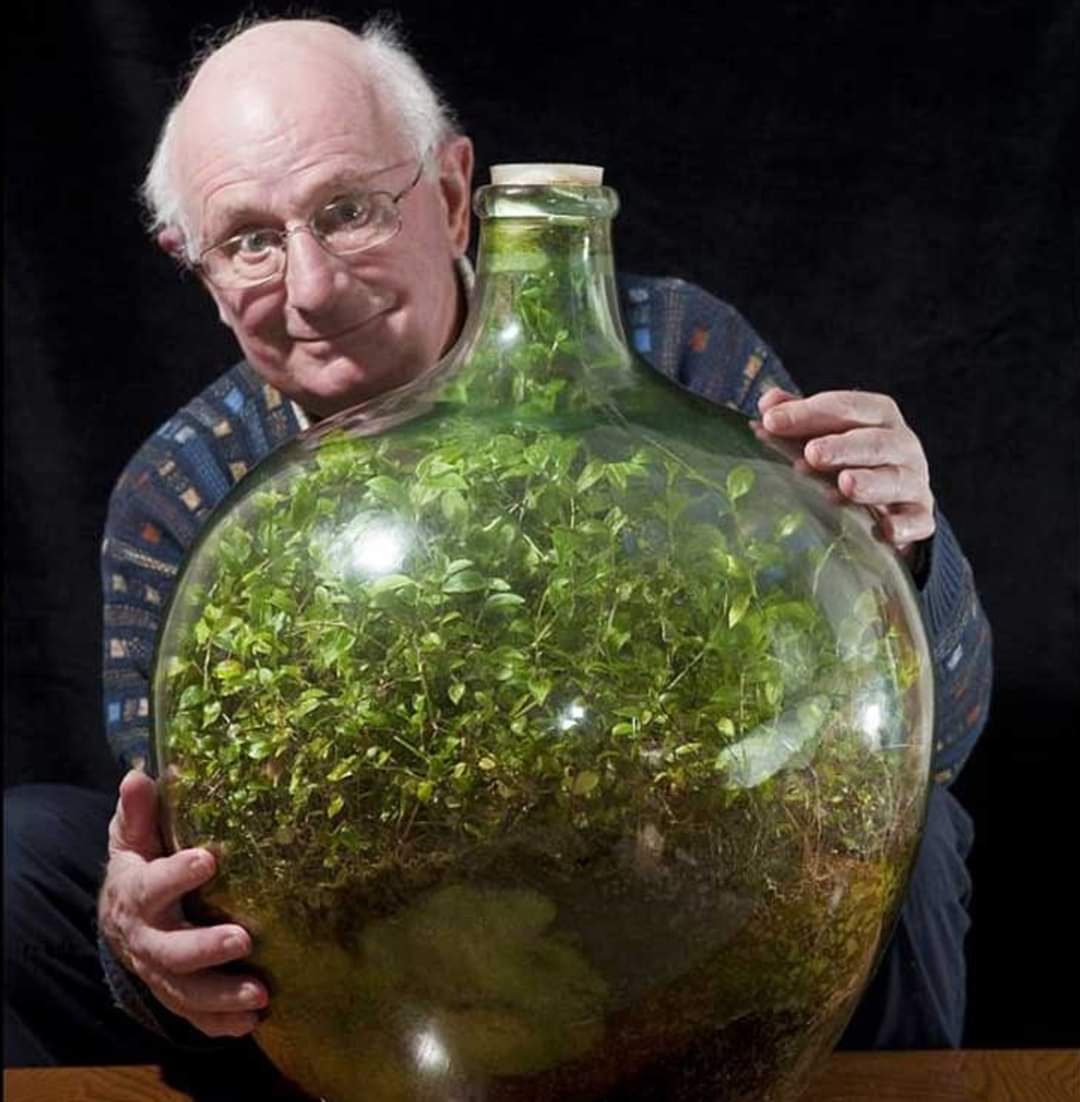
UN ECOSISTEMA EN MINIATURA 🤯
En 1960, el inglés David Latimer decidió intentar crear un pequeño jardín dentro de una botella de vidrio.
Desde entonces, su jardín portátil sigue verde e intensamente vivo, debidamente sellado dentro de la botella.
El detalle curioso y sorprendente, es que la última vez que Latimer regó su jardín fue en 1972.
La planta crea energía a partir de la luz solar mediante la fotosíntesis, consumiendo dióxido de carbono y liberando oxígeno en la botella.
Cuando mueren partes de la planta, las bacterias del suelo usan el oxígeno para descomponer estas partes muertas, liberando dióxido de carbono y completando el círculo.
El ciclo del agua se reabastece de manera similar: el agua que la planta toma a través de sus raíces finalmente sale de sus hojas, se condensa en el interior de la botella y gotea de nuevo en él.
La botella funciona como una versión micro de lo que sucede en todo el planeta.... ¡Impresionante!
Las ventas no han estado taan buenas 😞 así que recurro a ustedes mis amigos de tw para que me ayuden con un rt por si andan buscando un teléfono con las 3B y no quieren comprar en market aquí les tengo hasta con garantía 🫡💘 siganme en insta que ahi los publico todos 🫣😎
In the vast deserts and mountains of the Barbary coast in North Africa, the Barbary lions once roamed freely. With their distinctly dark manes, they were thought to have been one of the largest lion species to have ever existed. These majestic creatures captured the imagination of many, and their historical significance reaches far back into antiquity.
The photo taken in 1925 by French photographer Marcelin Flandrin captured a poignant moment, possibly featuring one of the last Barbary lions in the wild before their eventual extinction. Flandrin's lens immortalized a sight that would soon vanish from the natural world forever.
Barbary lions were not only remarkable for their appearance but also for their role in history. These same lions were regularly captured by hunters for the brutal games held in the Roman colosseum. Known as "Damnatio ad bestias" in Latin, this practice was a form of capital punishment where condemned prisoners were executed by Barbary lions and other large cats. The lions' presence in such events added to their mythos and perpetuated their fame.
The decline of the Barbary lion population began with the expansion of the Arab empire from 632 to 1258, leading to the end of the Islamic Golden Age after the Siege of Baghdad by the Mongols. Survivors of that turbulent period claimed that "the waters of the Tigris ran black with ink from the enormous quantities of books flung into the river and red from the blood of the scientists and philosophers killed." Amidst the turmoil in the region and as empires crumbled and fell, the Barbary lions managed to persist until the arrival of European colonists in the 19th century.
During this time, big-game hunting gained popularity, and it proved to be devastating for the already dwindling lion population. As a result, sightings of Barbary lions became scarce, and not a single one was reported from 1901 to 1910. By the 1920s, most scientists believed that they had become extinct in the wild.
There were a few reported sightings in subsequent decades, offering glimmers of hope that some may have survived. In 1948, there was a reported sighting in Morocco, and in 1958, another sighting was claimed in a heavily forested area near the city of Sétif in Algeria. However, the forest was destroyed during the Algerian War in the same year, further exacerbating the challenges faced by these noble creatures.
Today, approximately 100 captive lions possess the genes of the Barbary lions, but none of them are pure descendants. While these lions carry a part of their ancestral legacy, the extinction of the Barbary lions in the wild serves as a stark reminder of the consequences of human actions on the delicate balance of nature. The story of the Barbary lion stands as a poignant testament to the importance of conservation efforts to protect and preserve the incredible diversity of life on our planet.