O coeficiente de atualização das rendas para 2027 é de 2,56% (média do IPC sem habitação nos 12 meses até agosto de 2026). Isso é o máximo que os senhorios podem aplicar.2
Em termos nominais, uma renda de 1.000 € passa no máximo para 1.025,60 € (+25,60 €/mês).
Para saber se fica mais cara ou mais barata em termos reais (descontando a inflação), compara-se esse 2,56% com a inflação prevista para 2027:
•Banco de Portugal (projeções de junho 2026): inflação de 2,4% em 2027 (depois de 3,1% em 2026).
•Outras instituições apontam para valores semelhantes, na casa dos 2,3–2,4%.
Conclusão das contas:
•Aumento das rendas: +2,56%
•Inflação esperada em 2027: ~2,4%
As rendas ficam ligeiramente mais caras em termos reais (cerca de +0,16 pontos percentuais). É uma diferença pequena, praticamente residual. Se o senhorio aplicar o máximo, o inquilino perde um pouco de poder de compra nessa despesa; se aplicar menos (ou zero), as rendas ficam mais baratas em termos reais.
Nota: o coeficiente usa inflação passada (atrasada), enquanto a inflação de 2027 é uma previsão e pode variar. O valor oficial do coeficiente só sai em outubro no Diário da República.
Top Countries in the World
1.🇯🇵 Japan
2.🇬🇷 Greece
3.🇵🇹 Portugal
4.🇮🇹 Italy
5.🇪🇸 Spain
6.🇹🇷 Türkiye
7.🇮🇪 Ireland
8.🇭🇷 Croatia
9.🇫🇷 France
10.🇨🇦 Canada
11.🇨🇭 Switzerland
12.🇲🇽 Mexico
13.🇩🇪 Germany
14.🇮🇳 India
15.🇹🇭 Thailand
16.🇲🇦 Morocco
17.🇦🇹 Austria
18.🇩🇲 Dominica
19.🇧🇹 Bhutan
20.🇿🇦 South Africa
Source: Condé Nast Traveler – Readers’ Choice Awards 2025
Elon Musk just said the most important economic sentence of the decade.
Wall Street still hasn’t processed it.
Musk: “At a very high level, I’d say that autonomy is an insanely fundamental breakthrough. And no one is even close to Tesla.”
Not slightly ahead. No one is even close.
While the entire automotive industry spent a century perfecting a machine that sits parked 95% of its life, Musk was asking a different question.
What if the car was just the beginning?
Musk: “With self-driving, the car becomes roughly five times more useful, but it costs the same to build.”
Same factory. Same steel. Five times the utility.
Musk: “Can you imagine what would happen if a company were doing 25% to 30% gross margins, but suddenly that same thing was five times more valuable. It boggles the mind, actually.”
That is not a product upgrade.
That is the most violent repricing of a physical asset in modern economic history.
But the car was never the real product.
Musk: “We will leverage our manufacturing expertise and the intelligence we’ve developed for self-driving to have a useful humanoid robot.”
The neural network that absorbed every edge case, every near-miss, every chaotic road condition at a scale no research program on earth could replicate.
Now gets a body.
Musk: “The economy is fundamentally GDP per capita times capita.”
In every civilization that has ever existed, output had one hard ceiling.
The number of human bodies available to work.
Musk: “If you no longer have a constraint on capita because of a useful humanoid robot, it’s not clear that there’s any limit to the size of the economy.”
Not a new market cycle.
The permanent demolition of the only ceiling every economy in human history has ever shared.
Every mile a Tesla drives is a training rep.
No simulation. No research grant. No government contract.
A self-funding intelligence machine built on public roads, financed by the largest crowdsourced real-world training program in history.
The competitors still selling traditional vehicles are not losing market share.
They are being made mathematically obsolete by a man who used the car industry as a vessel to build something that has never existed before.
The car was never the destination.
It was the most ambitious laboratory ever built, hiding in plain sight on every road on earth.
A neural network forged in real traffic, real weather, real consequences at global scale.
Ready to walk into every factory, every hospital, every warehouse on earth.
The highway was never the ceiling.
It was the floor.
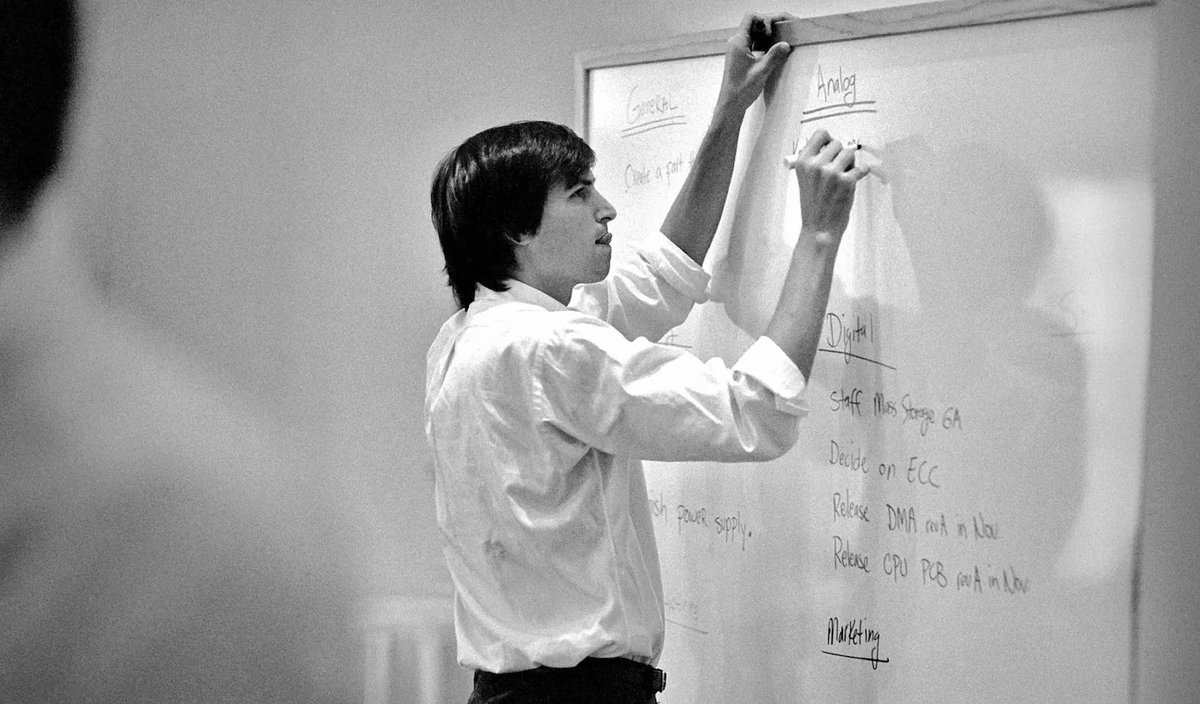
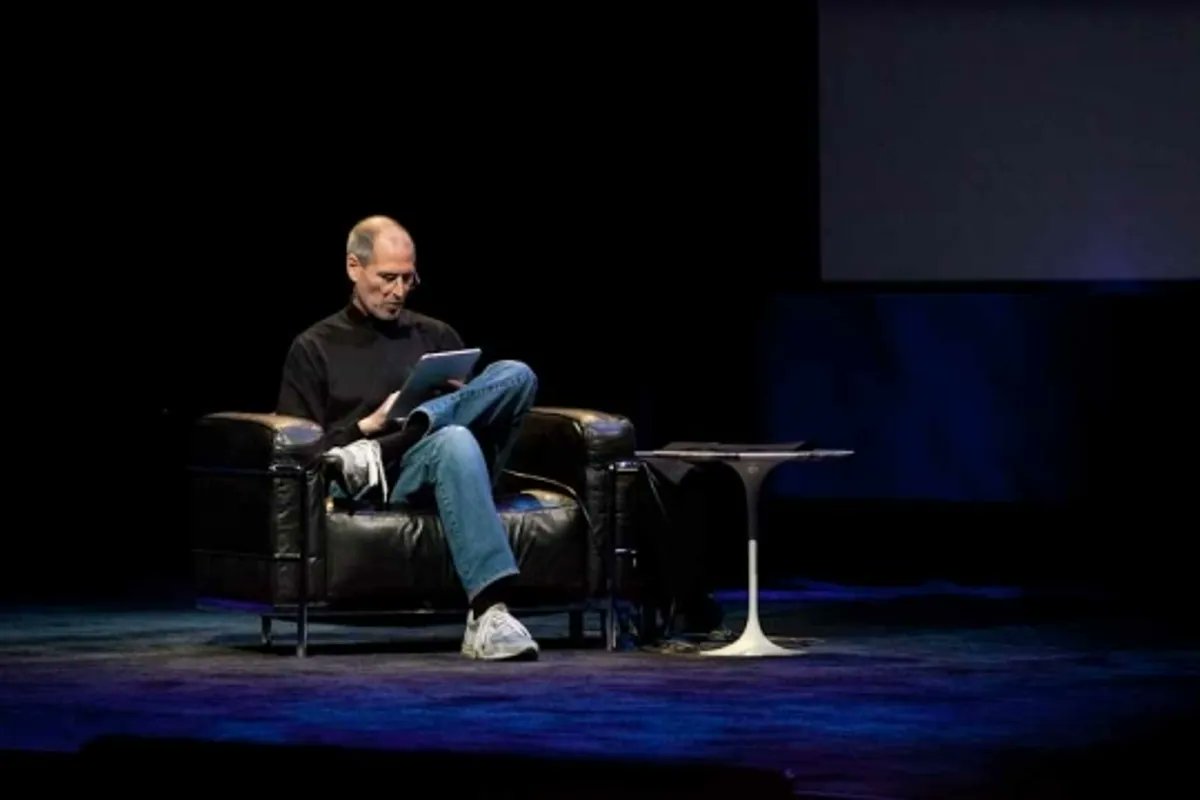
Steve was an incredible leader, innovator, and friend whose world-changing ideas moved all of us forward.
Celebrating his remarkable life and legacy today, on his birthday.
Starship departs for Mars at the end of next year, carrying Optimus.
If those landings go well, then human landings may start as soon as 2029, although 2031 is more likely.