In dedication to @RichardHeartWin hitting that follow button and also to the all time high HEX hit today, I cut my louis vuitton bag up and turned it into the best logo on earth #LVHEXLogo#Pulsechain
Guess who's still here.
Trace Mayer isn't. Last tweet 1,350 days ago
Satoshi, never even tweeted.
Do Kwon 332 days, jail
SBF 290 days, jail
Su Zhu 56 days, jail
Mashinsky set to private and on bail
Andreas Antonopolous 169 days
Cobie set to private
Barry Silbert 68 days
Roger Ver makes a couple tweets a month
This isn't even counting dudes that still exist, but get no views. Too many to count.
Only counted normal tweets, not retweets.
Perhaps if you're reading this...
#Bitcoin The SBF conviction is a victory for me. I begged you to use cryptocurrency instead of giving your money to middlemen. I begged you to not use Celsius. I am begging you now to know your own keys instead of empowering middlemen. Not your keys, not your coins.
Know that crypto is still full of bad actors. Operators of middlemen companies that want your money, exchanges that want your money. People that unnecessarily log you, track you, violate your privacy. Bad actors that got all their followers rekt are still being listened to. I tried to save you while they led you to slaughter.
Just a reminder of what I've done for you. Raised $27M to try and save your life with medical research. Wrote you free self help books, made you free self help videos. Showed you how to install a bidet for your mom. Called the Bitcoin top at $65k years ago, it's $34k now. Dressed as a clown to bring attention to the things that matter. I shook my ass on stage for you.
Now I spend my time educating you on how to improve law and democracy through relevant and substantive comments. HEX has functioned flawlessly since launch. PulseChain has functioned flawlessly since launch. Every single day I work to make the world a better place. And it's working! I made commenting popular, and now the rules have 2 extra weeks of time for commenting because of it. This should lead to increased consideration and thus better rules!
A man's deeds speak louder than his words. When you're hearing someone trying to convince you of something, ask yourself, what have they done for you? I'm here because I care about you. I want you to live the best life you can. And that's why I ask you to take care of your family, educate yourself, be part of the solution. The world's only going to get better if you make it better.
P.S. Just so people remember what's real. Your $1,200 stimulus check on April 15th, 2020 was worth 2,043,492 HEX. That's HEX is currently worth $51,094 including the PulseChain and Ethereum version. BTC is still down 50% from 2021. ETH is still down 63%. Lots of other things I warned you about are down nearly 100%. Check the math yourself!
I care about you guys and you're on my mind every single day.
While you're enjoying your weekend, thinking about your Halloween costume, I'm thinking of ways to protect your rights. While you're ready to say or do anything for a green candle, I'm watching the macro situation. If you don't understand why interest rates going up means bond holders are losing money, you're not qualified to do any macro analysis at all. Do you even know what macro means? I guess you're in good company though, as rather stupid people hold $130 trillion of bonds, because I mean, like hey, why would the interest rates ever go higher than near zero?
Can you imagine how stupid you would have had to have been to lend out your money for a decade for a return of, get this, 0.55% a year. And the very same people who did that, often banks and bankers, have the gall to tell you what you should do with your money. Also, a government, trillions of dollars in debt wants to tell you the same. And here's the worst part. After you wait a decade to get that fat 0.55% APR return, how much is the money worth that you're receiving at the end?
It's a mad world out there, and I only know one thing that might bring power back to the people. A people desperately in need of verifiable truth. #cryptocurrency.
Be the change you wish to see in the world. If you want to make something better, make it better. If you're sitting around criticizing others, you're a leech. Get to work. Get the word out.
This picture always reminds me of a guy at my gym named Steve
I've talked about him on here before. He's 83 years old, former marine, and he's in noticeably better shape than 90% of the guys I went to high school with (I'm 36)
He lifts weights 3-5 times per week, program is compound movements and moderate weight for high reps, push pull legs
A while back I asked him what advice he'd give to young people lifting weights (so I could share it on social media 😂)
His advice: "Just start, and then never stop."
A handful of things have an outsized impact on the quality of your aging:
Particularly, how much fat you carry, how "spry" you are, and your mental acuity
All three of those are improved by a weightlifting habit
Be like Steve, and you'll only get old when you quit
Lawyers. The arguments that support cash, support cryptocurrency. Washington D.C. is now enforcing their law banning cash bans at local retailers. That's awesome, as cash is a requirement for national security, privacy and protecting the rights of the unbanked and un-bankable.
The arguments that support the FTC's case against Amazon leaving consumers with less choice support cryptocurrencies as well. If monopolies are bad and competition is good, then cryptocurrency is good; as it's the first real competitor to credit cards and offers features they can't, like real permanent settlement finality in 13 minutes and irrevocable payments.
Sometimes it's easiest to use your attackers force against them. Particularly when what they're attacking is what they're supposed to be promoting and fostering development of.
One could say the most effective way of shutting down hackers stealing cryptocurrency, would be free government code audits of public goods and open-source protocols. Friendly government pull requests and security suggestions (which they already give through NIST,) would be a welcome addition to the cryptocurrency and blockchain space!
Competition is good. Cryptocurrency is an honest competitior to fiat currencies and Visa/Mastercard monopolies. It is the premier source for undeniable, timestampted truth. A computer science breakthrough. Cryptocurrency still is the best performing asset of all time, and useful for so much more than just profit.
It'd be great if the equal protection clause were used to protect us blockchain speakers. The full court administrative state press against blockchain speakers is unconstitutional, and without substantive due process.
It's currently about 1,000x cheaper to transact on PulseChain than #Ethereum and 1,500x cheaper than Bitcoin. Still 17% faster. Still more decentralized validation. Still 25% less base inflation per block. PulseX still can never inflate, only burn. HEX will be 4 years old soon. So many years of flawless function!
What does doing your own research look like? Asking AI stuff. For instance, a simple experiment:
You: list 10 constitutional arguments against the securities and exchange commission attempting to regulate cryptocurrencies outside their mandate
1. Exceeding statutory authority: The SEC's power is derived from federal securities laws, which may not cover all cryptocurrencies. By attempting to regulate assets beyond their scope, the SEC would be overstepping its legal boundaries.
2. Separation of powers: The Constitution establishes a separation of powers among the three branches of government. If the SEC were to regulate cryptocurrencies outside its mandate, it could be seen as an encroachment on the legislative or judicial branch's authority.
3. Due process: Regulating cryptocurrencies without a clear legal basis may violate due process rights guaranteed by the Fifth and Fourteenth Amendments. The SEC would be required to provide fair notice of its intentions and allow for meaningful participation in the rule-making process.
4. Vagueness doctrine: If the SEC were to regulate cryptocurrencies without a clear legal framework, it could run afoul of the vagueness doctrine, which requires that laws be clear and definite to avoid arbitrariness in enforcement.
5. Overbreadth doctrine: The SEC's attempt to regulate cryptocurrencies outside its mandate might be considered overbroad, potentially sweeping in conduct that is not within the agency's authority and chilling legitimate speech or activity.
6. Substantive due process: Regulating cryptocurrencies without a clear legal basis could violate substantive due process rights by unduly interfering with individuals' and businesses' economic liberties.
7. Equal protection: If the SEC were to regulate certain cryptocurrencies but not others, it might be accused of violating the equal protection clause by treating similar entities or individuals differently under the law.
8. First Amendment concerns: Cryptocurrencies can be seen as a form of speech or expression, and attempting to regulate them without a clear legal basis could implicate First Amendment protections for free speech and association.
9. Tenth Amendment limitations: The Tenth Amendment reserves powers to the states that are not delegated to the federal government. If the SEC were to overstep its authority in regulating cryptocurrencies, it might intrude on areas traditionally reserved for state or local governments.
10. Political question doctrine: Courts may be hesitant to intervene in matters that are better suited for resolution through the political process, such as determining the scope of the SEC's authority over cryptocurrencies. This could limit the effectiveness of constitutional challenges to the SEC's actions.
These arguments highlight potential concerns with the SEC regulating cryptocurrencies outside their mandate and emphasize the importance of a clear legal framework for any regulatory action.
***
You: Give 30 more arguments.
AI:
1. Non-delegation doctrine: The SEC's attempt to regulate cryptocurrencies beyond its statutory authority could violate the non-delegation doctrine, which limits Congress' ability to delegate legislative power to executive agencies.
2. Congressional intent: Regulating cryptocurrencies outside the scope of federal securities laws may contravene congressional intent and disregard the separation of powers.
3. Rule of law: The SEC's actions could undermine the rule of law, as regulating without a clear legal basis would create uncertainty and undermine public trust in the regulatory process.
4. Regulatory overreach: By attempting to regulate cryptocurrencies outside its mandate, the SEC might be seen as engaging in regulatory overreach that could stifle innovation and economic growth.
5. Private property rights: Regulating cryptocurrencies without a clear legal basis could infringe on private property rights protected by the Fifth Amendment's Takings Clause.
6. Contracts clause: The SEC's actions might be seen as impairing contractual relationships, potentially violating the Constitution's Contracts Clause.
7. Privacy concerns: Overregulation of cryptocurrencies could have implications for individual privacy rights protected by the Fourth Amendment and informational privacy interests.
8. Freedom of association: Regulating cryptocurrencies outside the SEC's authority might infringe on individuals' right to associate, form contracts, and engage in economic activity with others.
9. Commerce Clause limitations: The SEC's attempt to regulate cryptocurrencies beyond its statutory authority could exceed Congress' power under the Commerce Clause.
10. Presumption of constitutionality: Courts generally presume that federal laws are constitutional, which might make it more difficult to challenge the SEC's actions on constitutional grounds.
11. Regulatory clarity: The SEC has a responsibility to provide clear guidance on its regulatory authority, and failing to do so when regulating cryptocurrencies could undermine public trust in the agency.
12. International implications: Overregulation of cryptocurrencies could have unintended consequences for international relations and create conflicts with foreign regulatory regimes.
13. Notice and comment requirements: The SEC may be required to provide notice and opportunity for public comment before regulating cryptocurrencies outside its mandate, which it might not have done.
14. Small business concerns: Overregulation of cryptocurrencies could disproportionately impact small businesses and stifle innovation in the digital asset space.
15. Consumer protection: Regulating cryptocurrencies without a clear legal basis might undermine consumer protection by creating confusion and uncertainty in the market.
16. Economic liberty: The SEC's actions could be seen as infringing on individuals' and businesses' economic liberties protected by substantive due process rights.
17. Public participation: Regulating cryptocurrencies without a clear legal basis might limit public participation in the regulatory process, undermining democratic values.
18. Transparency concerns: Overregulation of cryptocurrencies could create transparency issues, as regulated entities may be required to disclose sensitive information.
19. Competition concerns: The SEC's actions might inadvertently favor certain market participants or industries, raising competition concerns.
20. Jurisdictional issues: Regulating cryptocurrencies beyond its authority could raise jurisdictional questions for the SEC and potential challenges in court.
21. Preamble concerns: The SEC's actions might not align with the preamble of the Constitution, which emphasizes promoting the general welfare and securing individual rights.
22. Categorical approach: Regulating cryptocurrencies without a clear legal basis could result in a categorical approach that fails to account for the unique nature of different digital assets.
23. Prohibition on arbitrary classification: The SEC's actions might be seen as creating arbitrary classifications among different types of investments, potentially violating the Constitution's equal protection clause.
24. Political pressures: Courts may be hesitant to intervene in matters influenced by political pressures, which could limit the effectiveness of constitutional challenges to the SEC's actions.
25. Practicality concerns: Regulating cryptocurrencies without a clear legal basis might create practical difficulties for market participants trying to comply with the law.
26. Cost-benefit analysis: The SEC has a responsibility to consider the costs and benefits of its regulations, which it may not have done when regulating cryptocurrencies outside its mandate.
27. Formalistic approach: Regulating cryptocurrencies without a clear legal basis could result in a formalistic approach that does not account for the unique characteristics of digital assets.
28. Textualism and originalism: Regulating cryptocurrencies beyond their statutory authority might conflict with textualist or originalist interpretations of constitutional provisions related to federal agency powers.
29. Legislative history: The SEC's actions might not be consistent with the legislative history of federal securities laws, which could undermine its regulatory efforts.
30. Deference to state regulation: Courts may be hesitant to interfere with state-level regulations or initiatives related to cryptocurrencies, potentially limiting the effectiveness of the SEC's actions.
***
You: Expand on the three strongest arguments against the SEC in the voice of justice Sandra Day O' Conner
AI: As Justice Sandra Day O'Connor, I would present the three strongest arguments against the Securities and Exchange Commission (SEC) in the following manner:
Overreach of authority: The SEC's actions in this case have overstepped their statutory boundaries by seeking to regulate cryptocurrencies as securities without a clear basis in law. By doing so, they are effectively creating new rules and enforcing them retroactively, which undermines the principles of fair notice and due process. This approach not only harms individuals and businesses but also threatens the broader stability of our financial system by introducing uncertainty and stifling innovation.
Lack of clarity in regulations: The SEC has failed to provide clear guidelines for determining whether a cryptocurrency is a security, leading to confusion and ambiguity in the market. This lack of clarity disproportionately affects small businesses and individual investors who may not have the resources to navigate such complexities. In turn, this hinders the development of new technologies and industries, ultimately harming consumers and the economy as a whole.
Inconsistency in enforcement: The SEC's inconsistent approach to regulating cryptocurrencies has led to disparate treatment of similar digital assets, creating an uneven playing field for market participants. This inconsistency undermines the public's trust in the SEC's ability to fairly and effectively enforce securities laws, thereby eroding the foundation of our financial system.
In conclusion, the SEC's actions in this case demonstrate a concerning pattern of overreach, lack of clarity, and inconsistency. These issues not only harm individual investors and businesses but also threaten the stability and integrity of our financial markets. It is crucial that the SEC adhere to its statutory authority, provide clear guidelines, and enforce securities laws consistently to protect investors and foster a healthy and vibrant economy.
***
You: Write a 2000 word essay on the major questions doctrine limiting the securities and exchange commission
AI:
Title: The Major Questions Doctrine: Limiting the Securities and Exchange Commission's Overreach
Introduction
The Securities and Exchange Commission (SEC) is a federal agency tasked with regulating the securities markets in the United States. Its primary mission is to protect investors, maintain fair and efficient markets, and promote capital formation. However, in recent years, the SEC has faced criticism for overstepping its statutory authority, particularly in the context of cryptocurrencies. This essay will explore the major questions doctrine, which limits the SEC's ability to regulate without clear congressional authorization, and its implications for the agency's actions in the digital asset space.
The Major Questions Doctrine
The major questions doctrine is a legal principle that holds that administrative agencies like the SEC cannot regulate on issues of vast economic or political significance without clear congressional authorization. This doctrine is based on the idea that such significant decisions should be made by elected representatives, not unelected bureaucrats. The Supreme Court has applied this doctrine in various cases to rein in agency overreach, including FDA v. Brown & Williamson Tobacco Corp. (2000) and Utility Air Regulatory Group v. EPA (2014).
The SEC and Cryptocurrencies
Since the advent of cryptocurrencies, the SEC has struggled to determine how they should be regulated. In some instances, the agency has treated digital assets as securities, while in others, it has not. This inconsistency has led to confusion among market participants and stifled innovation in the industry. The major questions doctrine is highly relevant in this context, as it limits the SEC's ability to regulate cryptocurrencies without clear guidance from Congress.
The SEC's Overreach in Cryptocurrency Regulation
One of the primary ways the SEC has overstepped its authority in the realm of cryptocurrencies is by attempting to regulate them as securities under the Howey Test, which determines whether an investment contract constitutes a security. However, applying the Howey Test to cryptocurrencies is problematic because it was designed for traditional financial instruments and does not account for the unique features of digital assets.
Moreover, the SEC has pursued enforcement actions against various crypto companies without providing clear guidelines on how they should comply with securities laws. This approach has created uncertainty in the market and made it difficult for legitimate businesses to operate. The major questions doctrine would suggest that the SEC cannot regulate cryptocurrencies as securities without explicit congressional authorization, which has not yet been provided.
The Need for Clarity and Consistency
The major questions doctrine highlights the need for clarity and consistency in the SEC's approach to regulating cryptocurrencies. To address this issue, Congress should provide clear guidance on how digital assets should be classified and regulated. This would enable the SEC to develop tailored rules that protect investors while fostering innovation in the industry.
Furthermore, the SEC should engage in a transparent rulemaking process, which includes public comment periods and opportunities for stakeholder input. By doing so, the agency can ensure that its regulations are informed by the perspectives of those affected and are more likely to achieve their intended goals.
The Impact on Innovation and Economic Growth
The SEC's overreach in cryptocurrency regulation has had a chilling effect on innovation and economic growth. As digital assets represent a new and transformative technology, it is crucial that regulators strike the right balance between protecting investors and allowing for experimentation and development. The major questions doctrine can help achieve this balance by limiting the SEC's ability to regulate without clear congressional authorization.
By adhering to the major questions doctrine, the SEC can avoid stifling innovation and ensure that the United States remains a leader in the global digital asset market. Clear and consistent regulations will also help attract foreign investment and promote economic growth, as businesses and individuals will have greater certainty about the regulatory landscape.
Conclusion
The major questions doctrine serves as an essential check on the SEC's authority, ensuring that the agency does not overstep its statutory boundaries in regulating cryptocurrencies. As digital assets represent a novel and rapidly evolving sector, it is crucial that regulators proceed with caution and avoid imposing unnecessary burdens on innovation. By adhering to the major questions doctrine and working closely with Congress, the SEC can develop balanced regulations that protect investors while allowing for continued growth and innovation in the cryptocurrency space.
***
Notice that it took barely any effort at all to do all this research. You could ask the AI to expand on individual ideas, or research the ideas in different search engines or AIs. You could even have it explain things to you in different voices. The better things you ask the AI to do, the better things it will do. It's never been easier to learn. What a wonderful, free, learning tool! Note that none of the AI output here was inspected, nor checked for quality or hallucinations, it's just an example of how you can use a new and powerful technology for learning.
If you're not getting great output from AI, your just not asking it for what you really want. The more in depth your commands, the better your results! AI a contact sport, get good at it, it's the future!
Also, notice that this output didn't even have the benefit of any fancy input text. It would be interesting to see what it would do with a text you wanted analyzed for weaknesses for instance.
Bless you if you made it down this far :)
There are 2 different comment's on two different proposed rules closing on the same day. One from the IRS, one from the SEC. Here is the SEC one. Relevant and substantive comments are best. Still open: 1. https://t.co/qmFVOJ03rD
And to be clear, here's the IRS one ending on the same day: still open: 2. https://t.co/ZU1cPESNZk
Here's a 3rd, where comments recently "closed." But apparently the commission still publishes late comments and may consider them as well. Here's a recently "closed" one. 3. https://t.co/YxJMvre8k8
Richard Heart hasn't read any of these things, so you should.
HEX, PulseChain, PulseX are truly decentralized. Many things in #cryptocurrency are decentralized in name only. Check out these zip files that let you run the HEX code from your desktop. Feel free to inspect the code. As it has been from day 1 in HEX, there's always been multiple sites, from multiple teams, on multiple code bases, in multiple places that you can choose from to run the code you wish. Even on multiple networks now. https://t.co/CT2SJbraxE
Lawyers. Everything you thought you knew about #cryptocurrency and the #blockchain is wrong. The laws regarding what you possess and what you know are wildly different, as they should be. You can't possess a cryptocurrency, it's not possessable. When someone steals your purse, you don't have it anymore, they do.
When someone steals your private key, you still have it. Because a private key isn't something you have, it's something you know. How many millions of people have written their seed words down somewhere. And how many of you millions have proof that no one else's eyes have seen the light reflected off that page?
Every law that treats cryptocurrency as something you have instead of something you know is deeply flawed. Blockchains are about knowledge, not possession. It is fact. It is provable. It is obvious if you do the math.
Here's 12 seed words from the BIP 39 word list that most "wallets" use to generate addresses:
like february unaware banana paddle excite vanish secret under lounge rich fan
If someone assigns value to an address derived from those, do you in fact have dominion and control, because you read those words? Do you not, in fact, have the same exact dominion and control as thousands of others now? Here's a funny one. What if someone assigned value to an address that is 2,000,000,000,000,000,000,000,000,000 deep in the derivation. Could you have possibly even known the value was there? It's computationally impossible to monitor a blockchain for all the possible addresses whose value your seed words might unlock.
Thus, you can't even actually know what value a seed word might have, for you can't actually know the near infinite addresses it could access that could have value. And good luck trying to check again every 10 seconds a new block hits. Here's another funny party. You can even derive new addresses from your seed words using different derivation paths, so there's not just one address set.
In summary. In cryptocurrency and the blockchain, there is no such thing as possession, there is only knowledge. Thus, the laws that best fit are not those concerning possession, or custody, but those that concern the creation and dissemination of knowledge.
If I see that someone has scratched your back, and you know feel obligated to scratch theirs, because you're a good human with the emotion of reciprocity, am I a money transmitter because I witnessed it and would testify to it? Was not value exchange or created? What rules should govern the witnessing and professing of truth?
I hope I can educate everyone about this world changing computer science breakthrough that makes truth and it's publication and verification more affordable, free and open than in any other time in the history of man.
I pity any man who would stand in the way of technological progress, or worse, attempt to harm those making the world a better place. History has not been kind to such small men. There's a brighter future in store for us all, because of technology and in spite of those that attempt to stifle its progress.
bip39 word list: https://t.co/cTvufljAmV
TLDR; Cryptocurrency is something you know, not something you have. A crypto wallet is a keychain, it doesn't hold money it hold's keys. When you "transfer" crypto, you didn't actually transfer anything, the things are still right where they always were. Years of wrong thinking about mathematical fact needs to be amended in the halls of power. The job of an educator is a wholesome one.
JUST IN: Richard Heart could be getting ready to defeat the SEC, part 2
This is a battle that they DO NOT want to enter
If they choose to do so anyways, this man will absolutely destroy them at their own game
$HEX #PulseChain#PulseX
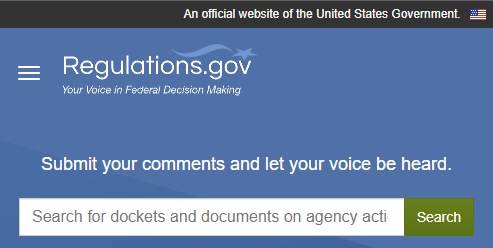
Clean design. Good call to action. Good URL. It's really clear that the government wants you to submit your comments. Many governments don't care about your comments at all.
#cryptocurrency Important! Comment period ends 10/30/23: https://t.co/ZU1cPESNZk can also request to speak at the public hearing planned Nov. 7 & Nov. 8 if there’s enough requests to speak. Outlines to speak must be received by Oct. 30 or the public hearing will be cancelled. Submit your substantive, relevant comments before the deadline! You can do so over the net, and anonymously if you wish. You can use https://t.co/Xge7em9CUo and https://t.co/3o73f63vCn to help you verify your comments are relevant and substantive. They're free and amazingly helpful. As an experiment, ask it to write you something and see how amazing it is. Ask it to expand on it. Ask it to include citations and quotes. Ask it to speak in the voice of a supreme court justice, for a laugh. Doing your own research has never been easier! Writing your own comments is fun!
Also ends 10/30/23: https://t.co/qmFVOJ03rD
Now, for the first possible APA violation. Searching cryptocurrency, cryptocurrencies, virtual currency or virtual currencies in that box in the screenshots doesn’t bring up all the important and currently open for comment results. Saying you want comments, and then hiding the issues from people searching for them; misleading them that they don’t exist, is perhaps a violation of the APA. For instance, the second link in this post doesn't appear in the results.
Richard Heart is not a lawyer, and this is not legal advice. Richard Heart hasn't read any of these. You should. You may make substantive and relevant comments anonymously by web form or alternative means. Time is running out.
Evidence attached.
Richard is doing more to make the world a better place, by getting eyeballs and engagement for good rule making, than most. And mind you, for a country he hasn't lived in for 20 years. Freedom ain't free. Do the work.
Let your voice be heard, submit your relevant & substantive comments now. The sooner you start, the sooner the regulators can be educated by you and fellow commenters may be inspired by reading your public comments as well.
You have all the tools you need to make a positive impact.
Attorneys. Richard Heart is here to help. Regulatory agencies must consider all relevant comments. “Consider” means more than you might think. They must explain, in writing, what they relied on, a reasoned basis for such, and they must not have failed to consider any important aspect. If they don’t, they can be found “arbitrary and capricious” by the courts and their rules undone. Substantive, relevant comments lead to better rules, or no new rules, as it mandates regulators do a better job. Basically, if you make a relevant, substantive comment, and they don’t respond to it, it can invalidate the rule they made.
Now that AI exists, it’s easier than ever to verify your comments are relevant and substantive. I've seen anonymous comments submitted by webform in the official record. Google it.
Furthermore, the courts might find that the agency didn’t provide you with good enough reasoning in their proposed rule for you to even make reasonable comments about, which is a different type of APA violation. Basically, the APA has lots of rules the agencies must follow, to the letter, or risk being overturned in court. Smart lawyers are referencing those rules in some of their comments. I’ve heard that by making more obvious the deficiencies in the agency’s notices, that if they make a bad rule final, that it might be easier in court to have it overturned. As you can show the judge what they ignored, what they violated, what they didn’t reason about properly, what they failed to disclose, etc. Then it’s easier for the judge to rule against them, as the agencies violations are made more obvious. Here’s an example of such a comment: https://t.co/7U2jKOkKS7
Citations: Section 553 of the APA (5 U.S.C. § 553)
Motor Vehicle Manufacturers Association of the United States, Inc. v. State Farm Mutual Automobile Insurance Co., 463 U.S. 29 (1983).
I’m not an attorney, but I’ve been told I’d make a good one. This is not legal or professional advice of any form.
WRITE SUBSTANTIVE, RELEVANT COMMENTS. BEFORE THE DEADLINES.