Treat all emails as potentially suspicious. Before clicking links or opening attachments, check the sender’s domain and use Gmail’s “Show original” to verify SPF, DKIM, and DMARC. If DMARC shows FAIL, do not trust the sender without independent verification. Even a PASS doesn’t guarantee safety.
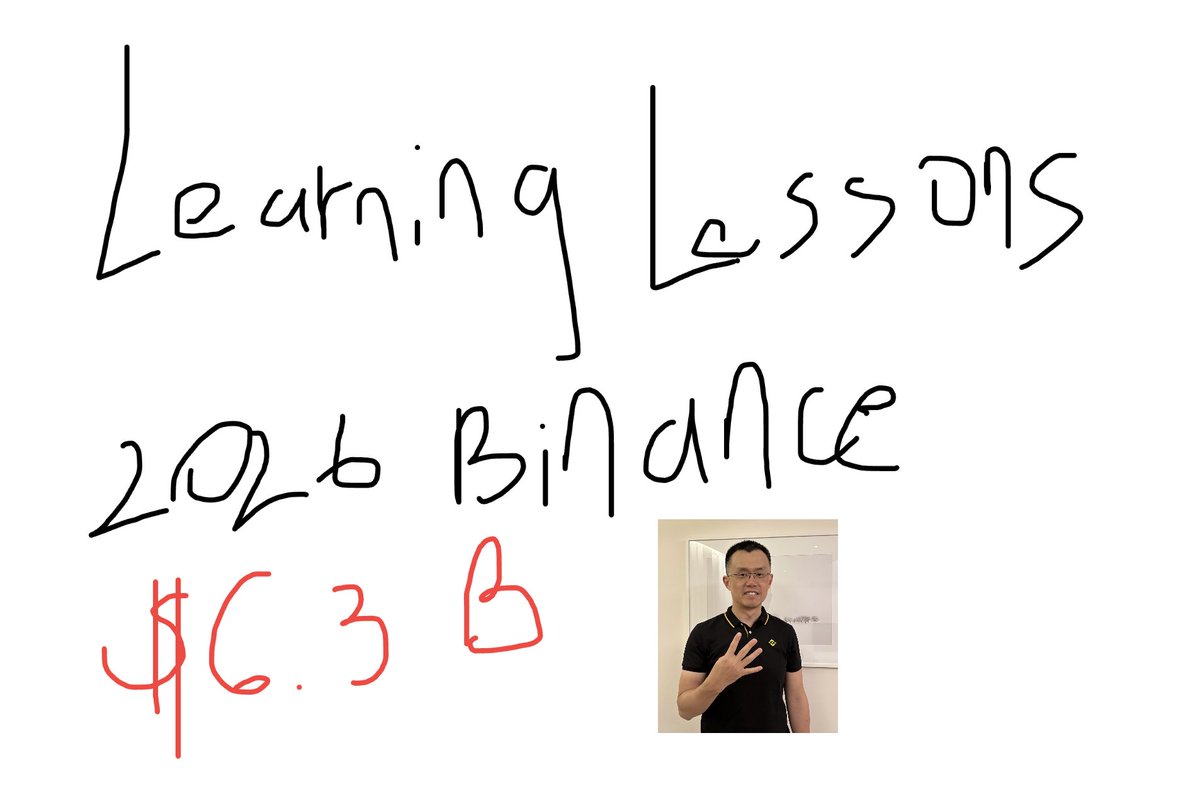
Some learning lessons / recs from @binance hack to crypto teams mixed with my own personal ramblings.
- Work devices are for work, personal devices are for personal. No exceptions.
- Never install or perform actions on a destination site from a search result. Google is notorious for shitty ad control policies in cases even displaying the legit domain -> then redirect to a malicious copy
- Software MUST come from approved channels, nowhere else. Your engineers will be annoyed but whitelisitng apps, extensions, cli tools / binaries, etc is a MUST in today's environment.
- Educate your employees and yourself on DPRK attack vectors!!! Every single employee entering your organization must be aware of the common DPRK attack vectors (meeting phishing, contagious interview, pollinrider tactics, etc.).
- Never clone / open a repo locally on your machine. Goes without saying but this a tried and true payload delivery mechanism for DPRK
- Use a freaking MDM to manage software it's 2026 (probs jamf or iru). One of the compromised engineer's got one of his Homebrew tools (pyenv) with a version that gave the attacker remote access. Use MDM to manage verified install channels for binaries and anything else. Push config changes (e.g VS Code task abuse), governance for AI tool usage, hunt across your fleet for vulnerable software, auto-updates, allowlists for app installations, execution allowlisting for binaries, etc.
- Only dedicated devices + dedicated accounts should have access to critical / existential actions. We've been doing this at Monad for a while and encourage eco teams to do the same.
- Make a threat model pls. In the words of @iphelix what are your crown jewels? You must know what are the existential threats to your company and defend them / build the controls so that even if you ARE compromised - it doesn't destroy you.
- Use an EDR (Crowdstrike or Huntress if smaller and need something more managed) and build custom IOAs based on threat intel (e.g this binance post-mortem). EDR did NOT detect for Binance - it doens't mean that's the case for you - write some damn custom detection rulesets.
- Egress controls on every device. Yes i know people don't like Zscaler but your employees are going to fall for the B-team tactics time and time again. Block newly registered domains by default and setup some automation to keep adding new IOCs from your threat intel.
- Speaking of threat intel - do you have any??? If you don't rss feeds are ok - X tho is really the gold mine you should setup custom detection feeds based on your organization's threat model. Otherwise can use cve.[now], cloudlfare zero-wire, and @_SEAL_Org threat intel as a basic starter. A lot of rss feeds are poop so focus on quality.
- No long-lived sessions or tokens on laptops. Short-lived, scoped, device-bound creds. Simple enough but hard to apply across the org.
- Yubikeys won't save you from malware. This is not the only line of defense but for phishing yes they're great so obv have them.
- Vendor risk is literally sky-high rn. You cannot allow employees or yourself to blindly install / run / grant perms to 3rd party platforms. Distrust by default and Oauth grants (hey google workspace admins i'm talking to you) should be set to read-only for ALL apps by default. If you rmr this is how Vercel got pwned.
- Signing policy should be enforced no matter who's calling. Destination allowlists, per-tx and velocity limits, hard block on EIP-7702 from hot wallets.
- Detection and alerting do you have any??? The attackers were incubating since JUNE - months of time to prep for lateral movement until they could escalate. How do you know you're compromised or behavior is suspicious?
- lastly just going to leave this here: https://t.co/sNVQiLnsKW
News to share: the Blocknative team has joined Deloitte. It's been eight-plus years. Thousands (more?) of conversations. Too many talks, panels, blog posts, and podcast appearances to track. A team that refused to ship anything we weren't proud of. Grateful for each and every one of you. Onward. 🫡
Seamless crosschain interop isn't coming. It's already here.
@cryptomachia demos Presto, an app letting you mint an NFT on @ApeChainHUB w/ funds on @RariChain in one click. No bridging required.
This is what Espresso's fast finality enables. Check it out at our @EFDevcon booth.
Feels like the right moment for this thread with the Robinhood L2 chain just announced.
Rollups were first conceived as a "scaling solution" for Ethereum. This framing is wrong imo. It's a new paradigm for the future of Web3 that will win out against monolithic chains (1/8) 🧵
🚨 New ep alert! Are intents even real?
In the latest entry to their "Are they even real?" series, @alysiatech & @ellierdavidson examine how intent bridges work and dive deep into @AcrossProtocol & its proposed Across Prime upgrade.
Timestamps:
01:02 - Intro
01:29 - Understanding intent bridges
03:34 - Liquidity bridges explained
04:34 - UX of intent bridges
05:54 - Risks and security in intent bridging
08:39 - Intent lifecycle
12:36 - Capital efficiency in Across Prime
13:56 - How Across Prime improves capital efficiency
19:35 - Technical details of Across Prime
23:19 - Introduction to relay improvements
23:51 - Challenges in rebalancing funds
26:06 - Capital efficiency and yield
27:54 - Intent bridging & ERC 7683
30:53 - Canonical assets and NFT ridging
36:41 - Fair exchange problem in distributed systems
42:09 - Future of intents in blockchain
44:42 - Final thoughts