🧵 (7/7) Instead of increasing symptoms in established risk groups (like familial history of mental illness), the pandemic led to a redistribution of depressive symptoms burden towards segments of the youth population previously considered to be low-risk.
Which polygenic score is the best predictor of major mood and psychotic disorders in youth?
#neuroticism is the unlikely winner.
https://t.co/kVwig3zMaF
Polygenic scores for neuroticism and subjective well-being predict the risk of major mental illness independently of family history. https://t.co/tiCsZvv8pc
🧵(6/7) Offspring of controls w low neuroticism PGS had the lowest probability of onsets, followed by offspring of controls w high neuroticism PGS, then offspring of affected parents w low neuroticism PGS, and finally offspring of affected parents w high neuroticism PGS.
@NbTenants - just got a notice that my Saint John NB rent is set to increase by 11.5% in March 2023. Any word on extending the 3.8% cap on rent increases into 2023? #rentcontrolnow
Great work by @VallisEmily! #CBT is effective in reducing #anxiety in young #children and reduction is maintained over follow-up. So glad I could be involved with this work!
I’m very excited to share my first meta-analysis 📚
Cognitive-behavioural interventions for prevention and treatment of anxiety in young children: A systematic review and meta-analysis
@AlysonZwicker@RudolfUher
https://t.co/P1XjyjeNp0
@shanniesci @AcademicChatter I printed out my thesis and had it bound with a coil at Staples. I put little sticky notes indicating the start of chapters, and the location of figures and tables. I found this super helpful - I could just calmly flip to a chapter/fig/table when asked a question about it!
Most questionnaires are too long. Not this one. Depression, anxiety, affective lability, sleep, psychotic and basic symptoms, all measures with a single page youth-report YETI. Good for adolescents and young adults @ProjectFORBOW
https://t.co/TXQ9TLJAY3
"We never know what he will feel like the next hour."
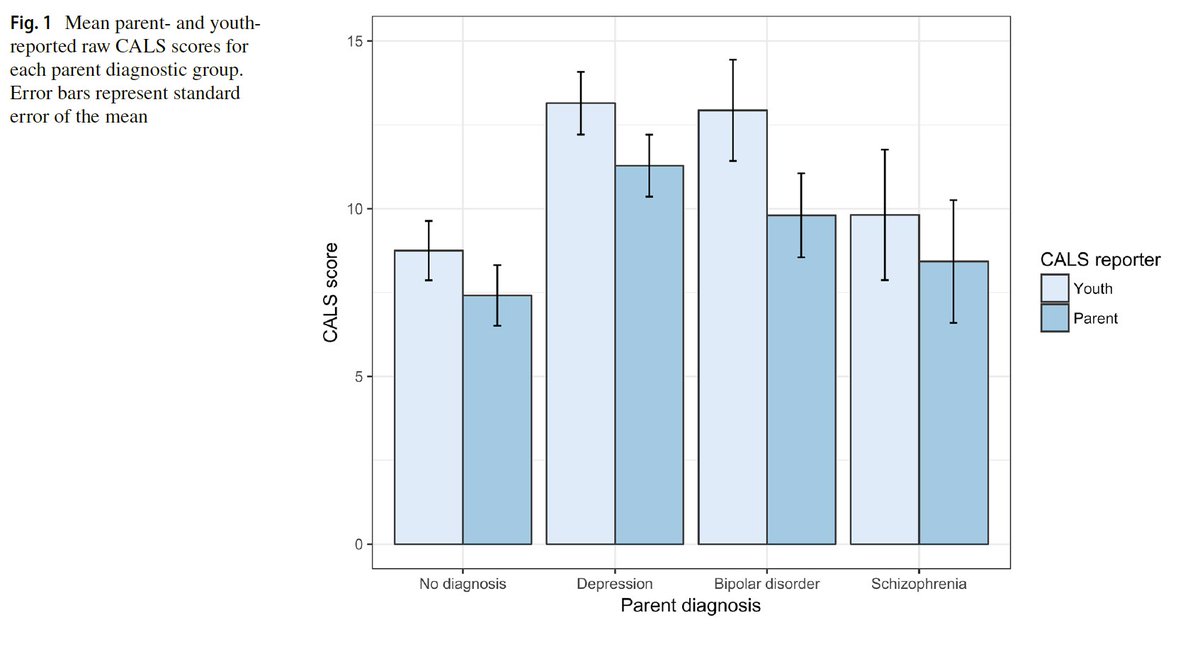
Affective lability increased in sons and daughters of parents living with depression, bipolar disorder. @ProjectFORBOW@AlysonZwicker https://t.co/A6VFprGxNf
Genetic predisposition to #ADHD is associated with increased risk of adversity (maltreatment, bullying, socioeconomic disadvantage) - among individuals with and without ADHD. https://t.co/Uuh0qdJdzX @ProjectFORBOW@Dal_Psychiatry@NSHAResearch@TheJCPP