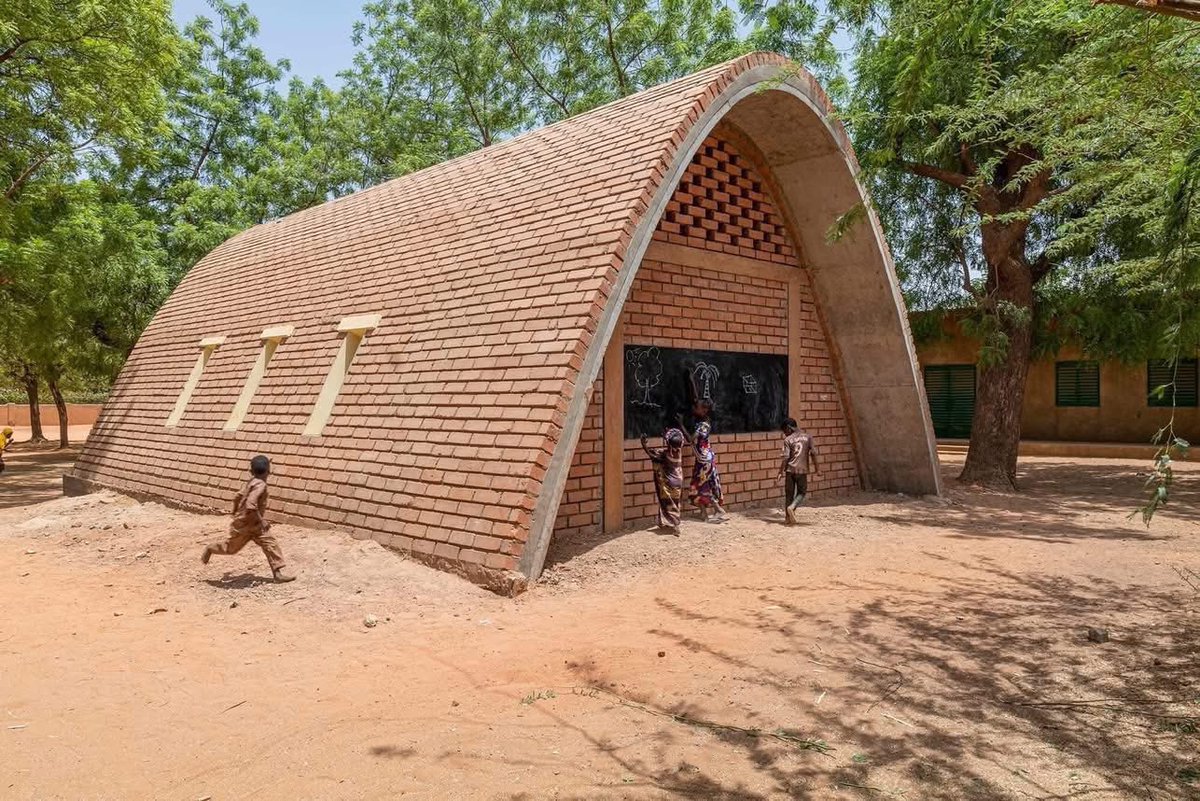
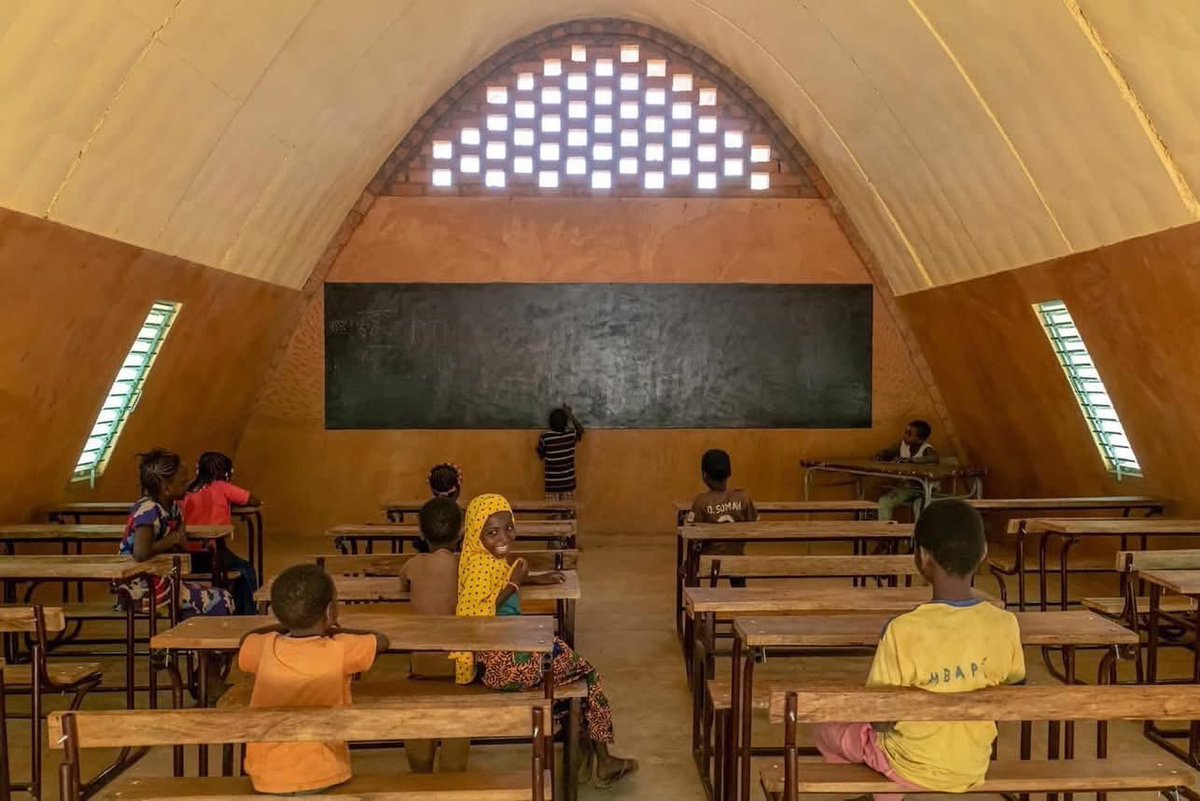
Ghana needs to start researching architectural materials that can provide natural ventilation for housing projects. The solution is a low-tech, cost-effective use of clay or earth tubes, which are sustainable, zero-energy, passive geothermal solar cooling systems. Classrooms must be built from clay, which is a natural temperature regulator, absorbing heat during the day and releasing it at night.
Educational structures in Ghana need a new shift in architectural designs that help address issues of climate change.
The attached images are of the Class Rouge project in Niger, which utilizes SEB (Stabilised Earth Blocks), a bioclimatic material made from locally sourced laterite-rich soil stabilized with 6–7% cement.
This offers excellent thermal insulation, reducing classroom temperatures by 5–6 degrees compared to traditional cement buildings.
We need thinkers who can replicate this innovation to provide an environment that is not only good for learning but also conducive for residential apartments.
So you people…
You hound me for months to release the film, I do and it’s taking some of you forever to watch it? For free…..Hmmmmmmmmm
I am not happy oo, yoooo 😔
#forloveandcountry2 streaming on Sparrow Station on YouTube oo. Watch here: https://t.co/V7DBzW8GeH
I would never in a million years have imagined that I would be speaking on a global stage but here I am. Today, I had the incredible honor of sharing a fireside session with the legendary Chef Andrew Zimmern at the BRIDGE Summit, the biggest media summit in the world.
As part of KNUST’s Campus Cat Identity Initiative, official ID cards have been issued to resident cats Kwasi Joe and Kofi Sam at the Main Administration enclave.
#KNUST#SustainableCampus#CommunityCare
Learn more here⬇️
https://t.co/V0FFvi27fV