Believer in the gospel of Jesus Christ according to the Scriptures.
HR practitioner writing about work, people and Nigerian politics.
Proud member SLC Global.
Every state I've visited in the last month is painted with APC banners. I built this NDC-themed DP maker so we paint the online space with it.
https://t.co/gmfLBz8OEN
Generate yours, drop in the quotes/comments, and use it everywhere!
REPEATED ATTACKS ON OUR SUPPORTERS IN DELTA STATE: AN URGENT APPEAL FOR ACTION
I am profoundly troubled by the continuing attacks against our supporters throughout Nigeria, especially the latest tragic incident in Delta State, in which four people were killed during an attack on supporters of the Nigeria Democratic Congress (NDC). I unequivocally condemn this senseless act of violence.
It is no longer sufficient for those responsible to fund the dissemination of false claims against the opposition. They have now escalated to the appalling practice of murdering innocent Nigerians solely because of their political affiliations. This is completely unacceptable.
The deceased include:
1. Hon. Moses Anaughe, immediate past Federal Commissioner, Federal Character Commission.
2. Comrade Akima Efenena Umukoro, former President of the Urhobo Progress Union (UPU), Youth Wing.
3. Nyoren Okoro, an NDC chieftain.
4. An additional victim whose identity has not yet been established.
Fifteen other people sustained critical injuries and were hospitalised. Among them are Hon. Evance Ivwurie, Chairman of Senator Ovie Omo-Agege’s Campaign Organisation, and Comrade Chuks Erhire, Director-General of the same organisation.
I offer my deepest condolences to the families of those who died and pray for a swift recovery for the injured.
I urge the security agencies to conduct a comprehensive investigation, identify those responsible and their sponsors, and ensure they face justice. The authorities must also act swiftly to safeguard Nigerians engaged in political activities.
Every Nigerian has a constitutional right to support any political party or candidate without fear of intimidation or violence. Political differences must be resolved through persuasion and the ballot, never through the use of bullets.
No political ambition is worth the life of even one Nigerian. -PO
The Anambra experience demonstrated that proper planning, accurate information, prudent management of resources, and genuine commitment to the welfare of citizens can make a meaningful difference.
What we achieved between 2006 and 2014 was not the elimination of poverty, but the establishment of a practical framework for confronting it. We can adapt and expand that experience nationally.
I have consistently spoken about the need to move millions of Nigerians out of poverty. In discussing this challenge, I have often drawn attention to the experiences of China and India, countries that have lifted hundreds of millions of their citizens out of poverty through sustained economic reforms, investment in productive sectors, infrastructure, agriculture, education, and deliberate policies that expanded economic opportunities.
Their experiences demonstrate that mass poverty is not an inevitable condition of a nation. It can be substantially reduced through purposeful leadership, long-term planning, productive investment, and the consistent implementation of policies that place people at the centre of development.
If China and India could undertake such transformations, Nigeria can also do so. We must study what worked in those countries, understand the differences in our circumstances, and adapt the lessons to our own environment. We do not need to reinvent the wheel; we need the commitment to make proven development strategies work here.
A country cannot be prosperous when millions of its citizens go to bed hungry. Our ambition must be to move Nigeria from managing poverty to systematically defeating it.
That is the Nigeria we must build: one where no citizen is abandoned, opportunity is not determined by geography, and the dignity of every Nigerian is protected.
In the next instalment, Series 8, we shall examine what we did in commerce and industry. -PO
Our objective was to improve agricultural productivity, facilitate access to markets, and ensure that farmers earned better incomes from their labour.
We understood that a farmer who cannot conveniently transport produce to the market remains poor, regardless of how much land he cultivates. This was why agricultural support had to go hand in hand with rural infrastructure.
4. EMPOWERING YOUTHS, SUPPORTING POOR HOUSEHOLDS, AND PERSONS WITH DISABILITIES
We established and equipped skill-acquisition centres to provide young people with vocational training and opportunities for self-employment.
Beyond training, we provided financial support to 500 youths who had acquired productive skills, giving each ₦100,000 to establish or strengthen their businesses. The intention was to move them from unemployment and dependence to productive enterprise.
We also distributed more than 500 specially designed wheelchairs to persons living with disabilities, improving their mobility, independence, and participation in society.
Through conditional cash-transfer programmes under the Millennium Development Goals framework, we provided financial assistance to extremely poor households. These interventions were designed to address immediate hardship while preventing poverty from being passed from one generation to another.
We believed that no young person should be condemned to poverty because of a lack of opportunity, and no person living with a disability should be excluded from society’s economic and social life.
5. RESTORING DIGNITY TO PENSIONERS AND PROTECTING THE ELDERLY
We inherited substantial pension and gratuity arrears owed to retired public servants. We embarked on their systematic liquidation. We spent over ₦35 billion to clear the stock of pension and gratuity arrears.
Beyond pensioners, we recognised another category of vulnerable citizens: elderly people who had neither pensions nor financially capable children to support them.
Consequently, we introduced a monthly social security stipend for indigent citizens aged 75 and above who were not retirees and had no successful children or dependable family support to meet their basic needs. The programme covered approximately 30,000 beneficiaries.
Importantly, we did not treat this as a temporary political gesture. We gave the initiative a legal foundation through the Anambra State Indigent Relief Law 2013, thereby institutionalising the state’s responsibility towards these vulnerable citizens.
We believed that growing old without a pension or family support should not condemn anyone to hunger and indignity. The government had a responsibility to provide a safety net for such citizens.
These interventions reflected our commitment to protecting both those who had served the state and those who, through no fault of their own, were without dependable means of survival.
CONCLUSION: FROM MANAGING POVERTY TO DEFEATING IT
Nigeria faces an alarming food and poverty crisis. According to the Food and Agriculture Organisation (FAO), approximately 36.3 million Nigerians, representing 17 per cent of the population covered by its analysis, faced severe acute food insecurity between June and August 2026, compared with 30.6 million during the corresponding period in 2025.
Behind these figures are families struggling to feed themselves, children facing nutritional deprivation, and farmers unable to earn adequate incomes.
We cannot confront this crisis through disconnected interventions, occasional cash transfers, and emergency food distribution alone. Nigeria needs a comprehensive strategy addressing the structural causes of poverty.
We must invest in agriculture, open up neglected rural communities, support small businesses, expand access to affordable credit, equip young people with practical skills, and establish effective social protection for the elderly, widows, persons with disabilities, and other vulnerable citizens.
NIGERIANS, GO AND VERIFY (7)
LIFTING THE VULNERABLE : ANAMBRA’S BLUEPRINT FOR POVERTY ALLEVIATION AND SUSTAINABLE EMPOWERMENT (2006–2014)
Economic growth that does not translate into improved living conditions for ordinary citizens is incomplete. This is one of our fundamental concerns with President Bola Ahmed Tinubu's government. Development must ultimately be measured by its impact on human lives, particularly those of the poor and vulnerable. This was underpinned by the Anambra Integrated Development Strategy (ANIDS). We believed that infrastructure, education, healthcare, agriculture, and social protection must reinforce one another. Poverty was not merely a shortage of money; it was also a lack of access to opportunities, productive resources, and the basic conditions necessary for a decent life.
Our poverty alleviation strategy, therefore, went beyond temporary handouts. It focused on restoring dignity, creating economic opportunities, and equipping vulnerable citizens with the means to become self-reliant.
Our approach attracted recognition beyond Anambra. In May 2010, Magnus Kpakol, then National Coordinator of the National Poverty Eradication Programme (NAPEP), commended our commitment to poverty reduction, declaring: “We are prepared to support you in the excellent work you are doing in Anambra State.”
1. POVERTY MAPPING: KNOWING WHERE POVERTY LIVES
We recognised that poverty could not be effectively addressed without knowing where it was concentrated and what caused it. We, therefore, undertook a poverty-mapping exercise to identify the most deprived local government areas and communities.
The exercise revealed that some of our poorest communities were also important food-producing areas. Their challenges included poor access to markets, agricultural inputs, electricity, water, and other economic opportunities.
Areas including Anambra West, Orumba South, Awka North, and Ogbaru required particular attention. The findings informed our development priorities, enabling us to direct roads, agricultural support, and social interventions toward neglected communities.
2. EMPOWERING WOMEN, WIDOWS, AND COOPERATIVES
We recognised that rural women, widows, and indigent households bore a disproportionate burden of poverty. Across the 21 local government areas, we provided financial assistance and productive support to thousands of beneficiaries.
Our administration provided financial assistance to support the establishment and expansion of small businesses and farming activities. We also introduced revolving loan schemes to promote enterprise development, economic self-reliance, and improved livelihoods.
We distributed productive equipment, including sewing machines, generators, ovens, cookers, hair dryers, shoe-making machines, and welding equipment. The objective was to help beneficiaries establish sustainable livelihoods rather than remain dependent on government assistance.
We also promoted access to microcredit and cooperative financing to enable small entrepreneurs to expand their businesses, improve their incomes, and create employment.
Our philosophy was simple: rather than merely giving people money to survive today, the government should help them acquire the means to earn a living tomorrow.
3. AGRICULTURE AND FADAMA: MAKING RURAL COMMUNITIES PRODUCTIVE
Agriculture was central to our poverty-reduction strategy because many rural households depended on farming.
Through partnerships with the Federal Government, the World Bank, and other development partners, particularly under the FADAMA programme, we supported farmers with finance and productive assets.
In November 2009, our administration disbursed millions to FADAMA Community Associations across the state. By October 2010, the National FADAMA office was commending Anambra’s commitment. Its National Project Coordinator, Buka Tijjani, represented by Charles Ugwuona, described Anambra as the leading state in the programme.
I’m grateful for the Church: people from different backgrounds brought together by faith in Jesus Christ.
As we gather today, may we make room for one another, learn from God’s Word and encourage those who need it.
Our local government representatives should be accessible to the people they serve.
When was the last time your councillor held a meeting where residents could raise concerns and get an update on what had been done?
Governance should be felt in our communities too.
Election season should be a time to question ideas, not threaten people for disagreeing.
I can support my preferred candidates and still listen to someone who sees things differently. Nigerians deserve a political conversation where disagreement doesn’t become hostility.
ANAMBRA STATE : ADVANCING EDUCATION, ENERGIZING INDUSTRY AND SHAPING A NEW NIGERIA
After returning from an official working visit to the United States of America, I arrived in Onitsha, Anambra State, yesterday, 20th November 2026, to continue our nationwide series of town hall meetings.
I began the day by visiting my alma mater, Christ the King College, Onitsha. Together with my friends, I am supporting the construction of a Teachers’ House to preserve the supportive teaching and learning environment for which the school is known. I commend the management and students of this distinguished institution for upholding its high standards.
We then travelled through Head Bridge, Ochanja, and Main Market, engaging with workers, traders, drivers, and other hardworking Nigerians who are striving to earn a living despite the challenging economic conditions affecting the country.
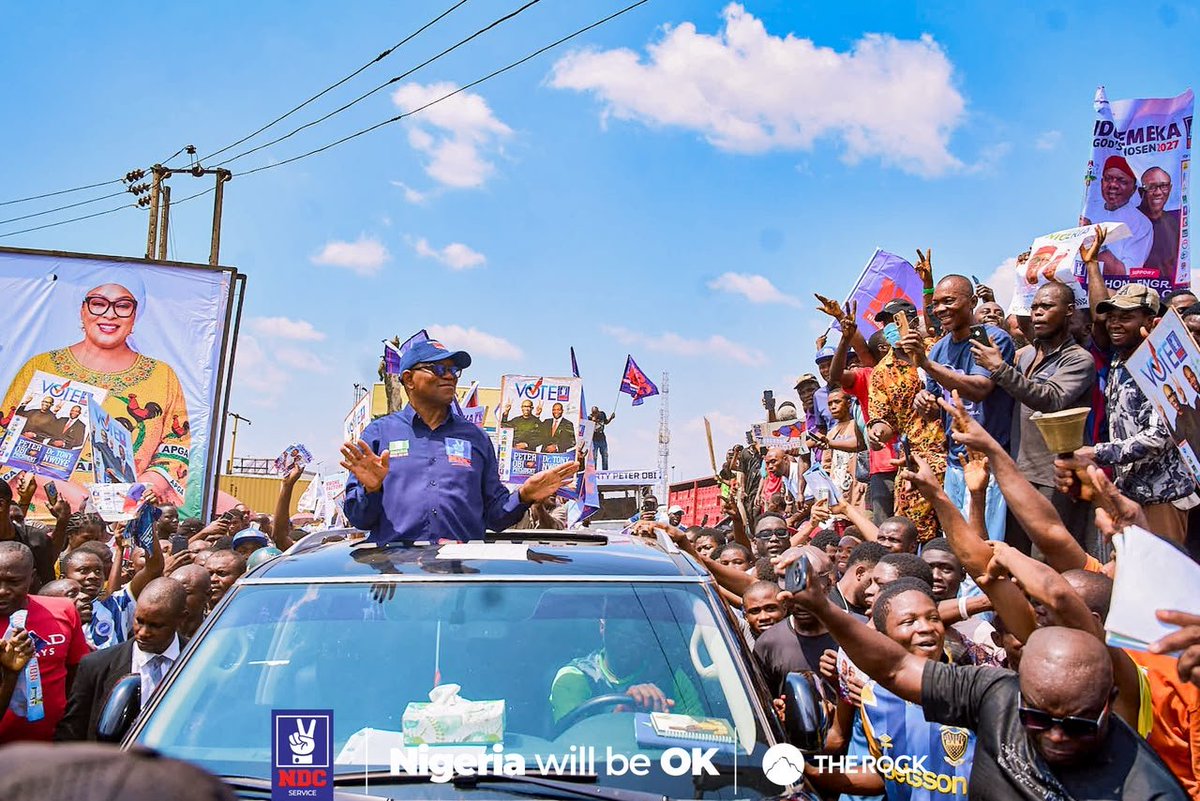
At the Archbishop C. J. Patterson International Auditorium Complex, Onitsha, where our town hall meeting took place, I reaffirmed the commitment of His Excellency, Senator Rabiu Musa Kwankwaso, and me to promoting national unity and taking decisive action to address the insecurity affecting many parts of Nigeria.
I also assured our numerous supporters and well-wishers of our determination to generate, transmit, and distribute at least 10,000MW of electricity to drive production and revive the country’s major industrial centers.
We also underscored our key priorities, especially substantial investment in education through the construction of at least 40,000 additional classrooms and the recruitment of the necessary number of teachers nationwide to tackle the problem of out-of-school children.
In the healthcare sector, we are committed to building at least 10,000 fully operational primary healthcare centers, with at least one located in every ward nationwide, thereby reinforcing the foundation of healthcare delivery in Nigeria.
These initiatives, together with other purposeful investments and policies, will contribute to our efforts to expand productive capacity and lift our people out of poverty.
I express my gratitude to the good people of Anambra State for their warm welcome and hospitality. I also commend our party leaders and members for their continued commitment and hard work in advancing the ideals of our party and engaging with our supporters.
NDC ka’ ma!
A New Nigeria is POssible, and Nigeria will be OK!
-PO
NIGERIANS, GO AND VERIFY (6)
SECURING LIVES AND PROPERTY: PARTNERSHIP WITH SECURITY AGENCIES
Peter Obi
In the preceding instalments, I explained how we approached governance under the Anambra Integrated Development Strategy (ANIDS), beginning with strengthening state institutions and investing in education and other critical sectors. Our conviction was that development must rest on strong institutions, capable human beings, and a secure environment.
No meaningful development can take place where lives and property are constantly under threat. Education, commerce, investment, and other productive activities can only flourish when people feel safe. This informed our approach to security. We understood that the responsibility of protecting lives and property could not be discharged through speeches and declarations alone. It required deliberate investment, effective coordination, and sustained partnership with the security agencies.
When we assumed office, Anambra faced serious security challenges. Armed robbery, bank attacks, kidnapping, and other violent criminal activities had created an atmosphere of fear. In 2006, I personally approached the then Inspector-General of Police, Mr Sunday Gabriel Ehindero, to seek urgent intervention. Following our appeal, the police authorities constituted a special team comprising experienced officers, including the late Haruna John, Alhaji Amusa Bello, and others, to confront the security challenges in the state.
We therefore made security a major priority of our administration, recognising that government must provide both the leadership and the resources required to enable security agencies to perform their duties.
EQUIPPING THE SECURITY AGENCIES
We believed that those entrusted with protecting our people must be adequately equipped. Accordingly, our administration, using funds from the security votes, provided over 600 patrol vehicles to various security agencies, including the Police, Army, Civil Defence, Customs, Immigration, NDLEA, Road Safety, Prisons, SSS, Navy, and community vigilante organisations.
Our support went beyond vehicles. We provided Armoured Personnel Carriers (APCs), armoured Hilux patrol vans, communication gadgets, repeater and linker stations, base stations, mobile vehicular radios, walkie-talkies, generators, and other logistical requirements. We also used the same security votes to provide financial support for their operations, including fuel, weekly allowances, and other essential needs of security personnel.
We paid particular attention to community security because we understood that effective policing must have a strong local presence. Again, using funds from the security votes, we provided billions of naira to the 177 communities in Anambra State to strengthen security in their respective areas. We directed traditional rulers and town union presidents to establish vigilante groups under police supervision, with the police providing uniforms for proper identification. We also contributed towards the payment of their salaries.
Additionally, we provided 250 patrol vehicles to communities across Anambra State. These vehicles were manufactured by Innoson Vehicle Manufacturing Company in Nnewi. Some towns received more than one, depending on their size and security needs. This initiative was also extended to universities and other large institutions in the state.
We also recognised that markets were particularly vulnerable because of the volume of commercial activities and the large number of people who visited them daily. Thus, in March 2014, we presented security vehicles to major markets in Onitsha and its environs. The beneficiaries included Bridge Head Market, Ogboefere Market, Building Materials Market, Ogidi, Onitsha Main Market, Marine Modern Market, Ogbaru Main Market, Ose Okwodu Market, Electronics Market, and the Amalgamated Market Traders Association.
A special shout-out to @BudgITng and all the well-meaning Nigerians who have supported our work through donations. We sincerely appreciate your generosity and belief in what we do.
I'm still accepting applications from prospective students either via the 1+3.5 route (masters + PhD) or 3.5 route (PhD only) in comparative and/or environmental politics, to be funded through the North West Social Science Doctoral Training Partnership (NWSSDTP) competition.
Quick one, I need the following.
1. Senior Risk and Compliance Officer
2. Head of Operations
3. Project Manager
4. Application Support Officers
5. Customer Engagement Officers
6. Head of Sales and Business Development
📍Abuja
Mode- Onsite
Ecosystem - ICT and Payment Services
My DM is open to receive your resumes.
The mock election is a welcome idea, but why is INEC keeping the details to itself? Why aren’t political parties, civil society groups and the media being carried along?
So far, everything about this exercise has been shrouded in secrecy.