I’ve been to Saratov too. Although there’s a conservatory building in central Saratov built in a “German style” (photo 1), most Volga Germans in the Russian Empire lived in villages rather than cities. In Saratov itself, according to the 1897 census, 88.8% of the population was Russian and 6.1% was German.
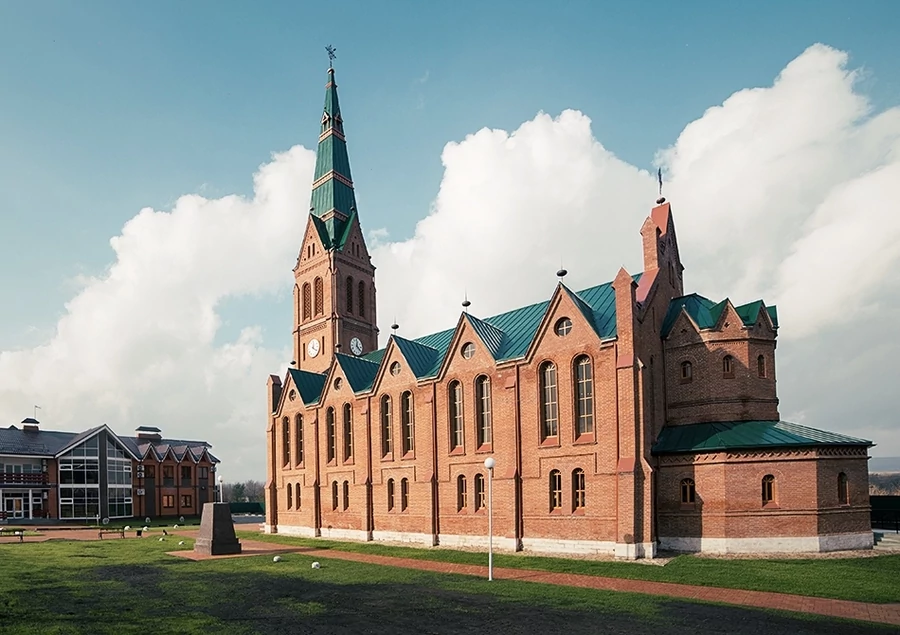
Still, even today, if you go out into the surrounding countryside, you can find their old Lutheran churches in villages across Saratov Oblast (photos 2, 3, and 4).
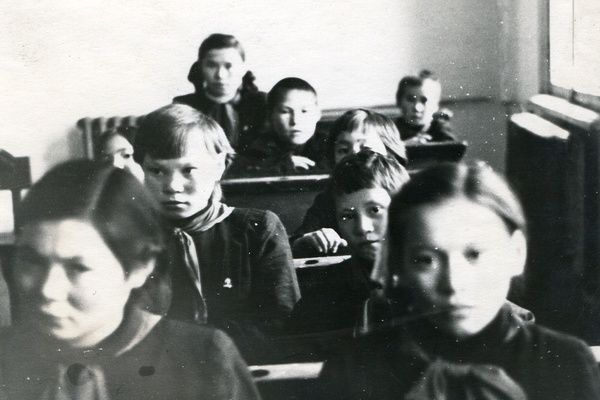
@HorasaniTurki Yes, I agree. By the way, here is one photo of such boarding schools as an example. These are Nenets people from the Yamal Peninsula, a different northern people, though they had the same experience too.
I only know a few words: “gamto” means “hello,” and “koyana” means “reindeer.”
Unfortunately, neither I nor my Koryak mother and grandmother know our native language.
In the time of the Russian Empire, the Koryak people could live by their own laws. They only had to pay tax.
Everything changed when the communists came to power.
In 1956, a law (15.09.1956 №1290) came out. It said that all children of the northern peoples had to live and study in boarding schools. These were closed schools, and the children stayed there for 9 months every year, far from their families.
Their families lived a nomadic life, so they could not be with their children.
In those boarding schools, children learned only Russian.
My grandmother was in one of those boarding schools, so she already did not know the language.
After boarding school, many children did not go back to their parents’ way of life. They started their own lives, worked, and lived in one place, for example at fish farms.
Because of this, we do not know our native language now. The same happened to many other northern peoples too.
Ve bir şey daha. Benim gibi Türkçe öğrenen birçok yabancı için en güzel kelimelerden biri “kütüphane”.
Evet, biliyorum: “kitab” Arapçadan geliyor, “hane” da Farsçadan geliyor. “Hane” ev demek.
Sonra bu kelime Osmanlı Türkçesi içinde değişiyor ve bugünkü Türkçede çok güzel bir ses kazanıyor.
Mesela modern Farsçada da benzer bir kelime var. O da yaklaşık “ketabkhaneh” gibi söyleniyor. Benim kulağıma göre onun sesi o kadar güzel gelmiyor.
@AwGabrel@UBERSOY1 На карте изображены точками только центры (столицы) губерний или областей. Например, нет также Одессы, потому что тогда она не была центром губернии. Но вы правы, я сделаю позже более подробную карту с 500 самыми большими городами.
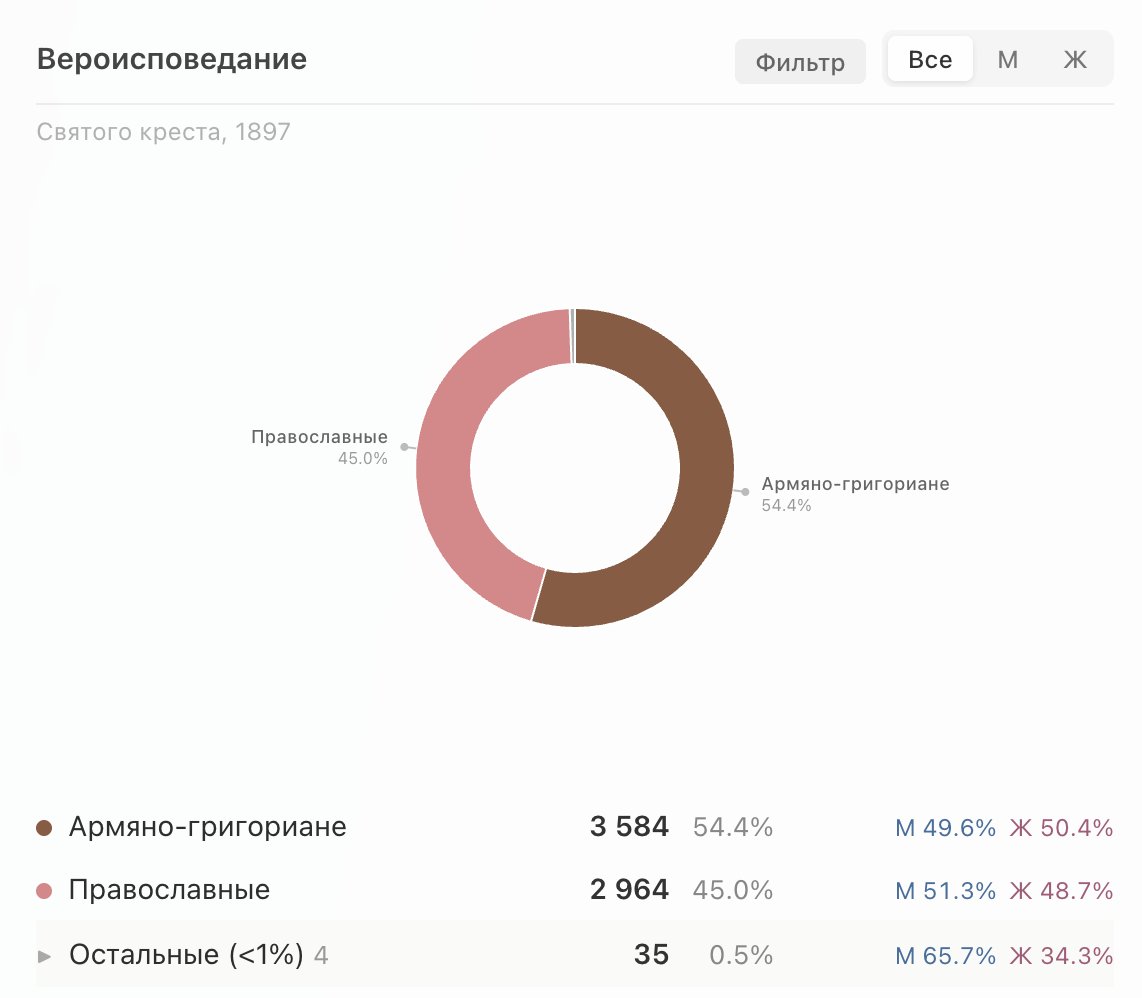
Речь о городском населении. Да, в Кизляре и городе Святого креста (сейчас Будённовск) на первом месте были армяне. Города небольшие. В тех районах были станицы с населением в несколько раз больше, но они не считались городами. Сельское население в подавляющем большинстве было православным, конечно.
@dykitantsi@Neolsanolgelme@UBERSOY1 You can look at the census data yourself and compare it; old books (published in 1899–1904) along with the census results and all the statistics are available to everyone on the websites of Russian archives.
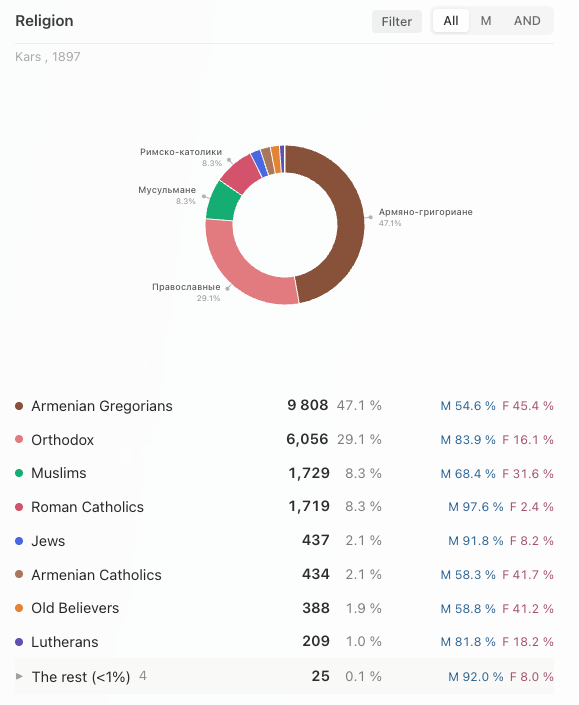
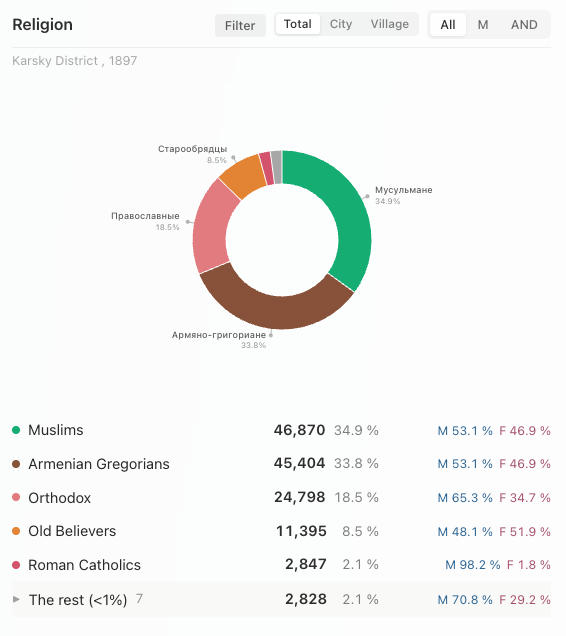
Merhaba, ben haritanın yazarıyım. 1897 yılında Kars Oblastı’nda şehir statüsüne sahip olan sadece Kars’ın kendisiydi. Bu sadece çok büyük bir district. Diğer yerleşimler Ardahan, Oltu ve Kağızman’dı, fakat o dönemde şehir sayılmıyorlardı. Aşağıda onun dinsel yapısı var. Ancak çevredeki uyezdde (district, yani ilçe gibi) çoğunluk Müslümandı. Bunlar benim sitemdeki nüfus sayımı verileri. Evet, biraz Türkçe konuşuyorum, fakat ben Rusya’danım.
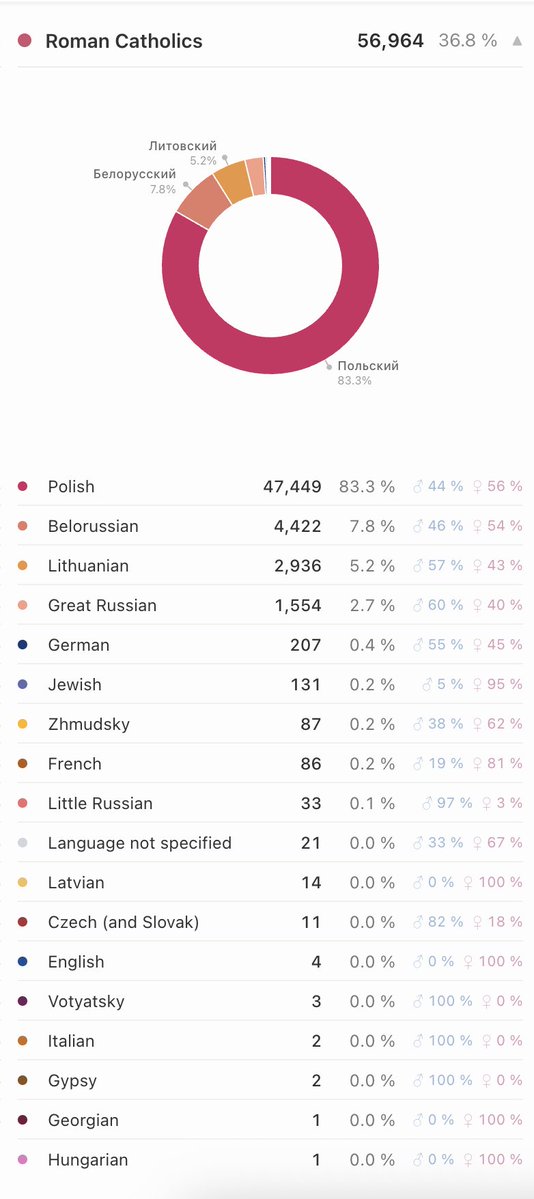
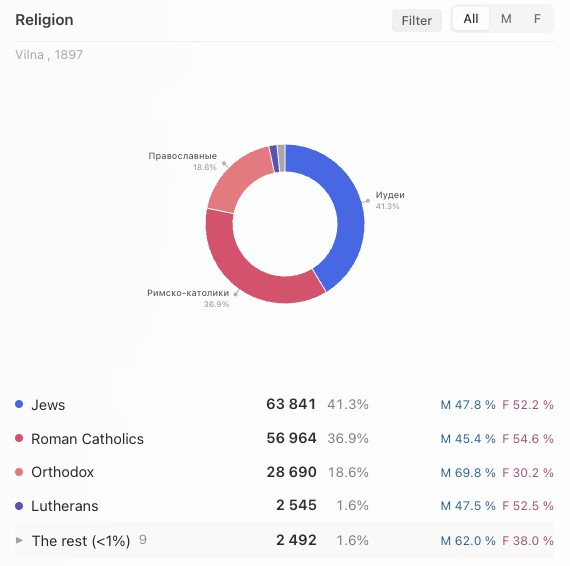
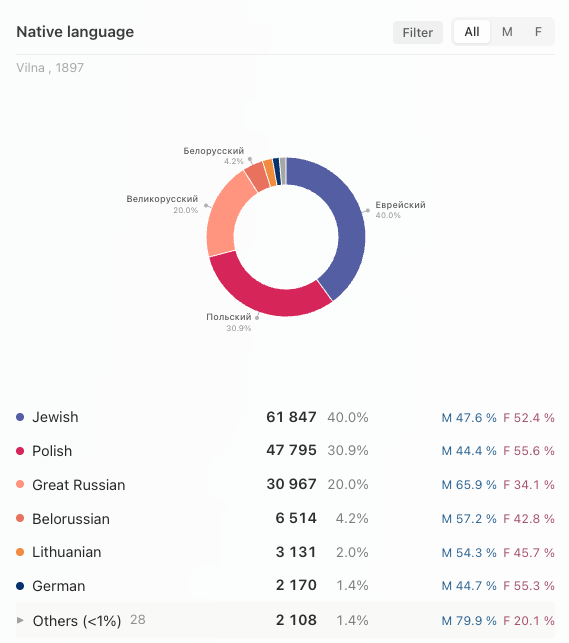
@Lingenaw@UBERSOY1 According to the 1897 census, Catholic Poles weren't a majority in Vilnius (Wilno/Vilna), but they were certainly numerous. Here are the 1897 figures:
В моём университете был курс по истории древней Сибири, и про этот памятник. Так вот, в 2020 году археологи провели радио-углеродный анализ. Они выяснили, что Пор-Бажын построили в 777 году уйгуры. А каганом уйгурского каганата с 759 по 780 год был Идигань (он же Bögü Qaghan), обратившийся в манихейство. Идиганя убили во время восстания. Скорее всего, Пор-Бажын был манихейским монастырём, а потом был заброшен после смерти кагана. Но это, конечно, предположение, но все в целом соглашаются с этим.
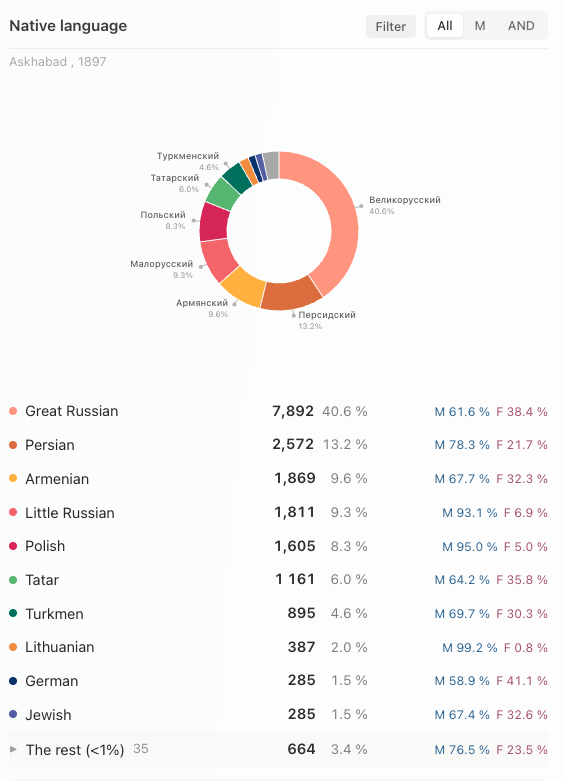
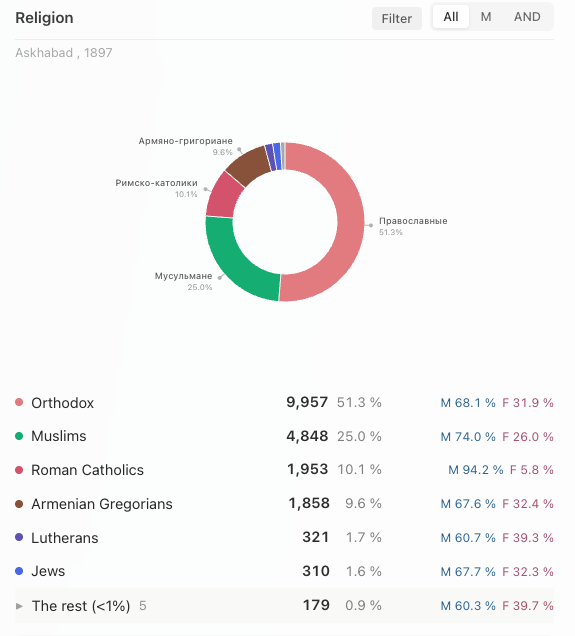
@Booey1901 @BlakeGa53596725@UBERSOY1 In 1897, the cities in Turkmenistan were very small. And I think the majority of people there were soldiers and traders. Here are the figures for Ashgabat, for example, for 1897. The rural population was, of course, predominantly Muslim and Turkic.
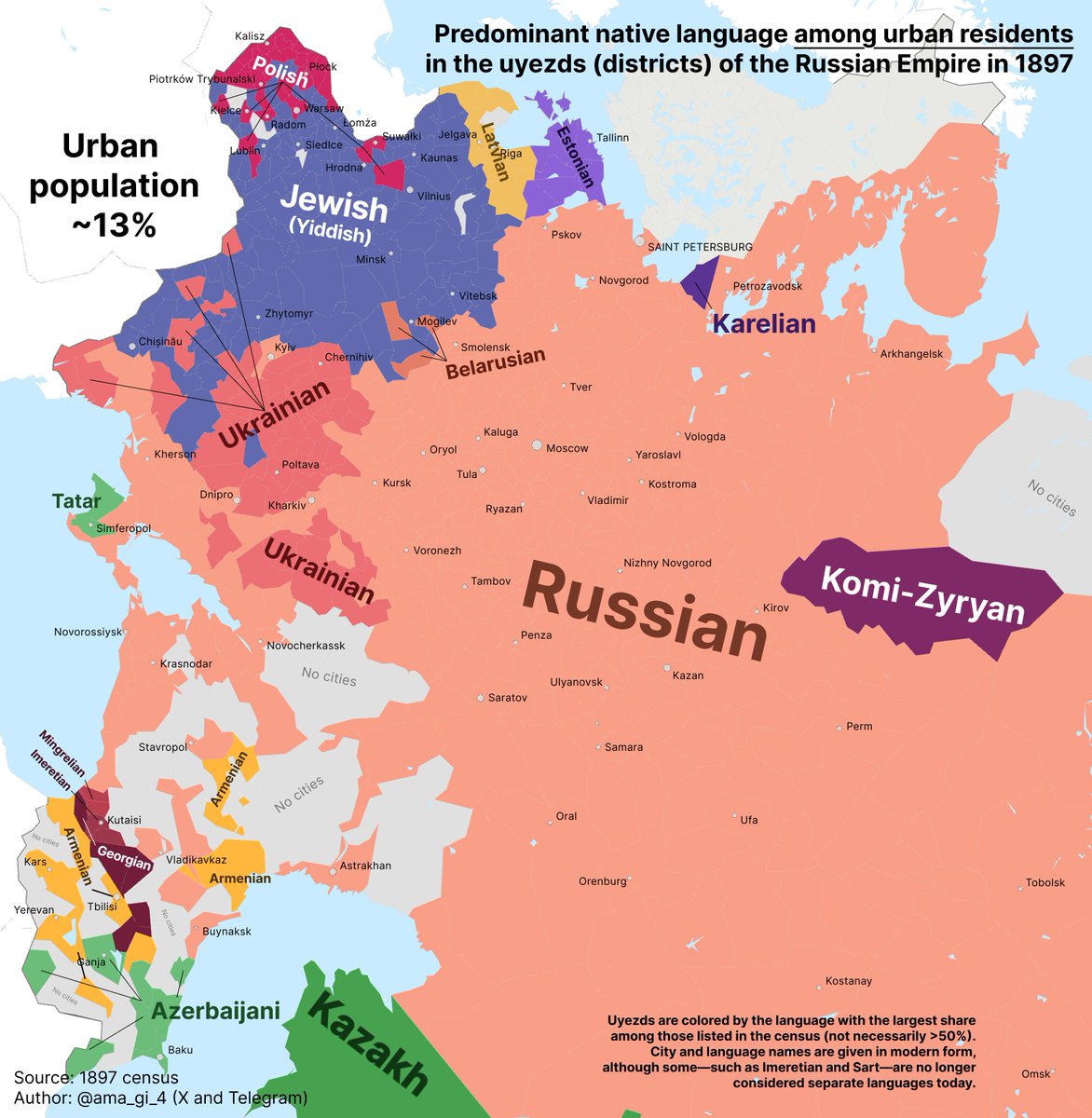
Predominant language among urban residents in the Russian Empire (1897)
This map illustrates the largest language groups within the urban populations of the Russian Empire’s districts based on the 1897 census.
Top languages among the total urban population:
- Russian — 52.5%
- Yiddish — 15.0%
- Polish — 8.7%
- Ukranian — 7.4%
- German — 2.5%
@UBERSOY1 В мае выйдет обновление с грамотностью и сословиям. Промышленность, здоровье и семейный статус в процессе тоже. Будет вся информация со временем.
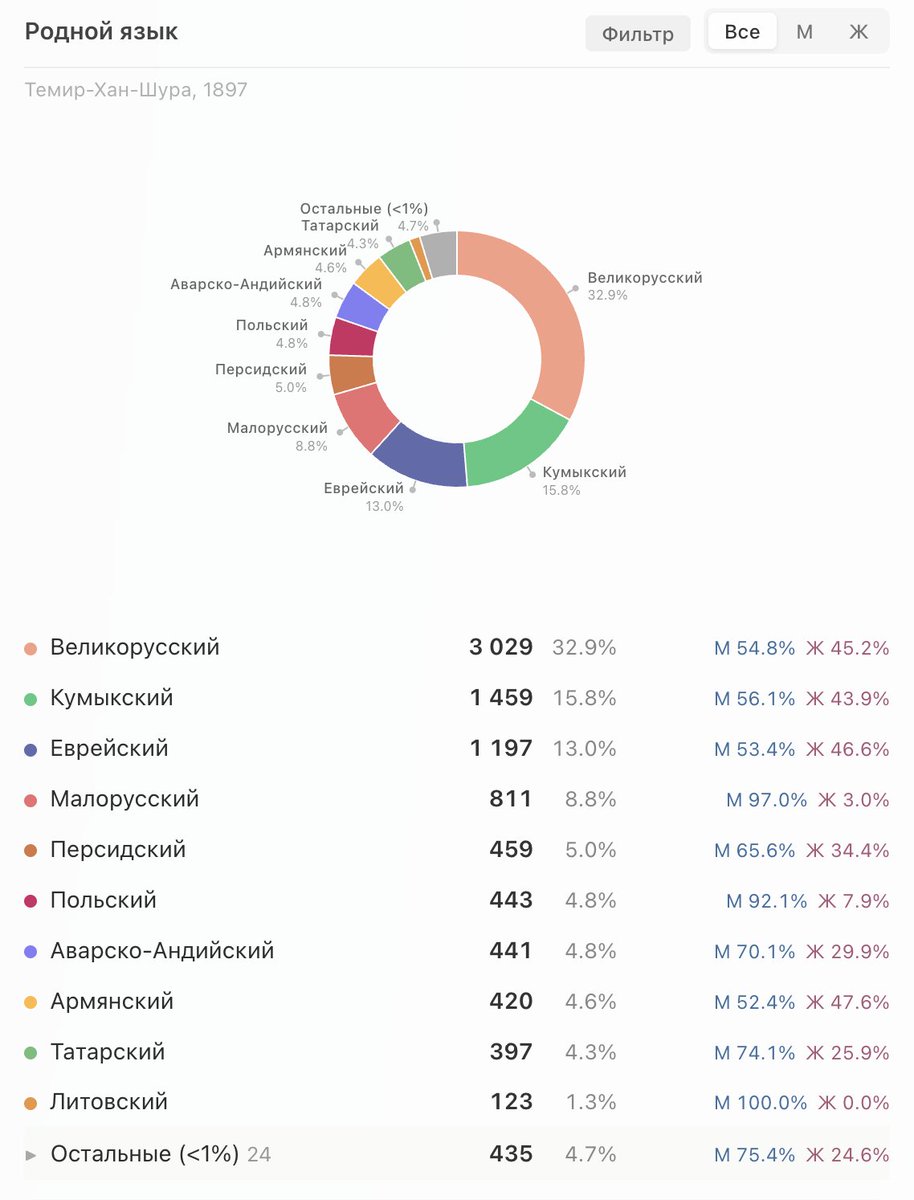
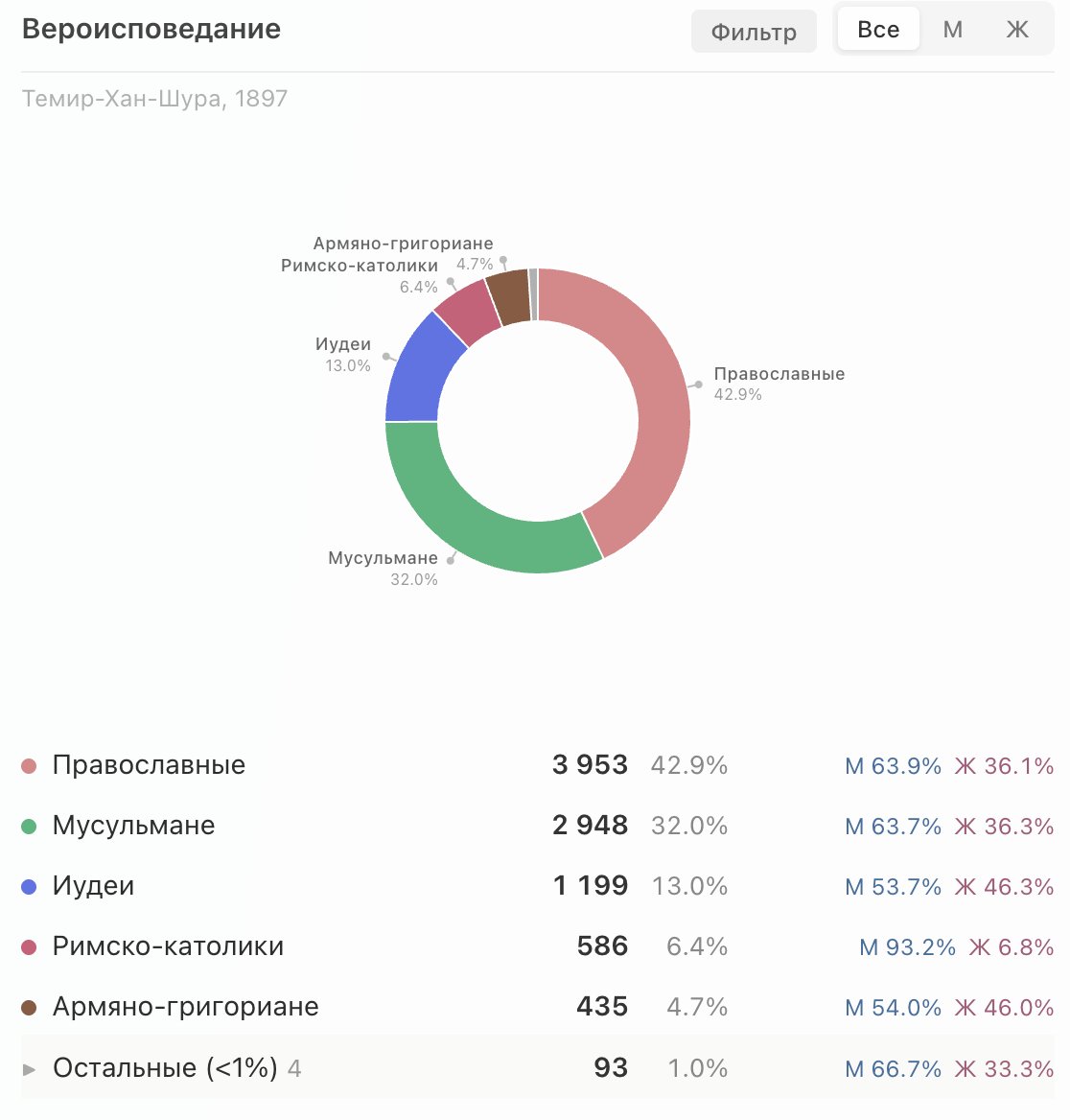
@vse1zanovo@Sangeli7@UBERSOY1 В 1897 году русских в Буйнакске (старое название Темир-Хан-Шура) было 32.9%. Но на карте религия. С разными народами православных в городе получается 42.9%. Можно сверить на моём сайте по переписи 1897 года: https://t.co/yksDtninKo