700 ימים.
700 ימים בלעדי יקיריהם.
700 ימים בתנאי מעצר בלתי אנושיים.
אני קורא לשחרורם המיידי של כל החטופים שעדיין מוחזקים בידי חמאס.
הסבל והברבריות התארכו כבר עד בלי די.
In ancient Athens, a woman's hairstyle was more than mere fashion—it was a symbol of her status and social standing. Women of wealth and high rank often wore elaborate hairstyles, especially when attending public events like religious festivals. These styles not only conveyed beauty but also reinforced their place in the social hierarchy, marking them as distinguished members of society.
Long hair held deep cultural meaning across many ancient civilizations, representing elegance, freedom, and affluence for both men and women. From ancient Greece to imperial China, flowing hair was seen as a sign of nobility and personal liberty. In contrast, short hair was often associated with servitude and punishment. In several regions, including the steppes, Japan, Mora, and Northern Europe, forcibly cutting someone's hair was considered a grave insult, symbolizing disgrace or enslavement.
This reverence for long hair extended into mythology and society’s upper echelons. Greek gods, goddesses, and mythological heroes were consistently depicted with long, flowing locks, a reflection of their divine and heroic status. Likewise, philosophers, poets, priests, and royalty typically maintained long hair as a visual marker of their intellectual, spiritual, or political importance. In nearly every ancient culture, hair was far more than aesthetic—it was an expression of identity, power, and dignity.
#archaeohistories
Hamas was reportedly trying to take advantage of the ceasefire and planning to commit another October 7.
Now, the ceasefire is officially over, and Israel is rightfully pounding the terrorists.
Starting a war you cannot win is not genocide. But doing it twice is just plain stupidity.
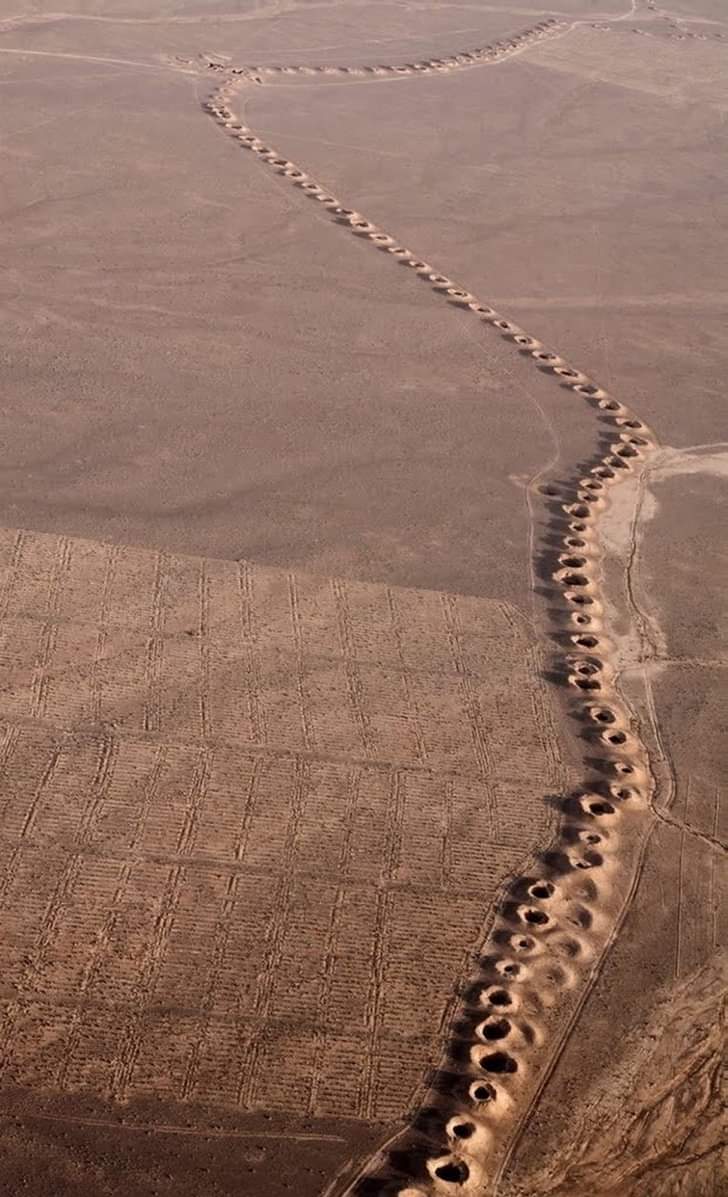
Qasabeh (Ghasabe) Qanat; an underground aqueduct in the city of Gonabad, Razavi Khorasan Province, Iran. It is one of oldest and largest qanats in the world built between 700-500 BC.
It is one of the oldest water supply system, that was made around 3000 years ago. These holes are called Qanat; an ancient Persian system of water supply. There was an underground canal that people used to drink water from or would get water for their plants.
There are scary myths and stories that have long circulated among local people. The ancient people believed that this qanat could not be constructed by humans and was made by super-human forces. Most of what we know about this underground aqueduct are the legends that the people of Gonabad have been narrating since the past.
Traditionally qanats were built by a group of skilled laborers, with hand labor. According to most sources, the qanat technology was developed in ancient Iran by the Persian people sometime in the early 1st Millennium BC, and spread from there slowly westward and eastward.
Apart from mythical and historical stories about the qanat, archaeological investigations into the aqueduct led to the discovery of pottery collected from the main wells proving that this strange aqueduct dates back to the Achaemenid Dynasty (550-330 BC).
French researcher Henri Goblot, in a book called “Qanats: A Water Acquisition Technique”, describes the underground aqueduct as an oddity and, of course, a structure built using the techniques of engineering. In his view, this qanat, which is the most original one in the world, is made by people who have had superhuman powers. To find pure water in an arid landscape and create lush vistas in middle of nowhere, they found an effective solution to Iran’s dearth of easily accessible water in marvel of ancient Iranian engineering known as kariz, more popularly known by its Arabic name, the qanat.
He travelled to Iran in 1940 to do research and comment on modern irrigation methods. In his book, he attributes the culmination of creativity to the builders and engineers of Gonabad qanat. This weird qanat is an ancient one dating back to 2500 to 2700 years ago.
Gonabad qanat also has two underground corridors that are 33km long as well as very deep wells, some of them 300m deep. The qanat was first added to UNESCO’s list of tentative World Heritage Sites in 2007, then officially inscribed in 2016, collectively with several other qanats, as “The Persian Qanat”.
A qanat or kariz is a gently sloping underground channel to transport water from an aquifer or water well to surface for irrigation and drinking, acting as an underground aqueduct. This is an old system of water supply from a deep well with a series of vertical access shafts.
This ancient water tunnel became a UNESCO World Heritage Site. It contains 427 water wells with a total length of 33,113m. Gonabad’s qanat still create a reliable supply of water for human settlements and irrigation in hot, arid, and semi-arid climates, and provides fresh water to more than 40,000 people, but the value of this system is directly related to the quality, volume, and regularity of the water flow.
#archaeohistories
Taoiseach Simon Harris has described Israel's decision to close its Dublin embassy as 'regrettable' and denied that the Irish Government has anti-Israeli policies https://t.co/Dn1tQ6nYfN
En #Syrie 🇸🇾 Bachar Al Assad a perdu la guerre
Il aura fallu 10 jours pour que nous assistions à l'effondrement général de l'Armée Arabe Syrienne.
Ce soir, l'armée se replie sur Damas, abandonnée par ses soutiens. La famille Assad se prépare à quitter le pays.
🧵THREAD🧵1/25⬇️