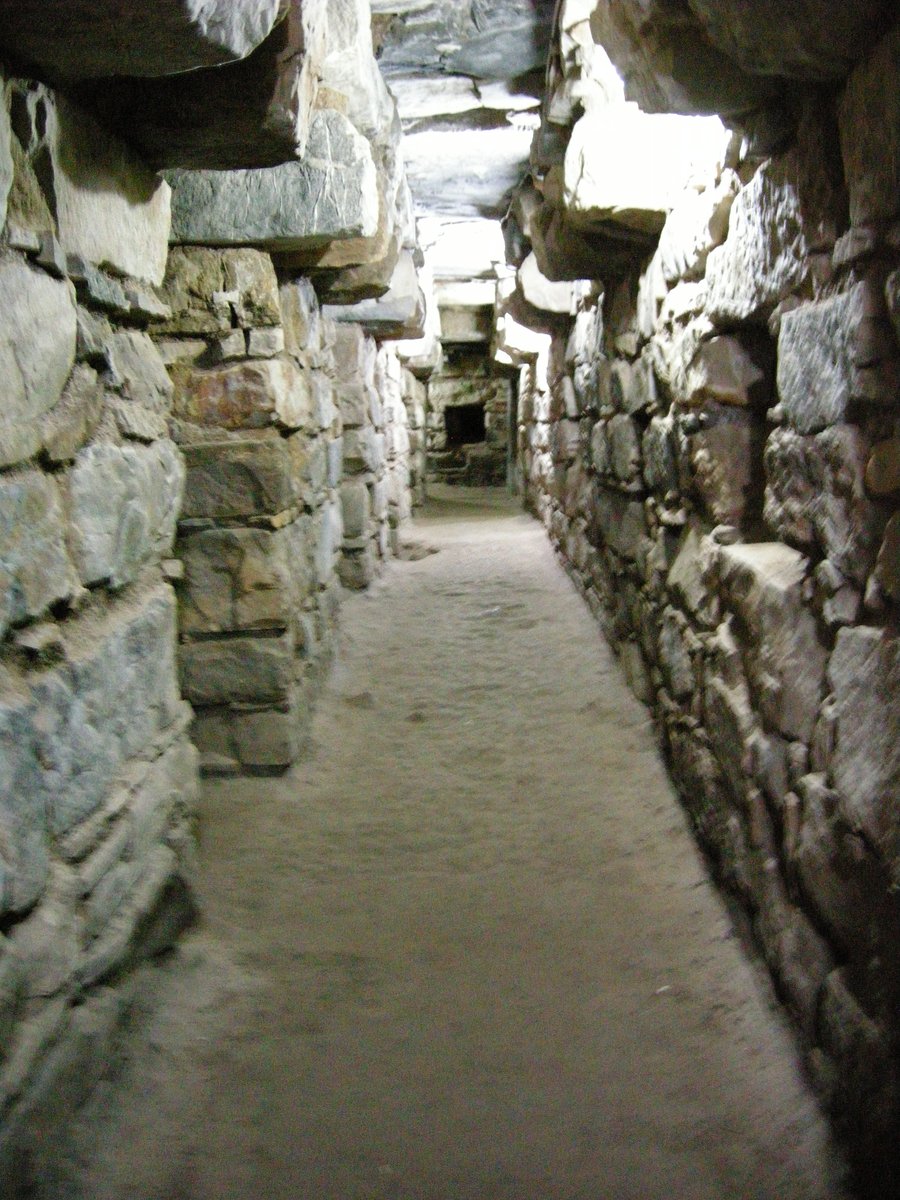
Shicras were primarily used as a foundation system for buildings in the Caral-Supe civilization, one of the oldest known civilizations in the Americas. The main purpose was to protect these structures from the destructive forces of earthquakes, which are relatively common in the region due to its location along tectonic plate boundaries.
Shicras were constructed by weaving baskets out of vegetable fibers, such as cotton or plant materials. These baskets were then filled with stones, creating a compact and flexible structure. The key to shicra's effectiveness in earthquake resistance lies in its flexibility. When an earthquake occurred, the stones inside the baskets would shift and move, absorbing and dissipating seismic energy. This prevented the buildings from experiencing excessive structural stress, reducing the risk of collapse.
The use of shicras dates back over 5,000 years, making it one of the earliest known anti-seismic techniques in the world. It predates famous Inca civilization by a few millennia.
Archaeological excavations at Caral-Supe have unearthed examples of these shicras, providing valuable insights into the engineering prowess of this ancient civilization.
While shicras are no longer used in contemporary construction due to advancements in seismic engineering, their historical importance has not been forgotten. They serve as a testament to the innovation and adaptability of ancient cultures in the face of natural challenges.
#archaeohistories
Sacred City of Caral-Supe and its Pyramids, discovered in 1948 and containing a Pyramid Complex; Sacred City of Caral-Supe, a 5000 year-old archaeological site located on a dry desert terrace overlooking green valley of Supe River in Peru.
- Subscribe for Detailed Post -
#archaeohistories