Every month, you work hard. At the end of the month, you put some money aside. That feels responsible.
Every month, that money loses value while you sleep.
It’s not your fault you didn’t know. But after this article, if nothing changes, that’s on you.
The average savings account pays 0.5% interest while inflation runs at 6.4% annually.
~ U.S. Federal Reserve, 2024
That means your $10,000 loses $590 in real value every year just sitting there.
Meanwhile, real estate returns averaged 10.6% over the past decade. Fine art gained 29% per year. Private bonds paid 8-12% consistently.
~ Knight Frank Wealth Report, 2024 | Artprice Index, 2024
But here’s the part nobody tells you. You were never meant to access those assets.
Minimum investment for private real estate funds? $250,000.
Art auctions? You need 6 figures just to be allowed to bid. Treasury bonds? Only big institutions get the best rates.
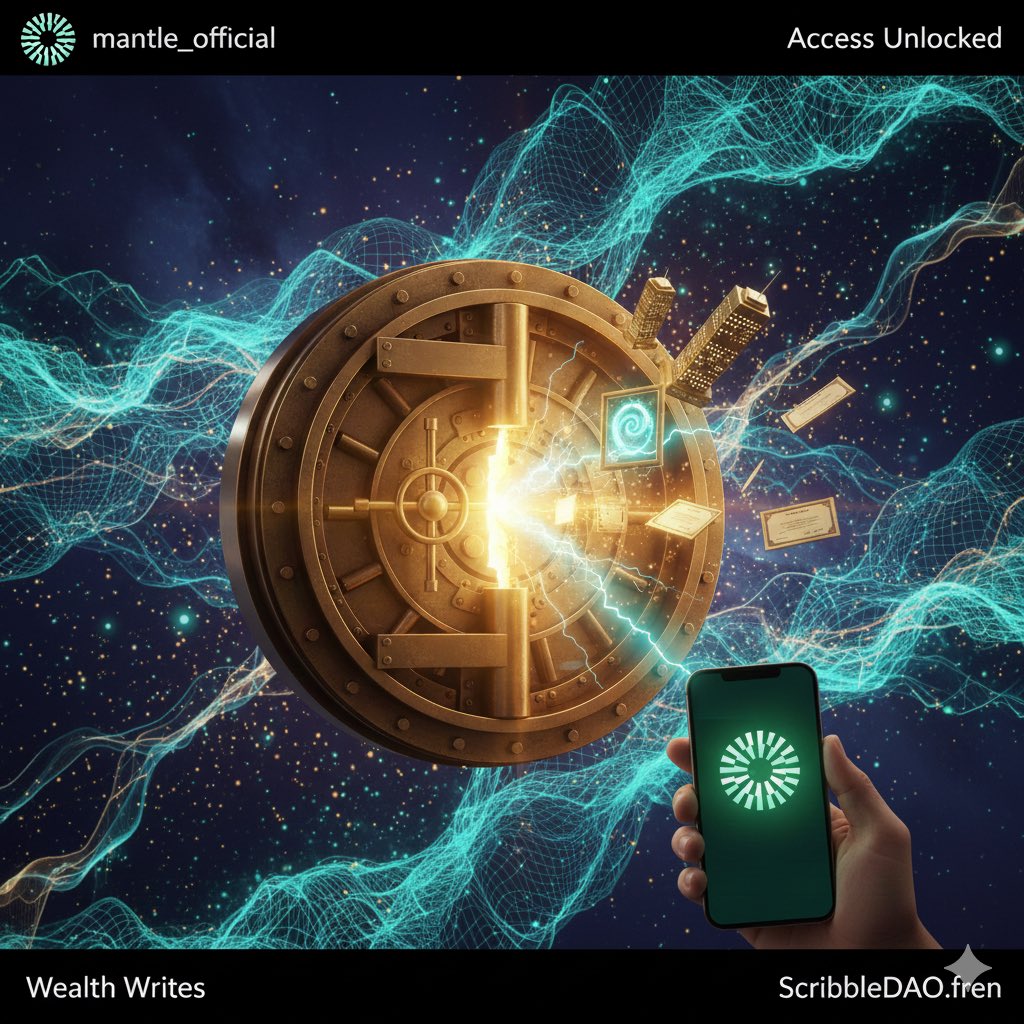
The system is designed to keep your money small while making their money huge. @Mantle_Official just broke that system.
It turns million-dollar assets into $10 pieces anyone can own, trade, and profit from instantly.
Through a direct connection with @Bybit_official, one of the world’s top exchanges with 60M users, you now have the same access billionaires had exclusively.
This is how regular people finally stop losing and start winning.
@scribble_dao
WWF
Let’s do some simple math.
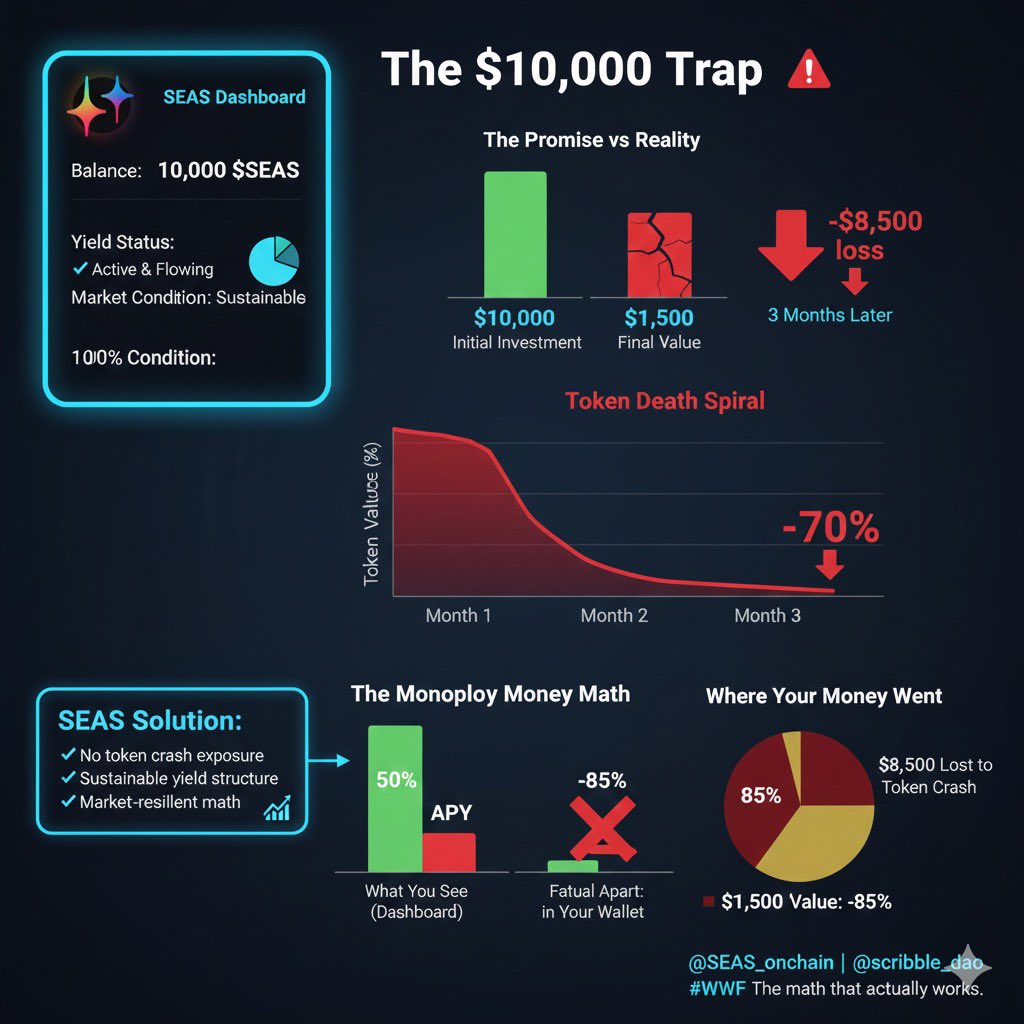
You lock $10,000 in a yield platform promising 50% APY (Annual Percentage Yield).
Sounds great, right?
3 months later, the token you’re earning is down 70%.
Your “yield” is now worth $1,500. Meanwhile, your original $10,000 is stuck, locked, untouchable.
Congratulations. You just paid $8,500 for the privilege of earning $1,500.
This is how most yield platforms work.
Big APY numbers that look impressive until you realize they’re paying you in monopoly money.
The math looks good in the dashboard. It falls apart in your wallet.
The real equation is simple: if your yield dies when markets drop, it was never sustainable to begin with.
So why do platforms keep building systems that only work when things go up?
Because they haven’t figured out what @SEAS_onchain already solved.
@scribble_dao
#WWF
It’s eye-opening how our daily attention fuels empires while we get nothing.
@SantaBrowser flips that, putting value back into the hands of users.
Every tap, scroll, and interaction becomes a choice that rewards you, not just the platform.
African parents born in the 20th century raised us on discipline and devotion.
Wake up by 5:00 AM, gather by 5:30, and your day didn’t start until you’d prayed and reflected.
The first thing you touched in the morning shaped how you moved through the day.
But today? Most of us don’t reach for devotion. We reach for a device.
And we didn’t even notice the shift. The phone quietly replaced the altar.
Now, the average person spends 6.5 hours online every day, scrolling, typing, sharing pieces of their thoughts, behavior, and attention.
By 2025, global data creation will hit 180+ zettabytes. A massive ocean of information, and most of it comes from people like you and me.
But here’s what baffles me: this data we casually drop? It’s gold.
Tech companies build trillion-dollar empires on it. They track us, study us, and sell to us. But the people fueling it rarely benefit.
It’s the modern version of waking up early for devotion, except now the “devotion” goes to platforms and the “blessing” goes to them, not you.
Most people think that’s just how the internet works.
But it doesn’t have to be.
This is the doorway into the @SantaBrowser story.
Because if our parents taught us anything, it’s that the first thing you touch when you wake up has power, and maybe it’s time that power started flowing back to us.
#WWF
@scribble_dao
African parents born in the 20th century raised us on discipline and devotion.
Wake up by 5:00 AM, gather by 5:30, and your day didn’t start until you’d prayed and reflected.
The first thing you touched in the morning shaped how you moved through the day.
But today? Most of us don’t reach for devotion. We reach for a device.
And we didn’t even notice the shift. The phone quietly replaced the altar.
Now, the average person spends 6.5 hours online every day, scrolling, typing, sharing pieces of their thoughts, behavior, and attention.
By 2025, global data creation will hit 180+ zettabytes. A massive ocean of information, and most of it comes from people like you and me.
But here’s what baffles me: this data we casually drop? It’s gold.
Tech companies build trillion-dollar empires on it. They track us, study us, and sell to us. But the people fueling it rarely benefit.
It’s the modern version of waking up early for devotion, except now the “devotion” goes to platforms and the “blessing” goes to them, not you.
Most people think that’s just how the internet works.
But it doesn’t have to be.
This is the doorway into the @SantaBrowser story.
Because if our parents taught us anything, it’s that the first thing you touch when you wake up has power, and maybe it’s time that power started flowing back to us.
��
#WWF
@scribble_dao
🔥 ALYT Zealy Sprint 2 Is Live! 🔥
ALYT Zealy Sprint has officially launched! 💥 Get ready to take action, spread the word, and earn rewards! 🚀
🗓 Campaign Timeframe:
February 15th, 12 PM UTC - March 1st, 12 PM UTC
🏆 Prize Pool:
1000 USDT in rewards! 💸
🚀 How to Participate:
Complete quests, share the hype, and earn XP to climb the leaderboard!
👉🏻https://t.co/8PMUWU8aLA
It’s time to fuel the ALYT flame! 🔥 Get involved, earn rewards, and let’s make this sprint one to remember! 🌟