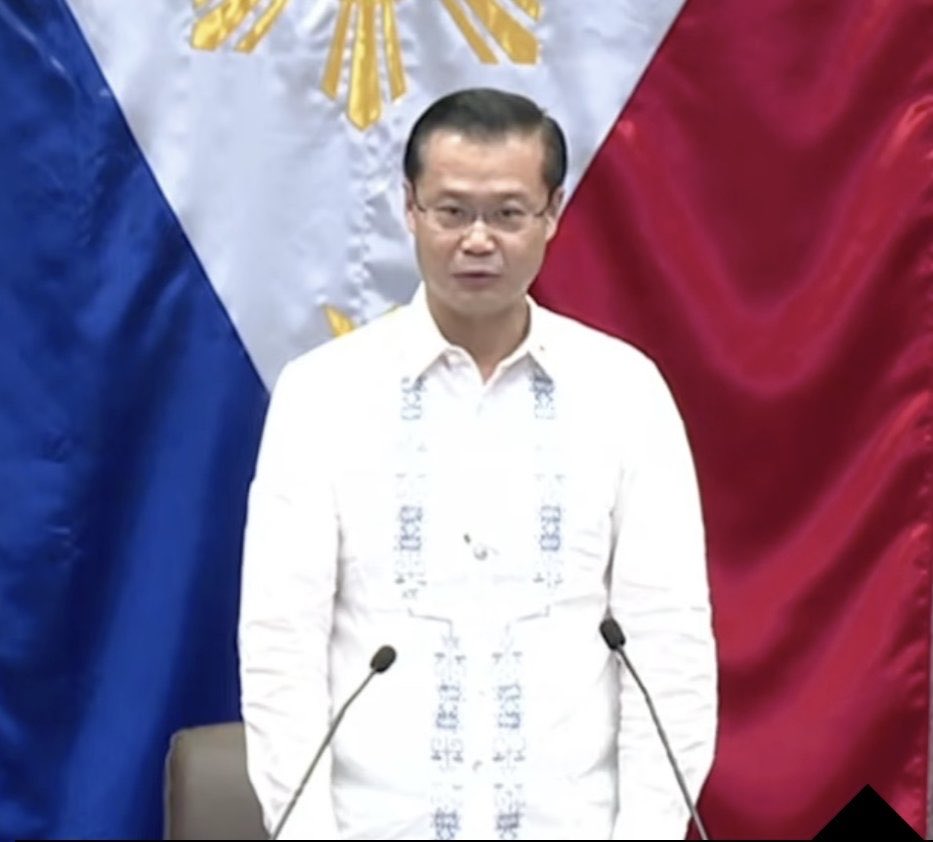
"We recognize the gentlelady from Panay, Senator Risa Hontiveros."
"Ano to, gavel?"
"Ano to, papel?"
Tingnan mo nga sa mata Sherwin!
WINRI SA SPECIAL SESSION
#WINRI#AntiPoliticalDynasty
🚨 Before the session resumes 3pm, andami na ang na-accomplish kanina.
Five Generals promoted. Two athletes naturalized.
Agricultural Cooperatives Act ni Kiko Pangilinan, Magna Carta for BHWs ni Risa Hontiveros, and Nutrition Program ni Bam.
All passed!
Yan ang trabaho. 👏
ANONG BASURA NA EBIDENSYA YAN NA MAY PICTURE?
Puro pasaring. Puro alegasyon. Puro palabas.
At dahil dinamay niyo pa ang pamilya ko, makakatikim kayo ng hindi pasaring, alegasyon, o palabas na kaso sa korte. Pananagutan ninyo ang paninirang ginagawa niyo.
Noong gabi raw na inaresto si Digong, kasama raw si Leila de Lima sa meeting doon sa Townhouse.
E sino ung kasama ko sa Bilyonaryo News? Na inienterview live 😭
Shet pati ako nagkaka crisis kung boss ko ba talaga ung kasama ko that night 😭😭😭
Imagine ah:
✅ 3 Former Senate Presidents with 8 years of experience in total being as Senate Presidents has spoken that it is lawful and within the Rules of The Senate
✅ The Lower House of Congress (House of Representatives) recognizing its lawfulness
✅ The Malacañang Palace (Executive) recognizing its lawfulness
✅ A landmark Supreme Court precedent that was used multiple times in the Senate Plenary
✅ The Integrated Bar of The Philippines saying its lawful
Ano pa ba kulang para paniwalaan ng lahat na quorum can be 12, if the active Senate membership is 23.
NEW COMMITTEE CHAIRS ELECTED AFTER SENATE QUORUM CONVENES
The Senate deadlock was finally broken after majority bloc senator Chiz Escudero attended the plenary session on Wednesday, forming a quorum.
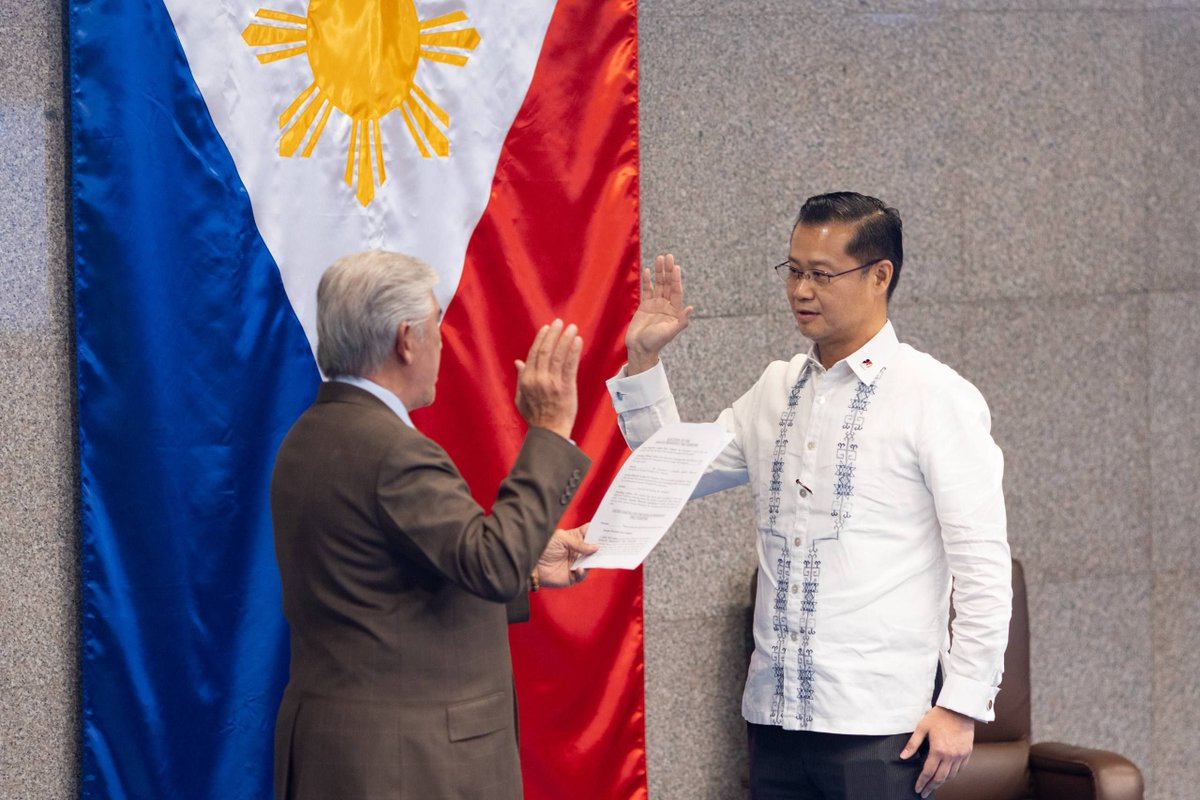
The session saw the election of Sen. Win Gatchalian as the new Senate President Pro Tempore and as the acting Senate President.
New committee chairs were likewise elected during the session, with some members being reinstated to their previous positions that they held before the election of Senate President Alan Peter Cayetano.
Read: https://t.co/KJ4GEInOIl
On Cayetano insisting that the Senate election done by the new Majority isn’t legal, Usec Claire clearly explains why it is constitutional and follows jurisprudence.
The way she explains is so simple, so clear, so logical. Ang galing ni baklaaa
🚨OP ED: How Avelino vs Cuenco Landmark Ruling Legitimized the Senate Leadership of Sen. Win Gatchalian
We witnessed a high-stakes constitutional standoff. On one hand, Sen. Alan Peter Cayetano took to Facebook Live, fiercely claiming he remained the "legitimate, legal, and moral Senate President" and blasting the session as an "illegal coup."
On the other hand, newly-elected Senate President Pro Tempore and Acting Senate President Win Gatchalian stood on the rostrum to systematically dismantle Cayetano’s defense using the text of the Constitution and established Supreme Court precedent.
When the arguments are weighed, Gatchalian's position proved far more compelling.
Here is the breakdown of why his argument held solid structural ground, while Cayetano's position appeared increasingly tenuous.
———
1. The Constitutional Mandate: The Three-Day Rule
Gatchalian highlighted Article VI, Section 16(5) of the Constitution, which explicitly states that neither House can adjourn for more than three days without the consent of the other.
Following the adjournment on May 26, sessions were supposed to resume on Monday, June 1, and Tuesday, June 2.
Cayetano and his majority bloc deliberately failed to appear, which effectively withheld quorum.
The Implication: By allowing two session days to lapse through a forced boycott, the leadership actively pushed the entire institution to the brink of a constitutional violation.
The Senate could not simply be frozen or held hostage because its presiding officer refused to show up.
———
2. Debunking the Numbers Game: What Constituted a Quorum?
The crux of Cayetano’s argument rested on the idea that without his specific bloc, a legitimate session could not be held.
Gatchalian effectively countered this by citing Avelino v. Cuenco, a landmark Supreme Court ruling.
Out of the 24-seat chamber, if certain senators are outside the coercive jurisdiction of the Senate (due to being out of the country, unavailable, or legally unreachable), the "absolute majority" required for a quorum is RE-CALCULATED based on the number of senators over whom jurisdiction CAN be obtained.
As established on the floor in with 22 senators available under the Senate's reach at that moment, 12 senators constituted a constitutional majority.
The moment Sen. Chiz Escudero walked onto the floor, the minority bloc and its allies officially hit that magic number of 12.
They had a quorum, they called the session to order, and under basic parliamentary rules, a sitting majority held the absolute power to reorganize the chamber.
———
3. Dereliction of Duty vs. Institutional Continuity
Cayetano claimed this shakeup was a political hit job meant to stop critical Blue Ribbon Committee hearings.
But looking at it objectively, the primary disruptor of Senate business was Cayetano’s own strategy of FORCED PARALYSIS.
Senate rules explicitly dictate that a Senate President cannot simply postpone a session without consulting both the Majority and Minority Leaders. This was a rule Cayetano bypassed.
Gatchalian’s senate address was not just a political speech; it read like a clinical, legally airtight justification for emergency intervention to save the Upper House from a complete legislative shutdown.
———
My Takeaway:
No matter how loudly Sen. AP Cayetano claimed "moral" legitimacy on his Facebook Live, politics at this level is governed by rules, numbers, and the Constitution.
Cayetano tried to use a quorum boycott as a political shield. In doing so, he left the door wide open for the opposition to masterfully weaponize the rulebook against him.
The minority bloc didn’t just mount a coup; they executed a precise, legally sound institutional rescue that left Cayetano with very little room to maneuver.
Malacañang's immediate recognition of Sen. Win Gatchalian’s acting leadership further cemented this reality: the rule of law moved forward, with or without the former Senate President.
THE SENATE EMPLOYEES CLAPPING AND CHEERING FOR THE NEW LEADERSHIP!
Sapat na yan para malaman na mismong mga tao sa loob ng senado ay pagod na sa gulo at gusto na ng bagong liderato. Tuloy ang trabaho!
#SenatePH
Today, I take my oath as Senate President Pro Tempore.
Nagpapasalamat ako sa tiwala at kumpiyansang ipinagkaloob sa akin ng aking mga kasamahan sa Senado.
Buong pagpapakumbaba kong tinatanggap ang responsibilidad na ito. Patuloy tayong magtatrabaho at tutupad sa ating tungkulin para sa sambayanang Pilipino.
EXPLANATION
Why Avelino vs Cuenco 1949 is enough for a quorum of 12
Normally, the Senate has 24 senators, so quorum is 13.
Senate PH Rule II says that for Senate officers: they are elected by “majority vote of all its members.”
So if all 24 are counted, 12 is not enough.
But the anti-Cayetano camp’s argument comes from Avelino v. Cuenco, 1949.
In that case, the Supreme Court accepted the idea that because one senator was outside the country and could not participate, the Senate could be treated as having only 23 participating members. That made 12 a majority.
The Supreme Court said that “an absolute majority (12)” of the Senate “less one (23)” could be quorum, and Justice Feria explained that the count may be based on “actual members or incumbents” who are not incapacitated or outside the Senate’s jurisdiction.
Applied today: if Jinggoy Estrada is unable to participate because he is arrested, they can argue the working Senate is 23, not 24.
So 12 becomes quorum under Avelino logic.
Now add the Cayetano issue.
A Senate President is not the owner of the Senate.
The Senate Rules say the Senate normally meets at 3 PM on weekdays, unless the Senate decides otherwise.
If a session is postponed, the Senate President must consult the Majority and Minority Leaders. And the Senate President cannot just suspend or adjourn a session by himself without a motion or resolution approved by senators present, except in the specific postponement situation.
So if Cayetano refuses to preside or tries to stop the chamber from functioning, the anti-Cayetano camp can say - the chair cannot kill the chamber.
That is also consistent with Avelino v. Cuenco, 1949.
In that case, the Senate President abandoned the chair and did not attend.
Worse, Cayetano not only was absent, he did not designate a Presiding Officer either - the Senate is not functioning.
The anti-Cayetano senators continued, and the case records say the deliberate abandonment made it necessary for the remaining members to continue “in order NOT TO PARALYZE the functions of the Senate.”
So the anti-Cayetano camp’s legal theory is basically this:
(1) The Senate is bigger than Former SP Cayetano.
(2) If he refuses to preside, and enough senators are present, the Senate can still function.
(3) If Jinggoy cannot participate, Avelino gives them an argument that 12 is quorum.
(4) Once quorum exists, the Senate can act on its internal organization, including committees per the Senate Rules.
They are on stronger ground when reorganizing committees, because committees are part of Senate internal organization.
Rule X says permanent committees are formed by the Senate after organization, including the Committee on Rules (take notice, yan ang unang call to motion ni Sotto).
So what did Cayetano did wrong?
Essentially by refusing to attend the Senate or any of the presiding officers (ie: Former Pro Tempore Legarda, and Former Majority Leaders), the situation became more and more similar to Avelino v. Cuenco, 1949.
The former Majority could even argue that Avelino v. Cuenco, 1949 is a "special circumstance" . However, the similarities between then and now became more apparent with the former Majority leaders absence and made the arguments of the anti-Cayetano camp stronger.
With this, the new Majority got their quorum and they rearranged leadership.
So why only the leaderships and not the actual Senate Presidency?
So the pro-Cayetano camp can ask: "If you truly have quorum, and the majority of all members, why not also elect a Senate President?"
Short answer: Because of the Constitution.
The Constitution makes electing a new Senate President more sensitive because it specifically requires a “majority vote of all its respective Members” for that office.
The Constitution then separately says each House may choose “such other officers as it may deem necessary.”
For Senate President:
The Constitution itself sets the rule. The Senate President must be elected by “a majority vote of all its respective Members.”
For President Pro Tempore and other officers:
The Constitution does not give a specific voting threshold. It only says each House may choose “such other officers as it may deem necessary.” (Sec. 16)
It also says each House may determine its own rules.
That is where Senate Rule II comes in:
the Senate used its rule-making power to say its officers, including the President Pro Tempore, Secretary, and Sergeant-at-Arms, are elected by majority vote of all members.
LOGICAL DIFFERENCE:
So the Constitution does not dictate the definition of "all members" for other Senate officers - only for the Senate President.
Thus, the dictation and definition of "all members" lies on Senate Rules per the Constitution Sec. 16, "...as they deem necessary..."
But with Avelino v. Cuenco 1949 coming in...
The Senate PH has already defined "majority of all members" to be "active members of the Senate - that could participate"
In the ruling,
Justice Feria said the count may be based on the Senate’s “actual members or incumbents,” excluding those unable to discharge their duties because of death, incapacity, absence from jurisdiction, or other causes making attendance impossible (ie: arrest).
Feria treated the Senate as having 23 actual members, so 12 became a quorum and majority.