Inlay face of a princess, possibly Meritaten, made from opaque turquoise-blue glass
New Kingdom, 18th Dynasty, c. 1351–1334 B.C.
From Tel el-Amarna. British Museum. EA54264
Read more: https://t.co/VhDqz5tItq
Today 30BC Cleopatra VII Philopator, the last ruler of the Egyptian Ptolemaic dynasty, commits suicide allegedly by inducing an asp (Egyptian cobra) to bite her🏛️
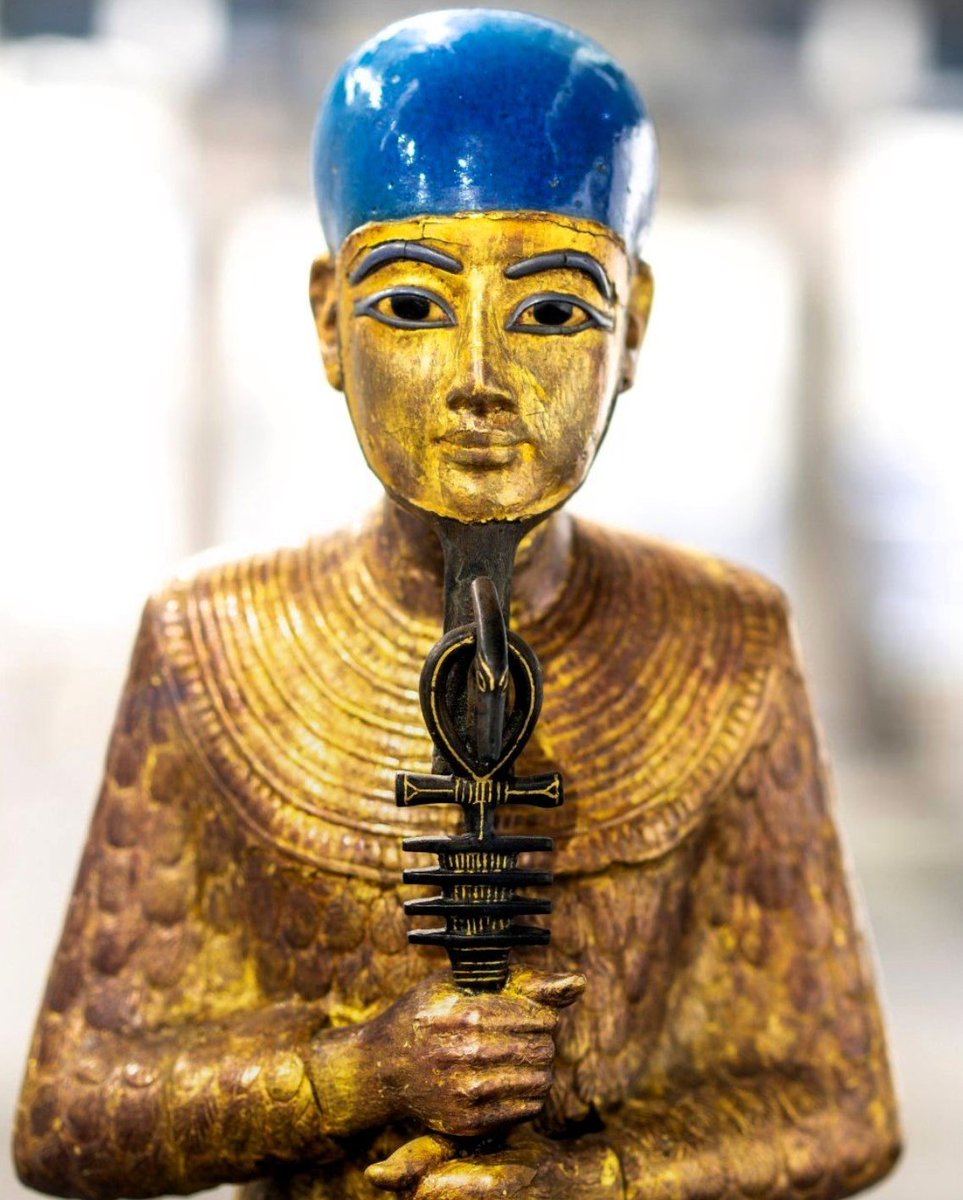
الديانة المصرية القديمة كان فيها مذاهب متعددة، كل مذهب كان له تفسير لقصة بدء الخلق، منهم كان مذهب مدينة (من نفر) منف أقدم عواصم الدنيا، و اللي كانت بتعتبر النتر المقدس (بتاح) هو الرب الرئيسي للمدينة، خالق الكون بالكلمة المقدسة
و ده أول ظهور تاريخي لفكرة الخلق بالكلمة. 🇪🇬
المصري من قديم الأزل، إيد بتزرع و إيد ماسكة السلاح، صاحي بيدافع عن أرضه المقدسة يفديها بدمه .. مش بيسيبها و يهرب.
حًب البل�� هو العقيدة اللي بتجري في عروق كل أصيل.
Golden Uraeus; belonged to Middle Kingdom, 12th Dynasty, reign of Senusret II (1897-1878 BC).
Uraeus ("rearing cobra") is stylized, upright form of an Egyptian Cobra, represents goddess Wadjet, a very ancient goddess who is associated with royalty and divine authority in ancient Egypt. When the snake is worn over the king's brow, its head raised and hood dilated ready to attack if needed, it is called a uraeus. The uraeus constitutes the consummate symbol of royalty. As time passes it is also worn by royal women and certain gods.
This uraeus is assembled from hammered gold and electrum sheets and strips; 6.7cm, the snake's head and hood form one component, which was inserted into the coils and tail that form a second, black eyes of granite, a snake head of deep ultramarine lapis lazuli, flared cobra hood of dark carnelian inlays and inlays of amazonite. The separate head element and inlays of the first component are now missing. The uraeus hood was probably originally inlaid in colors of red, turquoise, and dark blue. Traces of Egyptian blue suggest that material may have been used for some of the inlays. The long shallow curve of the tail would seem to suit a funerary mask, but the uraeus had been deformed and was restored, so the shape is not original.
For mounting on King’s Crown, two loops in rear-supporting tail of cobra provide the attachment points.
Egyptian Museum, Cairo
#archaeohistories
Detail from a statue of king Akhenaten holding the flail and crook.
One of the colossal statues of Akhenaten (r. 1353-1336 BC). From the Temple of Amun, Karnak. Now in the Egyptian Museum, Cairo.
#drthehistories