This is really cool (and wild):
Scientists simulated a complete living cell for the first time. Every molecule, every reaction, from DNA replication to cell division.
The paper (Luthey-Schulten et al., Cell 2026, https://t.co/PXxXWKC8yp), just out today, used JCVI-Syn3A — a synthetic minimal bacterium with fewer than 500 genes. A 3D+time simulation of the full 105-minute cell cycle: DNA replication, protein translation, metabolism, division. Every gene, protein, RNA, and chemical reaction tracked through physical space.
It took years to build. Multiple GPUs. Six days of compute time per run.
And this is the simplest possible cell.
A human cell has ~20,000 genes. It lives in tissue. It interacts with neighbors. It differentiates. It responds to drugs in ways that depend on context we haven't fully measured.
Mechanistic simulation of the minimal cell costs 6 GPU-days for 105 minutes of biology. You cannot scale that to human cells. The complexity isn't 40x harder. It's exponentially harder.
This is why the field pivoted to data-driven models. You can't hand-encode the regulatory wiring of a human hepatocyte. But you can learn it — if you have the right perturbation data collected across enough diverse biological contexts.
The two approaches aren't competing. Papers like this generate the ground truth that future ML models need for validation. But the path to a clinically useful virtual cell runs through foundation models, not through scaling up mechanistic simulation.
Amazing work!
@juramaga Si, yo lo hice directamente en la pagina del consulado. En el de Chicago se demoraba mucho, entonces me toco ir al de Newark. Boston tiene uno muy bueno donde no se necesita cita:
https://t.co/Ui43cgJMu1
📚 Forma parte del equipo académico de la Universidad Militar Nueva Granada
La convocatoria pública para el Concurso de Profesores de Carrera UMNG 2025 está abierta. Si tienes vocación docente y quieres aportar al desarrollo del conocimiento, esta es tu oportunidad.
By converting data into sounds, researchers “hear” hydrogen bonds forming during protein folding. 👂
Prof. Martin Gruebele led the new research with composer and software developer Carla Scaletti.
https://t.co/gGd89OqM1M
New paper :)
Computational Investigation of the Covalent Inhibition Mechanism of Bruton’s Tyrosine Kinase by Ibrutinib | Journal of Chemical Information and Modeling https://t.co/YkF32v2MVi
A new study led by #ILLINOIS researchers links acetaminophen use during pregnancy to delays in child language development.
The study explores how environmental exposures in pregnancy and childhood influence child development. https://t.co/mFOrMhxmFY
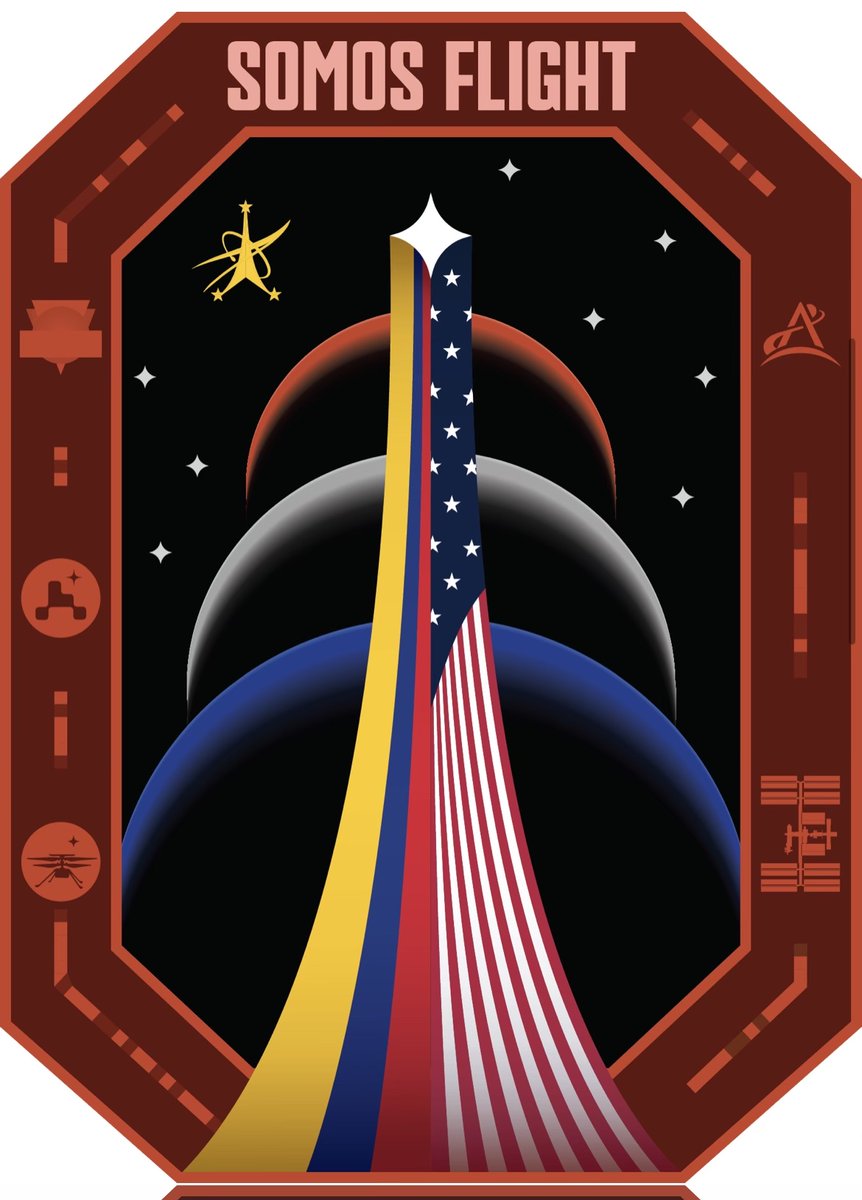
@NASA_Johnson Antes de iniciar su primer turno, Trujillo también presentó su insignia, con referencias a Colombia, su país natal, y a su experiencia previa trabajando con vehículos exploradores marcianos en @NASAJPL.
Diana Trujillo tuvo su turno inaugural como la 108.ª directora de vuelo de @NASA_Johnson la semana pasada. Su indicativo ("call name") es Somos Flight: para ella, "Somos" representa el poder de la comunidad.
¡Felicidades, Diana!
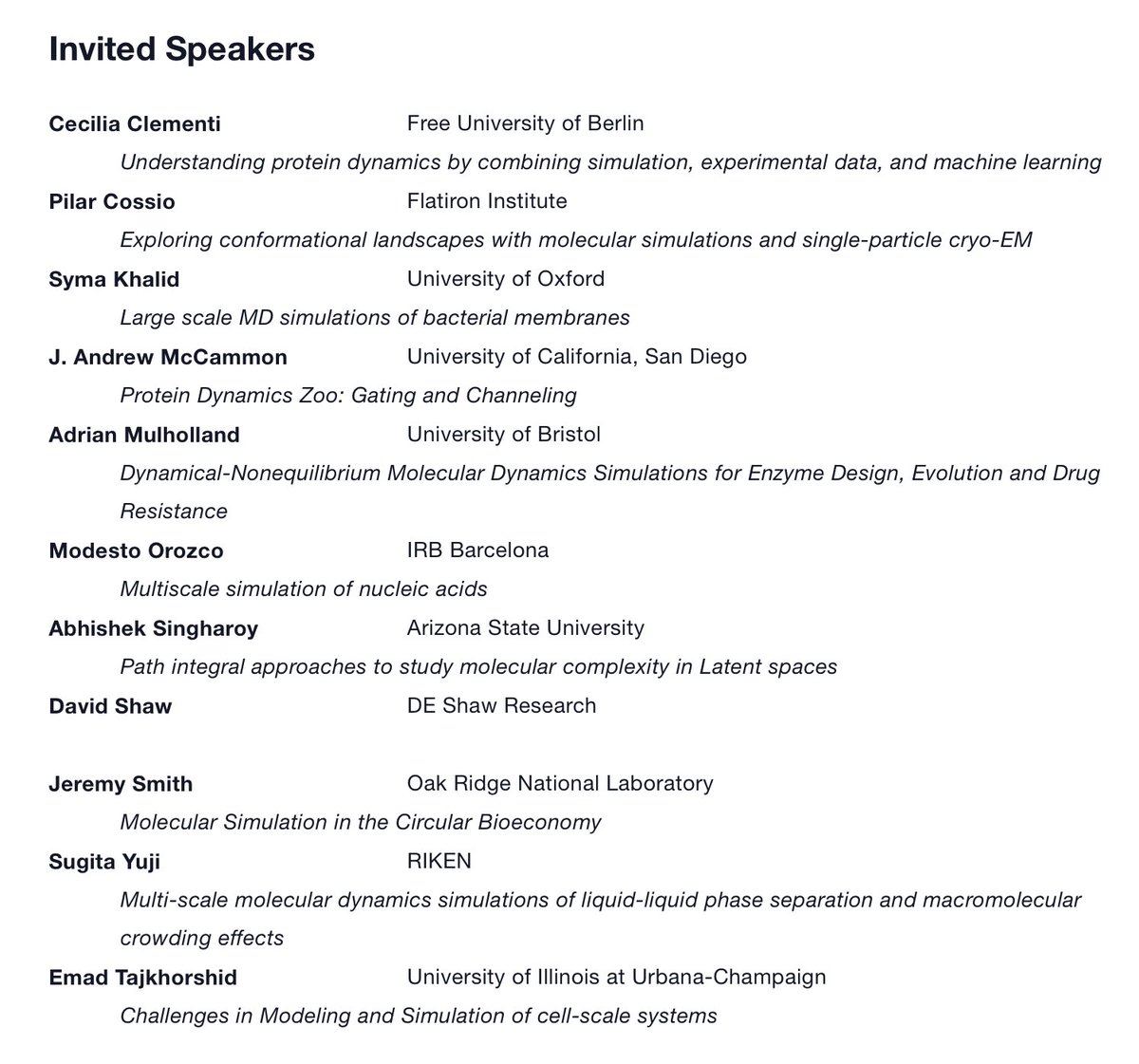
🚨🚨Fancy a 🤓 trip to NYC in May?
Pls join @tamar_schlick & me at @SimonsCenterNYU for our Simons Symposium on
✨CHALLENGES IN BIOMOLECULAR SIMULATIONS✨
We are looking for more speakers from abstracts!
https://t.co/uUx4zxSLF4
Look at this lineup!! 🤩🤩🤩
Join us!
🔊 #CZBiohubCHI is now accepting applications for its Investigator Program, open to researchers from our partners @NorthwesternU, @UChicago, @UofIllinois with a project related to inflammation, immune system function, or instrumented tissues.
Learn more:
https://t.co/Z1SSNnmecw
On the tougher days in this job, I need to remind myself that:
-the self-doubt means I have ambitious career goals
-the failure means I'm taking risks and trying something new
-the frustration means I care and I'm passionate about my work
Bringing human intuition to bear on modelling protein-ligand binding: combining interactive molecular dynamics in virtual reality (iMD-VR) with free energy (FE) calculations to explore the dynamics of biological processes at the molecular level. #VR#MD https://t.co/FKChMBHsos