You have Claude Fable for only a few days. Here's how to make the most of it.
Introducing /improve: use your most capable model to audit your codebase and write plans for cheaper models to execute later.
Studies your code, figures out bugs, perf, tech debt, missing tests, what to build and writes plans any agent can run.
- Screen-addiction discourse shifts five years earlier; “digital wellbeing” becomes a market force, not a CSR afterthought. - A generation of founders grows up chasing presence-first design rather than engagement metrics.
What if Steve Jobs were still alive?
Imagine how technology, and the world would be like if he were. Its hard to believe that our world wouldn't be completely different.
.
.
.
"Hey Siri, how would our timeline have shifted if Steve Jobs were still alive?"
Ripple effects:
- Facebook never rebrands to Meta; its AR/VR talent defects to Apple and Valve.
- Google leans harder into AI cloud services as Android loses cool-factor.
2025 — “An interface is a promise” keynote
On Apple’s 49th anniversary, Jobs states:
“Computers should melt into the background so humans can stand in the foreground.”
2023 — SwiftUI-Vision & Neural Drafts
Coding by voice + gestures goes mainstream. A designer whispers intent, the IDE scaffold appears. Start-ups cut prototyping time in half; Figma rushes to integrate.
2022 — Apple Car as a Service
Rather than selling vehicles, Jobs launches a robotaxi subscription, beating Cruise/Waymo to mainstream by bundling it with Apple One. Urban congestion pricing models the service’s predictive routing data.
2020 — “No-Home-Screen” iPhone
COVID accelerates remote life. iOS 14 ships with Flow Mode: you unlock directly into the app you need, chosen by context (calendar, location, biometrics). Screen-time drops 27% worldwide; regulators cite it when drafting anti-addiction standards.
2018 — Apple Health Network
After a pancreatic-cancer scare recurrence (treated successfully), Jobs fast-tracks an encrypted cloud for hospitals + wearables. Outcome-based insurance discounts follow; Amazon’s Haven never gains traction.
2016 — Project Callisto revealed (“one more thing…”)
A Jobs trademark surprise: lightweight AR glasses that fade to 10%-transparent mode when notifications appear, nudging users back to the real world. Competitors pivot; phone-first UX peaks and declines.
2015 — Apple buys Nest & August
Instead of Google, Apple folds smart-home hardware into a secure, local-only HomeOS. Privacy-centric edge AI becomes the brand’s new moat; voice processing never leaves the device.
2013 — iPad Air² “Ambient Edition”
Jobs obsesses over frictionless presence rather than bigger screens. A bezel-less iPad with always-on contextual widgets launches the Ambient SDK, letting apps surface only when helpful. This seeds today’s “quiet computing” trend.
Brand rabbit hole today: value props, colour theory, fonts.
No tool let us feel how tiny type tweaks shift emotion, so:
Typography Simulator — slide weight, size, leading, spacing; watch copy flip mood.
https://t.co/juzKhgKZYx
#Typography#Design
📸 Hanoi university maker-lab today: robots on plywood tracks, solar water probes, 3-D printers humming.
That raw hacker energy is exactly why we’re building Ambient—tech that feels playful, human, and useful. Thanks to the students for the spark! #Ambient#Wearables
The core value of our customer is growth. It seems like health is a trending element of growth.
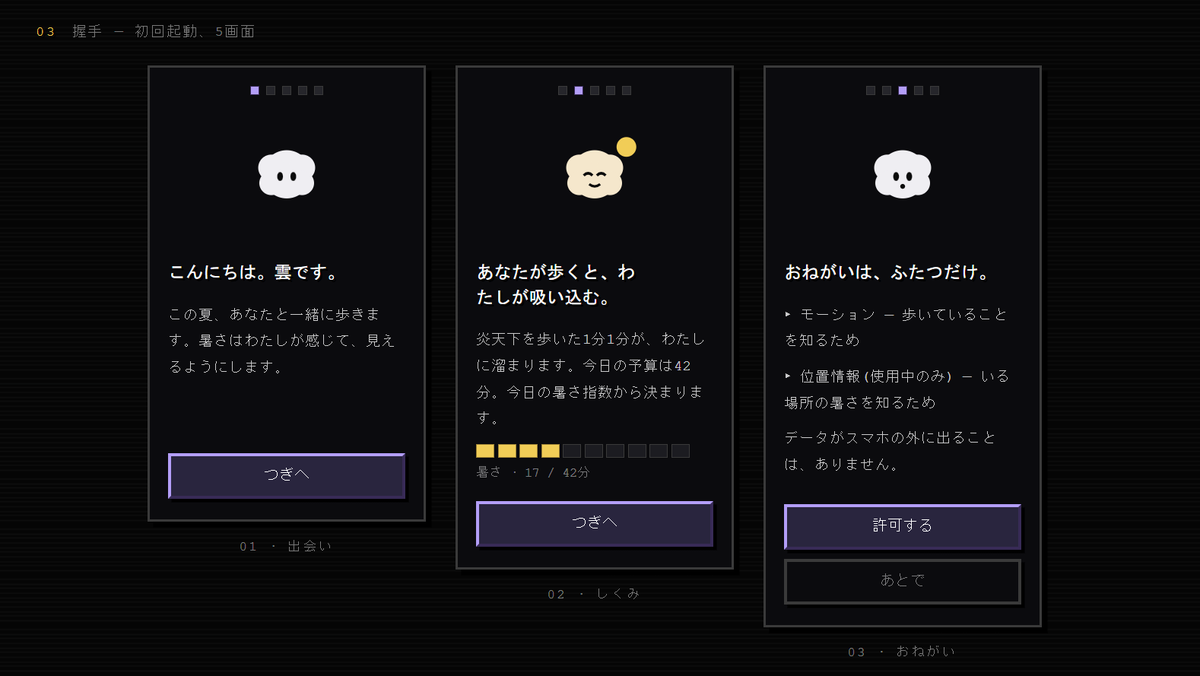
we’re not building for dopamine loops.
we’re building for people who want to leave.
and come back better.