Africa’s Diplomacy Must Move from Resource Advertisement to Capability Diplomacy.
=======
African leaders are right to remind the world that Africa matters. We have minerals, land, forests, energy potential, young people, strategic location, and many of the resources required by the next global economy. That message is true.
But sometimes, the way we say it is the problem.
At times, our resource diplomacy sounds like a man walking through the trading centre shouting, “My brothers, I have money under my bed, gold in my granary, sweet bananas ripening in the back room, calabashes full of tonto, and by the way, the key is under the third cooking stone behind the kitchen.”
Now, such a man will surely attract visitors. But let us not pretend all of them are coming to wish him well. Some will come with smiles. Some will come with notebooks. Some will come with scanners. Others will come with hammers. And a few will arrive very politely, carrying partnership brochures in one hand and very long straws in the other.
A serious household does not begin negotiations by announcing everything hidden in the store. First, it secures the house. It counts properly. It knows the value of what it has. It decides what can be sold, what must be processed, what must be protected, and what price is so low that even the most charming visitor must return home with nothing more than tea, directions to the road, and a deep appreciation of our excellent hospitality, firm discipline, and very clear principles.
That is the maturity African diplomacy now needs.
Resource abundance should not be the headline of our global engagement. It should be the starting point of a deeper conversation about processing, technology, standards, finance, data sovereignty, regional markets, and institutional control.
The world already knows Africa has resources. That is why they came before, and that is why they are returning with new words like critical minerals, green transition, carbon markets, food security, and strategic partnerships. Very polished language. Very well ironed.
But Africa should not keep announcing the contents of its granary as if global investors are innocent tourists who got lost on the way to a museum.
What we should announce is capability.
We should say Africa is building mineral-processing systems, battery-materials capacity, agricultural brands, construction-materials standards, development finance institutions, data-governance systems, and industrial corridors that serve African production before they serve external extraction.
There is a difference between attracting investors and inviting speculation. When a country presents itself mainly as a storehouse of raw materials, it attracts concession hunters, speculative financiers, extraction consultants, and polished vampire investors. But when a country presents itself as a centre of processing, engineering, standards, logistics, finance, and market power, the conversation changes. Investors no longer come only to ask what they can take. They must ask where they fit within a system that already has direction.
This is the argument I make in my new book, The Five Levels of Economic Power (https://t.co/uVuBnrZ6nj). Power is not determined by what a country has, but by what it controls. Resource ownership is only the first level. Real power begins when a country climbs into productive control, technological command, market power, and institutional sovereignty.
Africa is not merely the solution to other people’s energy transition, industrial anxiety, food insecurity, or supply-chain panic. Africa is a negotiating partner in the next industrial order.
Resources attract attention. Capability earns respect.
Power is not what you announce before the cameras. Power is what you still control after the visitors, translators, consultants, and camera crews have left the compound.
Introducing the Gulu City Property Market Report 2026
Gulu is rapidly transitioning into a structured urban economy, driven by:
- Sustained population growth
- Increasing regional trade activity
- Major infrastructure investment
- Evolving demand for formal real estate
Our latest research highlights:
A clear demand-supply imbalance across key sectors
Strong fundamentals supporting residential, commercial and industrial growth
A compelling case for early-stage investment
Watch the summary video for key insights
Read the full report: https://t.co/F6yvNd0EOy
In 1981, a United States professor was conducting research for a book that she later published in 1988. She sat down with workers during a meal in the United States and discussed the possibility of machines taking over in the future.
#LabourLawConf2026
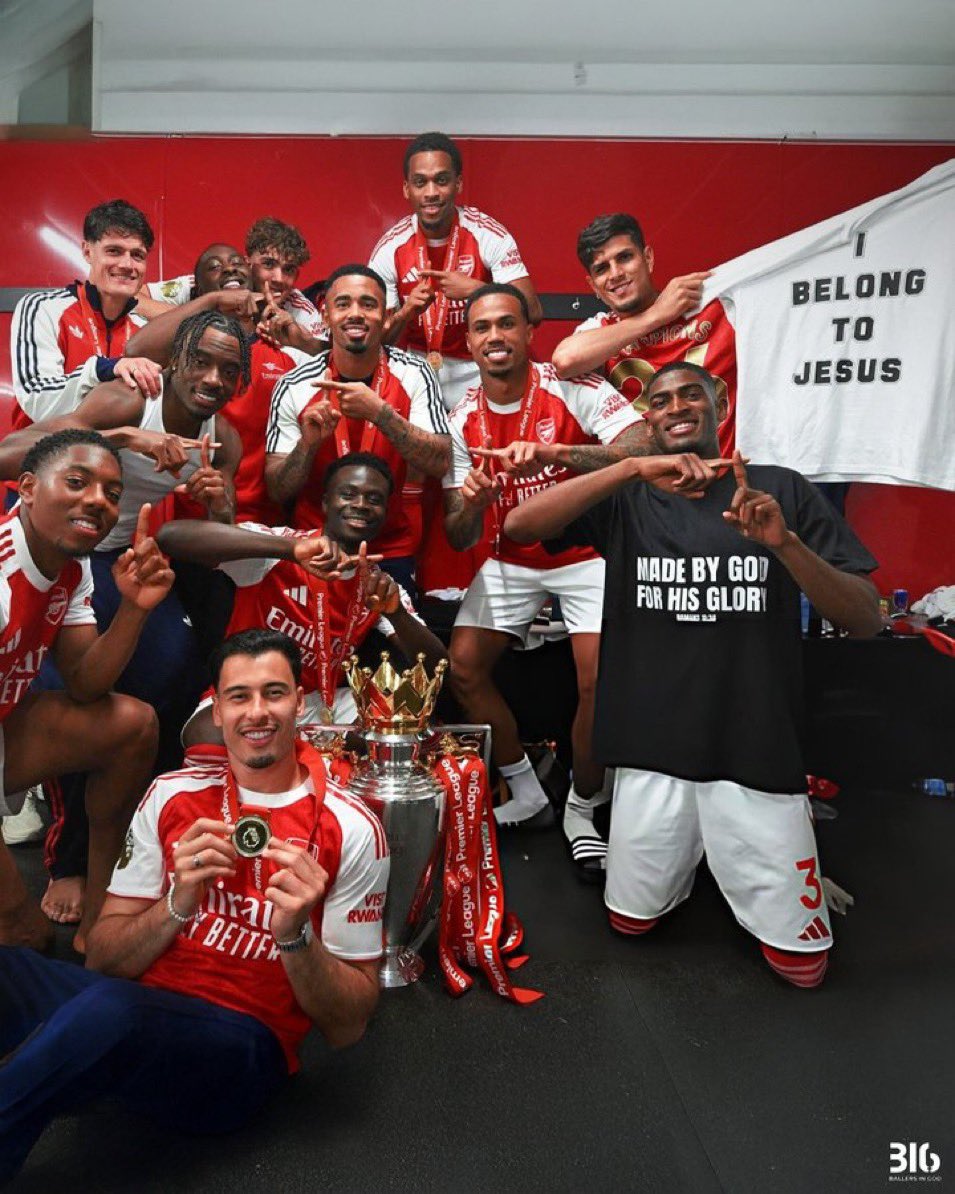
What Arsenal did different this time that many overlook…
My wife asked me what Arsenal did differently this time around despite missing out on being champions especially in the last 3 seasons…
I told her the major difference in the Arsenal team was that we suddenly had an influx of players who love Jesus, pray & fellowship together.
They never went into any game with doubts in their hearts but faith in God that He can help them come out victorious. Even when they lose games, they are still strong in faith.
Especially when Man City took over towards the end of the season, it all looked bleak but the players had an unshakeable Faith & almost immediately it turned around again.
For the first time, we have players who publicly declare Jesus as Lord and post Bible scriptures — depending on God for His help.
This was a big plus & a major factor that cannot be overlooked.
Do you have a heart for children and a passion to make a difference?
Join us as we spread Unconditional Love and hope to vulnerable children in Nebbi
Together, we are mobilizing to reach our target of 2 Million for a brighter future.
To join the group:
https://t.co/yYA1ExdItI
“My precioussss… Ohy precious… They stole it from us… My power… my seat… my precious…”
A cautionary tale from the Fellowship of Leadership
The rise is inspiring. The fall is a reminder.
Power tests the soul more than poverty ever could.
4 days.
One opening panel.
One defining conversation.
Panel 1 of the Acholi Real Estate & Infrastructure Conference sets the agenda—exploring how Uganda’s secondary cities can be planned, financed, and built for long‑term impact.
Led by Knight Frank Uganda, in partnership with @NCBAUganda.
📍 Gulu | 📅 22 May 2026
This is where the dialogue begins.
SCHOOL FEES ARE NOT JUST A HOUSEHOLD BURDEN. THEY ARE AN ANTI-INDUSTRIAL TAX.
=======
One of the biggest monsters in Africa’s living room is school fees. Not corruption alone. Not laziness. Not lack of prayers. School fees. The African child is born, and before they can pronounce “multiplication,” the parent has already entered a lifelong financial boxing match with bursars, uniforms, development fees, PTA fees, projects fees, computer fees, tour fees, and the famous “bring a ream of paper” fees.
By the time this child grows, graduates at around 25 or 30, and begins to stabilize in work, they should be building wealth. They should be buying equipment, starting enterprises, investing, innovating, establishing industries, and becoming economically dangerous. But no. That is exactly when the school fees relay baton is handed to them. Now they must pay for nursery, primary, secondary, university, professional courses, and possibly their own master’s degree, so that the economy can continue pretending that certificates are development.
So the African adult spends the most productive years of life, from 30 to 60, financing education instead of financing enterprise and partnering with age-mates to start industries. And the damage does not stop at the bank account. When family income is swallowed by school fees, feeding suffers. Healthcare suffers. Rest suffers. Parenting suffers. Confidence suffers. Nutrition quietly moves from balanced meals to “let us first survive this term.”
This is where the matter becomes even more serious. A productive adult does not appear from nowhere. A productive adult was once a well-fed, well-nurtured, emotionally secure, and properly stimulated child. The worker who concentrates, innovates, leads, solves problems, builds companies, and carries a nation’s productivity was first a child whose body and brain were being built meal by meal, conversation by conversation, and care by care.
Poor feeding in early childhood is therefore not a small family inconvenience. It is a national productivity loss in slow motion. It affects growth, brain development, immunity, learning ability, concentration, confidence, and adult energy. So when we see stunting, malnutrition, poor learning outcomes, low confidence, and weak productivity, we should not only blame parents. We should ask what kind of economy forces parents to choose between school fees and proper food.
In many developed countries, quality public education gives families breathing space. Parents can use income to feed children well, expose them, mentor them, save, invest, and build businesses. Here, the African parent is working like a government subcontractor, privately financing the public promise that failed.
That is why school fees are not just an education problem. They are a nutrition problem, a health problem, a productivity problem, an industrialization problem, and a national development problem. A country cannot industrialize when its most ambitious families are permanently fundraising for the next school term.
Universal, high-quality public education is not charity. It is economic liberation. Because no nation becomes rich when parents spend their best years paying invoices instead of building industries.
The Wisdom Degree: Why I Really Did a PhD by Dr. Apollo Buregyeya is a book about knowledge, wisdom, Africa, and the deeper purpose of education beyond certificates. Visit @aristoc_booklex for a copy. You can also have your copy delivered by calling Irene on 0781 482230.
Gulu’s Moment Is Now.
Knight Frank Uganda, together with @NCBAUganda, is proud to host the Acholi Real Estate & Infrastructure Conference under the Real Estate Development & Investment Summit (REDi) 2026.
This first‑of‑its‑kind conference convenes policymakers, investors, developers, and financiers to unlock investment, development, and growth in Uganda’s secondary cities, starting with Gulu.
📍 Acholi Inn Hotel, Gulu
📅 Friday, 22 May 2026 | 8:00 AM
An anonymous donor has pledged to match every donation 2X until the operation date, meaning every contribution can go twice as far.
If you are able to support or share this message, it could make a meaningful difference.
#Together4Atha#CommunitySupport#MakerereUniversity
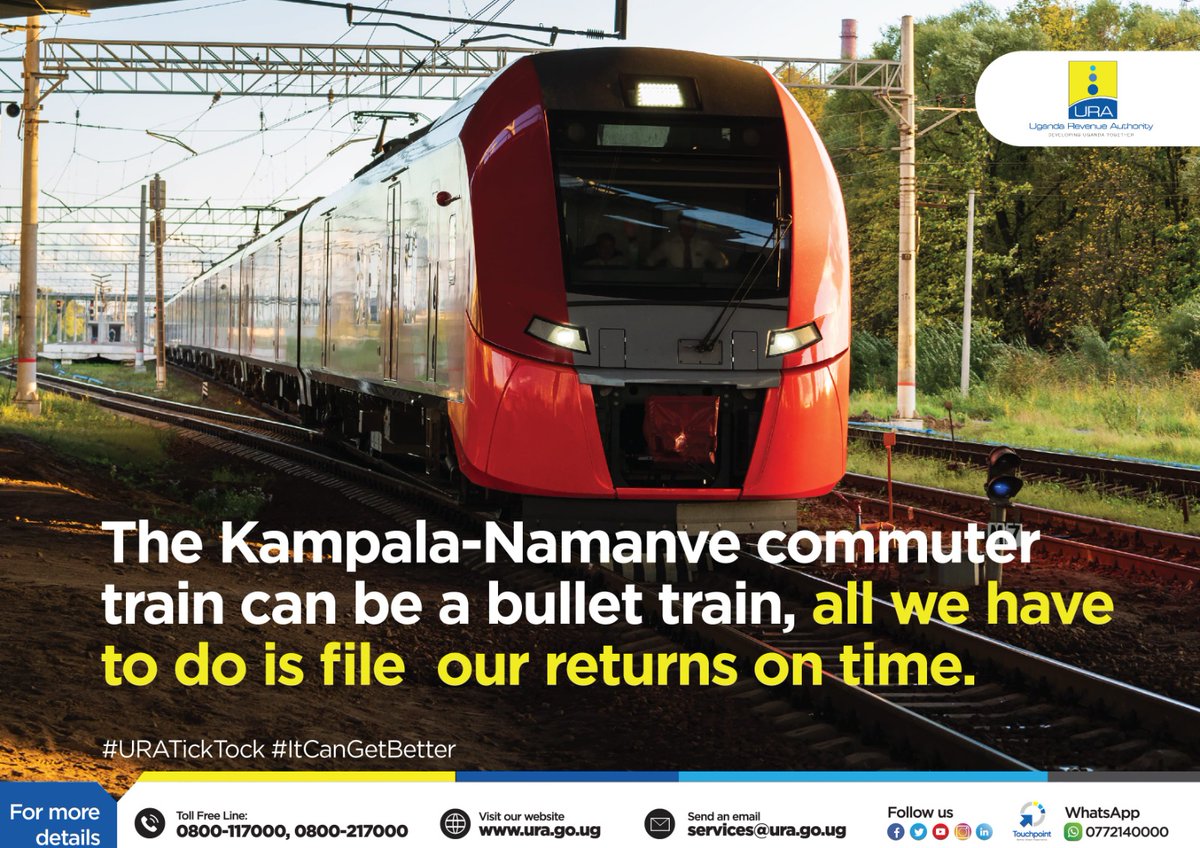
It's filing season, our taxes can do wonders for the country like transforming the Kampala Namanve commuter train to a bullet train.
All you need to do is file and pay your taxes.
#URATicktock#ItCanGetBetter
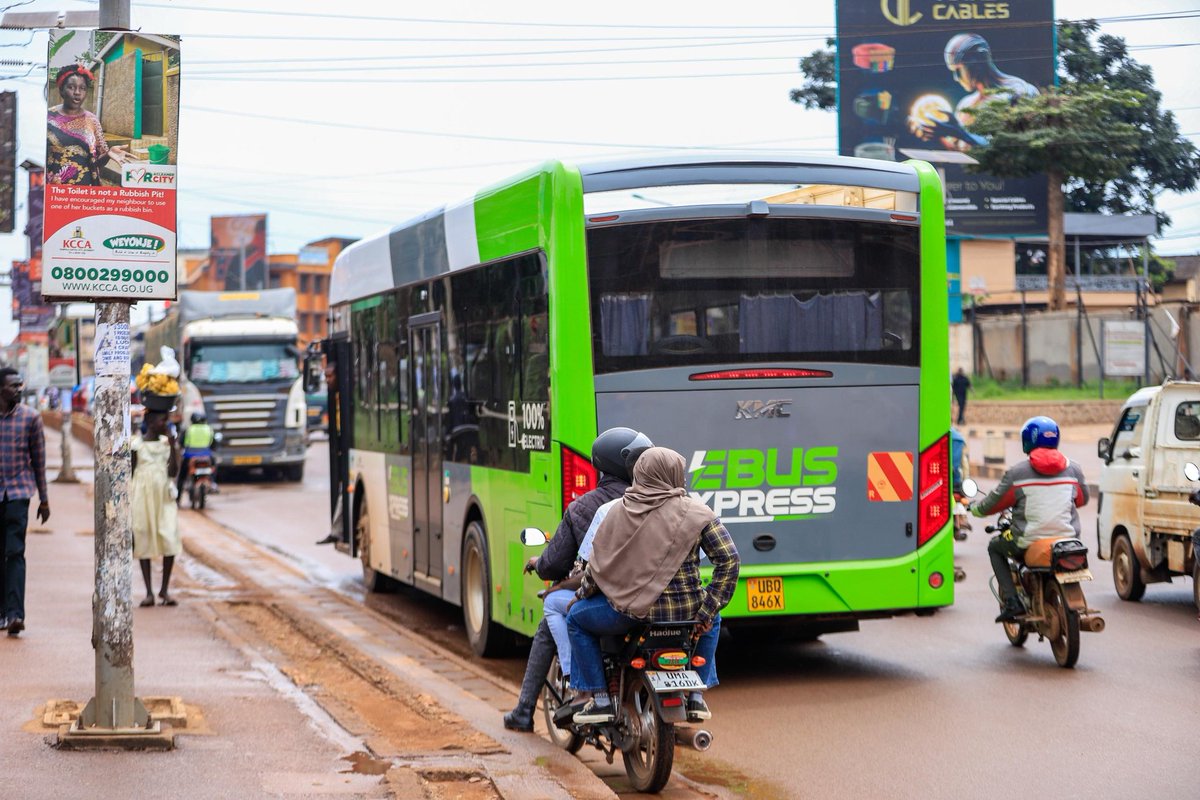
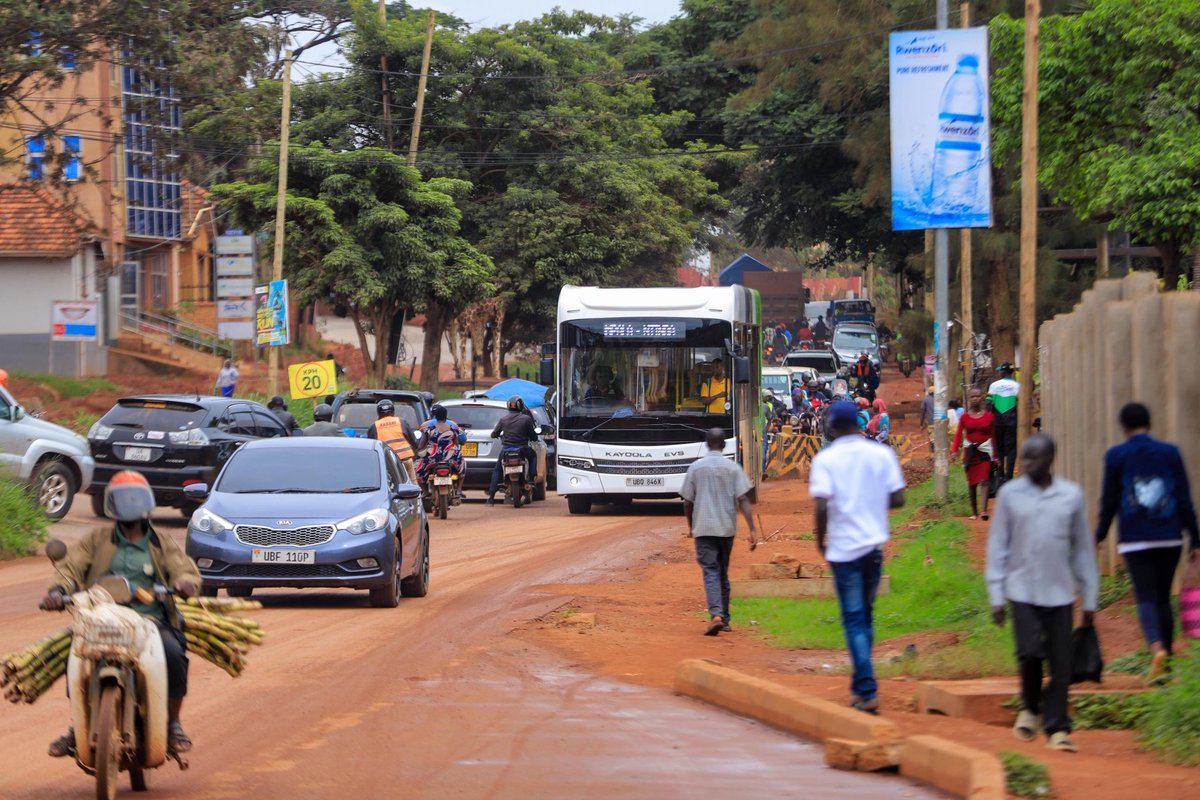
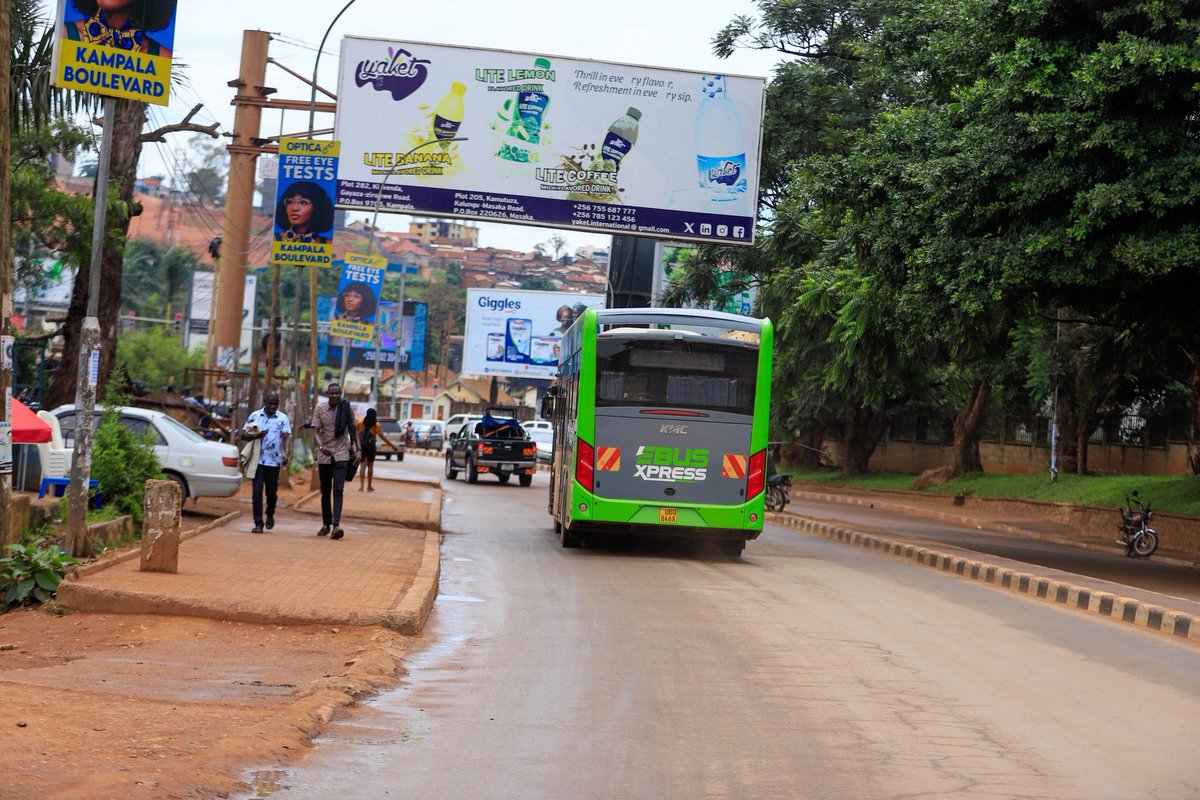
A new chapter in Uganda’s urban mobility journey begins today as E-Bus Xpress (EBX) officially launches operations in the Greater Kampala Metropolitan Area (GKMA), powered by locally manufactured electric buses from Kiira Motors Corporation.
This milestone marks a major step towards a cleaner, smarter and more organised public transport system for Kampala.
The inaugural routes are:
City Square – Nakawa – Ntinda – Bukoto – Kamwokya – Wandegeya
City Square – Wandegeya – Kamwokya – Bukoto – Ntinda – Nakawa – City Square
Uganda is driving into the future with innovation, sustainability and home-grown solutions at the centre of national transformation. #OpenGovUg
We’re not called to blend in, we’re called to stand apart.
When the Church lives differently, the world takes notice.
Watch the full teaching: https://t.co/sGZw9dIubM
#SpiritLed#SpiritEmpowered#SpiritEmpoweredChurch
Over 23,600 people accepted Jesus as their Saviour in 2025.
This is why we exist. Every number is a story. Every story matters to God.
#WatotoAGM#BoldGenerosity