🧘 Right now, dozens of devices around you are quietly saying "I'm here" over Bluetooth.
Crypto 101 e49 shows how your phone can listen and help everyday objects get found.
What is one thing in your life you wish you could always find? 👇
https://t.co/n8NaY9W4EC
Not found does not necessarily mean fake. It may simply mean that no supported credential was detected.
Have you ever misunderstood an unclear verification result?
What should newcomers do when technology gives an uncertain answer? 👇
https://t.co/Q2xdAlLbeX
Sid was an executive at Planet and CTO of Maxar Technologies, building infrastructure in space. Today he is CTO of iTradeNetwork, leading technology for a network that moves food across the US.
Some networks stop at the edge of the city. We want ours to reach the sky.
Welcome Sid Dixit, joining Intergalactic Labs, the lab behind the Nodle network and protocol, as Advisor to the Board.
“Verified” sounds final, but what does it actually confirm?
Crypto 101 e46 explores the difference between trusted, valid, failed, and not found.
What confused you most when you first encountered verification in Web3? 👇
https://t.co/Q2xdAlLbeX
Proof should inform your judgment, not replace it.
Before trusting a signed file or an on-chain claim, check the source, identity, history, context, timing, and supporting evidence. Verification can reduce uncertainty, but people still need to ask thoughtful questions.
Looking back on your Web3 journey, what is the most valuable lesson you learned through personal experience?
Leave one piece of advice for someone who has just entered crypto. Your experience could help another person avoid an expensive or frustrating mistake.
https://t.co/ODQauJavRL
#NodleNetwork #TrustNetwork #Crypto101 #Web3Education #CryptoCommunity
Verification is not a simple yes or no.
e46 breaks down:
✅ Trusted
🔑 Valid
❌ Failed
❓ Not found
Explore integrity, signer identity, timestamps, trust lists, and why valid proof does not automatically mean factual truth.
https://t.co/sCQTln14cQ
What does “verified” actually mean?
Was the file checked? The signature? The signer? Or all three?
Crypto 101 e46 explores what verification results can tell us, what they cannot, and why context still matters. 🧵
Trust is not permanent.
Keys can be lost or compromised. Certificates can expire or be revoked. Teams, policies, and communities can change. A trusted timestamp helps establish when content was signed, but people still need to consider what happened before and after that moment.
Have you ever changed your opinion of a crypto project, creator, or community? What signals influenced your decision?
Tell newcomers which warning signs they should never ignore.
https://t.co/ODQauJavRL
#NodleNetwork #TrustNetwork #Crypto101 #BlockchainSecurity #Web3Safety
Certificates and trust lists add structure to digital verification.
A certificate connects a key to information about a signer. A trust list helps a verifier determine which authorities it recognizes. These signals can support a decision, but they do not replace human judgment.
Did you ever trust a crypto claim, account, or project too quickly? What did that experience teach you?
Share one check that every newcomer should complete before acting.
https://t.co/ODQauJavRL
#NodleNetwork #TrustNetwork #Crypto101 #CryptoEducation #VerifyDontTrust
@GozemAfrica is joining the Nodle network.
The super app for French-speaking Africa is deploying Nodle in Togo, Benin, Gabon, Cameroon and the Republic of Congo to locate and recover the vehicles it leases to drivers.
Five countries. One network.
https://t.co/iXZRCBzOfc
A public key may identify the source of a signature, but it does not automatically explain the person, organization, device, or service behind it.
Reputation develops through consistent actions, transparent communication, verifiable history, and accountability.
What made you trust someone or something in Web3 for the first time? Was it their track record, community participation, technical proof, or something else?
Share the signals you think every newcomer should check.
https://t.co/ODQauJavRL
#NodleNetwork #TrustNetwork #Crypto101 #Web3Community #ContentProvenance
A valid signature can show that a particular key signed a file and that the protected data has not changed.
But trust requires another question: Who controls that key?
When you first entered Web3 or crypto, how did you decide which people, communities, and projects deserved your trust? Looking back, what advice would you give someone beginning that journey today?
https://t.co/ODQauJavRL
#NodleNetwork #TrustNetwork #Crypto101 #Web3Education #DigitalTrust
Crypto 101 e45 explores the layers behind a signed file:
🕵️♂️ Signatures and signer identity
🧾 Certificate chains and trust anchors
✅ C2PA conformance and trust lists
📝 Timestamps, revocation, and context
Read the full edition:
https://t.co/0Aj1OyMdti
A digital signature can prove that a file has not changed since it was signed.
But proof alone is not the whole story.
Who signed it? What does their certificate represent? And what should you check before placing trust in the content? 🧵
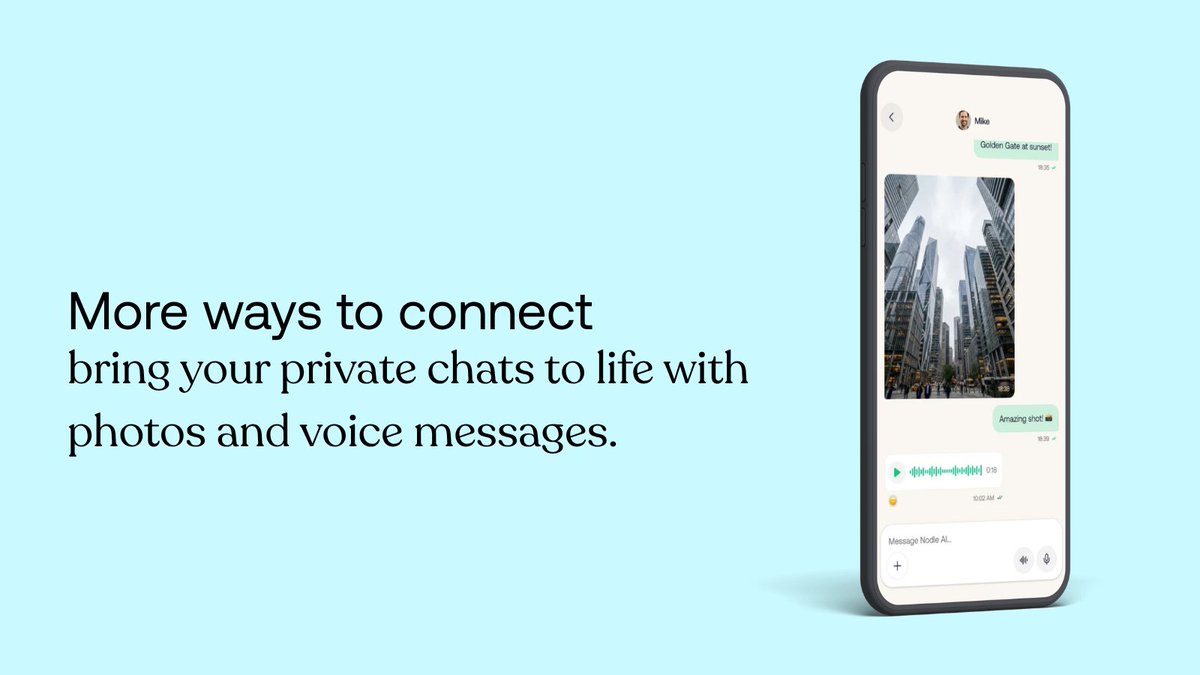
Some moments need more than text. 📸🎙️
Send photos and voice messages in private chats, with media controls to manage the experience.
Powered by @xmtp_, bringing more ways to connect inside Nodle.
Find the right BLE tag or tracker - and now make a more local choice. 📷
The Nodle Hardware Directory lets you filter manufacturers by country of origin and office location, helping you discover providers closer to home and support local dealers where possible.
Explore BLE beacons, trackers, smart labels and more:
https://t.co/dJqfXxLzIL
The future of live media is not blind trust in real time. It is evidence in real time.
Looking back at your Web3 journey, what is the one piece of advice you would give someone entering the space today?
Blog:
https://t.co/AdowgOlfbN
Thread:
https://t.co/cXMUgmPI7q