America does not have a data center problem. It has a thinking problem.
@Port_Washington ’s vote is what happens when growth is framed as a threat and scarcity is sold as common sense. #stoptherationing
"It begins quietly. A pause. A moratorium. A promise to protect families from footing the bill for someone else’s servers. It is dressed up as prudence and sold as protection.
In truth, it is permission."
https://t.co/EoqFkIyIZC
Data centers don’t just run “chatbots.”
They power cancer detection, medical imaging, drug discovery, & emergency response systems.
Calling it frivolous while complaining about energy bills misses the point entirely: we need more power, not fewer uses for it. @GovRonDeSantis
@RonDeSantis2024 Data centers don’t just run “chatbots.”
They power cancer detection, medical imaging, drug discovery, and emergency response systems.
Dismissing that as frivolous while complaining about energy bills misses the point entirely: we need more power, not fewer uses for it.
Electricity bills are rising in Pennsylvania because demand is growing and new power isn’t getting built.
PJM is warning of supply shortfalls. Plants are retiring faster than they’re replaced.
Scarcity raises prices. Capacity lowers them. @GovernorShapiro
@GovernorShapiro High electricity bills aren’t caused by utility profits.
They’re caused by a system that makes it nearly impossible to build new power.
You don’t regulate your way to abundance. You build it.
There’s no shortage of power in America.
There are roughly 2,000 GW of proposed generation sitting in interconnection queues ... far more than the electricity U.S. data centers currently use.
The problem isn’t availability.
It’s red tape.
I'm working on a report about data center developers building their own power plants and this data shocked me:
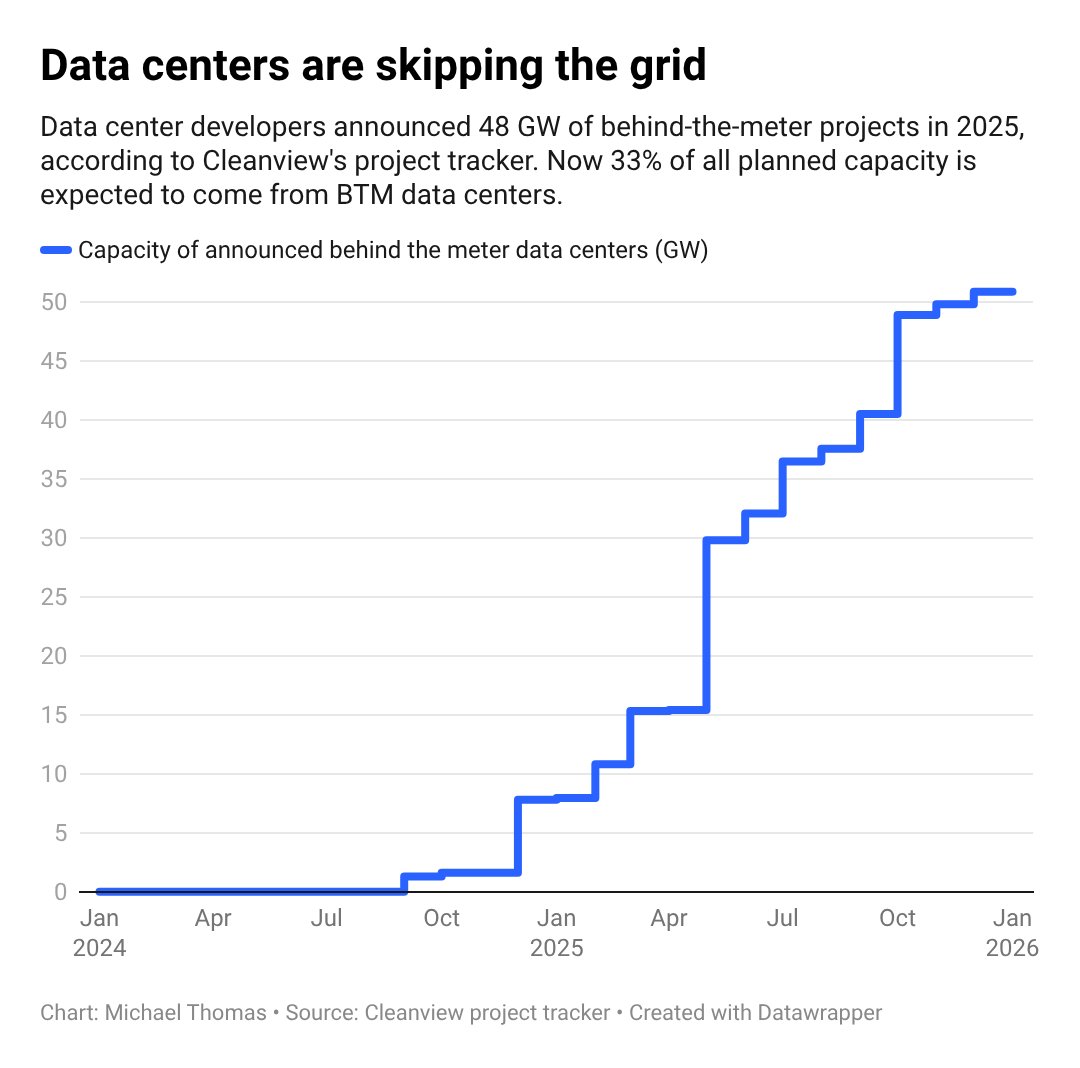
48 GW of proposed data centers—roughly 33% of all planned capacity—now plan to skip the grid by building "behind-the-meter" projects.
This is a very new trend.
A little more than a year ago, virtually all data center developers planned to use the electric grid to power 100% of their projects.
In December 2024, there was less than 2 GW of planned behind-the-meter data center capacity, according to our data center tracker at Cleanview.
Then in 2025, developers announced roughly 40 projects that planned to skip the grid partially or entirely.
Some of these projects will soon be home to America's largest fossil fuel power plants, like Homer City Energy Campus in PA—a proposed 4 GW+ natural gas plant that will send all of its power to an onsite data center.
Other projects will use a combination of technologies—everything from solar, wind, batteries, and even nuclear. Natural gas is by far the most common, though. 72% of projects plan to use it.
All projects are motivated by the same goal: getting their data center online as soon as possible.
It can take as long as 7 years to connect a hyperscale data center to the grid in a place like Virginia. Building behind the meter power in a red state with lax regulations can get that time down to less than 2 years.
But speed comes with a cost. Homer City's 4 GW project could soon become one of the largest single sources of carbon emissions in the country.
At Cleanview we're tracking more than 30 projects that plan to use onsite gas with a combined 48 GW of capacity.
The most recent NERC reliability assessment vindicates what I’ve been saying for years.
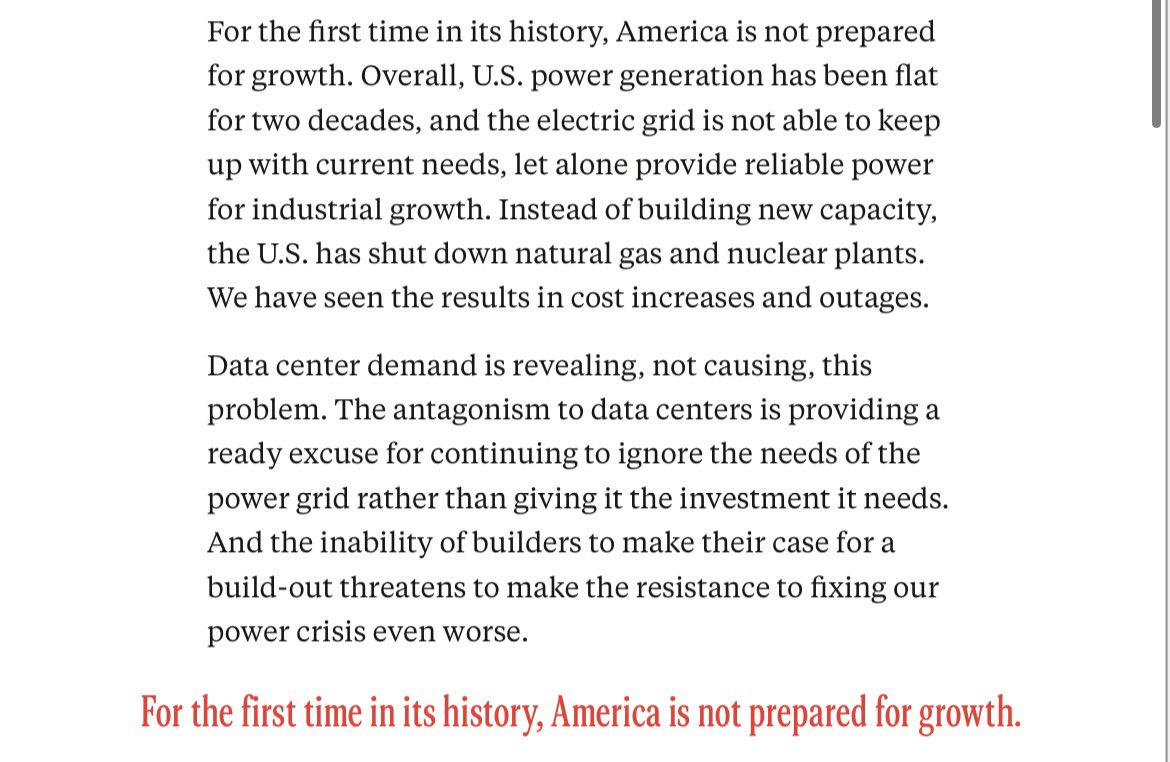
As say in @TheFP, decades of gridrot has left America unprepared for growth for the first time in its history.
Data centers are exposing, not causing grid problems.
https://t.co/ajH7djAqnH
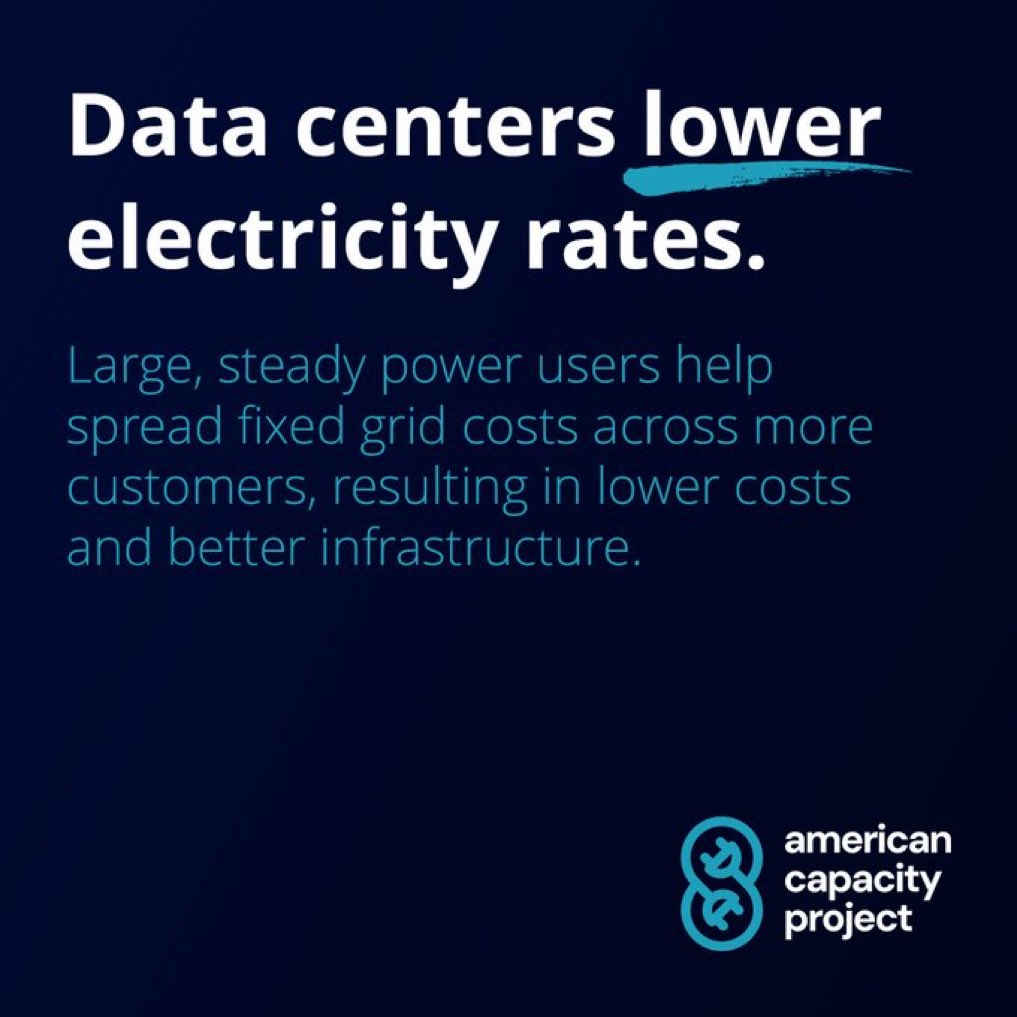
Data centers often lower electricity rates.
Large, steady power users help spread fixed grid costs across more customers and support better infrastructure.
Electricity works this way. #buildmorepower#capacitymindset