1/ 세상 어딜 가도 기레기는 있습니다. 저희 고향 영국도 예외 없죠. 텔레그래프 기사 제목부터 보세요:
"한국, 현대 문명의 종말에 대비한다"
낙하산 기자가 에너지 위기 취재하러 왔다면서 첫6개 단락을 북한 비교하는 데 씁니다.
https://t.co/g8YUTBrdZ8
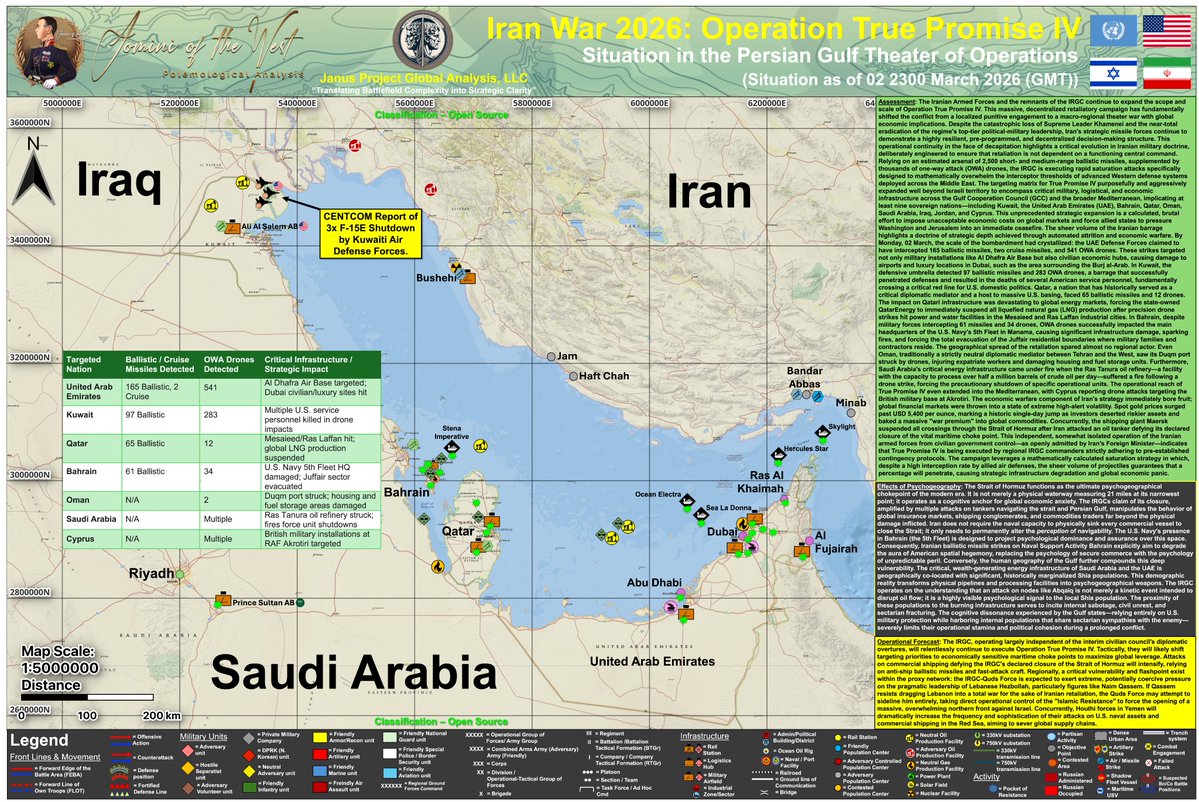
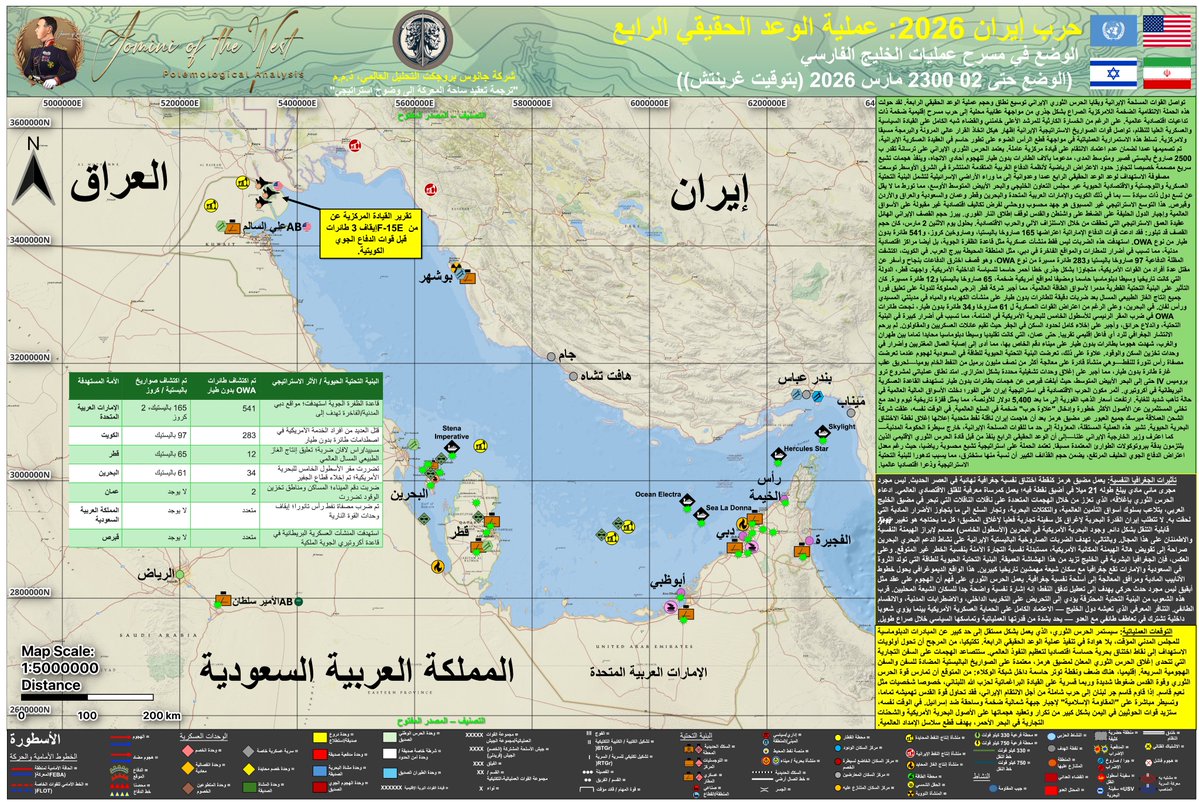
1/ Daily Tactical Update, Iran War D+3: Today's brief update focuses on the major events that transpired in the Persian Gulf and the expansion of Iran's Operation True Promise IV.
The Iranian Armed Forces and the remnants of the IRGC continue to expand the scope and scale of Operation True Promise IV. This massive, decentralized retaliatory campaign has fundamentally shifted the conflict from a localized punitive engagement to a macro-regional theater war with global economic implications.
Despite the catastrophic loss of Supreme Leader Khamenei and the near-total eradication of the regime's top-tier political-military leadership, Iran's strategic missile forces continue to demonstrate a highly resilient, pre-programmed, and decentralized decision-making structure.
This operational continuity in the face of decapitation highlights a critical evolution in Iranian military doctrine, deliberately engineered to ensure that retaliation is not dependent on a functioning central command.
#Iran #TruePromise #EpicFury #LionsRoar
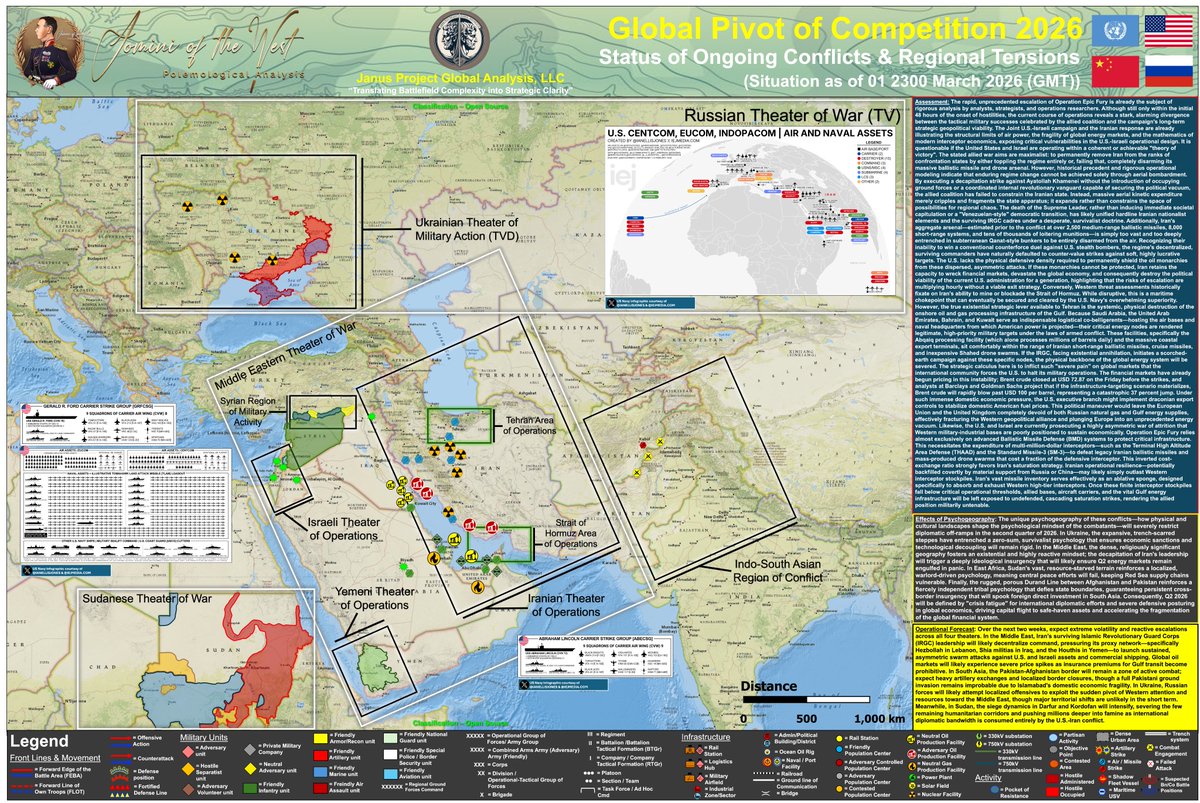
1/ Daily Tactical Update: Today's update is another brief look at the development of Operations Epic Fury, Lion's Roar, and True Promise IV. The rapid, unprecedented escalation of Operation Epic Fury is already the subject of rigorous analysis by analysts, strategists, and operations researchers. Although still only within the initial 48 hours of the onset of hostilities, the current course of operations reveals a stark, alarming divergence between the tactical military successes celebrated by the allied coalition and the campaign's long-term strategic geopolitical viability.
Over the next two weeks, expect extreme volatility and reactive escalations across all four theaters. In the Middle East, Iran’s surviving Islamic Revolutionary Guard Corps (IRGC) leadership will likely decentralize command, pressuring its proxy network—specifically Hezbollah in Lebanon, Shia militias in Iraq, and the Houthis in Yemen—to launch sustained, asymmetric swarm attacks against U.S. and Israeli assets and commercial shipping. #IranWar #Iran #EpicFury #LionsRoar #TruePromise4
This morning, the USA 🇺🇸 and Israel 🇮🇱 started a large military operation to overthrow the Iranian 🇮🇷 regime
Iran retaliated and bombed 8 countries in the middle east.
Everything you need to know is HERE :
🧵THREAD🧵1/15 ⬇️
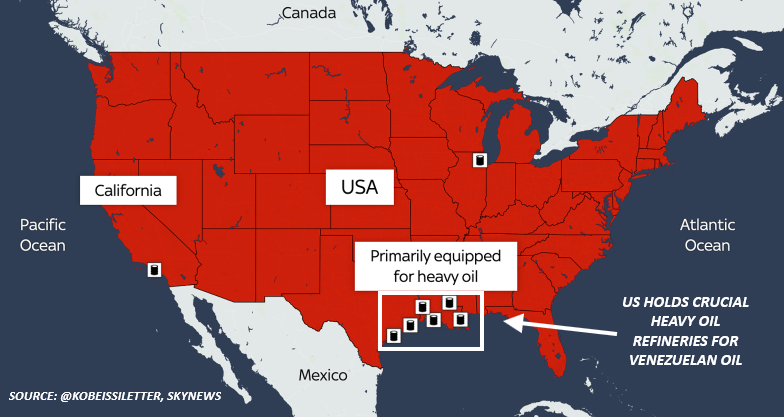
The Venezuela plot thickens:
While Venezuela holds 303 BILLION barrels of oil reserves, much of this is HEAVY crude oil.
Texas and Louisiana also *happen* to have 6 of the LARGEST HEAVY crude oil refineries in the world.
What does this mean? Let us explain.
(a thread)
Will the forcible removal of Nicolás Maduro from power through yesterday’s extraction operation by the United States lead to the democratization of Venezuela?
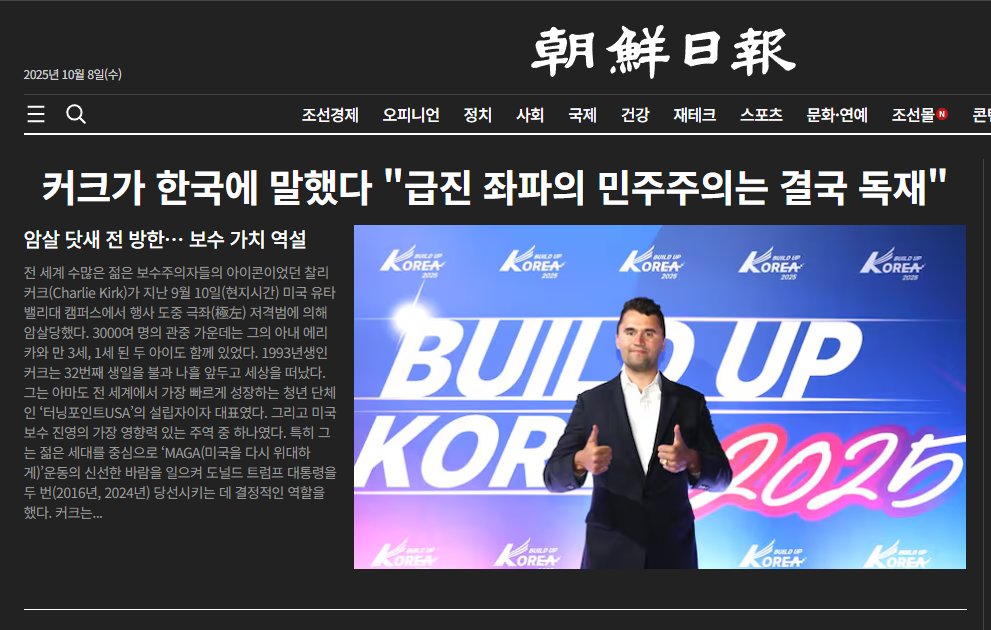
1/ Is Chosun Ilbo becoming a MAGA mouthpiece? Today, South Korea's biggest conservative paper made its top headline an essay deifying Charlie Kirk, complete with warnings about "radical-left dictatorships", framing the US-ROK alliance through shared Christian faith.
An initial assessment of the PLA parade that has just finished in Beijing. Overall, no major surprises although there were was some new equipment. The structure and content of the parade was pretty standard. Five key themes stood out for me however. 1/9 🧵
Why Iran Still Has No Functional Air Defense
People often say Iran lacks proper air defense because of U.S. and Western sanctions, and while that’s partly true, it’s far from the whole truth. The deeper issue lies in strategic indecision, deep-seated mistrust—especially toward China—and a long series of missed opportunities. Iran had multiple windows to build up a credible aerial defense system, but time and again, it chose not to act.
One of the clearest chances came in October 2020, when the UN arms embargo on Iran officially expired. This opened the door for Tehran to legally purchase advanced weapons systems from Russia and China, including fighter jets, air defense platforms, and integrated battle networks. Iran made moves—it explored options, visited factories—but in the end, failed to commit to a workable solution.
In 2021 and 2022, Iranian military officials visited China to inspect the J-10CE, a modern 4.5-generation fighter jet that Pakistan had recently acquired. The J-10CE is more than just a plane: it comes as part of a networked warfare doctrine, including radar, electronic warfare systems, data-link infrastructure, and full pilot training support. In short, it’s a plug-and-play combat package.
Pakistan recognized this and placed full trust in the Chinese system. That trust paid off. In the 2025 Indo-Pakistani aerial confrontation, Pakistan used this integrated system—specifically the J-10CE armed with the PL-15 long-range missile—to devastating effect. Pakistani officials later claimed they had downed six Indian aircraft, including four Rafales, and that they had radar locks on at least fifteen Indian jets but chose to hold back.
Iran, despite being offered the same system, walked away. It wasn’t just the J-10 it rejected. Iranian officials also inspected the JF-17 “Thunder” (known as 枭龙 in Chinese), a jointly developed fighter jet by China and Pakistan, and again passed on the opportunity.
Instead, Iran turned to Russia in 2023, at a time when Moscow was already bogged down in the war in Ukraine, which had begun on February 24, 2022. Tehran tried to acquire Su-35s and, more ambitiously, wanted to purchase the entire production line for domestic assembly. But two years later, by mid-2025, not a single Su-35 has arrived in Iran. No planes. No production line. No training systems. No change in combat readiness.
By this point, one would expect Iran to reassess its options and consider buying from China. But it didn’t. Iran preferred to go without any new fighters at all rather than rely on Chinese technology. The reason? A deeply ingrained belief that Chinese defense equipment is of inferior quality.
Take the case of the C-802 anti-ship missile, a Chinese system Iran had acquired in the early 2000s. Iranian engineers, convinced there were flaws in the original Chinese design, modified the missile’s guidance system without consulting China. Subsequent test launches failed: the missiles missed their targets every time. When Chinese technicians were called in for after-sales support, they found the issue wasn’t with the original system—it was with Iran’s modifications. Once restored to factory settings, the missiles performed exactly as intended.
Iran's attitude toward Chinese arms: suspicion, second-guessing, and ultimately, rejection.
Yet the irony is this: Iran wasn’t short on cash. With the money it had, it could have very easily built up its aerial defense system.
According to estimates from the U.S. State Department and various intelligence sources, Iran has spent roughly $15–20 billion supporting the Syrian government since 2011—averaging about $2 billion per year in military aid, fuel subsidies, logistics, and training. On top of that, Hezbollah receives an estimated $700 million annually, with some years seeing even higher flows. These are massive, long-term investments in foreign partners.
PD수첩 의뢰로 진행한 <대법관들의 판결 성향은 정치적 환경에 어떻게 영향받을까? : AI를 활용한 전원합의체 판례분석>이 어제(10일)자 방송에서 소개되었습니다.
방송은 아주 부분적인 내용 위주로 편집되어, 보다 균형있는 이해를 위해 원 분석을 상세하게 소개하자면 쟁점은 크게 세 가지입니다
1/ A few weeks after President Yoon declared martial law in December, I was able to read a military document detailing how martial law would have worked... has it been successful.
The content was so disturbing that I still have nightmares about it.
It's been 24 hours since OpenAI unexpectedly shook the AI image world with 4o image generation.
Here are the 14 most mindblowing examples so far (100% AI-generated):
1. Studio ghibli style memes
1/ What today's Han Duck-soo ruling tells us about President Yoon's impeachment case: not much.
Here are the implications from the Constitutional Court's decision:
A sobering message from a history teacher:
I’ve spent years teaching American and international government — from strong democracies like the UK to authoritarian regimes like russia and China.
But lately, the most alarming lesson comes from home.
1/n
1/ We find ourselves again not knowing when Yoon's impeachment verdict will be announced. So much speculation. Only the 8 justices know what's going on. Meanwhile, this endless guessing game continues as Korean media try to decipher every signal from the Constitutional Court: