The New Congress Is Almost Here. Citizens Need to Be Ready.
A new Congress is about to begin.
What comes next remains to be seen.
Unfortunately, Washington has a habit of focusing on what creates headlines, controversy, conflict, and great television.
The problem is that the bill for the show is becoming increasingly expensive.
Americans are paying it every day through housing costs, debt, healthcare costs, retirement concerns, workforce uncertainty, and the challenges created by rapid technological change.
Meanwhile, corporations, trade associations, lobbyists, and special interest groups are already preparing for the start of the new Congress.
They are not waiting until January.
They are in the starting blocks now.
They are building relationships, shaping priorities, and influencing the conversations that will ultimately become legislation.
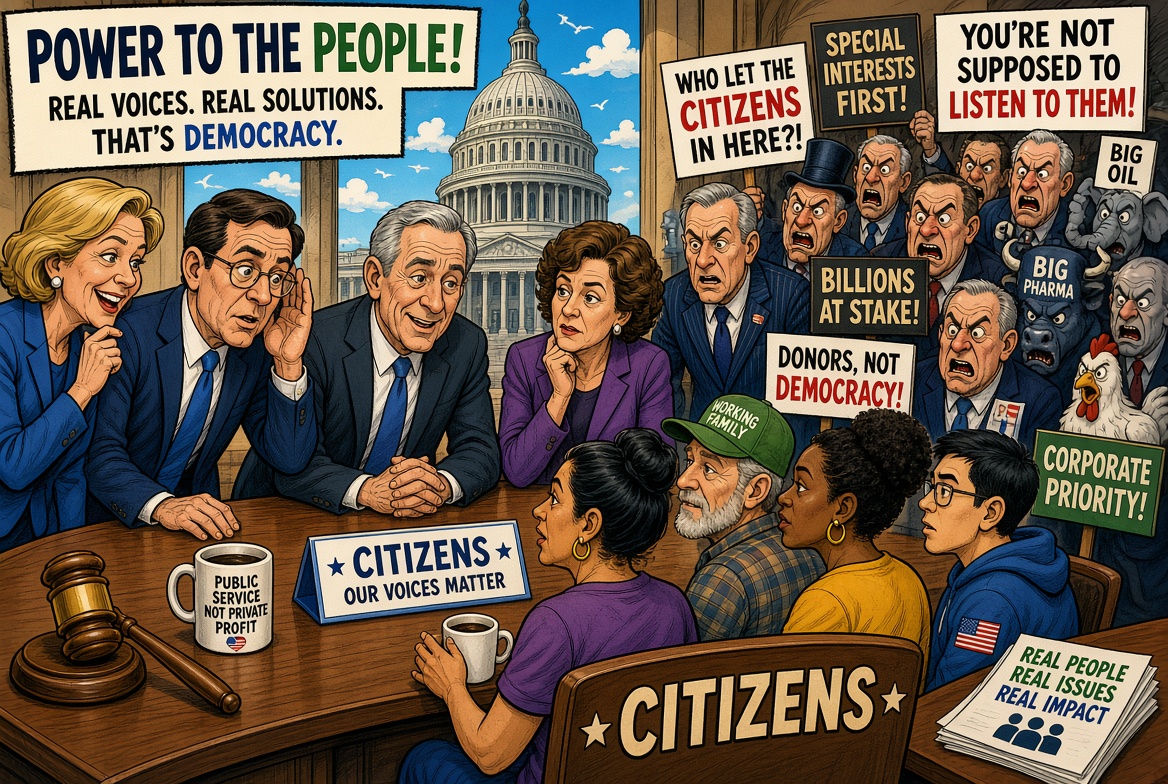
Citizens deserve a seat at that table too.
That is why I built AmericansSay.
The goal is simple:
Help citizens identify priorities, discuss solutions, find common ground, and communicate what Americans actually want legislators to focus on.
Our leaders face difficult decisions every day.
Most would likely benefit from knowing where citizens truly stand on the issues that affect their lives.
Soon, I will begin seeking members who want to be part of that effort.
Not just people who want to complain about government.
People who want to help improve it.
People who want a voice in the direction of the country.
People who want to understand why they are or are not being heard.
Getting https://t.co/GSbK5XTw9Z off the ground is a heavy lift.
If you believe citizens deserve a stronger voice between elections, follow the page, share the mission, and reach out if you'd like to help.
The election is over.
The governing is about to begin.
Now is the time for citizens to get involved.
The majority voice deserves a seat at the table.
#AmericansSay #Congress #CitizenVoice #CivicEngagement #Democracy #Government #Legislation #120thCongress #PublicPolicy
Education may be one of the most important issues facing the country.
Regardless of where someone places responsibility, most Americans would probably agree on a few things:
Students should graduate prepared for life.
Reading proficiency matters.
Math proficiency matters.
Critical thinking matters.
Career readiness matters.
The question isn't just what's wrong.
The question is what reforms citizens, parents, teachers, employers, and communities believe would produce better outcomes for students.
Education affects the future workforce, economic opportunity, and the long-term success of the country.
Healthcare affordability is one of the issues that consistently affects Americans regardless of political affiliation.
The discussion shouldn't stop at who is to blame.
The more important question is which solutions citizens believe would actually lower costs, improve access, and produce better outcomes.
Too often, those conversations happen without directly asking the people paying the premiums, purchasing medications, and navigating the system every day.
Healthcare isn't a Republican issue or a Democratic issue.
It's an American issue.
Citizens deserve a stronger voice in shaping the solutions. #AmericansSay
Regardless of where someone stands on immigration policy, government officials should be able to perform their duties safely and free from threats against themselves or their families.
At the same time, citizens expect transparency, accountability, and oversight from the institutions that exercise government authority.
The challenge isn't choosing one principle over the other.
It's ensuring both exist together.
Too often public debates become about teams and talking points when the real questions are about balancing safety, accountability, and public trust.
Those are conversations citizens should help shape, not just watch from the sidelines.
#AmericansSay #CitizenVoice #Government #PublicPolicy #Accountability #Democracy
Elections are about gaining power.
Governing is about how that power is used.
Most citizens aren't looking for revenge from either party.
They're looking for results.
Lower costs. Better opportunities. Safer communities. Stronger schools. A secure retirement. Government that works.
The real question isn't who won.
The real question is whether those elected will focus on solving problems that affect everyday Americans.
Citizens may disagree on politics, but most agree they want progress more than payback.
#AmericansSay
Regardless of political views, one principle should apply everywhere in government:
Transparency builds trust.
Citizens deserve to understand who is making decisions, how those decisions are made, and which institutions are influencing public policy.
Healthy democracies don't fear scrutiny, oversight, or difficult questions.
They welcome them.
The more information citizens have about how government operates, the better equipped they are to participate in meaningful discussions about reform, accountability, and the direction of the country.
An informed citizenry is one of the strongest safeguards any democracy can have.
#AmericansSay
Whether it's the United Nations, Congress, a state government, or any large institution, the same question eventually emerges:
How do organizations remain accountable to the people funding and supporting them?
Most citizens understand that institutions require resources.
They also expect transparency, measurable results, and a willingness to reform when systems are no longer working as intended.
The debate isn't always about more funding or less funding.
Sometimes it's about whether meaningful reforms should accompany it.
That's a conversation worth having in every institution funded by the public. #AmericansSay
Affordability may be one of the few issues that unites Americans across political lines. The interesting question isn't whether families want lower costs. Almost everyone does. The question is which solutions citizens believe will have the greatest impact on housing, energy, healthcare, food, childcare, and everyday living expenses. Too often, those conversations happen between elected officials, experts, corporations, and interest groups. Citizens should have a stronger voice in helping identify the priorities and solutions that affect their daily lives. Affordability isn't a partisan issue. It's an American issue. That's exactly the kind of conversation https://t.co/GSbK5XTw9Z was built to facilitate.
This is one of the reasons AmericansSay is being built with both federal and state legislative engagement in mind.
Many Americans focus primarily on Congress, but some of the most impactful decisions affecting daily life are increasingly happening in state capitals.
Housing.
Healthcare.
Education.
Childcare.
Workforce development.
These issues often move through state legislatures long before they become national conversations.
If citizens want a stronger voice in shaping policy, they need meaningful ways to engage not only with Washington, but with their own state governments as well.
Democracy is strongest when citizens participate where decisions are actually being made.
IS ANYONE FOR THIS?
Before the lobbyists.
Before the special interests.
Before the consultants.
Before the talking points.
What if we asked the American people first?
Would you support:
Single-issue bills only (no more 1,000-page monsters)
Banning members of Congress from personally benefiting while in office
Term limits
Real tax reform
Radical transparency
Balanced budget requirements
A complete ban on congressional stock trading
Or something entirely different?
We don’t know.
Because citizens are almost never asked in a structured way before the process begins.
That’s why AmericansSay is being built — not to tell you what to think, but to discover what you actually think. And to connect that voice to both Congress and your state legislature.
The new Congress is coming.
The special interests are already organized.
Maybe it’s time citizens were too.
The majority voice deserves a seat at the table.
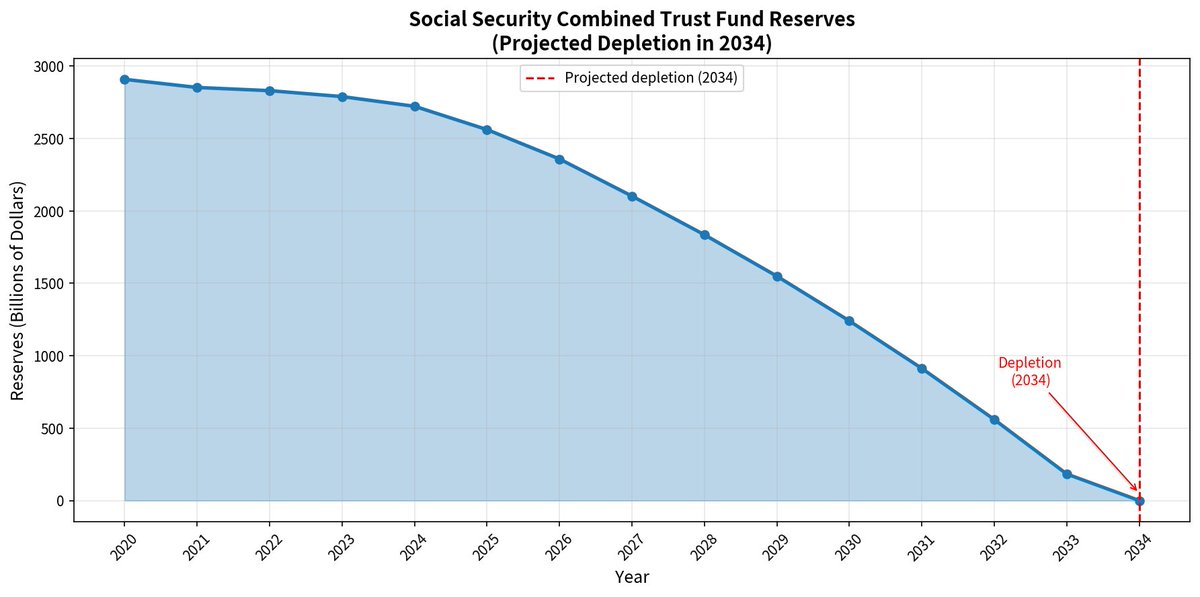
As the new Congress begins, should every option be on the table to strengthen Social Security?
Here's a thought experiment.
The U.S. now has approximately 23.6 million millionaires.
Assuming a projected Social Security benefit of $27,000 per year over 10 years, that represents roughly $6.4 trillion in future payments.
What if individuals above a certain net-worth threshold were offered a voluntary one-time buyout at a discounted value instead of lifetime benefits?
At 50 cents on the dollar, that theoretical obligation would be about $3.2 trillion.
Not advocating for it.
Just asking a broader question:
Should the new Congress be willing to discuss every possible option for strengthening Social Security, or are some ideas off limits before the conversation even begins?
Doing nothing is also a decision.
What would you consider?
https://t.co/GSbK5XTw9Z was created to help citizens explore ideas like these, debate alternatives, identify common ground, and develop solutions that can be presented directly to lawmakers rather than leaving the conversation solely to political parties, lobbyists, and special interests.
How much time do we spend arguing about issues that have little chance of changing the lives of most Americans while major challenges continue to grow?
Whether it's investigations, impeachments, political theater, or the outrage of the week, millions of Americans are left wondering:
What about household debt?
What about rising interest costs?
What about Social Security?
What about healthcare affordability?
What about housing?
What about workforce disruption from AI?
What about the issues affecting everyday citizens right now?
The reality is that Congress has a limited amount of time, attention, and political capital.
Yet too often, Americans feel like they are watching competing political tribes fight battles while the issues affecting their daily lives remain unresolved.
Maybe that's one reason trust continues to decline.
AmericansSay isn't being built around political parties.
It's being built around a question:
What would Congress focus on if citizens had a stronger voice in determining priorities?
The new Congress gives us a unique opportunity.
Every bill starts over.
Every committee resets.
Every priority must be established again.
For perhaps the first time in a long time, citizens can begin participating at the start of the conversation instead of reacting after decisions have largely been made.
And if citizens engage, discuss the issues, identify common ground, and clearly communicate their priorities, something valuable happens.
Either Congress listens.
Or it doesn't.
If it does, that's progress.
If it doesn't, we learn something equally important.
We learn where the disconnect truly exists.
We learn what must change.
And we can begin building the consensus necessary to create that change.
AmericansSay is preparing for member onboarding ahead of the new Congress because the best time to be heard is not after decisions are made.
It's while priorities are still being formed.
Government shouldn't be on autopilot between elections.
The majority voice deserves a seat at the table.
#AmericansSay #CitizenVoice #Congress #CivicEngagement #GovernmentAccountability #120thCongress
What Congress Is Working On vs. What Americans Need
Pete Hegseth may be important.
But does another impeachment proceeding improve Social Security?
Does it lower credit card interest rates?
Does it reduce the cost of housing?
Does it prepare workers for AI-driven job disruption?
Millions of Americans are worried about retirement security, debt, affordability, and what the next few years of AI advancement will mean for their jobs and families.
Yet much of the national conversation is focused on political battles that may generate headlines but do little to address the challenges facing ordinary citizens.
Government has limited time.
If Congress can spend months focused on one issue, shouldn't citizens have a stronger voice in determining what that issue should be?
That's one of the reasons https://t.co/GSbK5XTw9Z exists.
The majority voice deserves a seat at the table.
#AmericansSay #CitizenVoice #Congress #SocialSecurity #CostOfLiving #FutureOfWork #AI
How much time do we spend arguing about issues that have little chance of changing the lives of most Americans while major challenges continue to grow?
Whether it's investigations, impeachments, political theater, or the outrage of the week, millions of Americans are left wondering:
What about household debt?
What about rising interest costs?
What about Social Security?
What about healthcare affordability?
What about housing?
What about workforce disruption from AI?
What about the issues affecting everyday citizens right now?
The reality is that Congress has a limited amount of time, attention, and political capital.
Yet too often, Americans feel like they are watching competing political tribes fight battles while the issues affecting their daily lives remain unresolved.
Maybe that's one reason trust continues to decline.
https://t.co/GSbK5XTw9Z isn't being built around political parties.
It's being built around a question:
What would Congress focus on if citizens had a stronger voice in determining priorities?
The new Congress gives us a unique opportunity.
Every bill starts over.
Every committee resets.
Every priority must be established again.
For perhaps the first time in a long time, citizens can begin participating at the start of the conversation instead of reacting after decisions have largely been made.
And if citizens engage, discuss the issues, identify common ground, and clearly communicate their priorities, something valuable happens.
Either Congress listens.
Or it doesn't.
If it does, that's progress.
If it doesn't, we learn something equally important.
We learn where the disconnect truly exists.
We learn what must change.
And we can begin building the consensus necessary to create that change.
https://t.co/GSbK5XTw9Z is preparing for member onboarding ahead of the new Congress because the best time to be heard is not after decisions are made.
It's while priorities are still being formed.
Government shouldn't be on autopilot between elections.
The majority voice deserves a seat at the table.
#AmericansSay #CitizenVoice #Congress #CivicEngagement #GovernmentAccountability #120thCongress
The New Congress Creates a Rare Opportunity
For years, citizens have been reacting to legislation after it's already been written, negotiated, amended, and largely decided.
A new Congress changes that.
Every bill starts over.
Every committee resets.
New legislation is introduced.
New priorities emerge.
The conversation begins again.
That's exactly why AmericansSay matters.
Instead of trying to influence legislation after positions have hardened, citizens can engage at the beginning, when ideas are still being shaped.
Corporations have lobbyists ready on Day 1.
Trade associations have lobbyists ready on Day 1.
Special interests have lobbyists ready on Day 1.
Citizens generally do not.
The start of a new Congress is one of the few moments where ordinary Americans can begin on relatively equal footing, before hundreds of bills are already moving through the process.
AmericansSay exists to help citizens:
Understand legislation in plain English.
Identify issues that significantly impact citizens.
Discuss those issues with other Americans.
Find common ground.
Communicate majority positions through professional advocacy.
The reality is that most Americans only get involved when a bill becomes controversial enough to make the news.
By then, much of the work has already happened.
A new Congress gives Americans a chance to engage earlier, understand more, and have a stronger voice before decisions are largely made.
The best time to be heard isn't after legislation is passed.
It's when legislation is being created.
That's why the launch timing matters.
Government shouldn't be on autopilot between elections.
The majority voice deserves a seat at the table.
We May Be Underestimating How Fast AI Will Change Work
I keep hearing comparisons between AI and past innovations.
The automobile replaced the horse.
The internet disrupted newspapers.
Cell phones replaced landlines.
But I don't think AI is simply another chapter in that story.
This feels different.
Not because AI is smarter than people.
Because AI is spreading into hundreds of professions simultaneously.
A few years ago, if 100 small businesses needed websites, many would hire designers, developers, copywriters, marketers, and support staff.
Today, a single person can build much of that themselves using AI and modern software tools.
The same pattern is appearing in:
Customer service
Reception
Call centers
Paralegal research
Drafting
Technical support
Software development
Graphic design
Media production
Journalism
Marketing
Administrative work
Business operations
And we're still in the early stages.
Imagine millions of people building applications, automations, CRM systems, business software, products, media, and services that previously required teams of employees or outside vendors.
That productivity gain is extraordinary.
But it also raises a question we aren't discussing enough:
What happens if AI succeeds?
Not fails.
Succeeds.
If the same amount of work can be performed by significantly fewer people, how do we adapt as a society?
How do we prepare workers?
How do we maintain economic opportunity?
How do we ensure citizens remain participants in the future being built?
I am not anti-AI.
Quite the opposite.
AI may help solve some of humanity's biggest challenges.
But pretending there will be no significant workforce disruption may be just as dangerous as pretending there are no benefits.
The opportunities are real.
The disruption is real too.
And unlike almost every major innovation before it, this transition may unfold globally in years, not generations.
What do you think the workforce looks like five years from now?
#AI #FutureOfWork #Innovation #ArtificialIntelligence #Technology #Productivity #Society #AmericansSay
Corporations have lobbyists. Unions have lobbyists. Hospitals, universities, trade associations, foreign governments — all of them have someone whose full-time job is being in the room when legislation gets written.
Citizens get an email form.
I've been working on closing that gap since 2010. It's called Americans Say.
Verified citizens vote on which issue matters most. Surveys turn that vote into language specific enough to legislate from. The majority position is then filed with Congress by registered lobbying professionals — on the public record, under the Lobbying Disclosure Act. The same mechanism everyone else has used for decades.
Not a petition. A filing.
Open to anyone right now, no account:
→ Every bill before the 119th Congress, with the lobbying money attached to it
→ Live floor records from both chambers
→ Find your senators and representative by ZIP
→ Three bills a week you can vote on without joining
https://t.co/Q83M1mrqTP
What isn't there yet: members.
I built the whole thing before asking anyone to join. That's backwards, and it was deliberate — I wanted something that worked before I asked anyone for anything.
The first vote closes March 15, 2027, after the 120th Congress convenes.
Before then the whole thing gets rebuilt — web and mobile. It's called the Super Civic Connector, and I'm building it in the open: what's live, what's in progress, and the dates.
Founding membership is $5. One time. Not for the money — a card charge is the cheapest way I know to tell a person from a script. Anyone can create a thousand email addresses. Nobody creates a thousand verified payment methods. That single check is the difference between a position a congressional office can rely on and one more petition it has learned to set aside.
250 numbers. Then they're gone.
Most Americans probably agree on one thing:
They want to know where their tax dollars are going and why.
Transparency should not be partisan.
Citizens deserve clear information and meaningful opportunities to weigh in on spending priorities before decisions are made.
#AmericansSay
Great to see students engaged in conversations about their community and its future.
Civic engagement isn't something we suddenly learn as adults. It starts when people begin asking questions, sharing ideas, and understanding how decisions affect the places where they live.
Voting matters.
So does learning how communities work, how problems get solved, and how citizens can remain involved after Election Day.
The future of civic engagement starts with the next generation.
#AmericansSay #CivicEngagement #CitizenVoice