Necesitamos una revolución, estoy chata de que los pinches hombres, sea cual sea su nacionalidad, su color, su idioma, su religión, su sexualidad sigan creyendo que pueden decir o hacer con las mujeres lo que quieran sin consecuencias. NECESITAMOS REVOLUCIÓN!! #women
El ministerio de deporte y el gobierno de kast no sabe la cagada que se estan metiendo por meterse con un fandom como army, con bts, con el kpop, siendo este país el más kpopero de latam, SON ESTUPIDOS, DENLE CON TODO ARMYS, YO LAS APOYO A CUALQUIER COSA!! RECLAMEN CON TODOOO
Yo vivo de estas migajas gente, de estas migajas que nos dan cada 3 meses wn jajaja, fiel al 2ho desde 2020, no conoceran a nadie tan fiel a un ship como yo con el 2ho XD
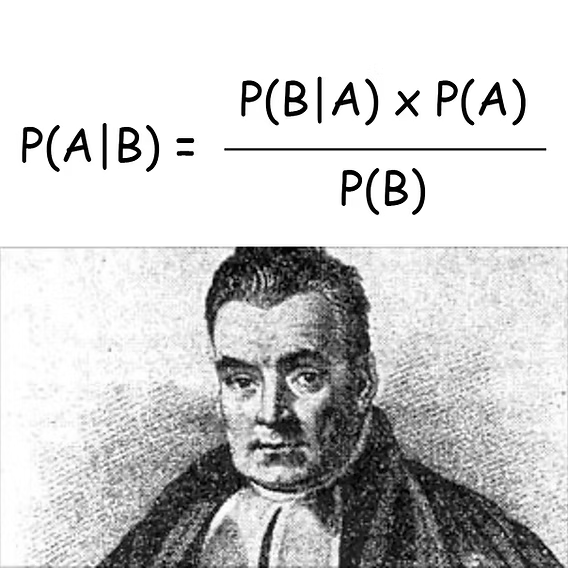
Bayes’ theorem is a rule in probability that tells you how to update the probability of a hypothesis when you get new evidence.
Bayes’ theorem is named after the 18th-century Thomas Bayes, and essentially it’s a formula that asks: when you are presented with all of the evidence for something, how much should you believe it?
Bayes’ theorem teaches us that our beliefs are not fixed; they are probabilities. Our beliefs change as we weigh new evidence against our assumptions, or our priors. In other words, we all carry certain ideas about how the world works, and new evidence can challenge them.
For example, somebody might believe that smoking is safe, that stress causes mouth ulcers, or that human activity is unrelated to climate change. These are their priors, their starting points. They can be formed by our culture, our biases, or even incomplete information.
Now imagine a new study comes along that challenges one of your priors. A single study might not carry enough weight to overturn your existing beliefs. But as studies accumulate, eventually the scales may tip. At some point, your prior will become less and less plausible.
Bayes’ theorem argues that being rational is not about black and white. It’s not even about true or false. It’s about what is most reasonable based on the best available evidence. But for this to work, we need to be presented with as much high-quality data as possible. Without evidence—without belief-forming data—we are left only with our priors and biases. And those aren’t all that rational.
sometimes i wake up, look at my phone, and instantly feel overwhelmed by the pull to absorb more info. so im building the opposite: a way to revisit things that already inspired me (a graph of the @AREdotNA channels i follow)
visually it's hugely inspired by CAIDA's walrus: a constant imagery of flowers of knowledge
Não entendo de verdade pq as mulheres brasileiras não seguem o conselho das coreanas e continuam colocando homem no mundo. Imagina você nutrir essa porcaria por meses, colocar sua vida em risco de diversas formas, só pra ele crescer e ficar larpando de integralista na internet.
La verdad hay veces que me quiero pegar un tiro por ver cómo les lavan el cerebro a las mujeres para continuar estereotipos sexistas, que les guste el azul y los autos y deportes no te hace hombre, eres simplemente una mujer, una persona con gustos propios.
It's so depressing that women spent lifetimes breaking down barriers, fighting stereotypes, refusing to be put into boxes... only for the freest generation of women yet to say: 'I like those gender stereotypes, actually. Time to chop up my body to conform to the set I prefer'.