We simply do not know what will be required by the job market in the coming decades. What matters most is the capacity to remain flexible, and to have a wide range of skills – intellectual, physical and social.
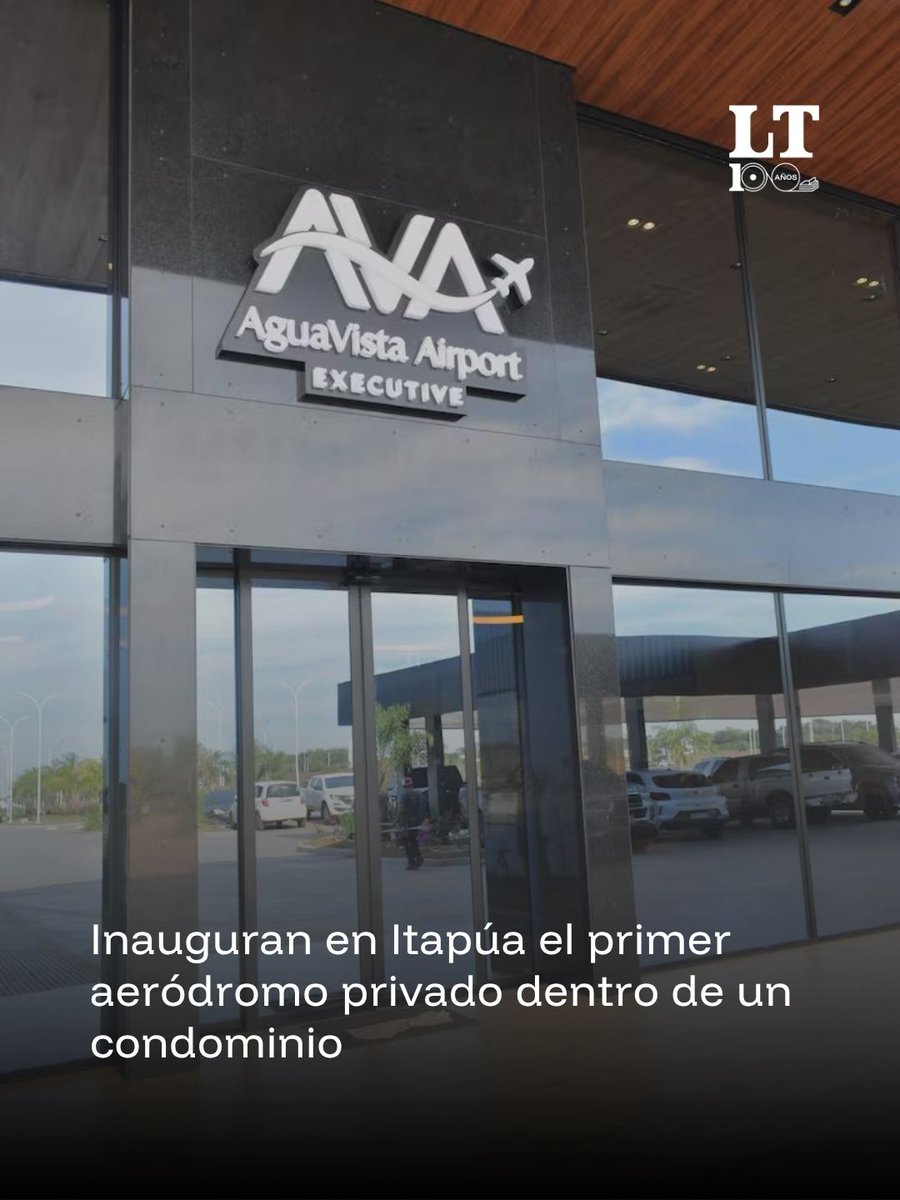
✈️🇵🇾 Itapúa estrena aeropuerto privado
💰Itapúa da un paso histórico con la inauguración del Aguavista Airport Executive, el primer aeródromo privado de la región ubicado dentro de un condominio residencial. La obra, que demandó una inversión superior a los 16 millones de dólares, está situada en San Juan del Paraná, a solo 15 kilómetros de Encarnación, y ya cuenta con todas las habilitaciones necesarias para operar.
🛩️La moderna infraestructura permitirá conectar rápidamente distintos puntos del país y recibir más del 90% de las aeronaves ejecutivas de la región. Además, cuenta con una pista pavimentada de 1.300 metros, hangares públicos y privados, torre de control, helipuerto, espacios de coworking, restaurante rooftop y estacionamiento.
📈🌎Impulsado por el empresario Andrés Trociuk y desarrollado por A+E Sociedad Anónima, el proyecto busca fortalecer la conectividad aérea, atraer inversiones y convertirse en un importante motor de desarrollo para Encarnación e Itapúa.
https://t.co/RW1o8e8YHz
#LaTribuna #LaTribunaParaguay
𝐋𝐚 𝐦𝐚́𝐪𝐮𝐢𝐧𝐚 𝐞𝐬𝐭𝐚́ 𝐥𝐢𝐬𝐭𝐚 𝐩𝐚𝐫𝐚 𝐞𝐥 𝐦𝐮𝐧𝐝𝐨 🦾🇵🇾🏆
Midfielder Andrés Cubas has earned a spot on Paraguay’s final 26-man roster for the FIFA World Cup 2026™.
¡Vamos Cubas!
📰 | https://t.co/eSKI4rDf0O
#VWFC | #VamosParaguay 🇵🇾
MAIS UMA VEZ, É O GRÊMIO NA COPA 🇵🇾🇧🇷 Balbuena está na lista do técnico Gustavo Alfaro para representar a Seleção Paraguaia na Copa do Mundo. O zagueiro Tricolor soma mais uma convocação vestindo a camisa da 𝒂𝒍𝒃𝒊𝒓𝒓𝒐𝒋𝒂 e vai estar com as três cores no maior palco do futebol. Estamos orgulhosos! ¡Buena suerte! 👏🏽
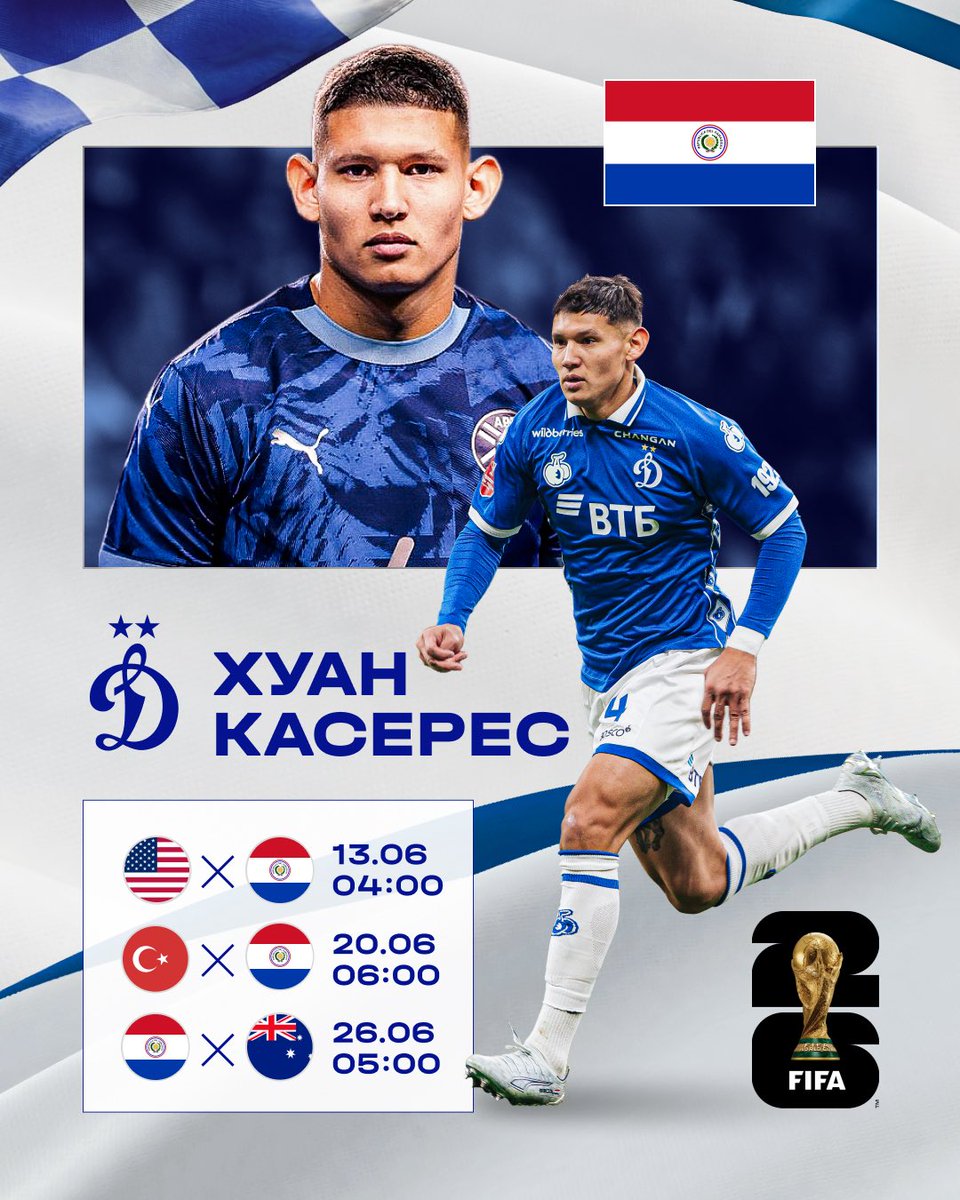
🇵🇾 ¡𝐂𝐨𝐧𝐯𝐨𝐜𝐚𝐝𝐨!
Parabéns, Damián Bobadilla, por integrar o elenco do Paraguai na Copa do Mundo!
A Seleção Paraguaia está no Grupo D, ao lado de Estados Unidos, Turquia e Austrália.
#VamosSãoPaulo 🇾🇪
A British biologist looked at 200,000 years of human history and found that the entire reason humans broke out of poverty was not intelligence, not language, not even agriculture, but one mechanism so simple a 6-year-old could explain it.
His name is Matt Ridley.
He is a zoologist by training, an evolutionary biologist by career, and in 2010 he wrote a book called The Rational Optimist that quietly argued the most important fact about human progress had been hiding in plain sight for the entire history of economics.
Naval Ravikant has been telling people to read everything Ridley has ever written for the last 15 years. The reason is the argument inside this one book.
For 200,000 years, anatomically modern humans walked around with the same brain you have right now. Same skull size. Same neural architecture. Same raw capacity for language, planning, and abstract thought.
For roughly 190,000 of those years, almost nothing happened. Generation after generation lived and died inside the same Stone Age toolkit their great-great-grandparents had used. Then somewhere around 50,000 years ago, the line on the chart of human progress started to tick upward. Then it bent. Then it exploded.
The question Ridley spent years on was the only question that mattered. What changed.
It was not the brain. The brain had been the same for 190,000 years. It was not language, which had existed long before the takeoff. It was not even agriculture, which arrived only 10,000 years ago and was actually preceded by the upward bend, not the cause of it.
What changed was that humans started trading with strangers.
This sounds too small to be the answer. Ridley argues that it is the answer to almost everything. The moment one human exchanged a useful object with another human from a different group, something happened that no other species on earth had ever done.
Two ideas that had developed in isolation came into contact. The flint knapper learned what the spear maker had figured out. The fisherman from the coast learned what the hunter from the forest had figured out. The two pieces of knowledge fused into something neither side could have produced alone.
Ridley calls this ideas having sex. The phrase sounds frivolous and it is meant to. The point is that ideas, like genes, get better when they combine with other ideas from different lineages.
An idea sitting inside one head, no matter how brilliant the head, eventually hits a ceiling. The same idea exposed to ten thousand other ideas does something genes do under sexual reproduction. It mixes. It recombines. It produces offspring nobody planned.
The cleanest proof of this argument is the most uncomfortable case study in the book. Tasmania.
Around 10,000 years ago, rising sea levels cut Tasmania off from mainland Australia. A population of roughly 4,000 humans was now isolated on an island, with no possibility of contact with the rest of humanity. They had the same brains. The same language. The same starting toolkit as their cousins 150 kilometers north. The natural experiment was now running.
What happened next is something no economist or geneticist had ever predicted.
The mainland Australians kept inventing. Boomerangs. Spear-throwers. Fishing nets. Bone needles for sewing fitted clothes. Watercraft with paddles. Their technology compounded slowly across the centuries.
The Tasmanians went the other way. They did not just fail to invent the new tools their cousins were developing. They started losing the tools they already had. Fishing was abandoned within a few thousand years. Bone tools disappeared. Fitted clothing disappeared. They forgot how to make fire from scratch and started carrying lit firebrands from camp to camp instead, relighting their fires from a neighbor's whenever their own went out.
By the time European explorers arrived in the 17th century, the Tasmanians had the simplest toolkit of any human society ever recorded. Their material culture had gone backward for 8,000 years.
The archaeologist Rhys Jones called it a slow strangulation of the mind.
Joseph Henrich at Harvard later proved with formal mathematical models that there was nothing wrong with Tasmanian brains. There was something wrong with their network. A toolkit requires a critical mass of people exchanging skills to maintain itself.
The act of teaching a skill is imperfect. Every generation loses a small percentage of what the last generation knew. If your population is large enough and trading widely enough, those losses get caught and corrected by someone else who still remembers.
If your population shrinks below a certain threshold and stops mixing with outsiders, the small losses compound until entire technologies disappear.
This is the part that should haunt anyone reading this in 2026.
Intelligence is not a property of the individual brain. Intelligence is a property of the network the brain is connected to. A genius in isolation will produce less than a mediocre thinker inside a dense exchange of other mediocre thinkers.
The thing your ancestors needed in order to break out of 190,000 years of stagnation was not better brains. It was better connections between brains they already had.
The implication for any individual is direct and uncomfortable. If you are smart and isolated, you will be outproduced by people half as smart who are connected.
The most successful people in any field are almost never the smartest people in it. They are the ones positioned at the intersection of the most idea flows. They are reading more authors than their competitors. They are talking to more people from more disciplines. They are in the rooms where ideas from different lineages bump into each other.
Ridley ends the book on the line that sounds optimistic but is actually a warning its this "The future will be invented by people who connect ideas, not by people who guard them."
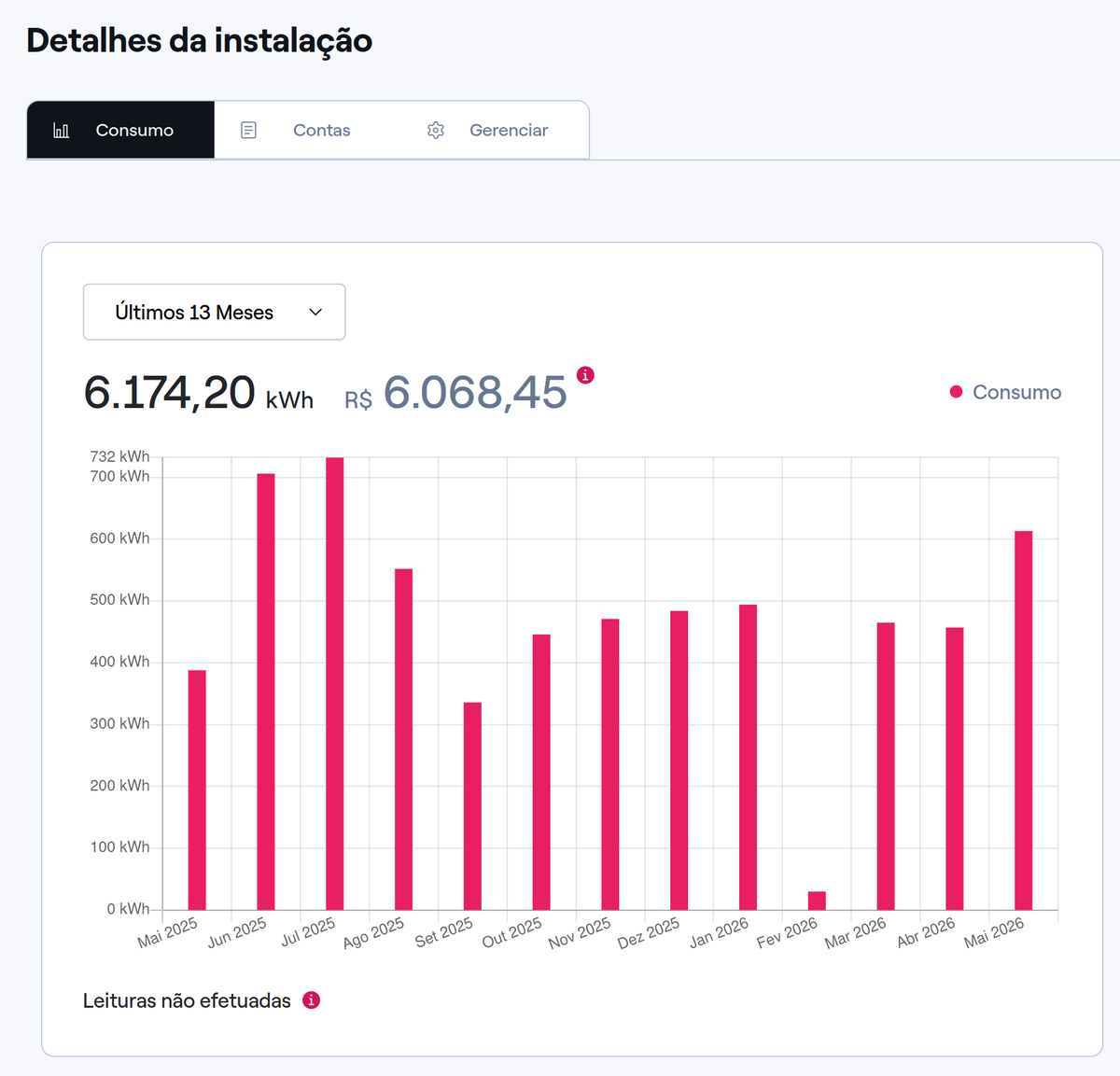
Após um ano com um carro elétrico BYD Dolphin Plus, volto aqui pra contar e mostrar as contas, conforme o prometido.
As contas de luz de Junho/25 até Maio/26 são com o carro elétrico, ou seja, exatamente 12 meses. A de Maio/25 refere-se ao mês de Abril e foi de 388kW/h. Descontando Set/25 (que estávamos viajando), a média de consumo foi de 495 kWh, apenas 84 kWh a mais que a média dos seis meses anteriores que foi de 411 (veja o post que estou retuitando).
(sobre o valor baixo de Fev/26, a Enel não fez a leitura e cobrou a taxa mínima, mas isso se acertou nos meses seguintes, o valor já está na conta)
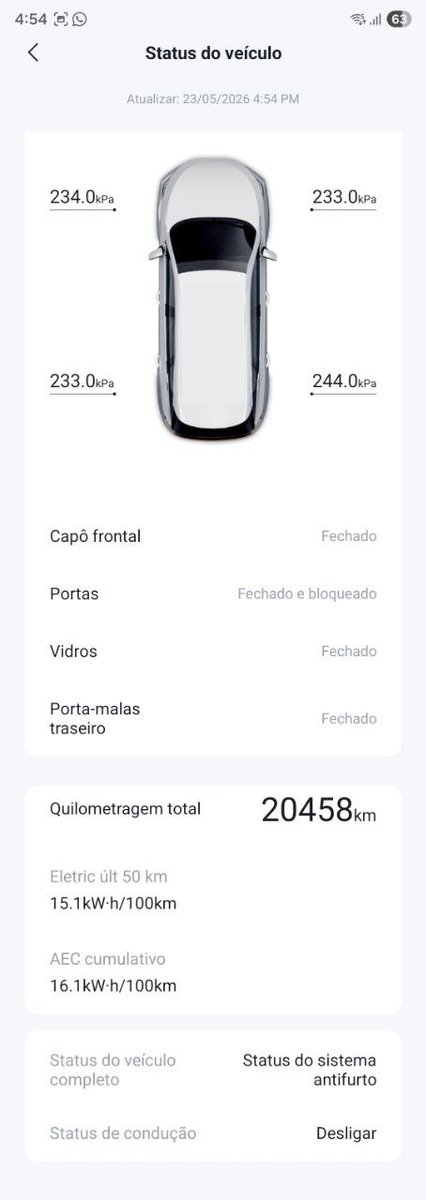
Nesse período rodamos cerca de 20 mil kms. Você pode ver na imagem que o desempenho médio nesse período (consultado hoje) foi 16,1 kwh/100kms. Considerando o custo de R$ 1 por kwh (em SP está um pouco abaixo disso), estamos falando de 6,2 kms para cada 1 kwh, ou 6,2 kms/R$. O meu carro anterior (um Mini Cooper) fazia 9 kms/litro, considerando o custo de R$6,30 no litro da gasolina, o seu custo era de 1,4 kms/R$.
Isso significa que agora eu rodo com o custo 4,3x menor. É como se a gasolina de R$ 6,30 estivesse, para quem tem um BYD Dolphin Plus, por R$ 1,45. Tudo isso enquanto eu ando mais, já que o Dolphin Plus entrega 210 cavalos (o tempo todo), enquanto meu Mini Cooper turbo tinha somente 170 cavalos (e somente em algumas RPMs mais altas e só depois que o turbo começa a atuar - maldito turbo lag).
Considerando os 20 mil kms que foram rodados nesse primeiro ano, o custo do BYD foi de 3,2 mil reais de eletricidade. Com o Mini Cooper seria de 14 mil reais. Poupamos 11 mil reais nesse primeiro ano, só no deslocamento (sem considerar desconto de IPVA etc).
E agora, somente com 20 mil kms, virá a primeira revisão. Ou seja, economizamos nas primeiras revisões de um carro a combustão, também, que não foram necessárias.
Não tivemos nenhum acidente ou nada de custos extras, então não tenho muito a comentar sobre isso. Depois que fizer a primeira revisão eu conto como foram os custos.
E notem que as contas não batem, se gastei 3200 reais, ou 3200 kwh, por mês deveria ter visto um aumento de 268 kwh na conta de energia (ou quase 268 reais). Não vi. Uma parte foi porque foram feitas duas viagens longas nesse período, então mais de 3 mil kms foram recarregados na rua, onde o custo costuma ser 2 a 3x maior do que em casa (e ainda assim mais barato que a gasolina).
Nesse meio tempo o carro desvalorizou dos 170 mil reais que paguei por ele para 150 mil reais, ou 12%. Em comparação um Toyota Corolla Cross XRV, um carro híbrido, caiu de 211 mil para 176 mil reais, ou 17%.
Nesse período a BYD saiu da oitava maior montadora no acumulado até Maio de 2025 para a quinta maior, superando Honda, Jeep e Toyota, sendo maior ainda que Renault, Nissan e Peugeot. Só perde para a lider, VW, seguida por Fiat, GM e Hyundai (sendo essa por apenas 0,5%). As 4 primeiras perderam vendas nesses 12 meses, enquanto BYD cresceu de 39 mil para 55 mil veículos emplacados no acumulado do ano até Maio (40%).
Meu carro segue funcionando perfeitamente, e segue sendo uma excelente experiência de direção. As previsões catastróficas feitas por muitos no primeiro post que fiz a respeito não se confirmaram. Eu não perdi dinheiro, minha conta de luz não estourou, o carro não quebrou ou deu qualquer problema, e, se eu resolvesse vendê-lo agora, receberia mais dinheiro do que se tivesse comprado um carro europeu, dos EUA, coreano ou japonês.
O futuro é elétrico e é chinês.
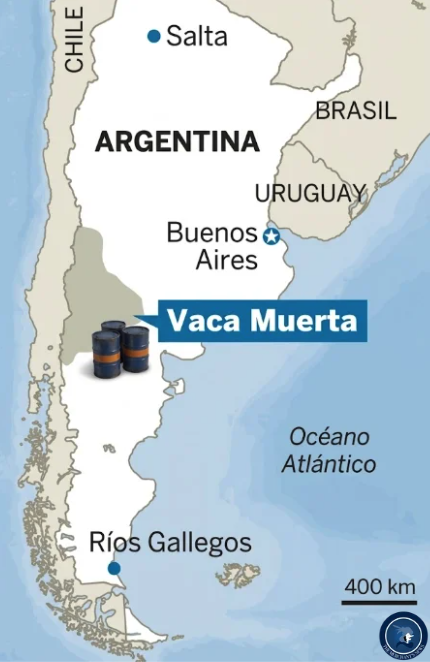
🇦🇷Argentina just put 15 Vaca Muerta blocks up for bid and YPF announced a $25 billion oil export project.
Hormuz is closed and the world needs non OPEC barrels. 🛢️
The timing is not a coincidence.
🚨Vaca Muerta is positioning itself as the world's alternative to Middle East crude.
💰The bid round:
Neuquén province launched its largest Vaca Muerta auction in a decade 15 shale blocks in the core fairway, run by provincial energy company GyP.
Expected bidders:
→ YPF, Pan American Energy, Vista Energy, Pampa Energiaía, Tecpetrol
→ Chevron deepening its Loma Campana JV footprint
→ Shell at a crossroads: testing a $3–4B portfolio sale while still drilling in 2026
→ Eni, TotalEnergies, bp primarily watching gas-prone blocks tied to future LNG phases
Early feedback: "high level of interest" more than double the blocks of the last Neuquén auction.
Why now and why this matters globally?
Hormuz disrupted.
Qatar offline for years.
Importing countries repricing their entire supply stack.
Vaca Muerta's pitch has never been stronger:
→ Geologically de risked
→ Technically proven YPF, Chevron, Shell already producing at scale
→ VMOS export pipeline and terminal under development
→ Non OPEC, non Hormuz, non Russian
Argentina is not just offering barrels.
It's offering supply chain independence from every geopolitical risk currently moving energy markets. 🌍
If you want to know my view on it within the full case with names, math, triggers of the disclosure stocks.
Read my latest article.
The link is in the below comments👇
Hoy no solo damos una palada inicial. Hoy damos un paso histórico hacia el Paraguay que soñamos. 🇵🇾
En Paso Horqueta, Concepción, comienza a levantarse el hub industrial forestal más grande de nuestra historia. Un proyecto que transformará el norte del país, generando miles de oportunidades para nuestras familias y demostrando que Paraguay está listo para dar el salto hacia la gran industrialización.
Paracel ya representa más de 100.000 hectáreas plantadas y más de 5.000 empleos generados. Y hoy celebramos también la llegada de Sudati, una de las mayores industrias de contrachapados de Brasil, que traerá más de 2.000 nuevos puestos de trabajo para nuestra gente.
Durante mucho tiempo vimos salir nuestra materia prima sin transformación, sin valor agregado y sin oportunidades para los paraguayos. Eso está cambiando. Hoy empezamos a escribir una nueva historia: productos terminados, hecho en Paraguay, con manos paraguayas y para el futuro del Paraguay.
#GobiernodelParaguay #RevoluciónPy2026
El tamaño del mercado mundial de cannabis se valoró en dólares 102,72 mil millones en 2025 y se prevé que crezca a USD 137,67 mil millones en 2026 @amifera https://t.co/q4Sehd4k53 https://t.co/q4Sehd4k53