My first Arxiv submission on empirical study of applying Bayesian GLM for Bankruptcy prediction with expert in the loop https://t.co/uBi319LFxW #bayesianml :) #rstanarm@mcmc_stan
I'm happy to announce that v2 of my RL tutorial is now online. I added a new chapter on multi-agent RL, and improved the sections on 'RL as inference' and 'RL+LLMs' (although latter is still WIP), fixed some typos, etc.
https://t.co/dWe5uNgcgp
(1/5) Very excited to announce the publication of Bayesian Models of Cognition: Reverse Engineering the Mind. More than a decade in the making, it's a big (600+ pages) beautiful book covering both the basics and recent work: https://t.co/5dnLpcMQzu
Microsoft released a groundbreaking model that can be used for web automation, with MIT license 🔥👏
OmniParser is a state-of-the-art UI parsing/understanding model that outperforms GPT4V in parsing. 👏
Nice paper for a long read across 114 pages.
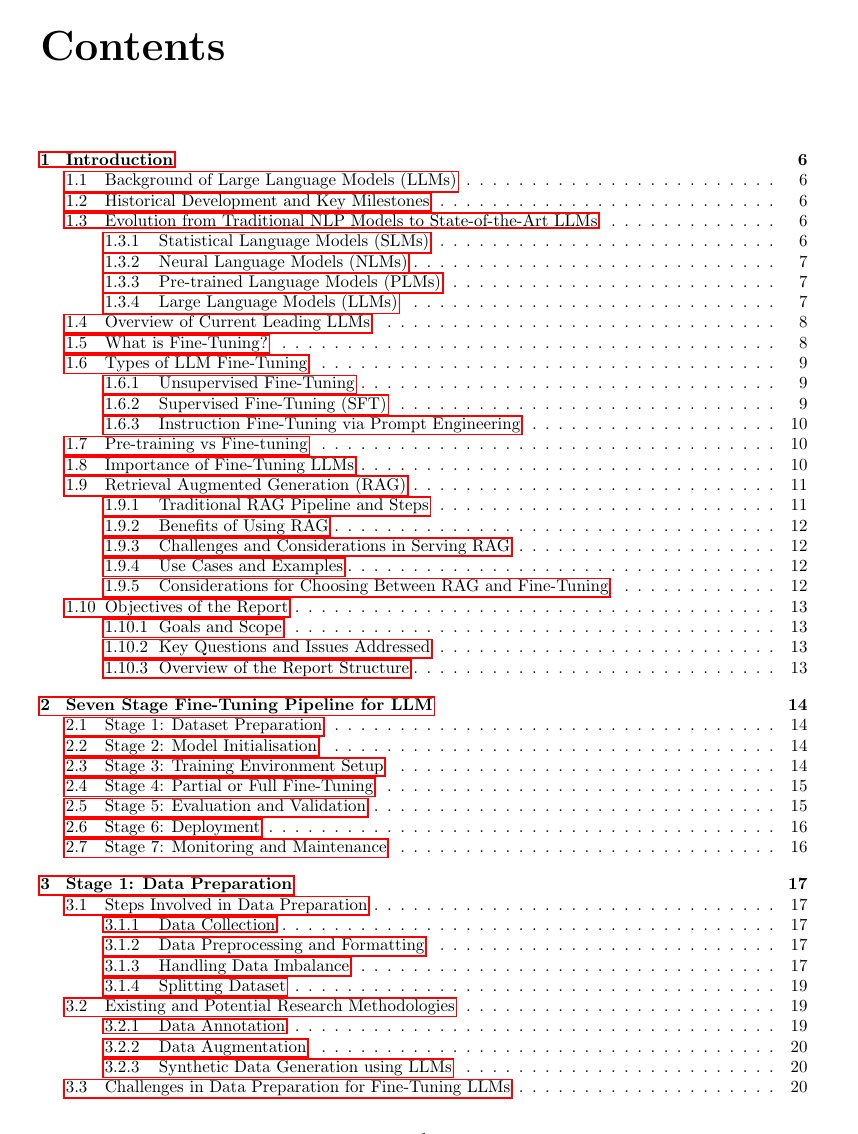
"Ultimate Guide to Fine-Tuning LLMs"
Some of the things they cover
📊 Fine-tuning Pipeline
Outlines a seven-stage process for fine-tuning LLMs, from data preparation to deployment and maintenance.
🧠 Advanced Fine-tuning Methods
Covers techniques like Proximal Policy Optimization (PPO) and Direct Preference Optimization (DPO) for aligning LLMs with human preferences.
🛠️ Parameter-Efficient Fine-Tuning (PEFT) Techniques
Discusses methods like LoRA, QLoRA, and adapters that enable efficient fine-tuning by updating only a subset of model parameters.
🔬 Evaluation metrics and benchmarks for assessing fine-tuned LLMs
Includes perplexity, accuracy, and task-specific measures. Benchmarks like GLUE, SuperGLUE, TruthfulQA, and MMLU assess various aspects of LLM performance. Safety evaluations using frameworks like DecodingTrust are also crucial for ensuring responsible AI deployment.
💻 Explores various deployment approaches and optimization techniques to enhance LLM performance and efficiency in real-world applications.
🌐 Examines the extension of fine-tuning techniques to multimodal models and domain-specific applications in fields like medicine and finance.
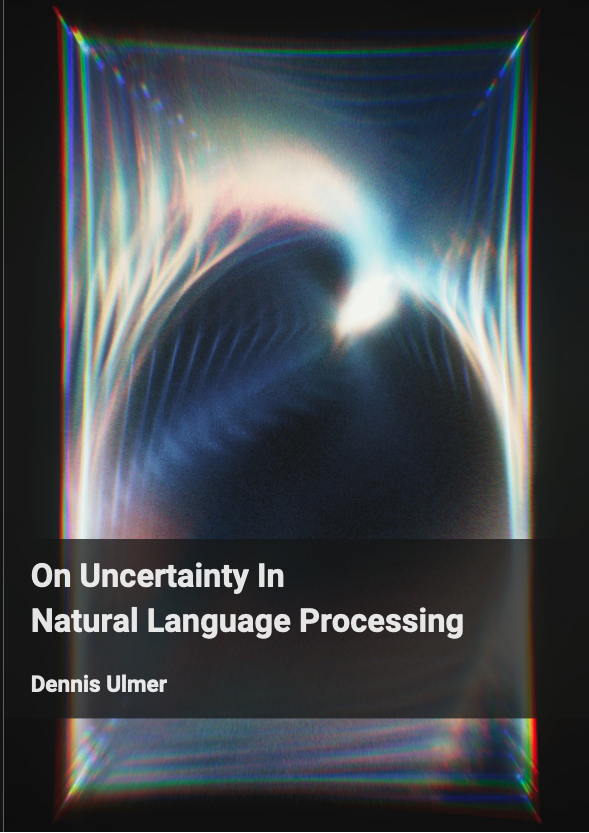
My dissertation "On Uncertainty In Natural Language Processing" is on arxiv! 🥳🎓
Check out my monograph for a background section summarizing statistical & linguistic views on UQ, a broad overview over methods used in #ML & #NLProc and so much more!
https://t.co/c4XFBjcWUH
I’d like to make more people aware of these books by @dvgodoy They provide an excellent overview of deep learning, including convnets, dropout, normalisation, RNNs, sequence-to-sequence, attention, ViTs, encoder decoder transformers and more. In many ways, the three volumes cover a good part of the history of AI since 2012 until GPT2.
They also explain many important aspects of AI in practice with @PyTorch, such as optimisation, learning rate scheduling, visualising activations, datasets, loaders, training loops, etc.
I highly recommend these books and the associated code by Daniel Godoy for summer schools and other introductory courses. @DeepIndaba@Khipu_AI
Transformer: Multi-Head Attention ~ Math vs Code 🔢💻 ~ I made this visualization to show you how to implement the multi-head attention math in PyTorch within 50 LoC. Multi-Head Attention is what makes the Transformer's performance outstanding. It captures and represents more diverse linguistic relationships and patterns, and attends to different learned input embedding spaces. The parallel computing design also makes the model more efficient.
"Please learn from our mistakes. Don't do exactly the same things that we did, or you'll end up in ten years with having nothing to show for it." — Nicholas Carlini urging AI researchers to avoid the pitfalls of past adversarial ML research at the Vienna Alignment Workshop 2024.
The Llama 3 paper is a must-read for anyone in AI and CS. It’s an absolutely accurate and authoritative take on what it takes to build a leading LLM, the tech behind ChatGPT, Gemini, Copilot, and others.
The AI part might seem small in comparison to the gargantuan work on *data* and *scale engineering*.
I hope professors in distributed systems, high performance computing, algorithms, databases, HCI, etc use it as an example of bleeding edge CS in their classes. So many exciting open problems!
@UBC_CS@CompSciOxford@berkeley_ai@Cambridge_Eng@WitsUniversity@NSERC_CRSNG@NSF@ERC_Research@UKRI_News
Check this out: a completely free book written bij my physics colleague at U. Amsterdam on "all of physics". It's a beautifully illustrated and highly accessible gem to take the deep dive into (classical & quantum) physics. Thanks Sander Bais!
https://t.co/lbqQAceQCs
A probability cut-point of 0.5 is almost never the best choice.
But how to find the optimal threshold?
sklearn has just released a transformer that does just that. Finds the best threshold based on a performance metric.
https://t.co/S6N5hO0BAY