Enterprise AI Adoption Crisis - 4 Big Issues - A long form essay (Substack)
If you don't agree and feel like enterprise adoption is exploding here is some data and what needs to be fixed. More data and links in the article.
Happy to see some counter views and data though!
@amitranjan Ha, that was a half-hearted quip. The more real point may be that not everyone has onboarded to AI personal assistants yet. Thr is a productivity arbitrage
Ppl who are using it r seeing insane speed. I've been busy finishing backlogs of so many things. wasn't easy earlier
Companies will do everything possible to give enterprise AI agents risk scores and permissions that change with behavior.
😭 employee badge model is coming to agents - hire them, watch them, revoke them. Agent tht cant be fired will not get hired as well 🫢
Visa, BILL and Billtrust just started (M2020) the first live pilot of AI agents paying bw buyer and supplier platforms. Paying suppliers use case which it always does
Agents are being blocked coz - it is not that the agent can just buy they fear.
Its that agent can wait - watch for the price drop or the restock, and buy the second it happens. Patience + intelligence, is AI agents add to shopping.
@nikitabier This is mostly a fight over who owns the customer, not a technical problem. Delta doesn’t object to bots as such. It objects to an agent sitting between it and the traveller, the same way it fought online travel agents. Banks worry about liability. Yelp wants to be paid.
@trikcode The big companies will set the standard itself. Cloudflare’s signed-agent work, Visa and Mastercard’s agent-payment programmes, and Google and OpenAI/Stripe’s commerce protocols are already moving on it.
@trikcode So an ID standard answers “who are you?” but not the questions that drive the blocking: “will you pay?”, “will you keep me in the loop with my customer?” and “who is liable if something goes wrong?” Whoever answers those wins.
As agents write more of the code, the problem shifts from writing it to proving it works. For founders... selling proof may beat selling speed. look at Antithesis
@KeithZhai Both and it depends whr the agent runs. Cloud agents usually die at the fingerprint layer (datacenter IP, headless/TLS signatures). Agents in the user’s own browser pass that but trip behavioral biometrics. Either way it flags “not human”, but not a “bad agent”. Hence kya
On Citi and other banks blocking agents - almost none do it as a dedicated step yet. What runs everywhere is the old fraud stack (risk scoring, bot detection, step-up auth), and the industry is mid-shift to a 3layer model
1) register and cryptographically identify the agent ("Know Your Agent"), 2) give it a scoped token instead of your raw card, and 3) carry a tamper-proof record of what you actually asked for ("verifiable intent" / mandates).
@Marriavla My guess is that the upfront mandate will probably win for everyday purchases because you have to keep the friction low, while the explanation at checkout may matter mostly for larger or unusual spends where someone will want to know why the agent bought it.
Amex now wants to know what an AI shopping agent intended before it spends. If you are building agents that transact, being able to explain intent may matter more than being able to act.
So Wix is adding "agent payments" with Stripe. For a small seller, your next product pitch may be read by a customer's agent. Can it find your price, delivery date and payment terms without calling you?
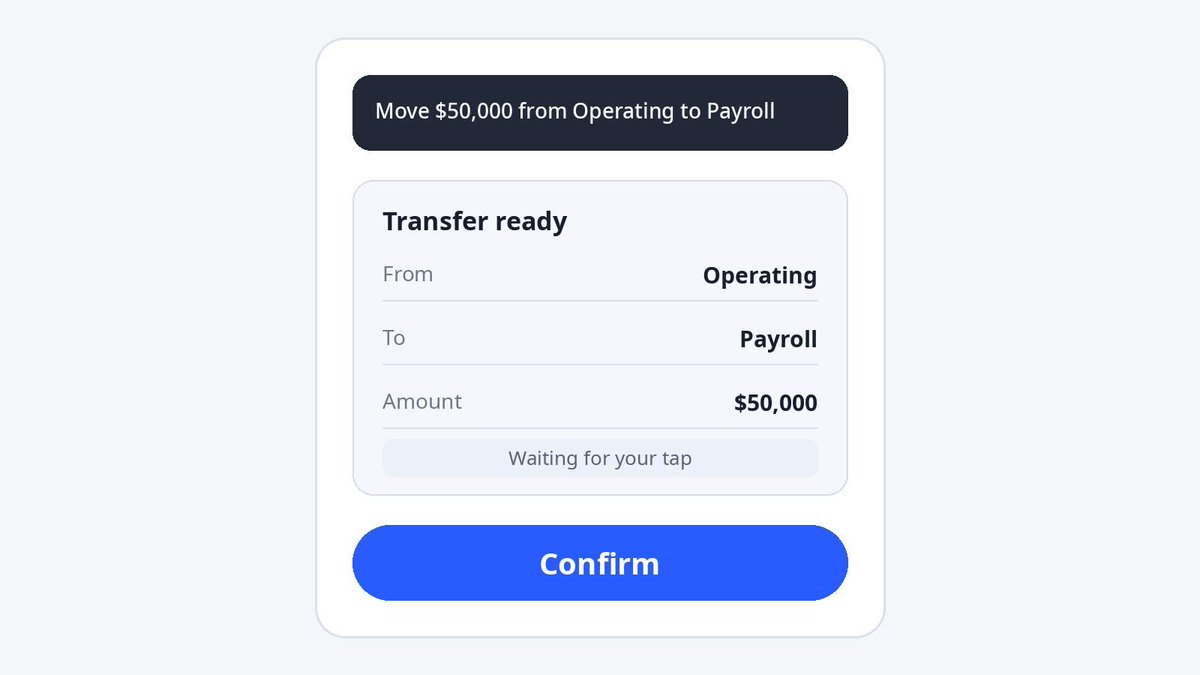
Business banking may be quietly turning into an AI chat interface. You can now tell Claude or ChatGPT to move $50,000 from Operating to Payroll through Mercury
and the only thing left to do in the bank's own app is one tap to confirm.