Robotics is hard because the last few mms are usually physical, not computational.
Our @TCSResearch PLGRM team placed 2nd in the #AIforIndustryChallenge, one of only two teams to achieve 100% success in the final stage.https://t.co/1JNci2BJso
You'll soon see lots of "Llama just dethroned ChatGPT" or "OpenAI is so done" posts on Twitter. Before your timeline gets flooded, I'll share my notes:
▸ Llama-2 likely costs $20M+ to train. Meta has done an incredible service to the community by releasing the model with a commercially-friendly license. AI researchers from big companies were wary of Llama-1 due to licensing issues, but now I think many of them will jump on the ship and contribute their firepower.
▸ Meta's team did a human study on 4K prompts to evaluate Llama-2's helpfulness. They use "win rate" as a metric to compare models, in similar spirit as the Vicuna benchmark. 70B model roughly ties with GPT-3.5-0301, and performs noticeably stronger than Falcon, MPT, and Vicuna.
I trust these real human ratings more than academic benchmarks, because they typically capture the "in-the-wild vibe" better.
▸ Llama-2 is NOT yet at GPT-3.5 level, mainly because of its weak coding abilities. On "HumanEval" (standard coding benchmark), it isn't nearly as good as StarCoder or many other models specifically designed for coding. That being said, I have little doubt that Llama-2 will improve significantly thanks to its open weights.
▸ Meta's team goes above and beyond on AI safety issues. In fact, almost half of the paper is talking about safety guardrails, red-teaming, and evaluations. A round of applause for such responsible efforts!
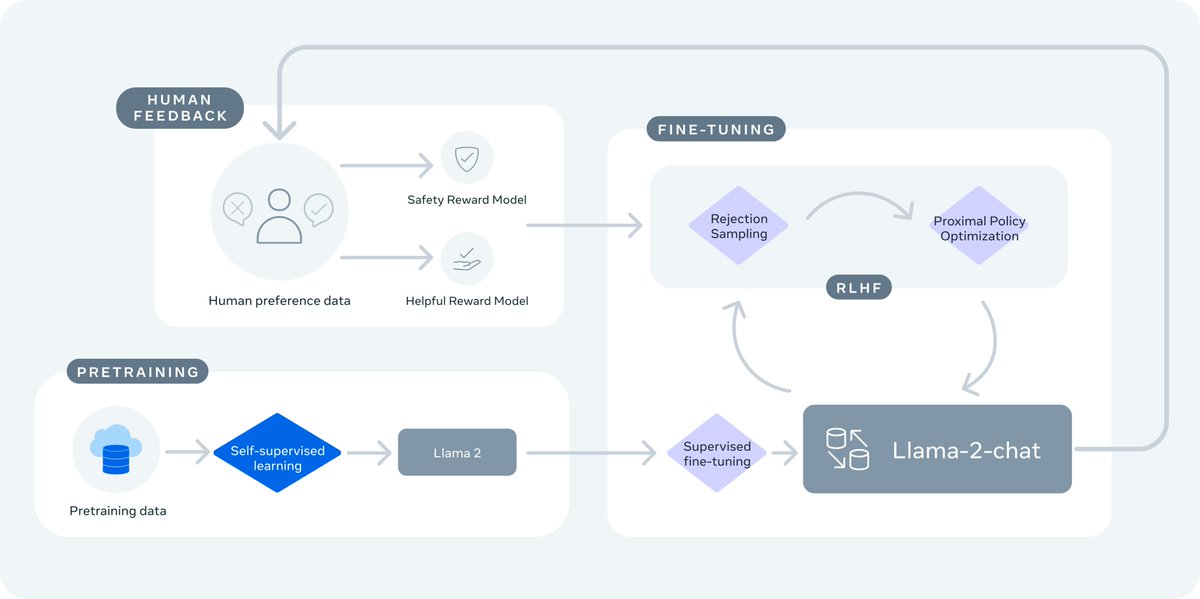
In prior works, there's a thorny tradeoff between helpfulness and safety. Meta mitigates this by training 2 separate reward models. They aren't open-source yet, but would be extremely valuable to the community.
▸ I think Llama-2 will dramatically boost multimodal AI and robotics research. These fields need more than just blackbox access to an API.
So far, we have to convert the complex sensory signals (video, audio, 3D perception) to text description and then feed to an LLM, which is awkward and leads to huge information loss. It'd be much more effective to graft sensory modules directly on a strong LLM backbone.
▸ The whitepaper itself is a masterpiece. Unlike GPT-4's paper that shared very little info, Llama-2 spelled out the entire recipe, including model details, training stages, hardware, data pipeline, and annotation process. For example, there's a systematic analysis on the effect of RLHF with nice visualizations.
Quote sec 5.1: "We posit that the superior writing abilities of LLMs, as manifested in surpassing human annotators in certain tasks, are fundamentally driven by RLHF."
Congrats to the team again 🥂! Today is another delightful day in OSS AI.
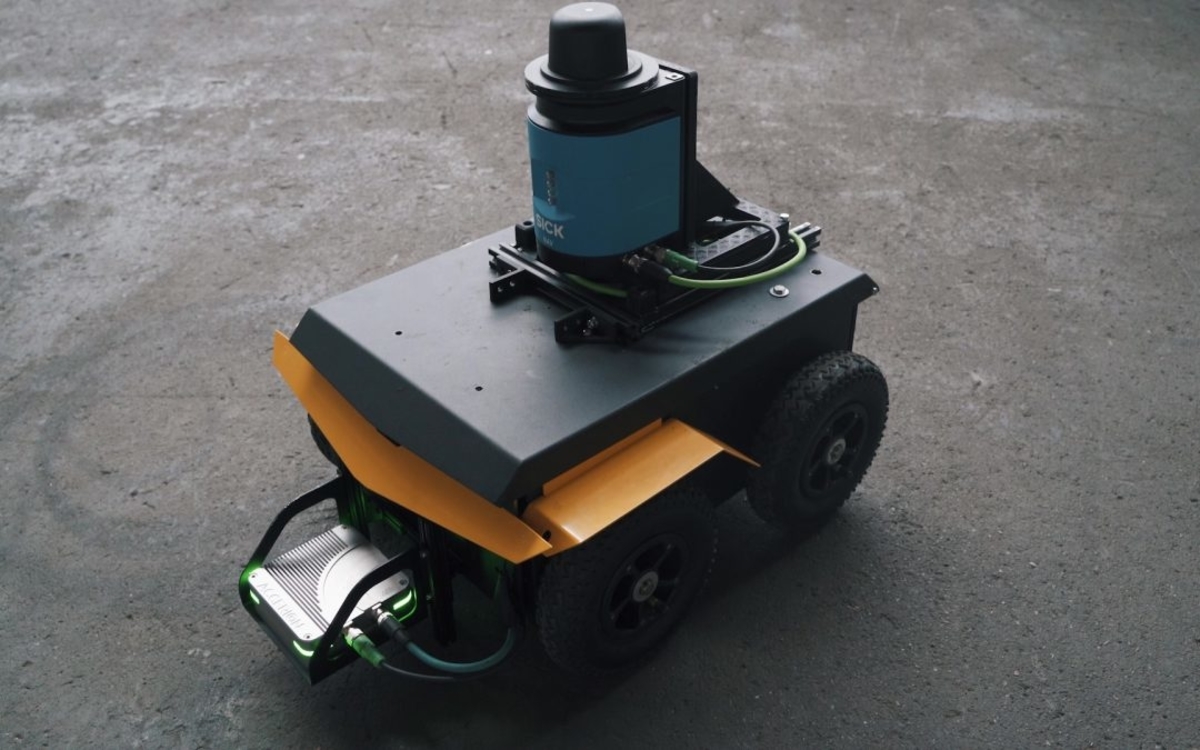
There is a big push in industry to replace robots with LiDAR, which often performs poorly in dynamic environments. That's why @Accerion used Jackal UGV to create Triton - an infrastructure-free solution that provides high-accuracy positioning data. https://t.co/W8JvMUEsqf
Factories of the future need high speed connectivity. Our partnership with Airtel has taken us a step closer to test our futuristic neural plants with #5G applications.
Excited about the future of #manufacturing ?
Read: https://t.co/RKGqeUxDtQ
@airtelnews
Today we are proud to announce that we are starting development on ROS 3!
ROS 3 will be first "blockchain native" ROS release and will coincide with the release of ROSCoin, a crypto-security built on the ROS blockchain.
Read our whitepaper here:
https://t.co/jTy5O5nGhn
I’ll be giving a seminar next week @Berkeley_EECS on Applied Deep Learning Research at NVIDIA. DL applications are numerous and exciting, but actually applying DL in the real world is rarely straightforward. I’ll be talking about how we approach it.
https://t.co/VjZjgn9wEB
🏅 #microROS module for #CubeMX
Integrate the small turtle into #STM32 microcontrollers with this amazing graphical tool!
Please, feel tempted to beta-test and contribute.💪
Visit this link for more information: https://t.co/J3buICZy2I
#ROS#ROS2#goROS
A core challenge in #DeepLearning is the disconnect between the theory of how models generalize and how they perform in practice. A new theoretical framework demonstrates how to understand model generalization through optimization behavior. Check it out at https://t.co/wrhk0cy3Co
You know what makes our day?
When we get an awesome pull request!
Check out this PR for joint trajectory controler plugin for Igntion / @GazeboSim. It makes it possible to couple #MoveIt 2 with Ignition Gazebo.
Take a look at the source code:
https://t.co/IXYieAgw3t
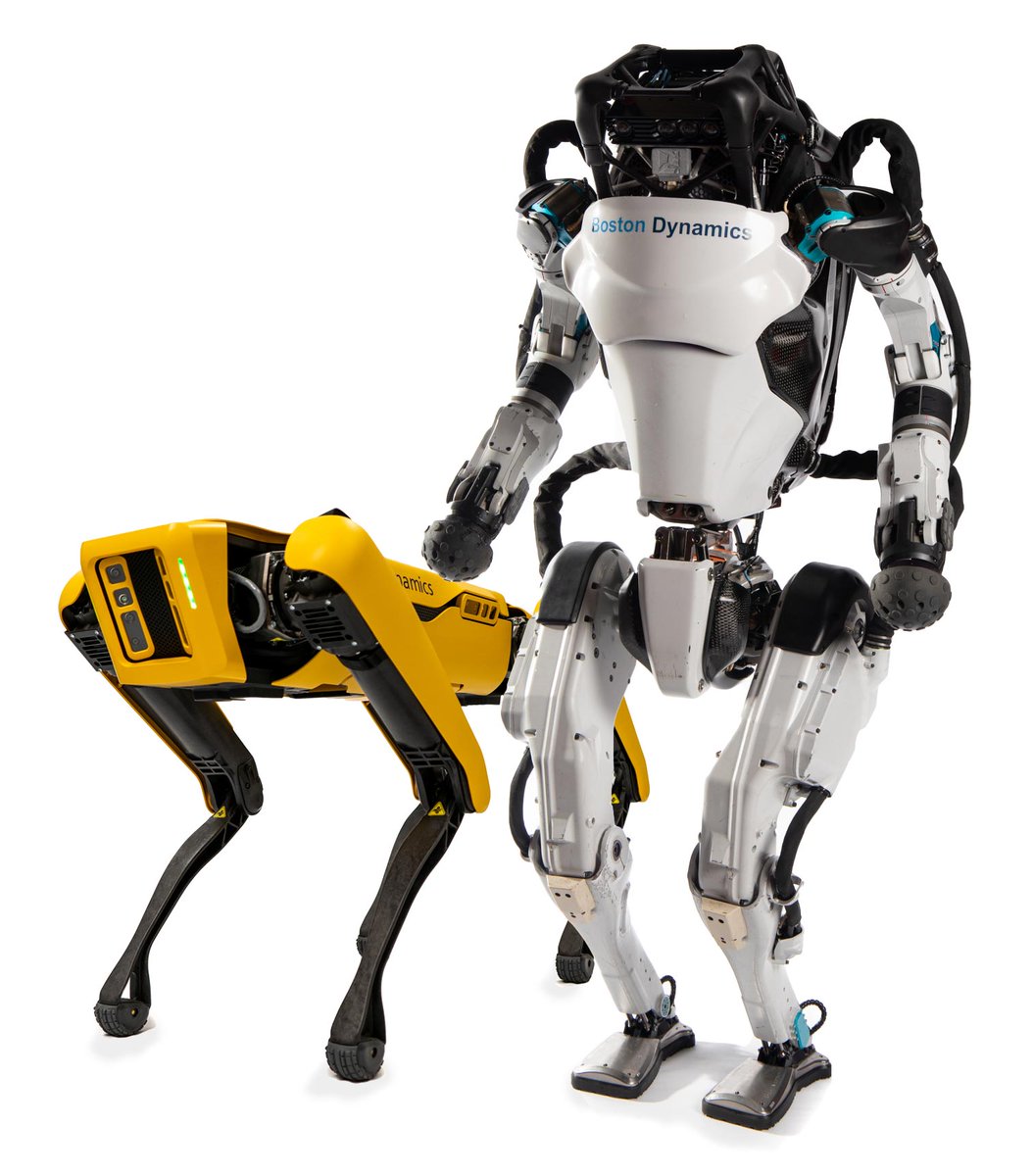
We’re thrilled to be joining Hyundai Motor Group, a partner that shares our vision for the future of mobile robots like Spot, Handle, and Atlas. Read more: https://t.co/fWB9ZquDIh
તમે રસ્તે જતાં હોય ને ચણા નું ધાણા નું કે મગફળી નું ખેતર દેખો ને થોડું એમાં થી લેતા હોય ત્યારે ખેડૂતો દેખસે તો કહેસે વધારે લયલો ભાઈ ભગવાને ઘણું આપ્યું આને અન્નદાતા કહેવાય,
બાકી મોટા મોટા સોપીગ મોલમાં થી એક ચોકલેટ તો ઉપાડજો ખબર પડે..
#FarmerProtests2020
We just posted all of the #ROSWorld lightning talks and session recordings. If you missed a parallel session or want to see all of the submitted lightning talks you can find them here: https://t.co/p9MkS4sM9f