There are over 70 one-page guides available to download for FREE from my website. Useful for building knowledge, developing a shared understanding about learning and supporting CPD.
🙏 Support my work by tapping REPOST and grab them here: https://t.co/QKGJjjeiKT
A community college professor taught the same study skills lecture for 30 years, and the video quietly became one of the most watched educational recordings on the internet.
His name is Marty Lobdell. He spent his career as a psychology professor watching students fail not because they were lazy, but because nobody had ever taught them how their brain actually works under the pressure of learning something hard.
The lecture is called "Study Less Study Smart." Over 10 million views. Passed around in Reddit threads, Discord servers, and university study groups for over a decade. And the core insight buried inside it has been sitting in cognitive psychology research for years, waiting for someone to explain it in plain language.
Here is the framework that completely changed how I think about effort.
Your brain does not sustain focus the way you think it does. Studies tracking real students found that the average learner hits a wall somewhere between 25 and 30 minutes.
After that, efficiency doesn't just decline. It collapses. You're still sitting at your desk, still looking at the page, but almost nothing is going in.
Lobdell illustrated this with a student he knew personally. She set a goal of studying 6 hours a night, 5 nights a week, to pull herself out of academic probation. Thirty hours of studying per week. She failed every single class that quarter.
She wasn't failing because she lacked effort. She was failing because she had confused time spent near books with time spent actually learning. The 25-minute crash hit her at 6:30pm every night. She spent the next five and a half hours sitting in the wreckage of her own focus and calling it studying.
The fix sounds almost too simple. The moment you feel the slide, stop. Take five minutes. Do something that actually gives you a small reward. Then go back. That five-minute reset returns you to near full efficiency. Across a six-hour window, the difference is not marginal. It is the difference between thirty minutes of real learning and five and a half hours of it.
The second thing he taught destroyed something I had believed about how memory actually works.
Highlighting feels productive. Going back over your notes and recognizing everything feels like knowing. But recognition and recollection are two completely different cognitive processes, and your brain is very good at making you confuse them.
You can see something you've read before and feel completely certain you understand it, even when you couldn't reconstruct a single sentence from memory if the page were blank.
He proved this live in the room. He read 13 random letters to his audience. Almost nobody could recall them. Then he rearranged the same 13 letters into two words: Happy Thursday. The whole room got all 13 without effort.
Same letters. Same count. The only thing that changed was meaning.
The brain stores meaning. Not repetition. The moment new information connects to something you already understand, the retention changes entirely.
This is what the cognitive psychology literature calls elaborative encoding, and it is the mechanism underneath every effective study technique.
The third principle was the one that hit me hardest, and the one almost nobody applies.
Lobdell cited research showing that 80 percent of your study time should be spent in active recitation, not passive reading. Close the material. Say it back in your own words.
Teach it to someone else, or to an empty chair if no one is around. The struggle of retrieval is where the actual learning happens. Reading your notes again is watching someone else do the work.
His parting line has stayed with me longer than almost anything else I have read about learning.
He told the room that if what he shared didn't change their behavior, they hadn't actually learned it. It would just live in their heads as something they had heard once and felt good about.
He was right. And most people leave every lecture exactly like that.
The students who remember everything aren't putting in more hours.
They stopped confusing the feeling of studying with the fact of it.
Responsive Revision: an evidence-informed & efficient approach to independent study. It's important we share this to support our students as they head towards exam season.
https://t.co/6Efb5ncPxo
One of the very best business lectures I have listened to. Enormous wisdom here and valuable lessons about the inner workings of the capitalist system.
Simplifying is actually a solution to "teacher workload", a concept that people often associate with prioritizing adult needs over student learning and performance.
Not so:
https://t.co/rcNPHBiGDX
One of the biggest drivers in my shift toward explicit instruction has been simplifying everything. I used to try to gamify, activify, and engagify every lesson—bells, whistles, and all. It wasn’t sustainable, and it wasn’t especially effective. I taught under the impression that I had to “make it fun.”
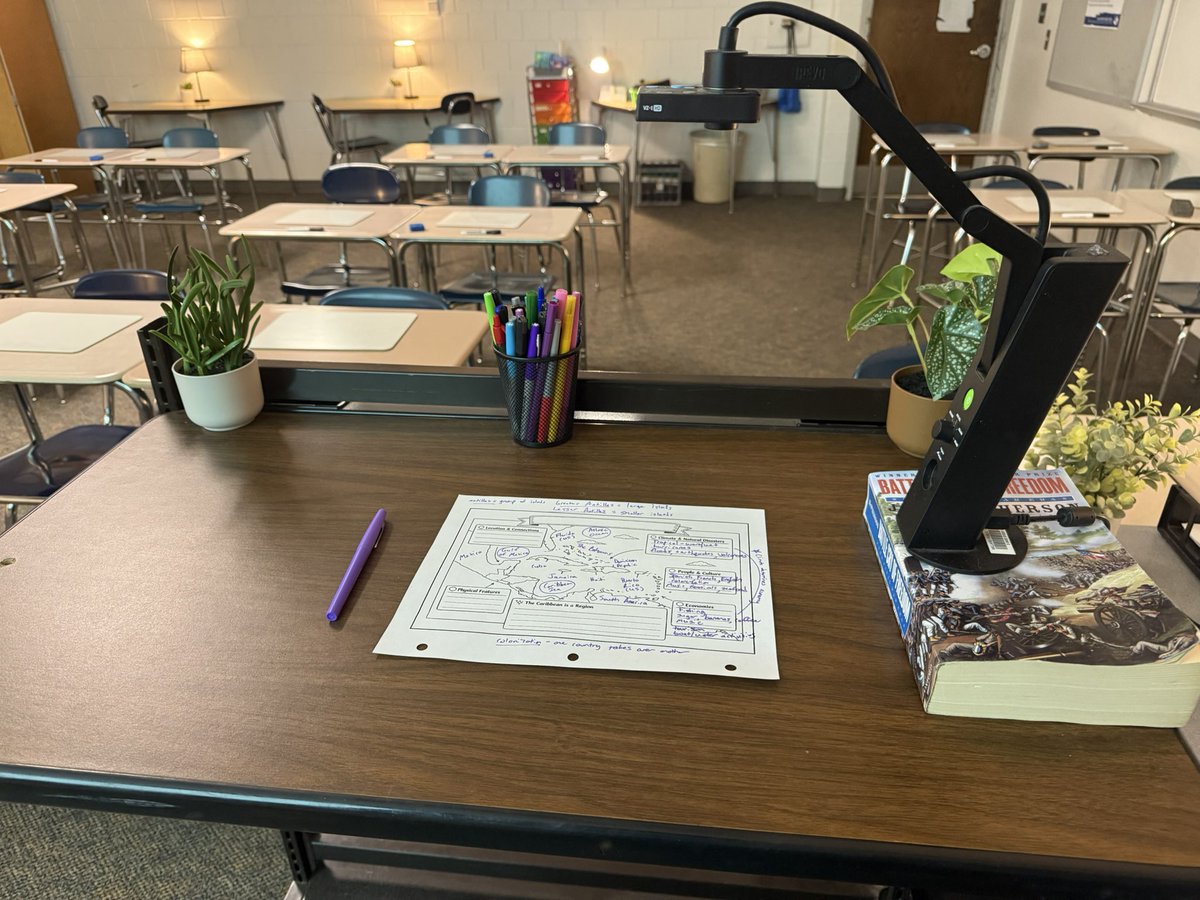
One of the best lessons I taught all year happened today, and here’s what it required: a visualizer, a blank outline map of the Caribbean, and all the critical content I know to explicitly teach my students with. That’s it. Add in lots of questions, choral response, turn-and-talk, concrete examples, active observation, and show calls, and you have everything you need for an effective and engaging lesson.
In previous years, I would have turned this simple Caribbean geography lesson into a high-energy, activity-based experience: stations, a gallery walk, or some kind of puzzle or game. There would be movement, noise, and “engagement,” but most of the new information would be lost in the shuffle. Working memory would be so overloaded that very little would actually stick.
Now I know teaching explicitly and simply is the most effective way to make learning happen.
Cautionary Tale Alert:
In the so-called ‘Science of Reading’ era, educators were sold a story about phonemic awareness, turning a little-known product into the *most-used curriculum* in US schools.
A faddish approach was packaged as a curriculum supplement, then boosted by SoR influencers, and it sold like hotcakes.
Today, it’s being walked back nationwide.
How'd this happen? Also, are curriculum reviewers working to ensure it doesn’t happen again?
My latest:
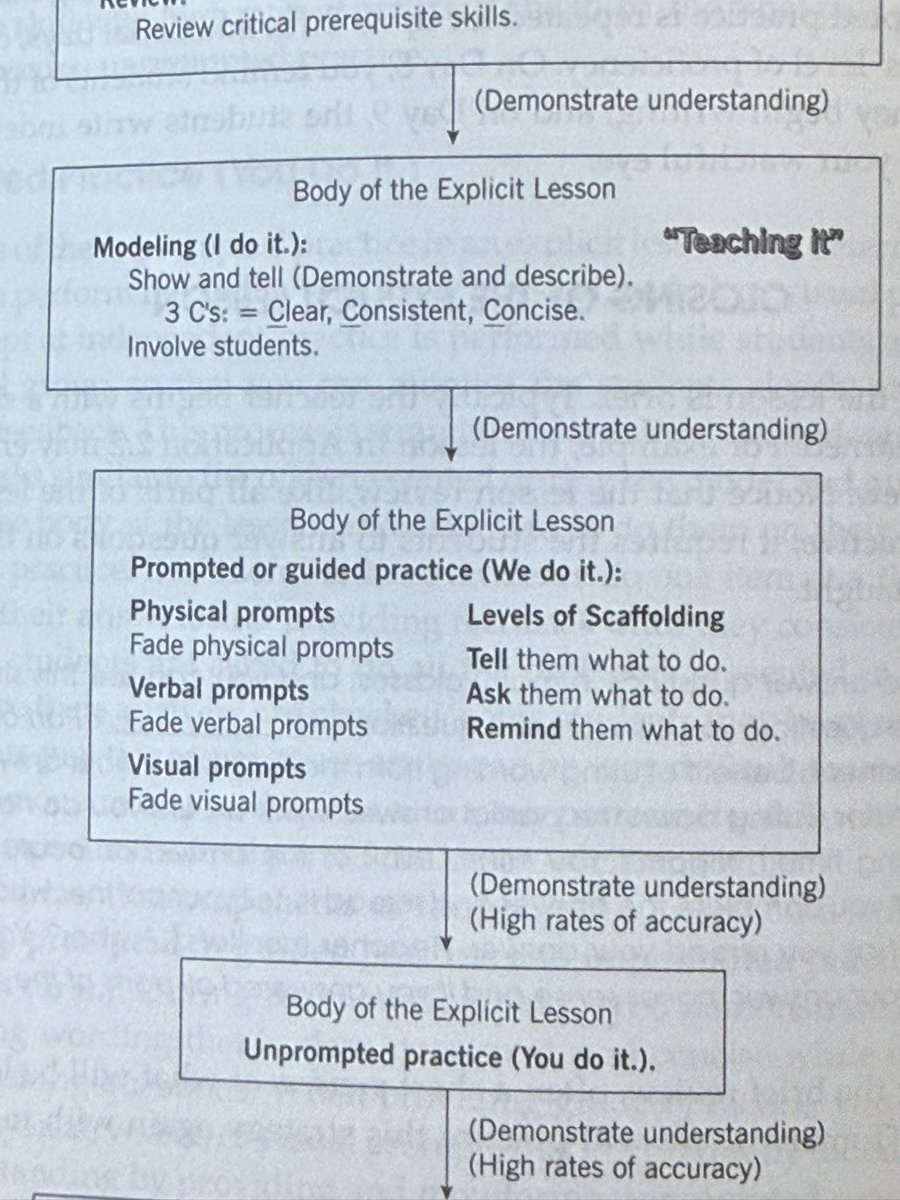
Over my career, like many of you, I’ve heard countless versions of Gradual Release of Responsibility, I do, we do, you do, all varying in important ways. Sadly, it’s become very buzzwordy with many lethal mutations in practice. Many of which I’ve been prone to myself.
Anita Archer’s articulation of “I do, we do, you do” in Explicit Instruction is the most precise yet nuanced version I’ve ever encountered.
Many circulating versions I’ve been trained on before contain a key lethal mutation in the “we do” phase which can and will reduce the effectiveness of the other phases: guided practice is treated more as a brief checkpoint where students “help” the teacher rather than an extended instructional phase, with responsibility rotated to independent practice well before students demonstrate sufficient accuracy and fluency.
I really appreciate how Archer outlines the importance of “prompted practice” aka “guided practice/We do” with different levels of scaffolding and different types of prompts temporarily available to students.
Based on this dynamic, most importantly, “guided practice / we do” is not the teacher modeling an example while students help. That’s “modeling/I do”.
“Guided practice / we do” needs to be students actively executing each step with the teacher providing prompts, scaffolds, and immediate feedback until a high rate of success is achieved then unprompted practice can begin.
TL;DR: “We do/guided practice” is students do it with your help not you do it with student help.
3. The AI-Detection Safe Rewrite
“Humanize this text so it does not feel AI-generated. Vary sentence length, add natural phrasing, improve transitions, and make it feel organic and authentic without adding fluff or changing the message. Text: [paste text].”