Check any crypto wallet for AML risk in ~10s. Consensus of OFAC, Chainalysis, TRM & Tether/Circle blacklists across 35 chains. Non-custodial. Free first check
👋 Meet AMLConsensus. Check any crypto wallet before a P2P/OTC deal in ~10s — one clear verdict by consensus of OFAC, Chainalysis, TRM & Tether/Circle blacklists across 35 chains. Non-custodial: public address only, no seed phrases. Free first check →
https://t.co/oN5ZNPbqzx
@Cointelegraph Iran's rail and auto sector has been a key sanctions-evasion channel for years, often moving funds through shell networks before reaching exchanges. Screening deposit addresses before sending matters more after news like this.
On Oct 1, about $3.8M left NEAR Intents. The bug was in how Omni deposits and withdrawals talked to the Intents contract, not in NEAR itself.
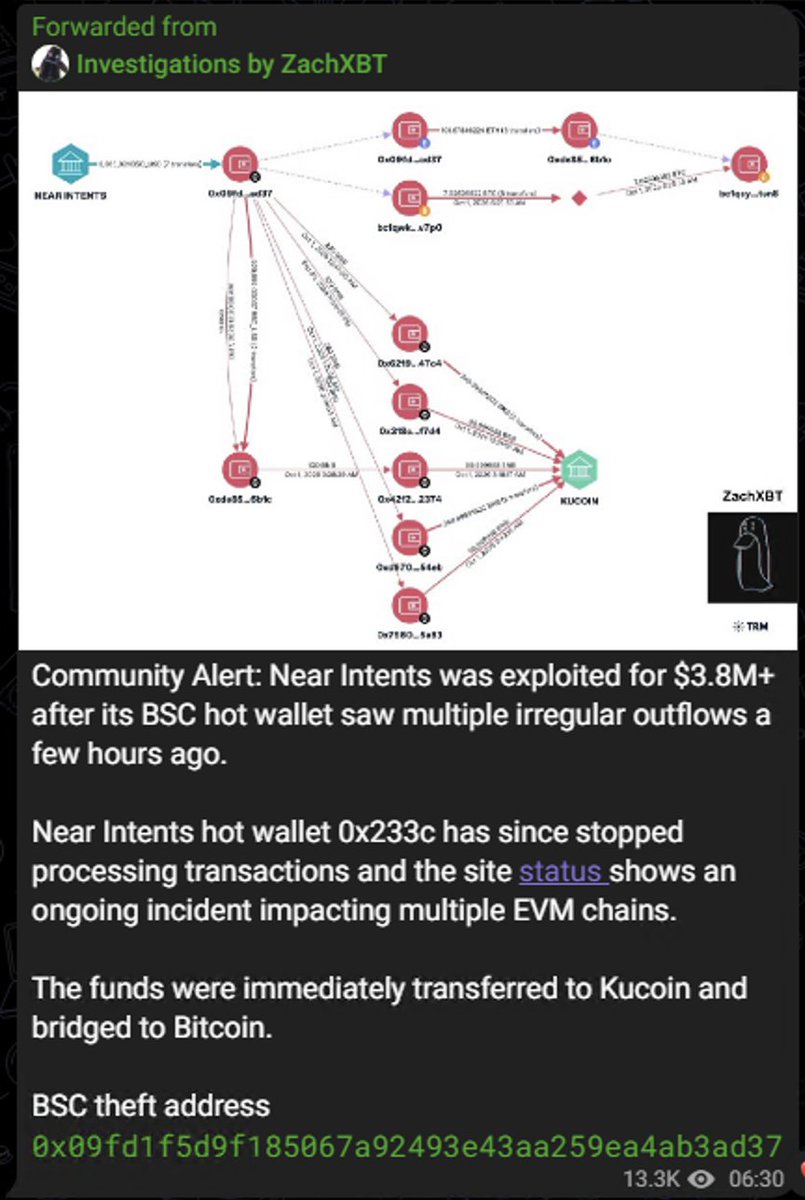
The contract-side hole is patched. Deposits and withdrawals are paused on 11 networks, including BSC, Polygon, TON, Optimism and Avalanche. The team says losses will be covered in full. ZachXBT flagged irregular outflows from the BSC hot wallet: funds went to KuCoin, then into bitcoin.
Receiver: 0x09fd1f5d9f185067a92493e43aa259ea4ab3ad37. Hours later it had sent 75 txs and was running EIP-7702 delegation. It was still absent from OFAC, the Chainalysis sanctions oracle, TRM, USDT/USDC blacklists and public scam lists.
That is the P2P problem. “Not on any list” in the first hours means “not labeled yet,” not “clean.” If you get paid in coins that just left a fresh exploit, the exchange questions arrive later, and they arrive to you.
Check age, first funding source and any large inflow in the last few hours. A new wallet with a large sum from nowhere is a reason to ask for another. Save the tx hash and the screening result on every deal.
https://t.co/Hd5ZN4zmEL
#NEAR #hack #AML #P2P
@Cointelegraph 319.5M shortfall from the 2021 hack means recovery depends on clawbacks and future revenue, not just reserves. Watch whether the plan sets a fixed payout percentage or a floating one tied to BitMart's earnings.
BitMart's plan in one line: your coins become a dollar claim.
Balances get "dollarised" at weighted avg prices from July 26 — any upside since then isn't yours. Recovery % for each option: not published yet. Court sign-off target: early 2027.
Coins on an exchange are an IOU.
@Cointelegraph 3.8M is sizable for an intents protocol. Worth watching which addresses received the drained funds and whether they moved through mixers before reimbursement lands.
@WuBlockchain Full reimbursement pledged is easy to say 32 minutes in. Real question: will NEAR cover it from treasury or a token raise, and how long before affected users actually see funds back in wallet?
Ran the BSC theft address through OFAC, Chainalysis, TRM, USDT/USDC blacklists and open scam lists a few hours after the exploit.
Not on any of them yet.
On a fresh hack, "clean" means "not listed yet". Take funds from it on P2P today and the freeze can land on you later.
@Cointelegraph If validators are exiting as a precaution, does that mean the compromise is contained to infra, or could staker withdrawal addresses also be exposed? Worth asking before moving funds anywhere near MetaMask Staking.
@Cointelegraph Eight months since that Super Bowl spike and still no public launch. For context, that ad reportedly cost around 15M for roughly 60 seconds of airtime. Worth asking what metrics they are waiting on before shipping.
@WuBlockchain 17,000 validators is a meaningful chunk of MetaMask's staking base. Worth asking which operator or infra provider was affected, and whether withdrawn funds touched any flagged addresses before re-staking.
@lookonchain Five months of silence then a 13M dollar pull right as ETH tests new levels. Accumulation, OTC settlement, or just rebalancing collateral. What pattern are you seeing in the other wallets this wallet touches.
@SlowMist_Team Curious what triggered this one — which chain, and did the funds move to a CEX hot wallet or sit in an intermediary address? That's usually what decides if a deposit gets frozen.
Issuer freezes and laundering in the last 24h — our own count from public data: 37 addresses blocked, holding 190,031,297 USDT largest: 23,862,526 USDT (TRON) 1,080 ETH went into Tornado Cash Feed with hashes and addresses: https://t.co/mlXMie33T4
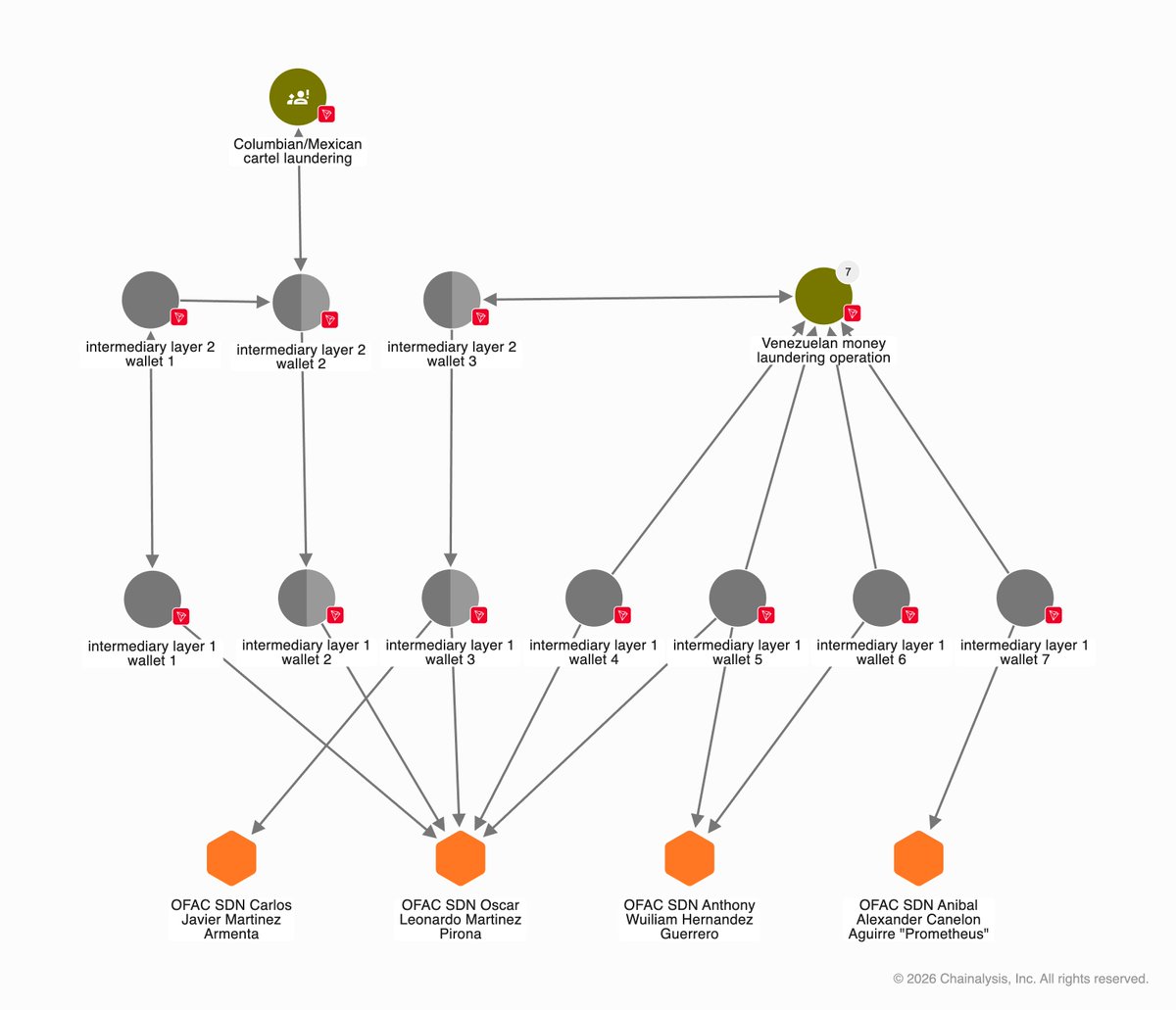
Checked against OFAC's own SDN file: 7 people, 1 TRON address each, programs SDGT + TCO.
Our screening called all 7 "clean" for several hours after the designation — we were reading a daily mirror of the list. Now we read OFAC directly, every 3h.
Today, OFAC sanctioned an FBI Top 10 fugitive and Tren de Aragua member who allegedly stole millions from U.S. ATMs using malware loaded on Raspberry Pis — and laundered the proceeds through crypto.
Our investigators analyzed the on-chain network surrounding the now-sanctioned wallets. What we found: counterparties with exposure to known money laundering operations based in Mexico, Colombia, and Venezuela that have been used by drug cartels, smugglers, and other illicit actors.
While the underlying crimes differ, criminal organizations rely on common laundering infrastructure to move funds. ATM jackpotting proceeds flow through the same channels as drug trafficking money.
"The on-chain insights show us that criminal organizations are leveraging common infrastructure for laundering," said Chainalysis Senior Intelligence Analyst Kaitlin Martin. "These are insights that only the blockchain can provide."
We also found these networks heavily use stablecoins to move criminal proceeds globally. Stablecoins offer price stability, but they also leave these networks susceptible to advanced monitoring and instant freezing actions.
This action is part of a broader government campaign: 30+ actions against 300+ individuals and entities tied to transnational criminal organizations since 2025. As these groups increasingly route funds through crypto, on-chain intelligence becomes critical.
Read our full analysis: https://t.co/4W0ixDlUqe
@chainalysis Checked against OFAC's own SDN file: 7 people, 1 TRON address each, programs SDGT + TCO.
Our screening called all 7 "clean" for several hours after the designation — we were reading a daily mirror of the list. Now we read OFAC directly, every 3h.
@PeckShieldAlert 285M returned on Liquid Network but 387M on Bitget still unaccounted for. Where does recovered versus laundered money actually diverge once mixers and bridges get involved. Would knowing a wallet's risk score before accepting a deposit have changed either outcome here.
@lookonchain Buying 6.3M in AAVE straight off an exchange instead of OTC is a strong signal. Does this address have a history of holding through drawdowns, or does it tend to flip positions within days. Checking an address before trusting its pattern matters, which is the AMLConsensus angle.
@trmlabs These 7 wallets moved funds for years before OFAC caught up. How many exchanges unknowingly processed them, and how many would a pre-deposit sanctions check have stopped?
@Cointelegraph A security incident near staking infrastructure raises the real question: was this isolated to validators, or could it touch custody paths too. Worth asking before calling it fully contained.