A context-engineering compromise between a rigorous prompt and getting a solution that is good enough is always required. I call this “optimum sloppiness”.
The simplest software that will do the job is the best. Complex elegant software looks great on paper but soon ends up on “manual”. Bigger is definitely not better in software design.
@amix3k - tmux for multiplexing
- nested tmux popup for codex/claude cli sessions
- neovim with fugitive for code review
- custom neovim lua code to send review comments to the tmux popup.
I found myself needing the python REPL in production, with access to the real config and objects of a running Flask application. Here is a minimal approach using the builtin code.InteractiveConsole to expose the REPL over a Unix socket.
https://t.co/jy1XGaTQzY
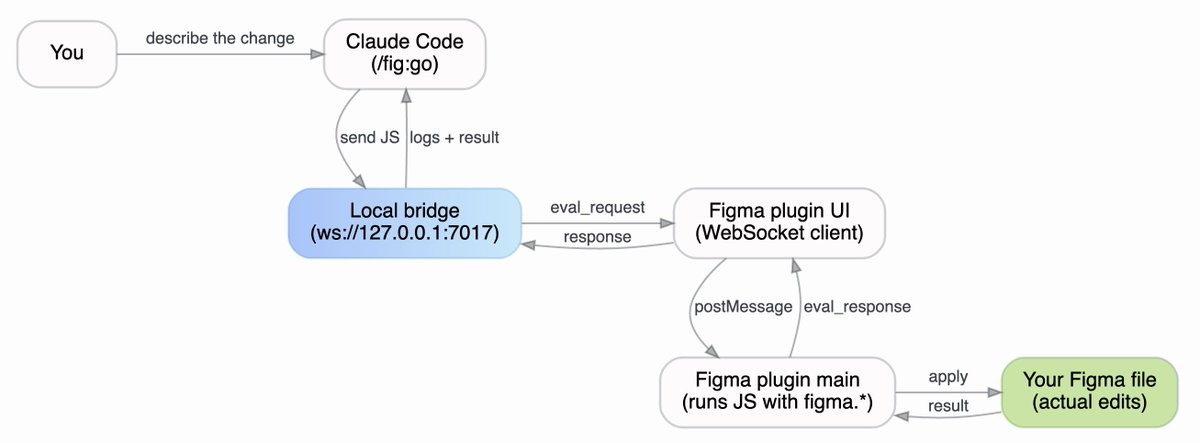
Here is a claude code plugin I wrote for figma: https://t.co/1IPEdtxMk2
unlike the official figma mcp server, it's read/write, not just readonly! In other words it can be used to make changes in figma.
@figma@claudeai
The ralph loop has completely changed how I write software. I used to do this:
tech-spec → todos → implement → think → repeat
The loop remains as is, except now the todos are done by gpt-5.2 or opus 4.5.
https://t.co/8YkvtYNKng
@kitlangton MacOS doesn't allow instant workspace switching. You can enable "Reduce Motion" in settings, but there's still noticeable lag.
I've been using AeroSpace with most features stripped out, just to recreate animation-free workspaces.
https://t.co/QVHeqCgI80
MacOS native workspaces include transition animations and adjusting system settings cannot fully remove the animation lag (unlike KDE or Gnome).
https://t.co/QVHeqCgI80