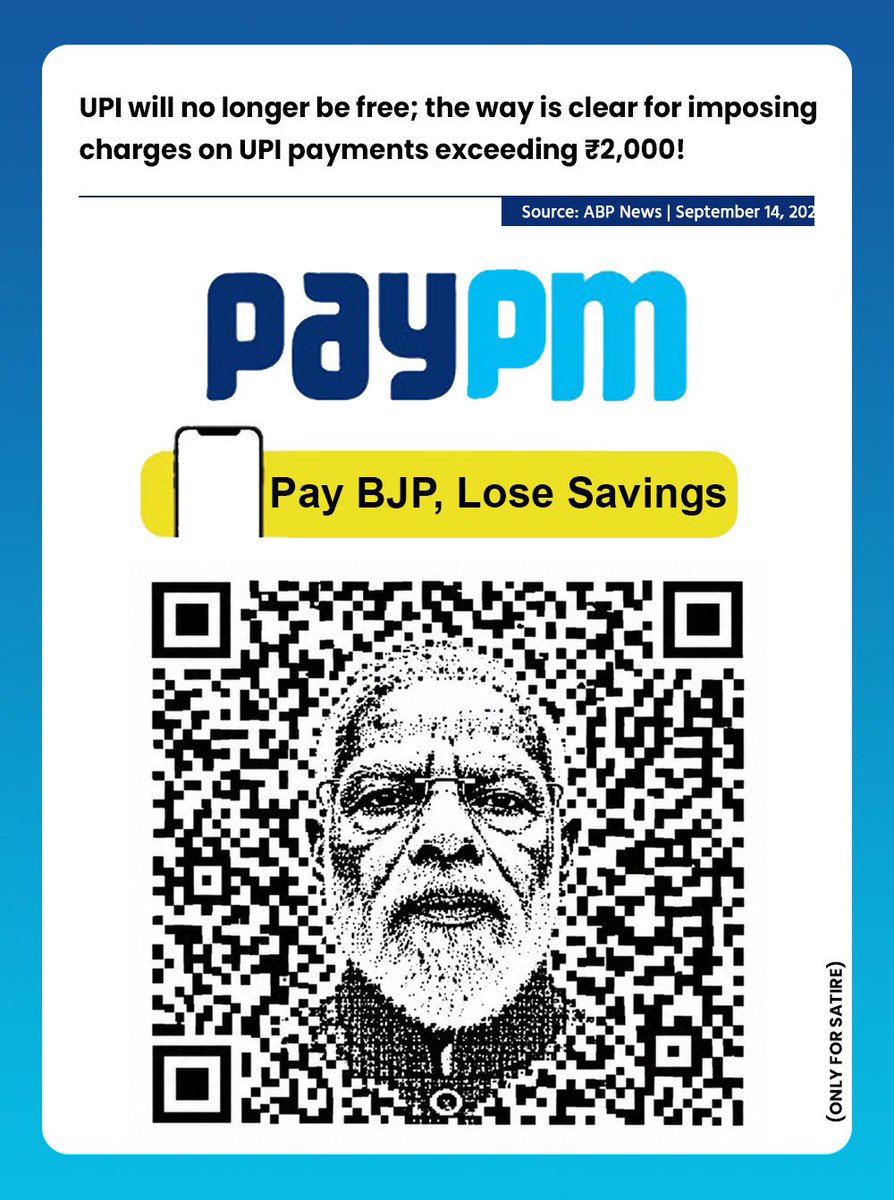
Dear @narendramodi ji, we demand resignation of Finance Minister @nsitharaman for imposing Transaction Fee on UPI. Income Tax Payers are getting squeezed in all aspects. This will impact Digitization initiatives of the Govt. Please protect Tax payers of the country.
Customer: Kitna Hua
Shopkeeper: 10 Hazar
Customer: UPI Kr du?
Shopkeeper: Haa kr do lekin fir 7000 aur alag se 200 aur upi krne honge aapke.
Customer: Pr 200 extra Kyu
Shopkeeper: Kyunki Sarkar humse 2% extra legi agar transaction 2000 se upar ho toh.
Customer: cash hi le lo
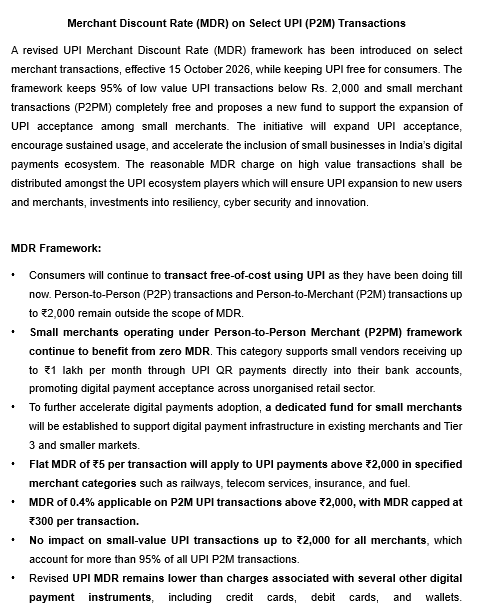
🔰UPI Payments to Remain Free for Person to Person transactions; MDR Applicable Only on Large-Value Merchant Transactions
▪️The Government has amended the Payment and Settlement Systems (PSS) Act, 2007 empowering the government to notify specific electronic payment modes where no charges shall apply.
▪️This amendment provides the legal foundation to ensure affordability and transparency in digital transactions
▪️On 14 September 2026, the Central Government issued a notification under this framework, specifying that Unified Payments Interface (UPI) transactions up to ₹2,000 will attract zero Merchant Discount Rate (MDR)
▪️Further, detailed circular has also been issued by NPCI on 15th September, 2026, after deliberation of UPI steering committee on operational parameters, fee distribution models, and category caps
🔰The key highlights of the circular are as follows:
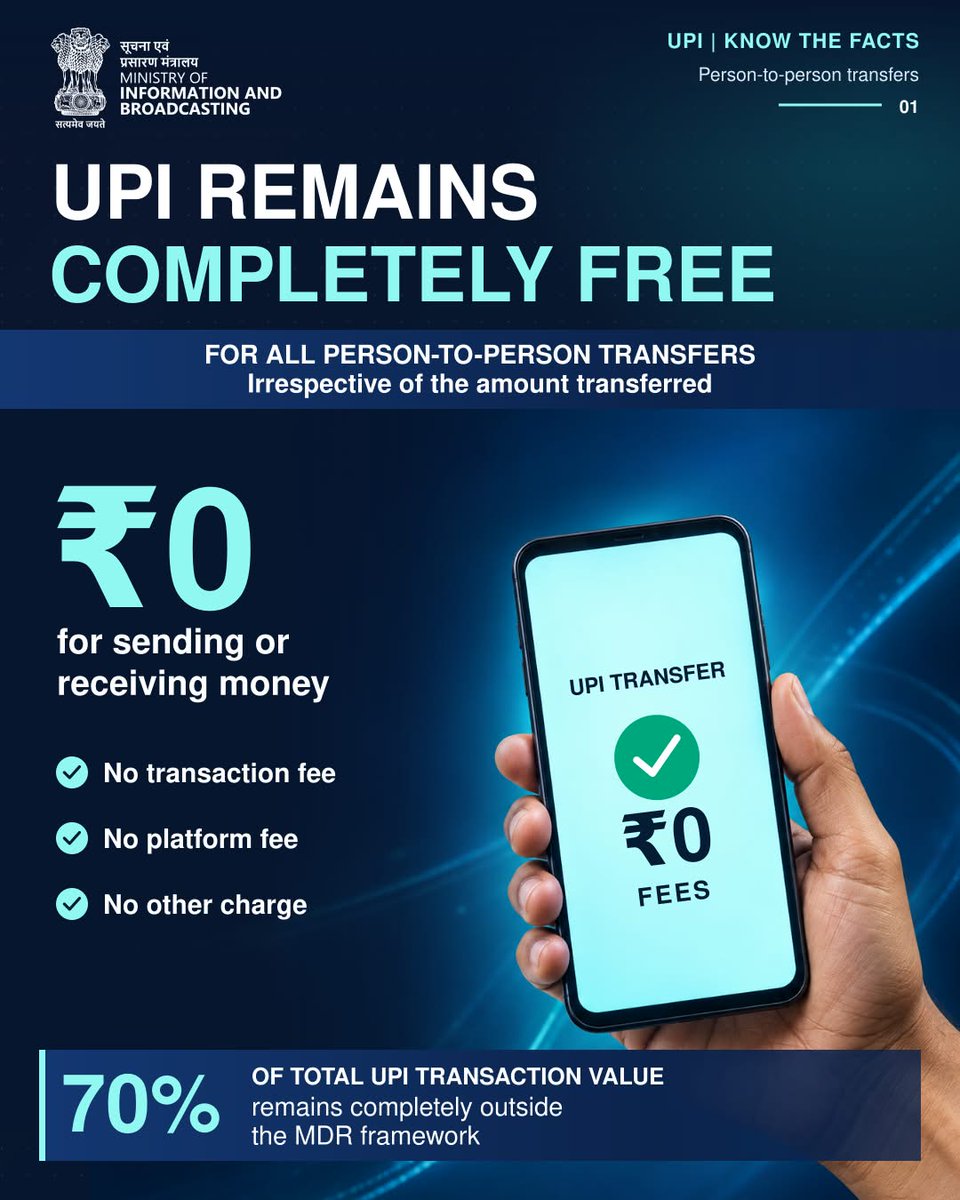
▪️For person-to-person (P2P) transactions, there will be no charges at all, irrespective of transaction value. P2P transactions constitute 37% of the total UPI transactions in volume terms and 70% in value terms
▪️Charges will apply only to person-to-merchant (P2M) transactions exceeding ₹2,000
🔰Technical Framework
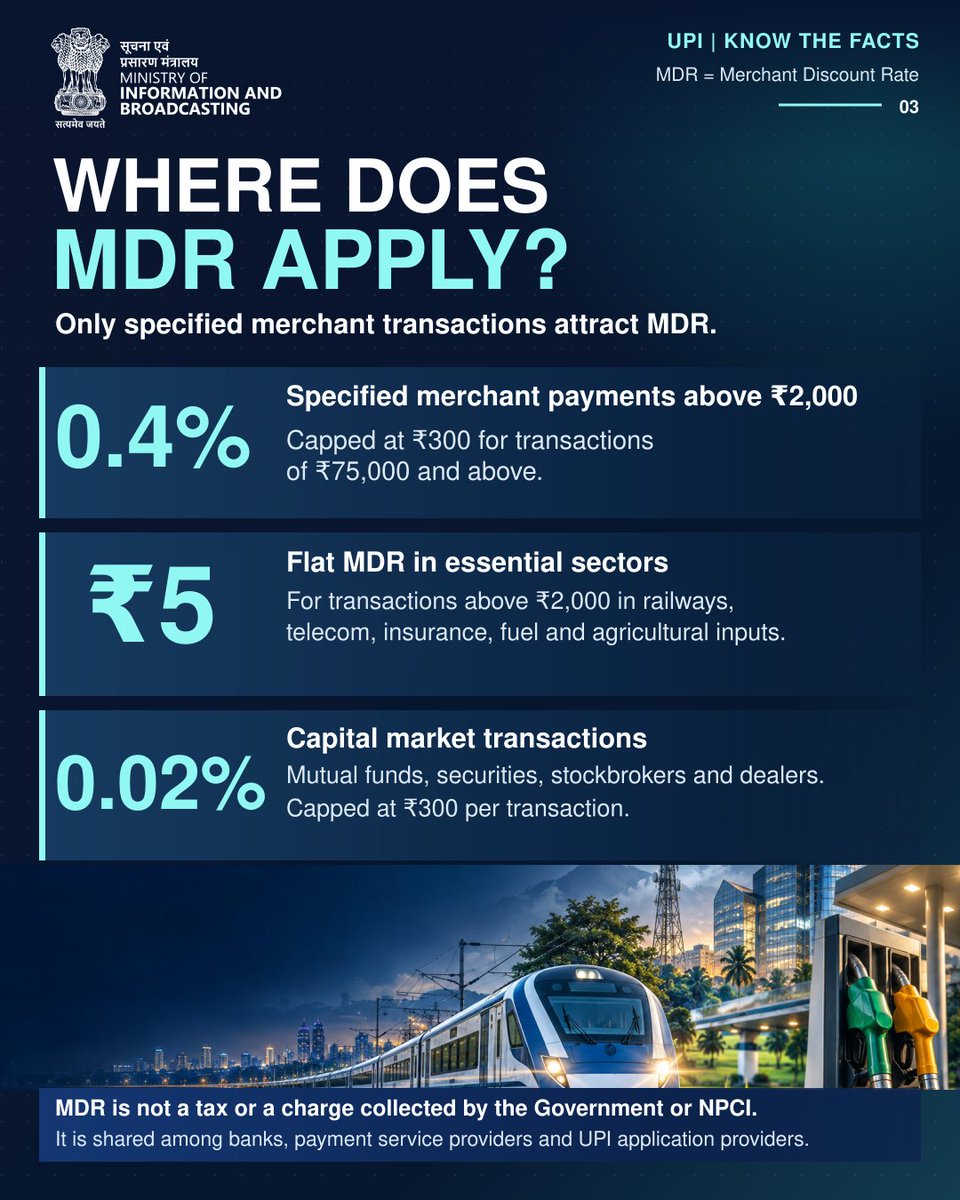
▪️A nominal MDR of 0.4% will be levied on P2M transactions above ₹2,000. This commission will be shared amongst the payment ecosystem partners, including banks and app providers
▪️For high-value transactions of ₹75,000 and above, MDR will be capped at ₹300 per transaction
Don't miss the full details—read here: https://t.co/ZQZdWlX9iq
@FinMinIndia
Earn Salary - Pay Income Tax
Use Salary - Pay GST
Use Salary - Pay Bank Charges
Withdraw Salary - Pay Withdrawal Charges
Use salary by UPI - Pay UPI Charges
Middle Class is So doomed.
"Banks are sitting on ₹2 lakh crore in profits. Any charges on UPI is just tax collection from Indian citizens by the government."
— Ashneer Grover, Businessman
नरेंद्र मोदी जनता से वसूली का नया प्लान लाए हैं। अब ₹2,000 से ऊपर के UPI पेमेंट पर सरकार वसूली करेगी।
प्लान है कि ₹2,000 से ऊपर के हर UPI पेमेंट पर 0.5% चार्ज वसूला जाए, मतलब -
• अगर आपने ₹5,000 की खरीदारी की तो ₹25 का चार्ज लगेगा
• अगर ₹10,000 की खरीदारी की तो ₹50 वसूला जाएगा
पहले UPI पेमेंट पूरी तरह फ्री था, लेकिन नरेंद्र मोदी से ये देखा नहीं गया और यहां भी वसूली का खेल शुरू कर दिया।
मोदी का फंडा साफ है - जितना हो सके जनता को लूट लो और अपने मित्र की तिजोरी भरो।
ये सरकार जनता की सरकार नहीं है, ये चंद उद्योगपतियों की सरकार है और नरेंद्र मोदी उनके एजेंट।
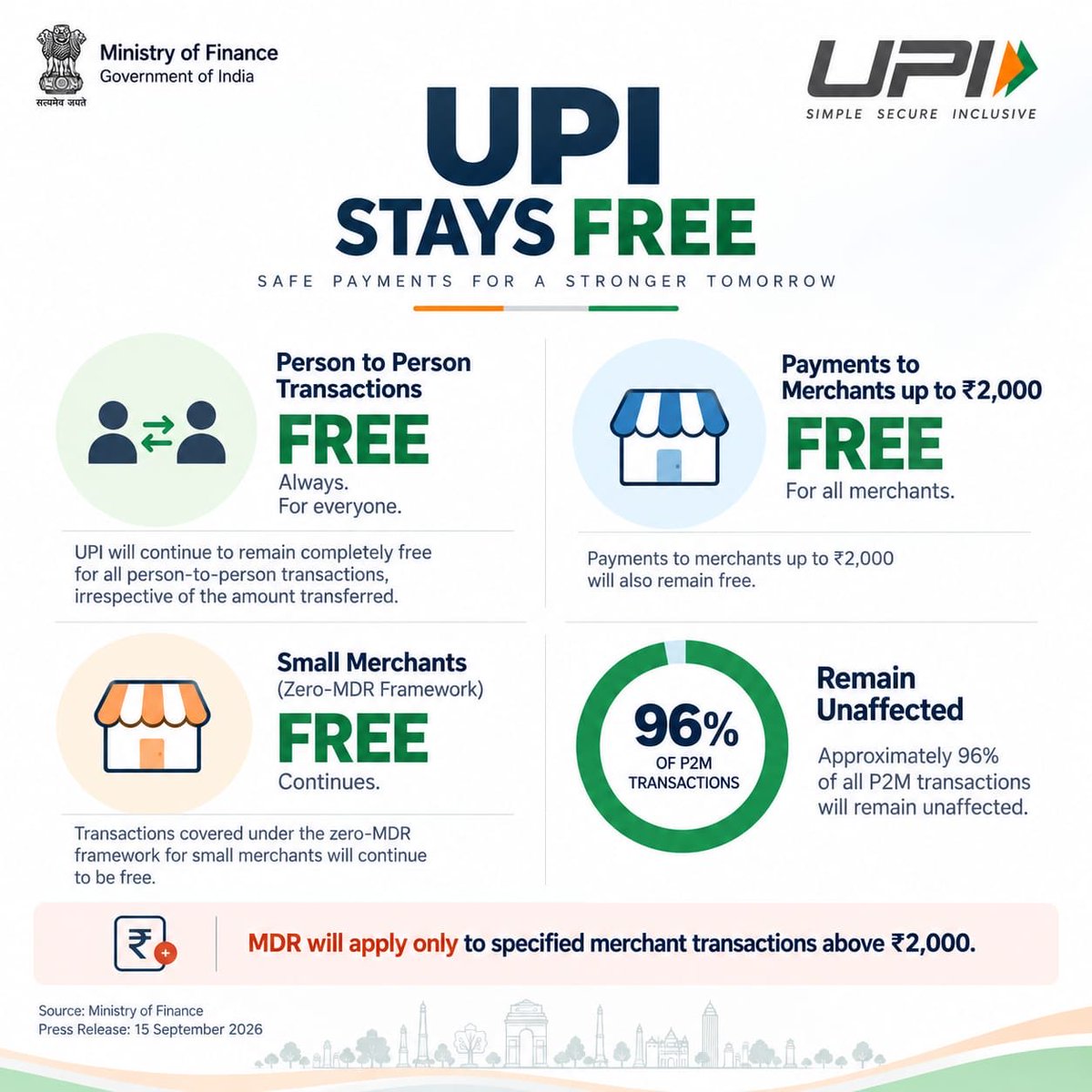
Don’t fall for rumours. Know the facts! 📱
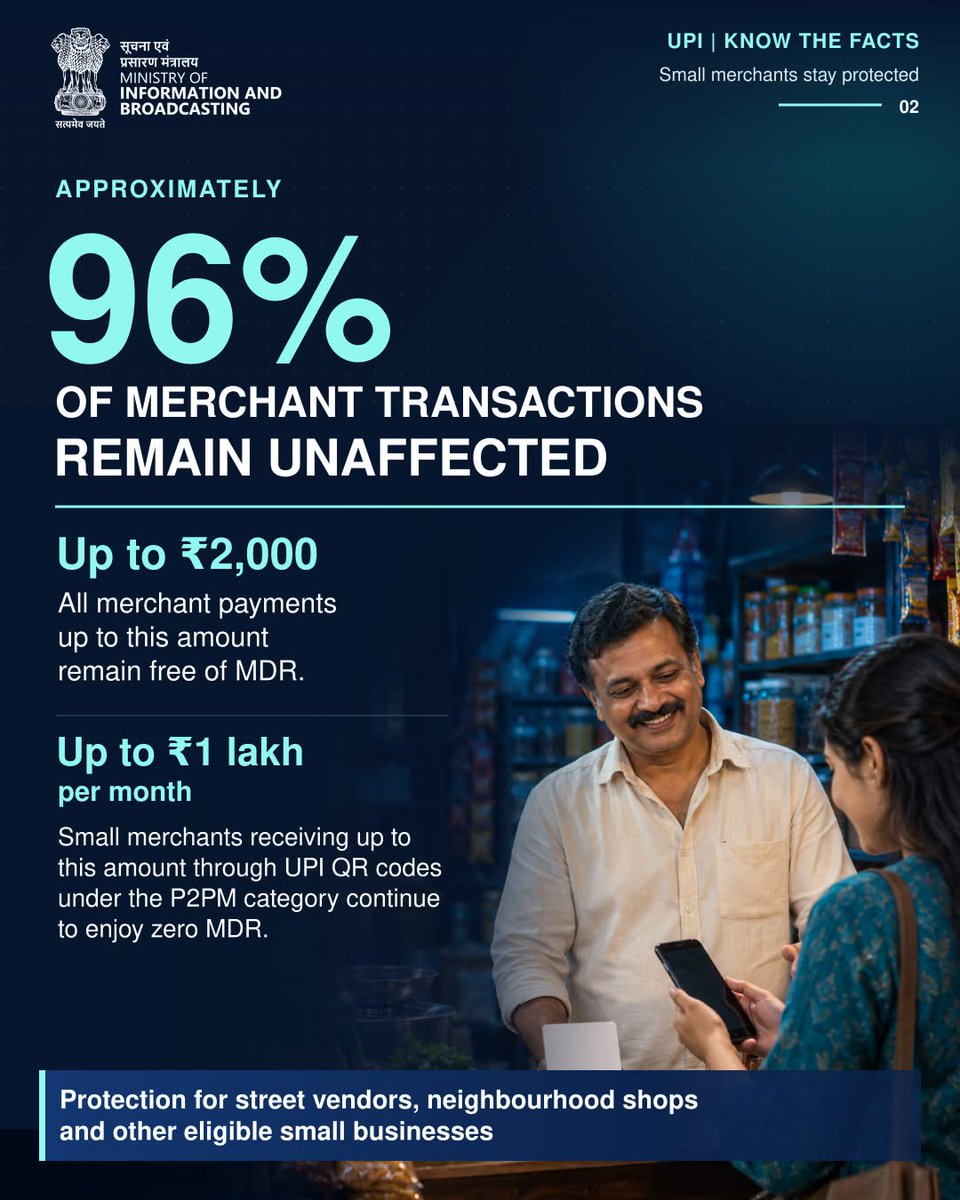
UPI stays free for you. Eligible small vendors continue to pay zero MDR, and around 96% of merchant transactions remain unaffected.
Stay informed. Pay with confidence.
Read here: https://t.co/ApsnyyBc0m
#KnowTheFacts#UPIUpdates
Fake News! MDR is not a tax!
No customer will be charged any charge!
Congress suddenly has discovered its "Love" for UPI. Till yesterday it was opposing it
Fake News! MDR is not a tax!
No customer will be charged any charge!
Congress suddenly has discovered its "Love" for UPI. Till yesterday it was opposing it
अब मोदी सरकार की लूट UPI तक पहुँच गई है। “No fees on UPI” को बदलकर अब “₹2,000 तक के UPI transactions पर no fees” कर दिया गया है।
गगनचुंबी महँगाई से आम आदमी की जेब पहले ही खाली है। थोक महँगाई 10% के क़रीब है और भाजपा सरकार ने जनता पर “Digital Payments Tax” लगाकर उनकी बची-कुची, बचत को भी तबाह करने की योजना बना दी है।
मोदी सरकार का सबसे बड़ा पलटवार देखिए —
10 साल पहले नोटबंदी करके देश की अर्थव्यवस्था को झटका दिया गया। जब नोटबंदी के विनाशकारी नतीजों पर सवाल उठे, तो सरकार ने दलील दी थी कि नोटबंदी Digital Payments और Cashless Economy को बढ़ावा देने के लिए थोपी गई।
वित्त मंत्री जी ने हाल ही में संसद में कहा था कि UPI पर कोई Tax व Charges नहीं लगेंगे, पर कई ख़बरों के मुताबिक़:-
₹5,000 के transaction पर ₹25 और ₹10,000 पर ₹50 तक की संभावित वसूली की जाएगी। क्या ये सच है?
MDR की बात करें तो सरकार को क्या यह नहीं पता कि व्यापारी पर पड़ने वाला यह अतिरिक्त बोझ आखिरकार कीमतों के जरिए आम उपभोक्ता की जेब से ही वसूला जाएगा?
महँगाई से त्रस्त जनता को राहत देने के बजाय मोदी सरकार हर रोज उसकी जेब पर डाका डालने का नया तरीका खोज रही है !!
The new UPI framework introduced has no impact on any person to person transactions.
UPI will continue to remain completely free for all person-to-person transactions, irrespective of the amount transferred.
Payments to merchants up to ₹2,000, along with transactions covered under the zero-MDR framework for small merchants, will also remain free. Consequently, approximately 96% of all P2M (person-to-merchant) transactions will remain unaffected. MDR will apply only to specified merchant transactions above ₹2,000.
Read More - https://t.co/w1m0HCY00C
👉 UPI Continues to Remain Free for Peer to Peer Transactions and 96% of Merchant Transactions
👉 The new UPI framework introduced has no impact on any person to person transactions
👉 UPI will continue to remain completely free for all person-to-person transactions, irrespective of the amount transferred
👉 Payments to merchants up to ₹2,000, along with transactions covered under the zero-MDR framework for small merchants, will also remain free
👉 Consequently, approximately 96% of all P2M transactions will remain unaffected. MDR will apply only to specified merchant transactions above ₹2,000
👉 It is clarified that MDR is neither a tax nor a charge collected by the Government or @NPCI_NPCI. It is distributed among payment ecosystem participants, including banks and payment application providers, to support the operation and continued expansion of the UPI ecosystem
👉 Introduced under the Payment and Settlement Systems Act, 2007, following detailed deliberations by the UPI Steering Committee, the framework seeks to ensure the long-term sustainability of UPI while protecting individuals and small merchants from additional charges
Read here for full details ➡️ https://t.co/KGxlX3SVC0
Bhai Chandra sahab ke ₹22,000 crores maaf nahi karte to India mein UPI agle 20 saal tak free chal jaata by government’s number of ₹8,000 crores subsidy.
Also NPCI - which runs UPI has ₹6,119 hard cash on its balance sheet and pre tax operating profit of ₹1,900 crores. NPCI apne cash pe and profits par zindagi bhar UPI free chala sakti hai. Government ka kuchh lena dena hi nahi hai. Government earned ₹1,000 crores tax from NPCI last year.
Bhai Chandra sahab ke ₹22,000 crores maaf nahi karte to India mein UPI agle 20 saal tak free chal jaata by government’s number of ₹8,000 crores subsidy.
Also NPCI - which runs UPI has ₹6,119 hard cash on its balance sheet and pre tax operating profit of ₹1,900 crores. NPCI apne cash pe and profits par zindagi bhar UPI free chala sakti hai. Government ka kuchh lena dena hi nahi hai. Government earned ₹1,000 crores tax from NPCI last year.
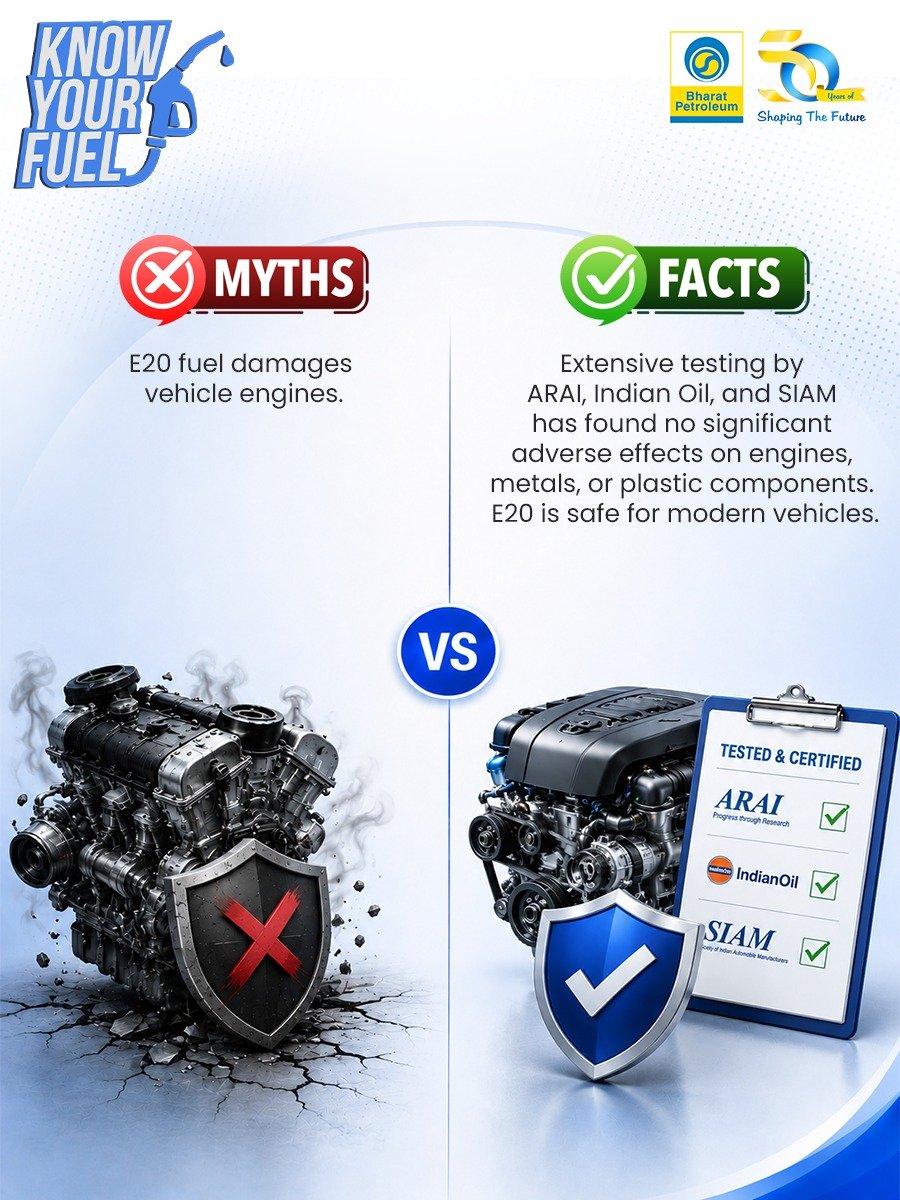
Extensive testing by ARAI, Indian Oil and SIAM has found no significant adverse effects of E20 on engines or vehicle components. E20 is safe for modern vehicles and supports cleaner mobility.
BPCL continues to drive awareness through facts.
#BPCL#E20Facts#CleanMobility #DriveWithConfidence #FuelFacts
@HardeepSPuri@Secretary_MoPNG@PetroleumMin
THE E20 DEBATE: FACTS VS HYPOCRISY.
HERE'S AN UNDENIABLE FACT:
The E20 programme did not begin under the Modi government. Ethanol blending was approved years earlier, during the UPA. The difference is in execution. Blending remained stuck at roughly 1–1.5% for years before accelerating significantly under the NDA.
So, let's first get the politics out of the way.
If ethanol blending was acceptable in principle then, why is it suddenly portrayed as anti-people now?
Now, let's look at the arguments being presented by critics:
CRITICS ARGUMENT 1: E20 FUEL IS BEING PUSHED BY NDA TO KEEP SUGAR CANE FARMERS HAPPY.
There's no doubt Ethanol is creating an additional income stream for sugarcane farmers.
But governments have always handed out subsidies or incentives to farmers.
+ MSP exists for 23 crops. Sugar cane farmers get SAP or State Advised Price.
+ Fertiliser subsidies.
+ Cheap or free electricity.
+ Irrigation subsidies.
+ Procurement policies.
If these benefits to farmers are accepted as legitimate public policy, why is E20 policy being targeted in isolation for market distortion?
CRITICS ARGUMENT 2: ETHANOL PRODUCTION IS WATER CONSUMING.
Yes, sugarcane consumes a great deal of water.
But so do
+ Paddy cultivators. Just look at the tumbling water tables in Punjab, Haryana.
+ AI and data centers.
+ Semiconductor manufacturing.
+ Steel and cement production.
The question is not whether something uses water, but whether the benefits justify the costs. Again why are critics holding E20 alone to a test that they don't set for others?
CRITICS ARGUMENT 3: THE GOVERNMENT SHOULD NOT MAKE E20 MANDATORY. LEAVE IT TO CHOICE.
We're in a democracy and choice matters. But governments routinely make decisions that we, the people have no choice but to accept.
+ Taxation rates
+ Emission norms.
+ Fuel quality standards.
+ Safety regulations.
+ Identity Proof.
These are often choices imposed to achieve broader national goals. Shouldn't E20 should be judged in the same way?
Here's how E20 usage serves NATIONAL INTEREST:
+ India imports 85–90% of its crude oil. E20 seeks to address that by replacing up to 20% of petrol volume with domestically produced ethanol, helping diversify the fuel mix and reducing import costs.
+ With E20 NDA estimates saving Rs 1 lakh crore in foreign-exchange.
CRITICS ARGUMENT 4: COST OF CAR ENGINE WEAR AND TEAR, MILEAGE INEFFICIENCY OUTWEIGHS BENEFITS.
It is true that Ethanol has about 34% less energy per litre than petrol. But because E20 contains only 20% ethanol, the overall energy content of the fuel falls by roughly 4%–7%. So at 5% a car that gives 20 km/L on pure petrol will give 19km/L. But usage also improves air quality. Which increases longevity in humans and lowers healthcare costs over time. That is s fair trade-off.
CONCLUSION:
Every policy is a trade off. E20 isn't perfect. But if agricultural subsidies, procurement, irrigation policy and fuel regulations are accepted as legitimate public policy, then judge ethanol using the same yardstick.
We all knew that Manish Kashyap was lying when he ranted about E20 fuel having damaged his brand new Toyota which was E20 compliant to begin with
Now Toyota has officially called out his bluff. He was using adulterated fuel. The company flushed out & cleaned the entire fuel system, refilled with E20 & it is running fine
But a lot of damage has been done because a lie travels much faster than the clarification
It is becoming increasingly evident that pliant influencers like Manish Kashyap are willing to trade their conscience & national benefit for material gains to peddle anti E20 propaganda
So please stay with facts & debunk such propaganda
The outrage over E20 fuel is driven more by politics than facts.
Ethanol blending in India has never been a sudden switch. It has been a carefully phased transition over the years:
• E10 rollout began in phases and became the nationwide standard.
• E12/E15 levels were introduced progressively in several regions.
• E16 and E18 followed as blending levels increased in a calibrated manner.
• E20 has now been introduced in a phased manner, not overnight.
This means the ethanol content in petrol has increased gradually over the years, not in one dramatic jump.
So, those claiming their car’s mileage has suddenly collapsed or that their vehicle has suddenly developed problems because of ethanol-blended fuel are making a claim that simply doesn’t align with how the rollout has actually happened.
If a vehicle has been running on progressively higher ethanol blends for years, blaming E20 for an abrupt overnight change is political opportunism, not evidence-based argument.
Facts matter. Fearmongering doesn’t.
Ethanol Blended Petrol does not damage your 2 wheeler or 4 wheeler engine.
More than 20 crore petrol driven two wheelers & more than 30 lakh petrol driven 4 wheelers which are on road since last 3 years are already using Ethanol Blended Petrol, as blending has been 20%, 19% and 15% for last 3 years.
Ethanol Blended Petrol is "Desh Ke Kisan Ka fuel" "Desh Ka Fuel".
It has helped increased per tonne price for maize farmers from 1200Rs to 2400Rs; provided 1 lakh 90K crore plus to farmers!
Ethanol Blended Petrol leads to
- 40% lessor carbon emissions;
- Better accelaration
- Overall improvement in drivability and vehicle performance
If India successfully achieves it; India's import bill on crude oil will reduce by lakhs of crores every year insulating it further in any global energy crisis.
‘Chinese foreign lobbies’ do not want India to achieve strategic energy autonomy
Watch my explanation & expose: