🏁Ya están abiertas las preinscripciones!!
El curso involucra trabajo práctico de laboratorio de 40 hs sobre producción y caracterización de nanomateriales, y la evaluación de sus propiedades
Más info en https://t.co/nuVy1FUsCJ
@unsamoficial@ebynunsam@Inquimae1@Exactas_UBA
Honored to receive 2nd place in the ISGS PhD Thesis Award 2024 🏅
Proud to be the only South American awardee.
Grateful to @isgs_sol_gel, mentors, and collaborators for their support!
🔗 https://t.co/LzLJMMLu0e
🆕Publicamos el resumen de nuestro año 2024 en la Memoria Institucional.
Acá podrán encontrar los hitos en la vida del instituto, sus grupos y producción científica, premios y eventos de relevancia.
Disponible en https://t.co/yRuY3vRuI4
Seminario nano del @insunsam
Hoy Andrea Montero Oleas nos muestra cómo hacer nanovehículos para delivery de proteínas.
Andrea se formó en @Exactas_UBA y @UGrenobleAlpes y ahora es postdoc en el grupo.
Ciencia de lujo.
🚀 Exciting news! Our latest paper on the one-pot synthesis of Au@mSiO₂ nanocomposites for photothermal applications is out—and we’re on the cover!
Check it out here: 🔗 https://t.co/ApTJer6VOE
@luz_ricci@YoannRoupioz
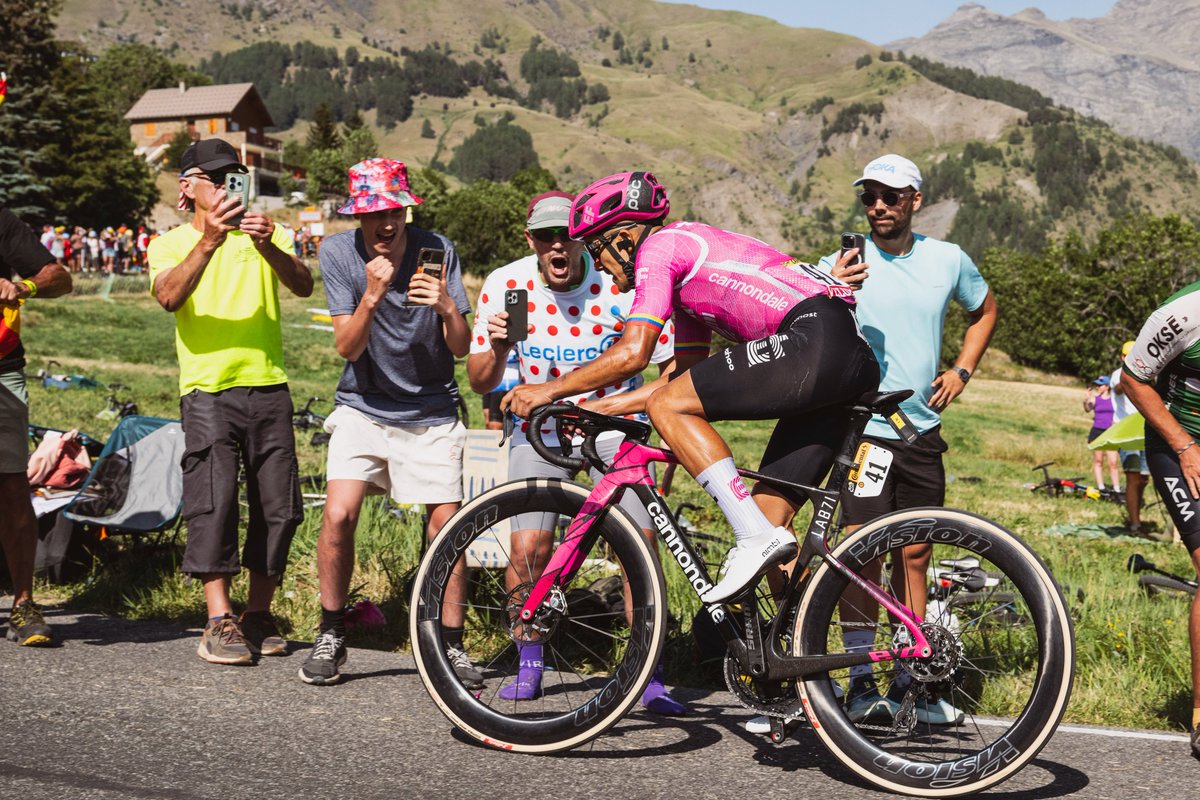
"NO TENGO NADA QUE AGRADECERLE A ECUADOR, ES LA RAZÓN POR LO QUE ME DEDICO ESTE TRIUNFO A MI MISMA!" Esther Galarza tras el triunfo en la tercera etapa de la @VueltaFemenina 2024 🇨🇴🚴🏻♀️
“Development of novel species-specific and genus-specific primers for the detection of Babaco Mosaic Virus (BabMV)” es la nueva publicación del Laboratorio de Biotecnología Vegetal.
It’s a story of how academia goes wrong. And how it self-corrects.
A must read for everyone:
2020 - A discovery of room-temperature superconductivity is published in Nature by Ranga Dias
2023 - The second RT superconductor is reported by Dias in Nature
2024 - The first paper is retracted. Then the second. No one could replicate his results.
The forth investigation by external experts showed that ‘he concealed information from his students, manipulated them and shut them out of key steps in the research process’.
▫️
The story looks like this:
1. Dias proposed that adding carbon to H3S might lead to RT superconductivity.
2. His PhD students could NOT observe the signs of superconductivity in the samples (no resistivity drop, no susceptibility change).
3. Suddenly, Dias emailed everyone and announced the discovery of RT superconductivity. Students were shocked.
4. The draft was sent to the team at 5.13 p.m. and SUBMITTED to Nature at 8.26 p.m. In just TWO hours! No one had time to read it.
5. Dias told the students he ‘had taken all the resistance and magnetic-susceptibility data before coming to Rochester’.
6. 3 reviewers were concerned. Only one supported publication. It was published on 14 October 2020.
7. A year(!!!) later Dias made raw data publicly available. This prompted data check where ‘data points were separated by suspiciously regular intervals’.
8. Then, Nature initiated post-publication review by 4 experts. Two said there were big problems.
9. Following rebuttal & responses, Nature retracted the manuscript. Dias did NOT tell the students about the post-publication review process and data fabrication concerns.
▫️
Now, the 2nd paper raised concerns about PhD students:
- Dias sent them the draft at 2.09 am and asked for comments by 10.30 am (same day). The draft had NO figures.
- The students convinced Dias to postpone submission by one day.
- The students raised concerns about the pressure data because none of it was “anything that we actually measured”. Dias dismissed it with: “Pressure is a joke.”
- Then ‘Dias gave them an ultimatum: remove their names, or let him send the draft’. It was very intimidating. The students gave in: “What if I [object] and he makes the rest of my life miserable?”
▫️
My conclusions:
1. This situation shows how easily a supervisor can manipulate inexperienced students into publishing and believing the results. I am sure there are many other examples in academia that just haven’t surfaced.
2. All data must be publicly available. Before publication.
3. Nature took the case professionally, asking for extra refereeing and post-publication review multiple times as things were unfolding. BUT it's not so common. I heard many stories where some journals just didn’t care.
4. Finally and MOST importantly - students suffer the most.
As one of them said:
“My thesis is going to be full of fabricated data. How am I supposed to graduate in this lab?”
#academia #PhD #research
Surrounded by the breathtaking beauty of the Brazilian flora and fauna, between lizards, galhinas de angola, carpinchos and colorful birds, and fascinating bugs
Passionate about this place! Working here feels like stepping into a futuristic sci-fi movie. 🚀 It is one of the world's most advanced synchrotron light sources.
And the best part? It's right here in South America! 🌿 @CNPEM@SincrotronLNLS
These weeks, I'm analyzing my samples at these amazing syncrothron facilities. Fingers crossed for some exciting discoveries #phdlife#scienceadventures#synchrotron







![Andrew_Akbashev's tweet photo. It’s a story of how academia goes wrong. And how it self-corrects.
A must read for everyone:
2020 - A discovery of room-temperature superconductivity is published in Nature by Ranga Dias
2023 - The second RT superconductor is reported by Dias in Nature
2024 - The first paper is retracted. Then the second. No one could replicate his results.
The forth investigation by external experts showed that ‘he concealed information from his students, manipulated them and shut them out of key steps in the research process’.
▫️
The story looks like this:
1. Dias proposed that adding carbon to H3S might lead to RT superconductivity.
2. His PhD students could NOT observe the signs of superconductivity in the samples (no resistivity drop, no susceptibility change).
3. Suddenly, Dias emailed everyone and announced the discovery of RT superconductivity. Students were shocked.
4. The draft was sent to the team at 5.13 p.m. and SUBMITTED to Nature at 8.26 p.m. In just TWO hours! No one had time to read it.
5. Dias told the students he ‘had taken all the resistance and magnetic-susceptibility data before coming to Rochester’.
6. 3 reviewers were concerned. Only one supported publication. It was published on 14 October 2020.
7. A year(!!!) later Dias made raw data publicly available. This prompted data check where ‘data points were separated by suspiciously regular intervals’.
8. Then, Nature initiated post-publication review by 4 experts. Two said there were big problems.
9. Following rebuttal & responses, Nature retracted the manuscript. Dias did NOT tell the students about the post-publication review process and data fabrication concerns.
▫️
Now, the 2nd paper raised concerns about PhD students:
- Dias sent them the draft at 2.09 am and asked for comments by 10.30 am (same day). The draft had NO figures.
- The students convinced Dias to postpone submission by one day.
- The students raised concerns about the pressure data because none of it was “anything that we actually measured”. Dias dismissed it with: “Pressure is a joke.”
- Then ‘Dias gave them an ultimatum: remove their names, or let him send the draft’. It was very intimidating. The students gave in: “What if I [object] and he makes the rest of my life miserable?”
▫️
My conclusions:
1. This situation shows how easily a supervisor can manipulate inexperienced students into publishing and believing the results. I am sure there are many other examples in academia that just haven’t surfaced.
2. All data must be publicly available. Before publication.
3. Nature took the case professionally, asking for extra refereeing and post-publication review multiple times as things were unfolding. BUT it's not so common. I heard many stories where some journals just didn’t care.
4. Finally and MOST importantly - students suffer the most.
As one of them said:
“My thesis is going to be full of fabricated data. How am I supposed to graduate in this lab?”
#academia #PhD #research](https://pbs.twimg.com/media/GIY8mFKXgAMu1k8.jpg)





