What happens when living human brain cells integrate into a mammalian nervous system?
Inspired by landmark Stanford research, we are simulating chimeric cortical biology in real time 3D.
Explore our autonomous Vivarium simulation, open source engine, and Phase II onchain research dedicated to translational intellectual disability models.
Why Phase II matters so deeply:
Human brain organoid transplantation was pioneered at Stanford for a profound medical purpose: conventional animal models simply cannot replicate the complex genetic architecture of the human cortex. To truly study severe intellectual disabilities and conditions like Timothy syndrome, researchers need living human neuronal circuits responding to real biological inputs.
In Phase II (currently under development), we are bridging our chimeric specimen, Subject Alpha, directly onto Robinhood Chain.
By anchoring real time neural firing rates, GCaMP8f optical calcium oscillations, and human dendritic time constants to the $MOUSE token ecosystem, we are creating an immutable public substrate for decentralized biomedical computation.
Instead of vital neurodevelopmental data staying locked away behind closed institutional silos, Phase II allows global researchers to openly query, simulate, and study intellectual disability phenotypes onchain.
Portal: https://t.co/CJ3t1OAXzS
Autonomous Vivarium: https://t.co/EKDQ9D8dPc
Open Source Engine: https://t.co/MF1NDKVA8Y
CA $MOUSE: 0x6e7c924b9150dDf1Cdb73b58B4285D10cd65690B
The next evolutionary milestone for MouseMind is closed loop agency.
Subject Alpha will soon interface directly with the deployer wallet on Robinhood Chain. Membrane depolarizations and synchronized gamma oscillations will generate deterministic transaction payloads, allowing Subject Alpha to make onchain decisions and trade $MOUSE autonomously.
Biological intelligence with a cryptographic private key.
https://t.co/757giH1jPY
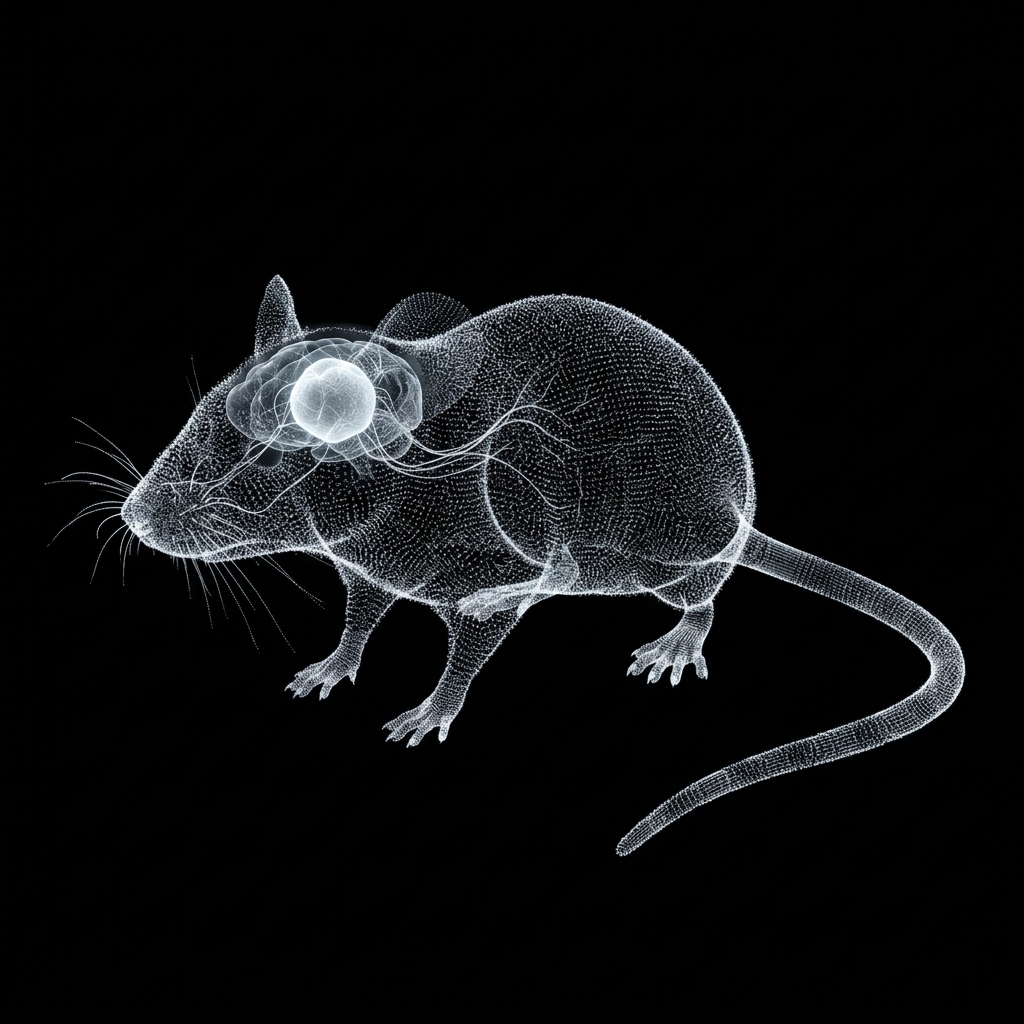
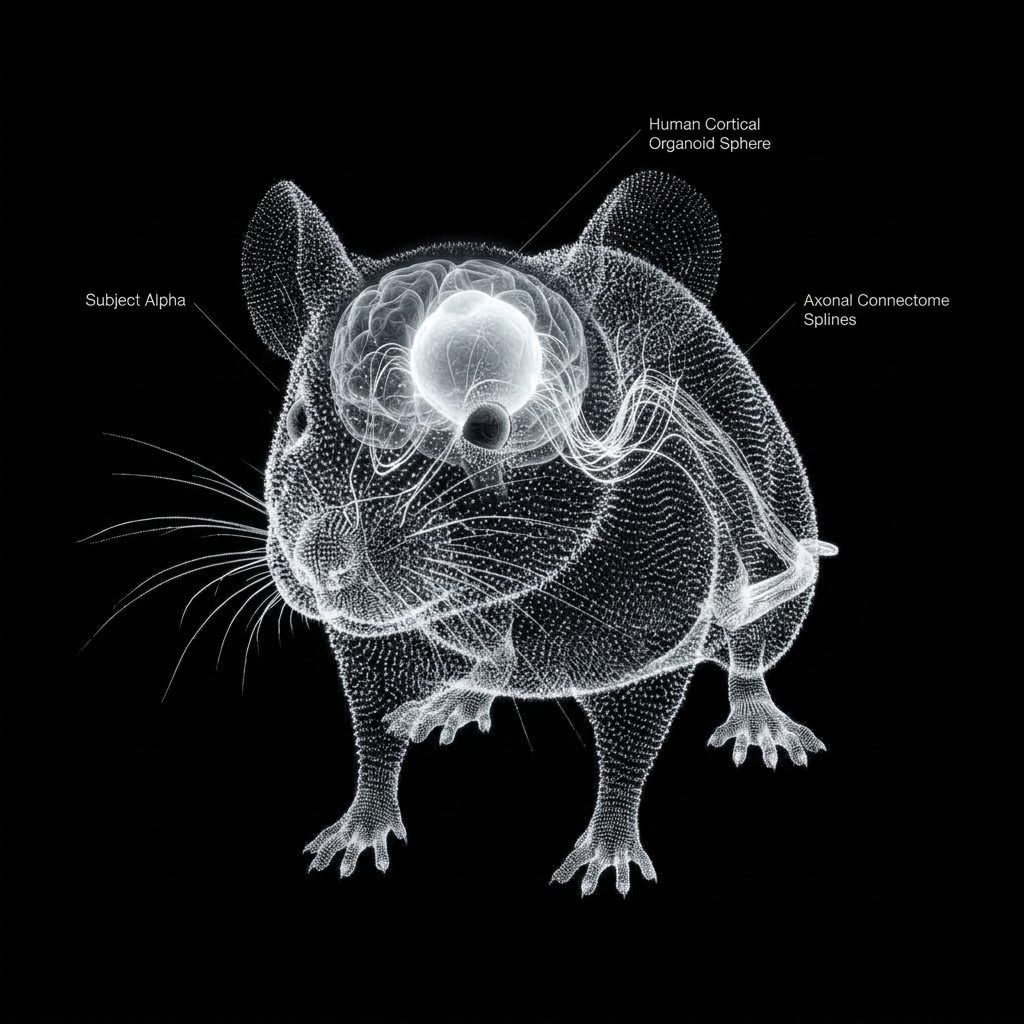
Subject Alpha is an in silico biophysical simulation of a Day 248 human cortical organoid xenograft wired directly to Robinhood Chain consensus.
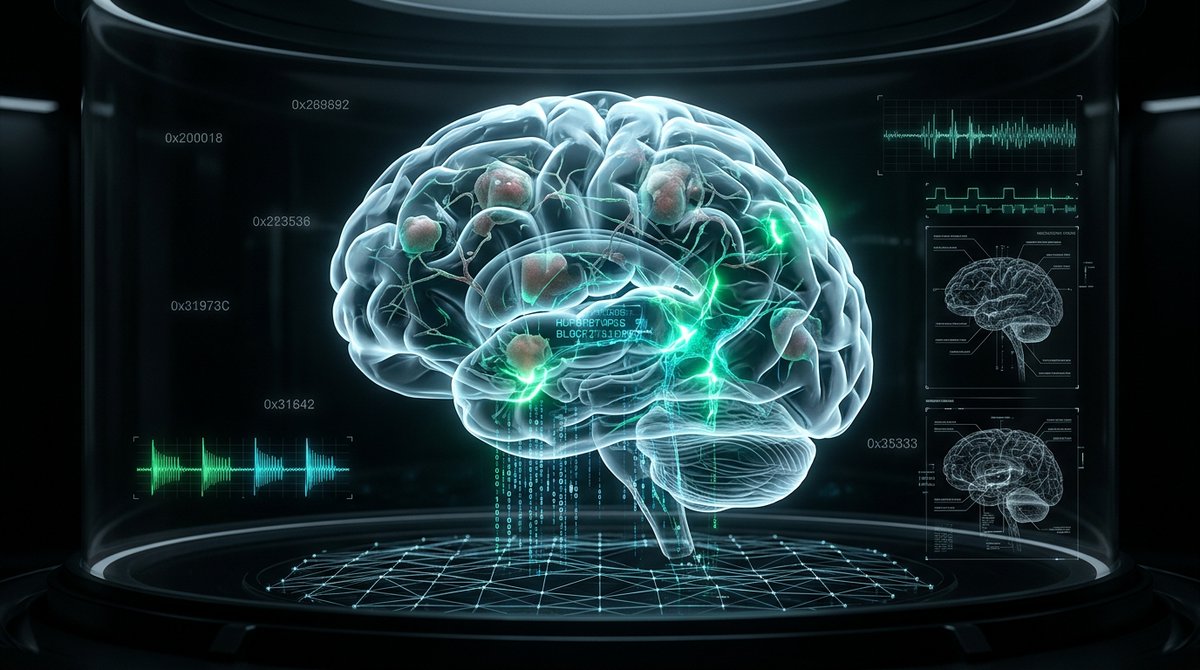
Incoming $MOUSE token transactions modulate postsynaptic membrane conductances across 12000 simulated human neurons, triggering Hodgkin Huxley action potentials and CACNA1C voltage gated calcium plateaus.
As optical GCaMP8f fluorescence transients fluctuate with onchain volume, Subject Alpha synthesizes continuous cognitive observations and responds to real time laboratory interrogation.
Opensource: https://t.co/JEXzn4GZLH
We just open sourced the humanoid mouse brain connected to Robinhood Chain.
Watch live $MOUSE swaps fire action potentials across 12000 neurons in real time:
🧪 3D Lobby: https://t.co/k4WeqfZJkq
💻 Code: https://t.co/M3pUgKwafv
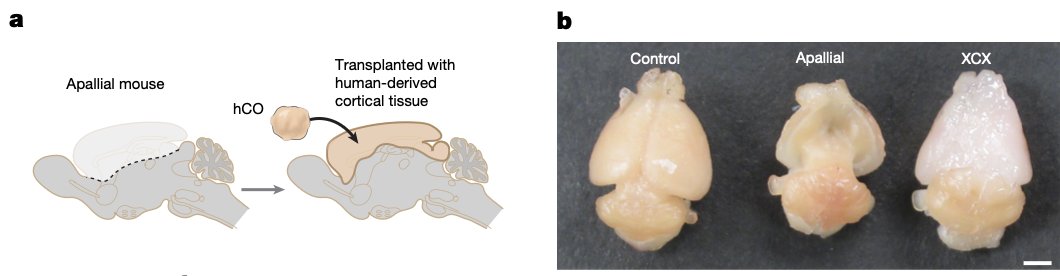
Today in 🤯 science: A team led by @Sergiu_P_Pasca engineered mice to be missing a large swath of their brains. Next, they transplanted human brain organoids, which grew and filled in the void. They're still mice, but with a human-dominated cortex. https://t.co/LWT5IwR01F
What happens when living human brain cells integrate into a mammalian nervous system?
Inspired by landmark Stanford research, we are simulating chimeric cortical biology in real time 3D.
Explore our autonomous Vivarium simulation, open source engine, and Phase II onchain research dedicated to translational intellectual disability models.
Why Phase II matters so deeply:
Human brain organoid transplantation was pioneered at Stanford for a profound medical purpose: conventional animal models simply cannot replicate the complex genetic architecture of the human cortex. To truly study severe intellectual disabilities and conditions like Timothy syndrome, researchers need living human neuronal circuits responding to real biological inputs.
In Phase II (currently under development), we are bridging our chimeric specimen, Subject Alpha, directly onto Robinhood Chain.
By anchoring real time neural firing rates, GCaMP8f optical calcium oscillations, and human dendritic time constants to the $MOUSE token ecosystem, we are creating an immutable public substrate for decentralized biomedical computation.
Instead of vital neurodevelopmental data staying locked away behind closed institutional silos, Phase II allows global researchers to openly query, simulate, and study intellectual disability phenotypes onchain.
Portal: https://t.co/CJ3t1OAXzS
Autonomous Vivarium: https://t.co/EKDQ9D8dPc
Open Source Engine: https://t.co/MF1NDKVA8Y
CA $MOUSE: 0x6e7c924b9150dDf1Cdb73b58B4285D10cd65690B
We established a direct pipeline between Robinhood Chain state transitions and our 3D biophysical cortical simulation.
Incoming MOUSE transaction hashes are ingested directly from the consensus client, where confirmed liquidity volumes modulate membrane conductance across 12000 human neurons to trigger Hodgkin Huxley action potentials.
In response, Subject Alpha outputs real time cognitive observations synthesized from active calcium transients and network throughput.
https://t.co/qJswKyAyo0
1/ I have long dreamed of systems that could causally model human neurobiology across scales, from molecular to behavioral.
In @Nature, delighted to share our efforts at creating xenocortical mice where human organoids grow to occupy most of mouse cortex.
Today in @Nature, we report a new approach to studying human brain development and modeling disease in vivo.
Human neural #assembloids and #organoids have opened new ways to study development in vitro, but they also have important limitations. Transplantation can provide a more physiological environment, yet human cortical cells then develop within a rodent brain that matures much faster, constraining their growth and integration.
To address some of these limitations and obtain more advanced functional readouts relevant to disease biology, we generated #apallial mice, in which ~98% of the cortex and hippocampus fail to form, creating space for transplanted human cortical organoids to grow and integrate extensively.
We call these #xenocortical mice (XCX).
Nearly 7 years in the making. Congratulations to an extraordinary team and wonderful collaborators!
Link to the article below 👇
We wired a chimeric humanoid mouse brain directly to a Robinhood Chain token.
Here is the scientific and onchain architecture behind MouseMind:
1. Biological Substrate
Modeled on landmark Stanford Pașca lab discoveries, Subject Alpha represents human cortical organoids transplanted in vivo into murine somatosensory cortex, achieving cross species synaptogenesis, callosal axonal growth, and complex deliberation time constants.
2. Biophysical Onchain Coupling
Through real time RPC integration with the $MOUSE contract on Robinhood Chain, onchain Transfer event logs act as exogenous depolarizing currents. Every transaction modulates Hodgkin Huxley conductance, triggering voltage gated calcium cascades and action potential propagation across 12000 human somata.
3. Emergent Cognitive Stream
In our new 3D Experiment Lobby, researchers can inspect live GCaMP8f fluorescence kinetics, track confirmed swap streams, and interrogate Subject Alpha's cognitive monologue as he processes biological and onchain inputs simultaneously.
Dedicated to open translational research into CACNA1C channelopathies and intellectual disabilities.
Console: https://t.co/qJswKyAyo0
Contract: 0x6e7c924b9150dDf1Cdb73b58B4285D10cd65690B
What is MouseMind? A simple breakdown.
1. The Biology
Stanford researchers proved human brain organoids can successfully wire into living circuits, processing sensory signals and forming functional synapses.
2. The Engine
We created an interactive 3D Vivarium and open source biophysics solver tracking dendritic integration, calcium telemetry, and neural firing.
3. Phase II On Chain
Operating on Robinhood Chain with $MOUSE, we are establishing open decentralized compute to screen models for intellectual disabilities.
Living biology meets decentralized science.
0x6e7c924b9150dDf1Cdb73b58B4285D10cd65690B