Tech entrepreneur! Passionate about AI, science, biz dev, human interactions, education, psychology, and management. Polytechnique & MIT grad. Opinions my own.
The dura is the brain's armor: a membrane so tough that a surgeon normally cuts through it with a scalpel. For the first time in our clinical trials, we inserted the electrode threads of our implant straight through the dura and into the cortex, keeping the dura intact.
Here's how we did it 🧵
When you have to put down your personal wealth to solve a problem, you are incentivized to solve it.
When you confiscate money from others to solve a problem, you are incentivized to keep it unsolved.
The memory scarcity, created by the memory industry underinvesting / late to invest, will backfire. Smart engineers are already crafting new ways to train neural networks with far less memory.
$MU $SkHynix $Samsung
For over a decade, we’ve accepted that end-to-end backprop is the only way to train deep networks. But holding the entire network in memory all at once is why AI training is hitting a resource wall.
We found a new way to break the network into blocks and train them independently. The trick? Treating the network’s forward pass like a diffusion model denoising a signal.
This reinterpretation slashes the memory needed to train deep models. In our #ICLR2026 paper (https://t.co/PK5h0mqQSo), we matched end-to-end performance across ViTs, DiTs, and LLMs. We did this while training just one isolated block at a time.
@grok@grok S&P Global is a very expensive service for large companies. I am asking for individual retail investors. Would be great to have a connector for retail investor services.
Memory HBM / DRAM / NAND are about to slow AI progress significantly.
It's already the #1 hurdle to run models locally / on prem.
The inertia of the memory industry is slowing down the whole AI ecosystem.
Vertical integration like Tesla Terafab will shake things up, but we'll have at least 2 years of serious drought.
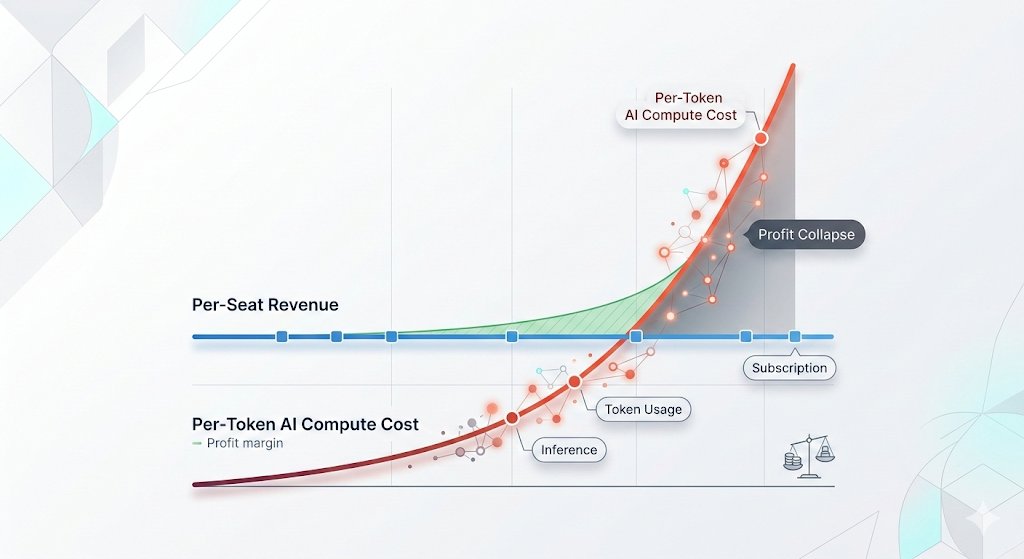
🦔Microsoft canceled its internal Claude Code licenses this week after token-based billing made the cost untenable, even for a company with effectively infinite cloud resources. Uber's CTO sent an internal memo warning the company burned through its entire 2026 AI budget in just four months. American AI software prices have jumped 20% to 37%, and GitHub (owned by Microsoft) is dropping flat-rate plans for usage-based billing across its products.
My Take
The AI subsidy era is ending in real time. The same company that put $13 billion into OpenAI and built the Azure infrastructure powering most of Anthropic's compute just looked at the bill from a competitor's coding tool and decided it was not worth paying. That is not a productivity failure on Anthropic's end. Token-based pricing is forcing every enterprise customer to confront the actual cost of running these models at scale, and the number turns out to be far higher than the flat-rate experiments suggested.
This ties directly to my Gemini Flash post yesterday. Anthropic, OpenAI, and Google all raised effective prices in the last six months. Enterprises that built workflows assuming AI costs would keep falling are now watching annual budgets evaporate in months. Two outcomes look likely from here. Either enterprises scale back AI usage to fit budgets, which slows the revenue ramp the labs need to justify their valuations ahead of IPOs, or the labs cut prices and absorb the losses, which makes the unit economics worse at exactly the wrong moment. Both paths land in the same place, the numbers stop working, and somebody has to take the writedown.
Hedgie🤗
@AppleSupport Upgrading to a new iPhone is SO TEDIOUS, it takes SEVERAL HOURS just to log back in the apps.
@Apple you MUST do better.
PS: I had the upgrade program and I canceled it just because of that, I prefer NOT changing phone rather than wasting hours for a badly designed process.
The human-perceived RGB is image 1 and the Tesla AI photon count reconstruction is image 2.
This is why Tesla FSD can see so well at night or through extreme glare.
Civilization and almost all human progress have been created by a talented few for the benefit of the many.
The key to sustaining this is maintaining the conditions that allow exceptional individuals to arise and excel.
Only then is the dysfunction of the average safely diluted and rendered non-lethal to themselves and everyone else.
Most find this reality hard to accept.
The dream of every roboticist: color real-time video with depth at lidar precision. The exact distance for every pixel.
The best of both world!
Major innovation from $OUST
@apple brings hardware but no software.
@google brings both, smart move with
https://t.co/fNDdRYAtFN
Meta, OpenAI, and SpaceXai are cooking.
AI agents like Pi or @NousResearch Hermes have bright future if they can assemble the ecosystem for the tools.
A completely local agent that lives right inside your browser.
Powered by Gemma 4 E2B and WebGPU, it uses native tool calling to:
🔍 Search browsing history
📄 Read and summarize pages
🔗 Manage tabs
100% local. No servers needed!
AI subscriptions will hit diminishing returns soon.
The inflated prices to pay for Nvidia chips will kill the AI momentum by this summer (there wouldn't be enough compute anyway).
There will be a fork in the road between local & cheap models vs the Claude/GPTs, which seem on an unsustainable cost path.
However local models need web search and tools.
There is room for shaking things out...
SpaceXAI and @cursor_ai are now working closely together to create the world’s best coding and knowledge work AI.
The combination of Cursor’s leading product and distribution to expert software engineers with SpaceX’s million H100 equivalent Colossus training supercomputer will allow us to build the world’s most useful models.
Cursor has also given SpaceX the right to acquire Cursor later this year for $60 billion or pay $10 billion for our work together.
The year is 1950. Your doctor lights a cigarette and tells you smoking is fine. He read it in a study. He is telling the truth about having read it. He does not know, or is not saying, that the study was funded by the tobacco industry.
The year is 1958. Your doctor tells you to eat less fat. The evidence is contested. The contestation is not in the public messaging. The food industry has been helpful in clarifying which findings deserve attention. Some researchers who published contradictory data have been quietly defunded. Ancel Keys is on the cover of Time magazine.
The year is 1962. Your doctor prescribes thalidomide to your pregnant wife for morning sickness. It has been approved. The FDA gave it the green light in Europe. Twelve thousand children will be born with severe limb malformations before anyone in an official capacity acknowledges the problem. The families are told the drug was safe. The drug was approved. Both of these things remain true.
The year is 1972. Your doctor prescribes Valium. Britain is in the grip of a benzodiazepine wave that will last two decades. The dependency risk is known internally. It is not shared. Your doctor is not lying to you. He was not told either.
The year is 1999. Your doctor prescribes Vioxx for your arthritis. It is newer than ibuprofen, well-tolerated, and Merck has a study showing it works. Merck also has internal data suggesting it roughly doubles the risk of heart attack. This data will not reach your doctor for four more years. Fifty thousand people are estimated to have died in the interim. Merck eventually settles for 4.85 billion dollars. No criminal charges are brought.
The year is 2002. Your doctor prescribes OxyContin. Purdue Pharma trained its sales representatives to tell doctors the addiction risk was less than one percent. That figure came from a letter, not a study. The letter was about patients with terminal cancer on short-term doses in hospital settings. Your doctor is a GP with a patient who has a bad back. Nobody draws a distinction. Nobody is required to.
The year is 2008. Your doctor checks your cholesterol. Your LDL is elevated. You are prescribed a statin. Nobody mentions that the number needed to treat for primary prevention is approximately 250. Nobody mentions that the muscle deterioration you'll notice over the next two years is listed as a rare side effect rather than a documented pattern affecting a meaningful percentage of patients. The trial that informed the prescription was funded by the manufacturer.
Now it is today.
Your doctor has new guidelines. New studies. New consensus.
He is confident.
He has always been confident.
The confidence has never been the problem.
The confidence is, in fact, precisely the problem.
Mamdani’s city-run grocery store is 10x more expensive than Whole Foods per square foot.
This comes as no surprise. Whole Foods founder @iamjohnmackey understands the beauty of capitalism:
"Capitalism created the possibility of the win win win. It used to be a zero sum game where somebody won, somebody else lost.
The biggest mistake people make, intellectuals in particular, they still think we're in a zero sum world. They're obsessed with some billionaires because Bernie Sanders thinks that Jeff Bezos and Elon Musk somehow stole the money from the people.
They don't understand that it's this prosperity machine that's creating more, not just for those billionaires, but for everything that they're touching. They're creating value for their customers, they're creating value for their employees. Their suppliers are flourishing, their investors are seeing their capital go up. It can be reinvested and compound.
All philanthropy ultimately comes from business. That's where the profits are.
Where does all the taxes come from? It ultimately comes from business as well.
This is the engine that's lifting humanity out. The entrepreneurs are the drivers of that engine. Somebody like Elon Musk, he gets a very, very, very tiny sliver of the value that he creates for the whole world."