Highlight of my 2024: As a remote Research Assistant at SD lab, I got to work on a systematic review with Dr Divyangana Rakesh and Dr Katie McLaughlin which has now been published in JCPP! Extremely grateful to @Divyanganar for giving me the opportunity to work with her!
New paper, and it only took two years 🫠! In this systematic review, we aimed to identify the mediators and moderators in the association of SES with EF, language ability, and academic achievement. Now published as an Annual Research Review in JCPP!
https://t.co/rWmPSELdp2
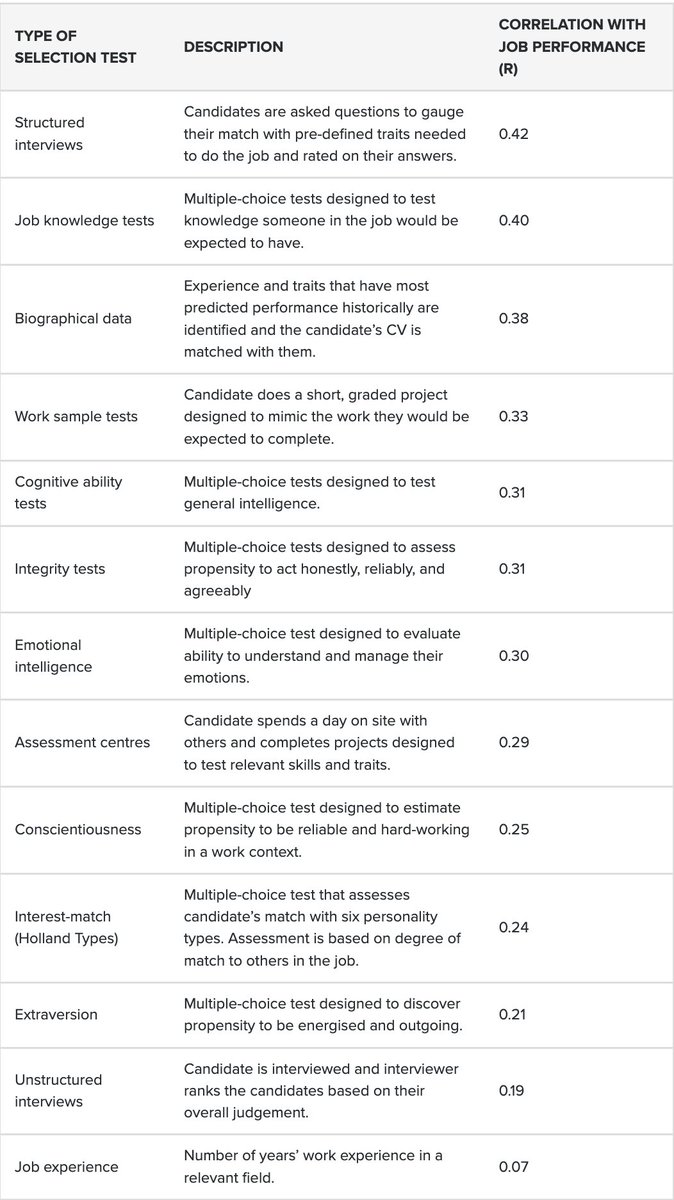
The worst predictors of job performance, according to hundreds of studies and the best meta-analysis available:
1. Years of experience
2. Unstructured interviews
3. Personality-match
What best predicts performance:
1. Structured interviews
2. Objectively tested biographical predictors
3. Work sample tests
An analysis of 370,000 college student essays found that human-written essays contain 8X more novel ideas than those generated by A.I. Though AI works often contain more flowery language, story lines are more homogeneous and lack distinctive ideas.
Negative symptoms in schizophrenia are not simply the absence of hallucinations or delusions.
They are a distinct symptom domain linked to motivation, reward, emotional expression, social cognition, and goal-directed behaviour.
Here’s the neurobiology that helps explain why they can persist, even when psychosis improves. 🧵👇
Nature just published the most important paradox in AI and science.
And nobody in the mainstream is talking about it.
The paper is called "Artificial Intelligence Tools Expand Scientists' Impact but Contract Science's Focus." Published January 14, 2026 in Nature. Researchers from Tsinghua University and the University of Chicago analyzed 41.3 million research papers across the natural sciences spanning 1980 to 2025.
The finding fits in one sentence.
Scientists who engage in AI-augmented research publish 3.02 times more papers, receive 4.84 times more citations, and become research project leaders 1.37 years earlier than those who do not.
More papers. More citations. Faster career progression. Every individual metric improves.
And yet.
AI adoption shrinks the collective volume of scientific topics studied by 4.63% and reduces scientist-to-scientist engagement by 22%.
More output. Less diversity. More citations. Less collaboration. More papers. Fewer ideas.
Here is the mechanism the researchers identified.
AI tools are extraordinarily good at accelerating work in established, data-rich domains. They can scrape existing literature, generate hypotheses within known frameworks, and process large datasets in fields where structured data already exists.
Biology. Chemistry. Physics. Computer science.
They are useless or nearly so for pioneering work in data-scarce areas. Emerging fields. Genuinely novel questions. The kind of research that requires human intuition about where the interesting problems are, not pattern-matching against what already exists.
So scientists with AI tools rush toward the data-rich fields. Because that is where AI helps. Because that is where output is fastest. Because that is where citations accumulate.
The questions nobody has studied yet the ones that require human imagination and tolerance for uncertainty get left behind.
The rush to study generative AI is producing a feedback loop of topical and methodological convergence, flattening scientific imagination and crowding out the pluralism needed to keep research adaptive, resilient, and intellectually generative.
A separate companion paper published in Nature the same month made the implication explicit.
AI is rapidly accelerating scientific output but risks narrowing inquiry, weakening judgment, and undermining how scientists are trained.
Here is the most uncomfortable finding of all.
The researchers found that AI adoption reduces collaboration between scientists. When a tool can do what previously required a conversation with a colleague, literature review, data analysis, hypothesis generation, scientists stop having those conversations.
The serendipitous collision of two researchers with different expertise that produces a genuinely novel finding the kind of collision that has produced most of science's biggest breakthroughs, happens less often.
AI made science faster.
And in doing so, it may have made science smaller.
(Paper link in the comments)
Good news for academics—substack is now piloting a project to allow for citations to Google Scholar.
This means if you write a great piece on substack and someone cites it in an academic journal, then you will get a DOI and credit on Google Scholar.
Our substack posts on Debunking Groupthink was included in the pilot and has been indexed by Google Scholar. It now appears on our Google Scholar profiles: https://t.co/GshvRNr0sv
You can read it using this link: https://t.co/p5BpFNhkYd
I also heard another substack article we wrote is being taught at Yale. So it's becoming an excellent place to write about and discuss science.
Disruption of circadian rhythms is a key mechanism in the risk and onset of many psychiatric disorders.
Check out our latest Primer which reviews the core features of circadian rhythms and the tools used to measure them.
🔗 https://t.co/YH8LqjlaG8
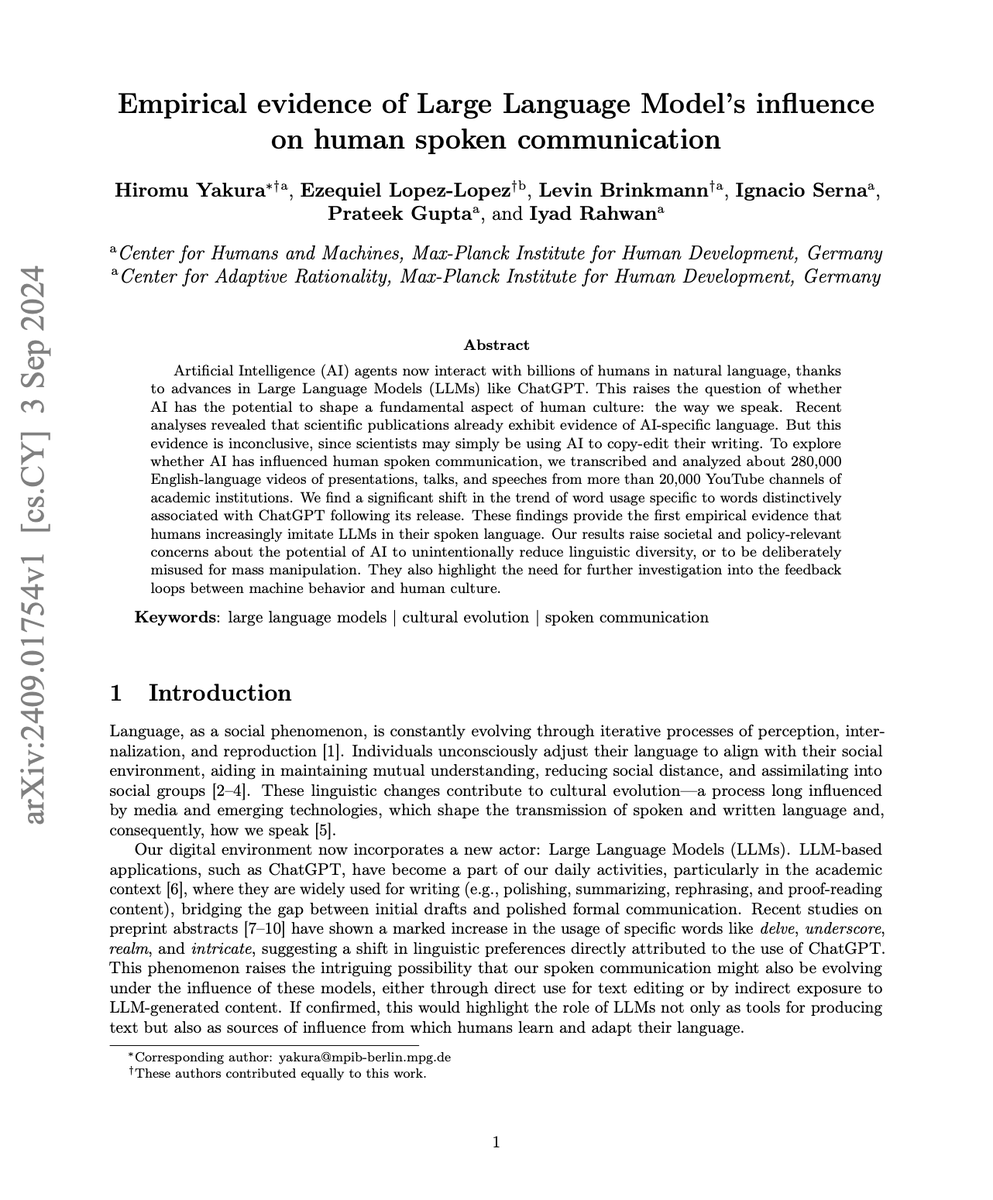
researchers at Max Planck analyzed 280,000 transcripts of academic talks and presentations from YouTube
they found that humans are increasingly using ChatGPT's favorite words in their spoken language. not in writing. in speech.
"delve" usage up 48%. "adept" up 51%. and 58% of these usages showed no signs of reading from a script.
we talk about model collapse when AI trains on AI output. this is model collapse, except the model is us.
I've met tons of researchers who hate stats!
If you're one of these, this book is for you ⤵️
Save (with 𝘤𝘭𝘪𝘱𝘱𝘦.𝘮𝘦) & Repost
The author says it perfectly:
"The most important concepts of statistics can be explained, so that ordinary people can understand it."
— No complex formulas.
— No expensive software needed.
— Just spreadsheets & clear thinking.
The book covers:
— Sample surveys
— Data presentation
— Confidence intervals
— Statistical tests
Written for people who need to collect data.
— Analyze results.
— Present findings.
But don't want to become mathematicians.
Real examples throughout.
— Like the Fitness Club survey with 30 kids.
Shows you exactly how to spot bias.
When to use different tests.
How to avoid common mistakes.
Perfect for public health researchers.
Statistics doesn't have to be scary.
(𝘢𝘵𝘭𝘦𝘢𝘴𝘵 𝘪𝘯 𝘵𝘩𝘦 𝘣𝘦𝘨𝘪𝘯𝘯𝘪𝘯𝘨)
💬 Comment if you'd like a link to download this book!
Living in an unequal society, regardless of individual wealth, can lead to structural changes in the brains of children.
#ScienceatKings#PopulationHealth
https://t.co/OvD1Zf3Q2r
Chronic, delayed, and shifting patterns of PTSD, CPTSD, and PGD were linked to higher levels of somatization and pain, highlighting the need for integrated trauma-informed care addressing physical and psychological health. https://t.co/aqkTvUPkPo
Chronic diseases were more strongly linked to suicide attempt, while severe conditions and psychiatric polygenic scores were more associated with suicide, indicating overlapping but distinct risk factors for attempt and death by suicide.
https://t.co/0BKIBCHPZo
Why is #ADHD often missed in women? Historical research overlooked female biology—but that’s changing! Discover how hormones like estrogen and progesterone impact #ADHD with @BorgSkoglund’s expert insights.
EARLY BIRD from £20! https://t.co/d6PEV7ipz3
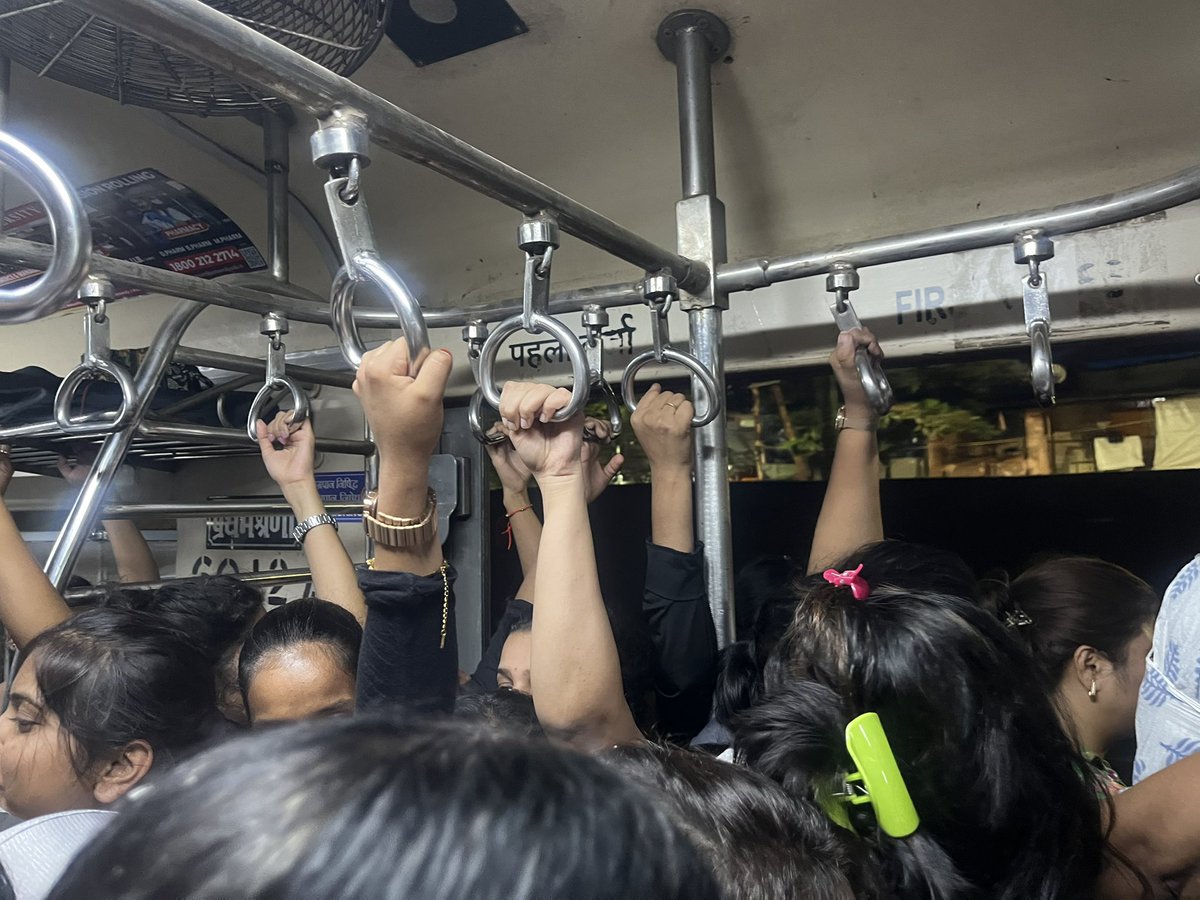
This is a peak-hour crowd in Central Railway’s first-class compartment — yet the railways refuse to expand it, even as the number of women commuters far exceeds its capacity.