🚀 Introducing DeepSeek-V4.1-Flash: smarter, faster, more efficient.
🔹 Introducing the smallest model in our new architecture family, with native visual understanding.
🔹 Designed for greater capability, faster inference, higher throughput, and scaling to larger models.
1/6
Just published a @TheMeshtastic platform adapter for Hermes Agent.
Connect @_HermesAgent to your LoRa mesh network, send/receive DMs, get signal quality, node info, and more.
https://t.co/kRqP0Ckk4N
@NousResearch
If you recognize what's happening here, you're part of a generation that also spent endless hours fine-tuning autoexec.bat and config.sys files.
And if you're not sure what's going on in the video, I honestly envy your youth.
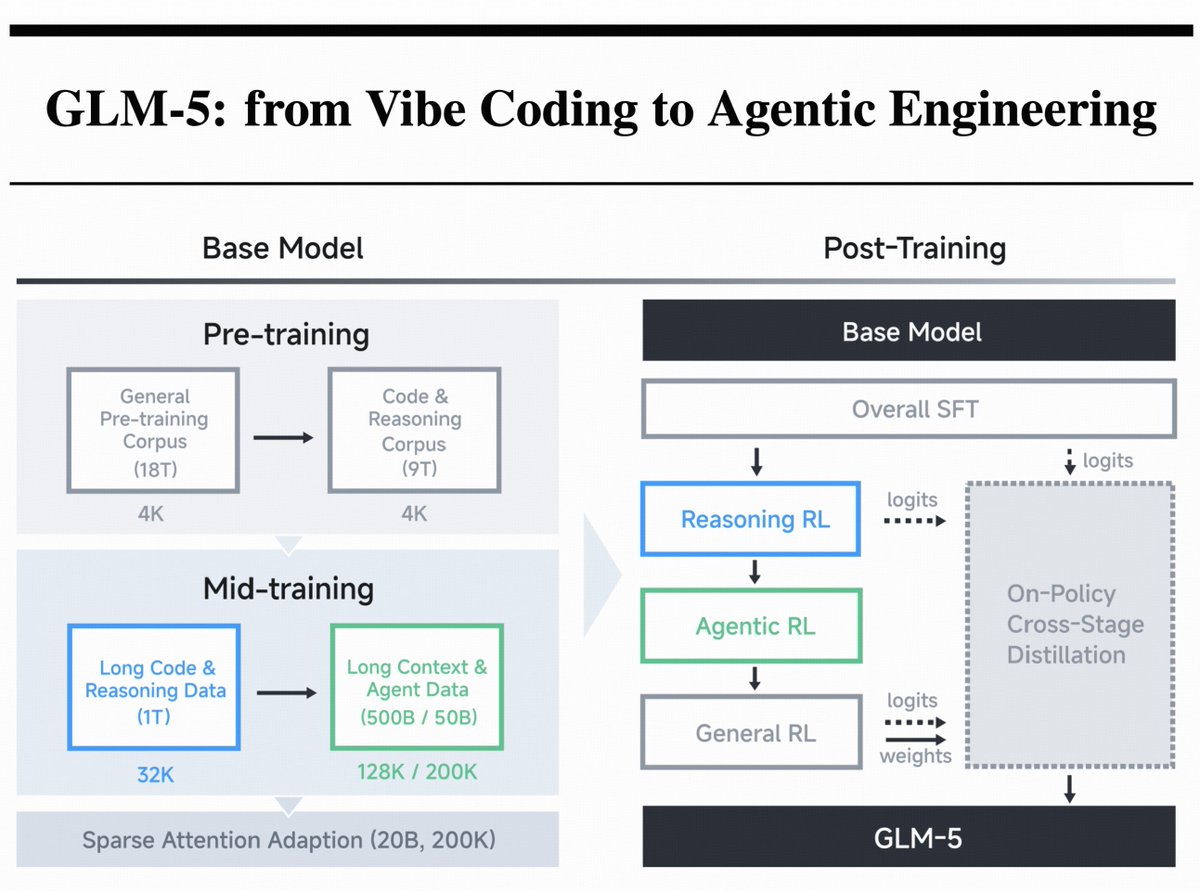
Presenting the GLM-5 Technical Report!
https://t.co/CGjxEISvFK
After the launch of GLM-5, we’re pulling back the curtain on how it was built. Key innovations include:
- DSA Adoption: Significantly reduces training and inference costs while preserving long-context fidelity
- Asynchronous RL Infrastructure: Drastically improves post-training efficiency by decoupling generation from training
- Agent RL Algorithms: Enables the model to learn from complex, long-horizon interactions more effectively
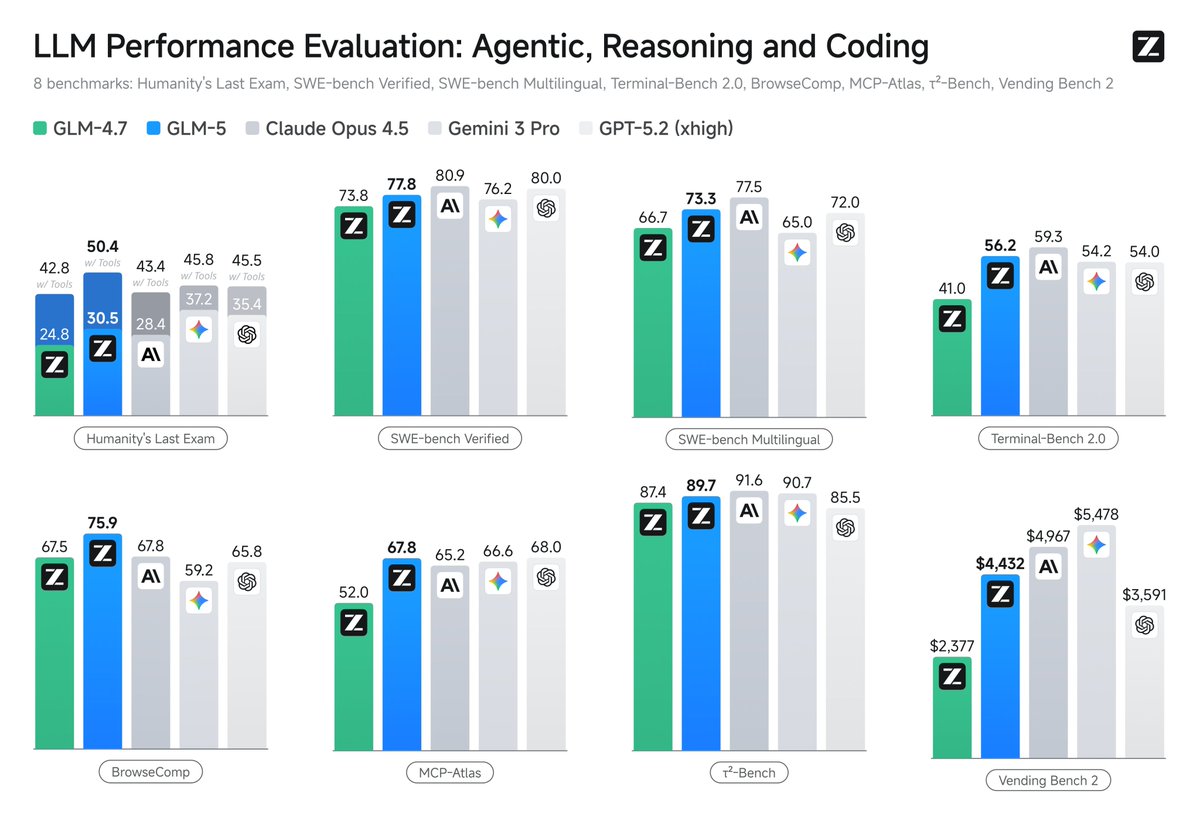
Through these innovations, GLM-5 achieves SOTA performance among open-source models, with particularly strong results in real-world software engineering tasks.
Introducing GLM-5: From Vibe Coding to Agentic Engineering
GLM-5 is built for complex systems engineering and long-horizon agentic tasks. Compared to GLM-4.5, it scales from 355B params (32B active) to 744B (40B active), with pre-training data growing from 23T to 28.5T tokens.
Try it now: https://t.co/WCqWT0raFJ
Weights: https://t.co/DteNDHjSEh
Tech Blog: https://t.co/Wxn5ARTJxH
OpenRouter (Previously Pony Alpha): https://t.co/7Khf64Lxg6
Rolling out from Coding Plan Max users: https://t.co/Nk8Y98Il7s
It's not your imagination: Old video games DID look better in the past.
Old games relied on old TVs to blur the images together, when viewed on a modern TV things dont look right -
Some of you will be old enough to remember this. Defragging - and it actually did serve a purpose. It was essential for optimizing slow, mechanical hard drives by rearranging scattered data into contiguous blocks. By doing so increased data load times (since the physical head of the hard drive didn't have to move that much).
However, what I remember most was the almost hypnotical satisfaction of seeing all those little blocks flashing, being organized, and just "knowing" that it was good for my computer.
In times when you fiddled around with autoxec.bat and config.sys, when every little Kilobyte of RAM mattered, and when hard drives were measured in Megabytes, not Terrabytes, the weekly routine of defragging almost felt like cleaning up your room.
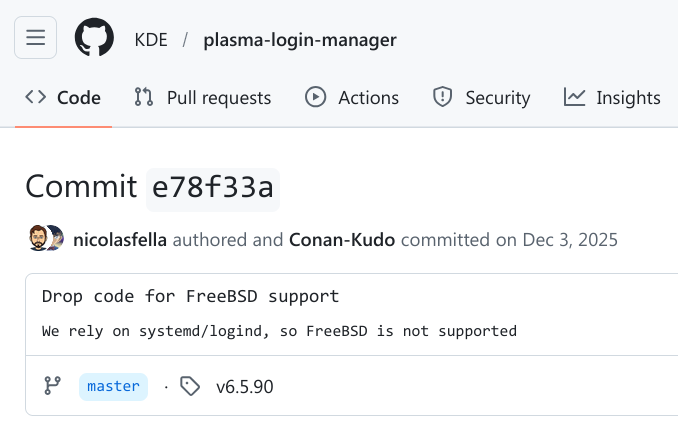
KDE removed FreeBSD support from Plasma login manager stating that KDE/Plasma relies systemd(1)/logind(1) Linux daemons.
FreeBSD should not waste time to work on adding KDE/Plasma desktop install button in bsdinstall(8) installer.
Use MATE/XFCE instead.
https://t.co/2QaJ3jBd2z