A community college professor named Marty Lobdell taught the same study skills lecture for 30 years. The video quietly became one of the most watched educational recordings online, with over 10 million views.
He spent his career watching students fail not because they were lazy, but because no one had taught them how their brain actually works when learning something difficult.
The lecture, “Study Less Study Smart,” contains a powerful framework.
Your brain cannot sustain focus the way most people believe. Studies show the average learner hits a wall between 25 and 30 minutes. After that, efficiency collapses. You’re still sitting there, but almost nothing is being absorbed.
Lobdell told the story of a student who planned to study 6 hours a night, 5 nights a week. Thirty hours total. She failed every class. She was not lacking effort. She was confusing time near books with actual learning. The fix is simple: when focus drops, stop, take a 5 minute rewarding break, then return. That reset makes a massive difference.
He also destroyed the myth of highlighting and re reading. Recognition is not the same as recall. To prove it, he read 13 random letters. Almost no one remembered them. Then he turned them into “Happy Thursday.” The entire room recalled them instantly. The brain stores meaning, not repetition.
This is why elaborative encoding works so well.
Finally, he shared the most important principle: 80 percent of study time should be active recitation. Close the book and explain the material in your own words. Teach it to someone else or an empty chair. Retrieval is where real learning happens.
His closing line stuck with me: If this information does not change your
behaviour, you have not actually learned it.
The best students do not study more hours. They stop confusing the feeling of studying with the reality of learning.
Someone praying for you in another building can change your brain in real time. There is a study that proves it.
Researchers at North Hawaii Community Hospital placed 11 people inside fMRI scanners, fully isolated. In a separate building, spiritual leaders who knew them personally sent focused intentions toward them at random two-minute intervals. The receivers had no way to know when. Their brains lit up at the exact moments the senders focused on them. Specific regions associated with attention and awareness activated on cue. The odds of this happening by chance were less than one in seven thousand.
Most people have never heard of this. Here are three more.
Hand-holding and pain. Researchers placed 22 couples under EEG caps. When the woman was in pain and her partner held her hand, their brain waves synchronized. The more empathy he felt for her, the more their brains coupled. The more their brains coupled, the more her pain decreased. Touch combined with focused care produced a measurable analgesic effect. The lead researcher got the idea while holding his wife's hand during the birth of their daughter.
Two brains in shielded rooms. A Mexican neuroscientist named Jacobo Grinberg ran a series of experiments at the National Autonomous University of Mexico. Two participants meditated together for 20 minutes. Then they were placed in separate electromagnetically shielded rooms more than 14 meters apart. One participant was shown 100 random flashes of light. The other, hooked to an EEG with no sensory contact of any kind, registered matching brain-wave responses one out of every four flashes. Pairs who had not bonded showed nothing.
Group prayer. Andrew Newberg at Thomas Jefferson University has spent more than two decades scanning the brains of praying nuns, meditating monks, and chanting Sikhs. His imaging work shows a consistent pattern. The frontal lobes activate. The parietal lobes quiet. The effect amplifies in groups. Brains in shared prayer entrain to one another the way two pendulums swinging in the same room eventually fall into the same rhythm.
These studies measure what physically happens to the human nervous system when people focus caring attention on each other, in the same room or at a distance. The findings are consistent across labs, methods, and decades.
The basic finding, that human brains synchronize during empathic connection, is now mainstream neuroscience. Newberg alone has published more than 250 peer-reviewed papers.
People have been doing this for thousands of years and calling it prayer. Christians alone offer a window into the variety. Latter-day Saints kneel as families. Catholics pray the rosary. Protestants join hands in prayer circles.
What is actually happening when you pray? On the imaging, something measurable. On the EEG, something synchronized. On the pain scale, something diminished.
Prayer works.
The Notes app on your iPhone is one of the most powerful tools available.
But 99% of people don’t know its true potential.
Here are 15 amazing features you must know:
The most dangerous, oddly glorified, yet overlooked problem in the world:
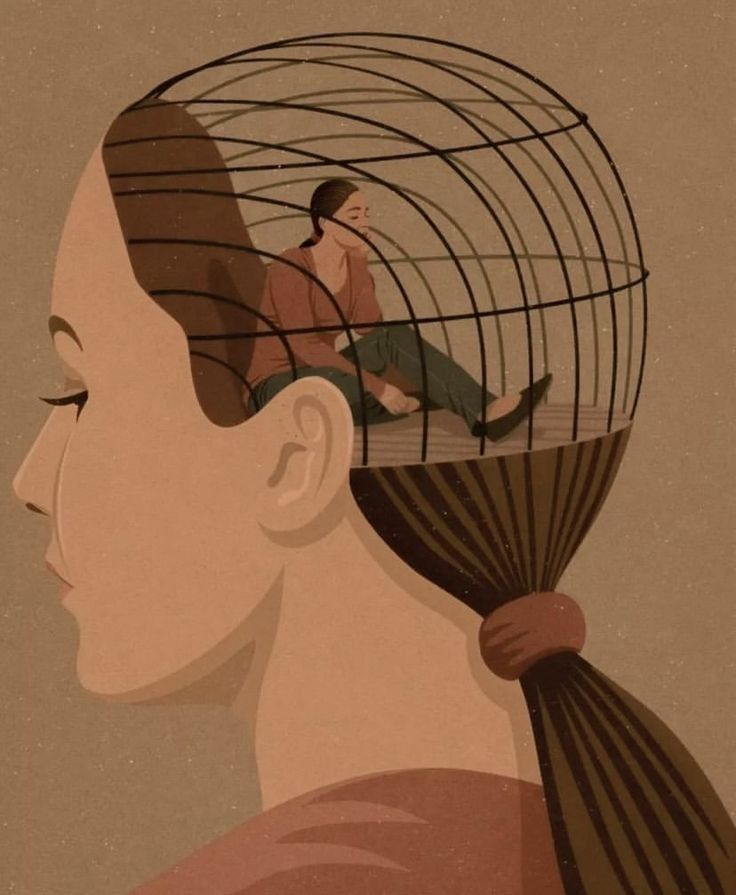
Overthinking and underacting.
It's why you're stressed, depressed and your immune system is always in chaos.
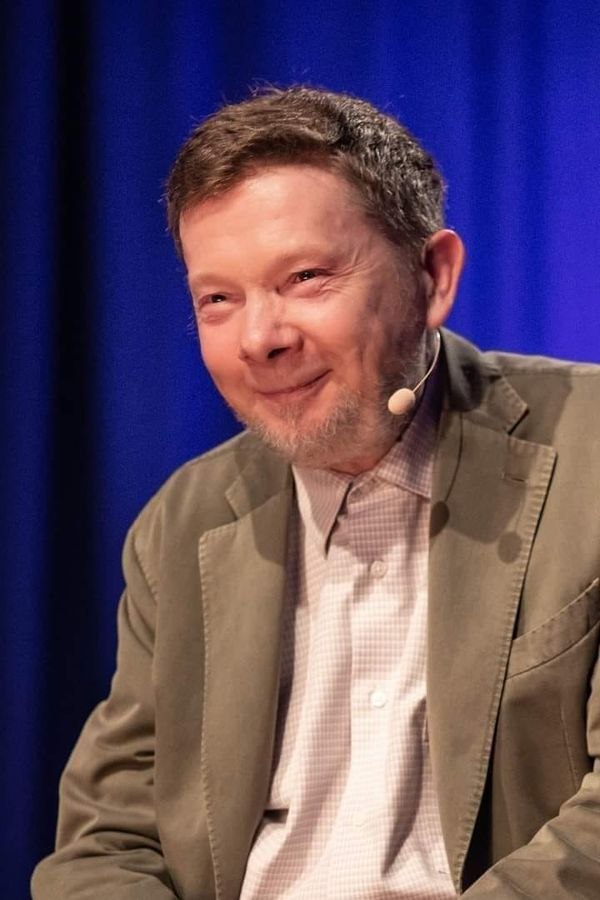
Here's Eckhart Tolle 7-step protocol to escape the prison of overthinking: 🧵