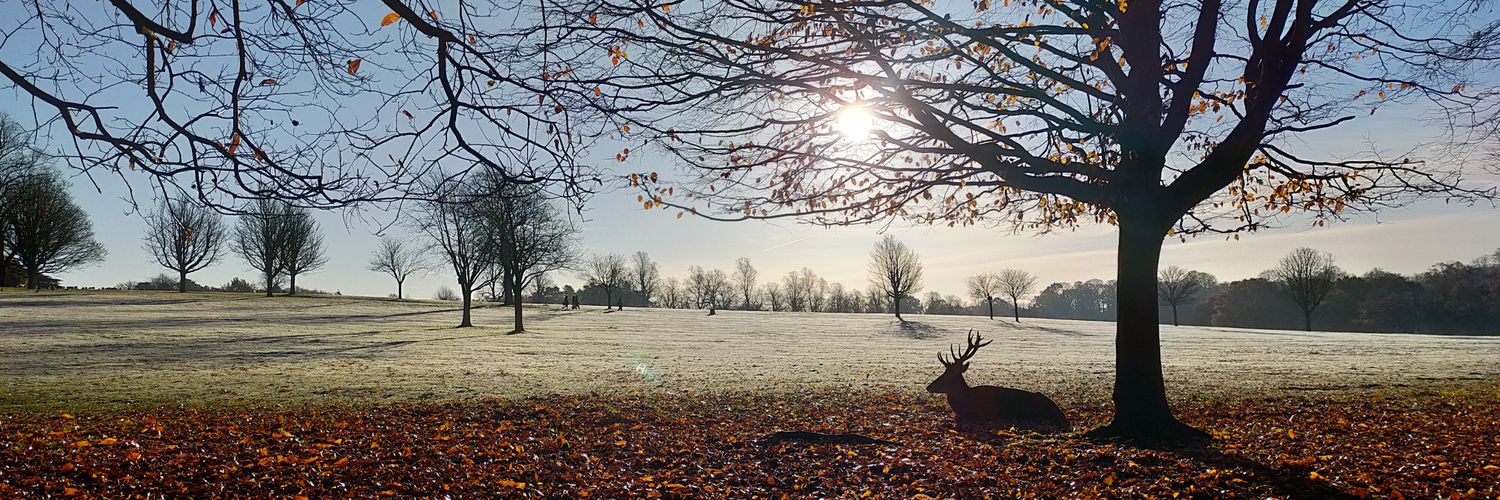
Hot off the press: a Conservation article on our recent work exploring patterns in the seasonal diet of fallow #deer in North Wales @GW_Shannon @BangorUni_Intl
Read the original paper here:
https://t.co/ieVUXERhkN
NEW PhD OPPORTUNITY 🌳🌲
"Biodiversity for woodland resilience: the long-term functional ecology of tree diversity".
https://t.co/fzrMfipuGT
Closing date 17:00 on Wednesday 12th March 2025.
The @duolingo team just published their internal handbook sharing how they build product, hire, experiment, and build a brand around "wholesome and unhinged" 🤣👏👌
Lots of good ideas to borrow/steal for your own team.
Check it out: https://t.co/xcxFUe8I0h
🚨 New fully-funded PhD project at Bangor Uni 🚨
"Ecologically-based temperate rainforest restoration: effectiveness for biodiversity recovery, carbon sequestration and resilience" 🌳🌲 https://t.co/SQeTRToTOs
Closing date 18th February
Also special mention to @WelshMountainZo for kindly collecting some faecal samples from their fallow deer herd to allow me to validate the results from the wild deer samples. Diolch yn fawr!
Round of applause for the team!
@GW_Shannon Markus Eichhorn, John Healey, @AmyEllison_UK , Kitty Pillay, @abigailjayne26, @SiCreerProf, Line Cordes and all staff and students in the @MEEBangor lab for all the encouragement and pipette tips!
Thank you, diolch yn fawr, takk!
As we work to expand tree cover and enhance forest resilience and biodiversity, we should seek to understand the dynamic interactions of increasing deer populations with rapidly changing treescapes.
... whilst widespread taxa (e.g. Rosa sp., Prunus sp. and Quercus sp.) were consumed more often than expected, given their availability in the landscape. In contrast to broadleaved trees and shrubs, conifer trees were found in very few samples.
With increasing disturbance from extreme weather and tree diseases leading to a more open canopy structure, bramble cover is set to increase in European forests, which could support further expansion of deer populations.
Broadleaf trees became more prevalent in the diet in the spring and summer, with oak being most prevalent in autumn, probably due to acorn consumption. Spatially clustered taxa (e.g. Betula sp., Corylus sp. and Fraxinus sp.) were consumed less often than expected ....
n fact, we found that the deer were consuming bramble (Rubus fruticosus agg.) more than any other taxa. Rather than diversifying their diet in winter as expected, the diet diversity was actually lowest in winter, with bramble forming 80% of the diet.
We studied the diet of fallow deer in North Wales to understand how they may be impacting local woodlands. We expected the diet would be dominated by grasses supplemented by woody browse in the winter, as this species is typically characterised as an opportunist bulk grazer.
Very chuffed to get this paper out from my PhD! Learning the process of DNA metabarcoding was very challenging for a newbie to molecular ecology, I couldn't have done it without all the co-authors! #deer#DNAmetabarcoding#forestry#deerdiary
So many things in our lives that we don't even think about can end up doing serious harm :( glad this study has brought this issue to light 🥚 https://t.co/U0zWvbikwW