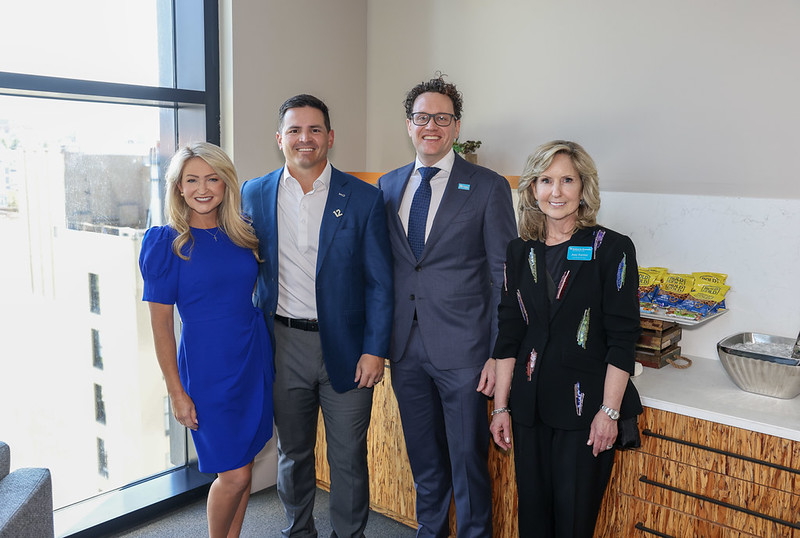
I appreciated the opportunity to attend the Puget Sound Business Journal’s Affordable Housing Forum earlier this month. It was valuable to hear perspectives from leaders across different sectors and consider how we can make progress on one of our region’s most pressing challenges.
One thing I took away is how important it is to keep affordable homeownership in the conversation. At Habitat SKKC, we see how access to a home can create lasting stability for families. That opportunity needs to be part of the broader housing discussion, alongside the work happening across the region to expand housing options.
Big thanks to the Puget Sound Business Journal for bringing this group together.
A lot of people contribute to the work of building affordable #housing. Some give their time, others contribute financially, and many help by bringing the right people and resources together.
November is National Gratitude Month, and I’ve been thinking about how much we rely on that collective commitment at Habitat.
Our volunteers, donors, sponsors, faith partners, and community supporters all have a part in moving this work forward. Some are out on a build site, some are helping make a project financially possible, and others are advocating for more affordable homeownership opportunities in their communities.
For 40 years, Habitat for Humanity Seattle-King & Kittitas Counties has been working alongside people who believe everyone deserves a decent place to live. That kind of commitment, sustained across generations of supporters and partners, is something I never take for granted.
To everyone who has been part of this work, thank you. I'm grateful for what we've accomplished together, and for all the people who will help carry it forward.
@habitatskc
The first families who moved into Stuart Meadows are now welcoming the newest ones. I love that detail.
When we celebrated the completion of the neighborhood in Ellensburg last month, homeowners from the earlier phases came out to welcome six new families. What began as a construction project in 2022 is now a neighborhood of 18 homes and 65 residents, with friendships and connections already taking shape.
There’s a lot to celebrate here, especially the dedication of the homeowners themselves. They spent time preparing their finances, attending #homeownership classes, learning construction skills, and putting in sweat equity to help build their homes. They've worked hard to reach this milestone.
I'm also grateful for the donors, volunteers, staff, and community partners who have stayed committed to Stuart Meadows over the years. The City of Ellensburg, Suncadia, and so many others helped make these homes possible.
And the work continues. We have three more permanently affordable homes planned for Willow Street in Ellensburg in 2028, followed by 16 homes in Cle Elum's Floral Avenue neighborhood by 2029.
To our newest homeowners, congratulations! It's wonderful to see what you've accomplished and the community you're becoming part of. https://t.co/gqBkKvF1Lg
Sometimes, an important part of addressing a #housing shortage is taking a closer look at what a community already has.
This article about #homelessness in upstate New York explores how counties are using vacant, abandoned, and deteriorated properties to create housing. The need is significant. Broome County, for example, spent $9.5 million placing homeless families in hotels last year, compared with less than $400,000 in 2018. Some residents are now staying in these hotels for years, often without access to the support services they need.
One example from Seneca County stood out to me. A county land bank acquired two vacant properties and partnered with FLACRA, a nonprofit housing provider. The arrangement helped the nonprofit establish site control and secure $2.5 million in state funding to build five permanent supportive housing units.
There is a lot to learn from that kind of collaboration. Public agencies, nonprofit organizations, and funding partners each have a role to play. Sometimes, a well-structured partnership can help unlock an opportunity that would otherwise remain out of reach.
For those of us working in affordable housing, this is an important part of the conversation. We need to keep looking at how existing community assets can be put to better use, and how the right investments can support housing that offers people greater stability over time. https://t.co/rHXMNb4z87
World Kindness Day is a good reminder to recognize the everyday acts of care that help make our communities stronger.
Working in the nonprofit sector, I get to see how much kindness can accomplish. It often starts with someone being willing to give their time or support a cause that matters to them. Those choices can have a lasting impact on the people and families nonprofits serve.
In affordable housing, that impact can be life-changing. Helping a family access homeownership gives them a chance to build stability and put down roots in their community.
I’m grateful to work alongside people who care deeply about making that opportunity possible. Today, I hope we all find a way to put a little more kindness into action!
One thing I've learned from working in the nonprofit sector: This work requires a willingness to be honest about what isn't working. We owe it to the communities we serve to keep evaluating our approach, listen to the people closest to the challenges, and make changes when they're needed.
A recent Urban Institute analysis found that the number of adults ages 18 to 45 who bought homes in 2024 was more than 26% lower than in 2021. The research also found that a growing share of younger buyers had access to more financial resources or help from older family members.
I find that second trend especially concerning. Between 2018 and 2024, the share of young buyers with household incomes at or below 80% of area median income fell from 33.7% to 28.9%. Meanwhile, more young buyers were purchasing homes with cash or putting at least 20% down.
Taken together, these numbers suggest that homeownership is becoming harder to reach for people without existing wealth or family support. Working toward a down payment is difficult enough. When the path also depends on whether your family can help, the playing field becomes even less level. https://t.co/yZonYM1Wpl
Recently, Investors Capital Group and Avenue5 Residential spent time on the build site with us in South Park. It takes committed partners to keep creating more affordable homeownership opportunities in our region, and their hands-on support made a real difference. So grateful they chose to put their time and energy into helping local families build a future here in Seattle!
We often hear that first-time homebuyers are getting older. But the bigger concern may be how many young adults are being shut out of homeownership altogether. When buying a home increasingly depends on family wealth or financial help, too many people are left without a fair shot at building wealth of their own.
Who’s excited for Giving Tuesday?
It’s coming up in less than one month, and I’m looking forward to seeing our Seattle community show up for the nonprofits doing important work across our region.
At Habitat SKKC, every gift helps make affordable homeownership possible for local families or supports critical repairs that allow people to stay safe in the homes they already have! https://t.co/YZfBi8zTpu
Enterprise Community Partners has set an ambitious goal to expand housing opportunity for 5 million people by the end of 2031 through its new five-year plan, Key into Housing.
I’m glad to see this kind of long-term commitment to addressing the housing crisis. We know that communities across the country are working on solutions, but the need for affordable homes continues to outpace what we’re able to deliver.
Five million people is a significant goal. I hope this initiative helps turn that ambition into more families finding a stable, affordable place to call home. https://t.co/W9TPzbdLTe
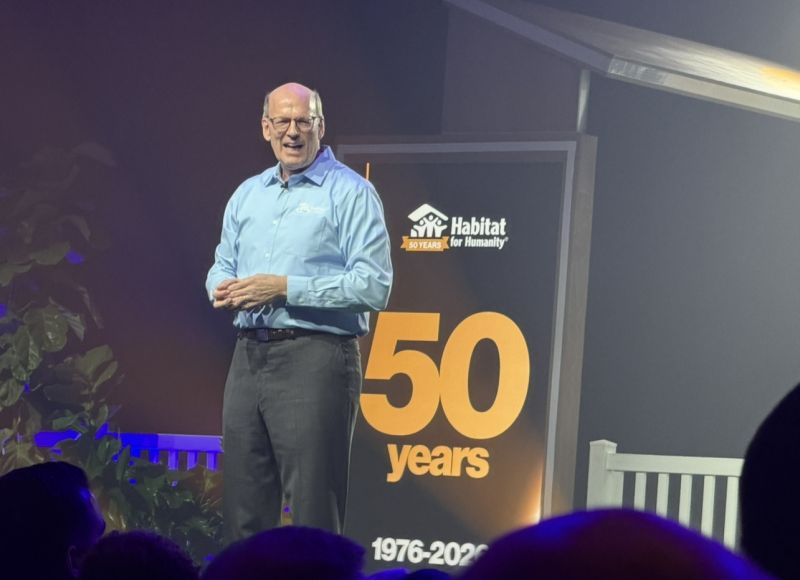
Still riding high from Habitat for Humanity International's 50th Anniversary Affiliate Conference!
I was so glad to join several members of the Habitat for Humanity Seattle-King & Kittitas Counties team, along with 3,200 Habitat colleagues from around the country, to celebrate 50 years of building homes, communities, and hope.
I came away from the week feeling energized by the connections with people who share our commitment to creating a world where everyone has a decent place to live.
I'm grateful to be part of this network and proud of the work our team does every day to expand access to affordable homeownership here in our region. There's so much we can learn from one another, and I'm excited to see what we can accomplish together in the years ahead.
Here's to the next 50 years of building brighter futures! 🏡💙
Myth: Nonprofits can solve complex community challenges on their own.
Reality: Lasting change takes collaboration, sustained funding, and trust in the people closest to the work. We need to give nonprofits the support and flexibility to turn their expertise into meaningful results.
Recently, I was able to attend the Seattle Sports Commission’s 14th Annual Women in Leadership Breakfast. It was energizing to be in a room with so many people committed to creating opportunities for women and girls to thrive.
The launch of Girls Lead was especially exciting. Giving girls more opportunities to participate in sports and develop confidence and leadership skills can shape how they see themselves and what they believe is possible.
Expanding access means making sure affordable homes are part of communities across the region, not just in places where land happens to be less expensive.
There’s still a lot of work between planning and welcoming the first homeowners. But securing sites to build affordable housing is an important step toward creating homes and opportunities for families.
When we talk about housing affordability, we tend to focus on the price of a home or the amount of rent someone pays. But there’s another cost worth paying attention to: what families have to give up in order to keep a roof over their heads.
Habitat for Humanity International’s new research puts that into perspective. When people cut back on groceries, delay medical care, or stay in housing that puts their safety at risk, the consequences reach far beyond their monthly housing budget. https://t.co/j51ugjySBj
A household may technically be able to cover its mortgage or rent, but that doesn’t necessarily mean it has enough left to handle an emergency or save for the future.
That’s why affordability has to mean more than getting someone into a home. We have to also create a path to housing that allows families to build financial security and stay stable over time.
When a home has been part of your life for nearly 50 years, being able to stay there safely and comfortably matters enormously.
Mike and Janice have lived in their Kent home since 1976. With Janice navigating MS and Mike managing arthritis, some everyday features of their house had become real obstacles. Through Habitat SKKC’s repair program, simple changes, including new flooring and easier-to-use door handles, have made daily life more manageable. The new flooring even allows Janice’s lift to move more smoothly across the room, making caregiving easier for Mike.
Their story speaks to an important part of affordable housing that deserves more attention: preserving the homes people already have. For older adults and people with disabilities, targeted repairs can help make it possible to remain safely in a familiar home and community.
I’m grateful to our Habitat Repair team and Lowe’s for helping make this work possible through the 2026 Lowe’s Repair Grant. Everyone deserves a home that supports their needs as those needs change. https://t.co/nmQwHPe7Jx
One thing I’ve learned working in the #nonprofit sector in #Seattle is that lasting progress takes people who are willing to work across differences and stay at the table, even when the problems are hard. Affordable housing is a good example. No one organization can solve it alone!
At Town Hall Seattle’s The Future of Affordable Housing, our community came together to discuss what it will take to make homeownership possible for more people in Washington.
As Habitat SKKC looks toward its next 40 years, I’m encouraged by the willingness to confront the barriers and keep working toward solutions together.