Walkable places make us happier:
"Living in a walkable neighborhood was directly linked to the happiness of people aged 36-45 and, to a lesser extent, those aged 18-35. For older adults, we found that walkable places mattered [indirectly]." @kleyden7
https://t.co/4AGUpTQgN1
1) It's hard to make new friends in your 30s
2) People report being 25% happier when they live close to friends
3) Family isn't enough to provide the robust safety net we crave
So why don't we live closer to our friends? Some theories:
https://t.co/gIFNxoCzsA
10/ The NHHIP will result in:
- More VMT, GHG emissions, & autodependence
- Worse air quality
- Huge residential displacements
- Huge business displacements
- More sprawl
- More wetlands loss
The VRA has not meaningfully changed the project design or its negative impacts.
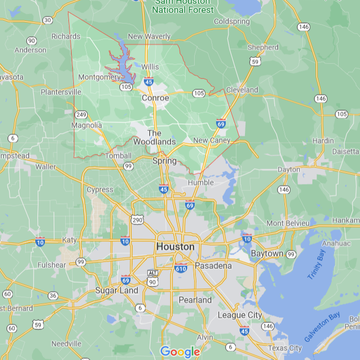
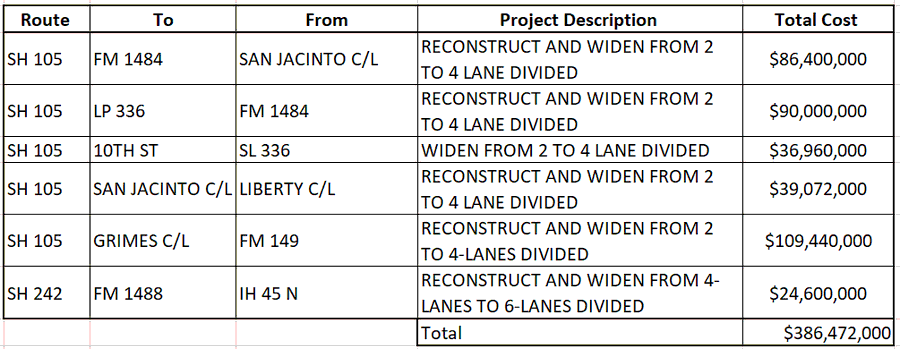
4/ I-45 will also supercharge sprawl. The transportation improvement program (TIP) for 2021-2024 shows how the exurban growth machine leverages highway expansions like I-45. This $386M for highway widening in Montgomery County is a small sample of the region total.
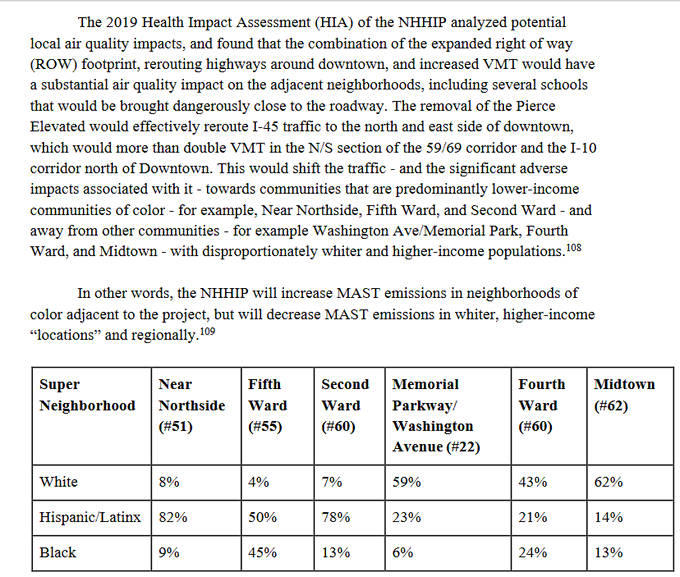
3/ The disparate impacts from the NHHIP are not limited to affordable housing loss. The Air Alliance complaint states the project would degrade air quality in "predominantly lower-income communities of color..." (Note: MSATs are mobile source air toxics)
2/ Numerous complaints against the NHHIP project argued the design violates Title VI of the Civil Rights Act of 1964.
Why?
Because the expansion will cause massive displacements -- especially of low-income residents in communities of color:
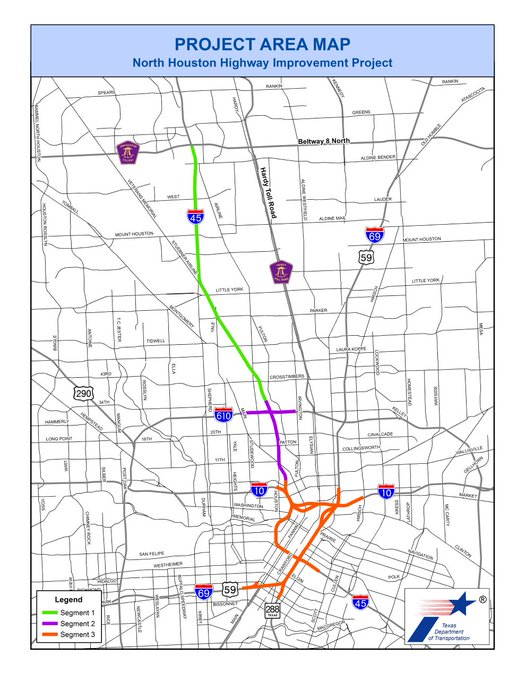
1/ FHWA and TxDOT have signed a Voluntary Resolution Agreement (VRA), which allows TxDOT to build the massive $10 BILLION I-45 North Houston Highway Improvement Project (NHHIP).
It's not good. Let's take a look.
With $20M in seed money, two former @HoustonChron journalists launch new nonprofit newsroom called the Houston Landing.
The content will be free to read and republish, and will focus on Houston and its suburbs.
https://t.co/prtfl6bWJY
@MaxGlick Legalize housing. Restrictive zoning has deeply right wing
roots and the modern left has to embrace an abundance agenda for the next generation rather than let people who already have homes stop everyone else from sharing in the American dream .
These maps reveal something that even a lot of environmentally-minded urbanists miss: even short of getting people to switch from cars to transit, density dramatically reduces emissions by allowing for *shorter* car trips. https://t.co/zHLeSoj6Tw
Wake County, North Carolina, voter registration is higher than 8 US states
813,729 Wake County
755,560 Delaware
740,098 Montana
708,718 Rhode Island
594,733 Alaska
581,379 North Dakota
577,570 South Dakota
494,272 Vermont
280,489 Wyoming
Here’s a very condensed history of gentrification in the US, then how exclusionary zoning and regressive regulations propped up by NIMBYs prevent housing development, which perpetuates cycles of displacement between classes
Part 1 (full video on tiktok):
https://t.co/Ya5HmhxzK8
absolutely wild to see the @HoustonChron endorsing a candidate for the chief executive position of the third-largest county in the country who uhhh doesn't care about climate
As a test case of the YIMBY agenda, California's 2016 legalization of ADUs is almost too perfect—besides the fact that the homes are in literal backyards, it has been a runaway success, permitting ~60,000 new homes in five years. My latest in @TheAtlantic: https://t.co/5nHh9XAKzx