Passionate Railwayman, Compelling Storyteller; Compulsive traveller; Cultural Explorer. Watch out for Food posts and Lunchtime humour. Views strictly personal.
Friends, finally, after some delay, my podcast with @kunalvijayakar on the History of the Bor Ghat railway line on @IVMPodcasts is live! It has come out well though the editing could have been a little better. I regret if there are any errors in the podcast. I would request you to watch it on YouTube in leisure (as it is 47 minutes long 🙂) and let me know how it came out! Thanks! 🙏 #podcast #IndianRailways #History
https://t.co/GGuBTXmmjW
Lunchime humour - The phone rings. The lady of the house answers, "Yes?
Mrs. Ward, please." "Speaking".
"Mrs. Ward, this is Dr. Jones at the Medical Test unit. When your Doctor sent your husband's samples to the lab, the samples from another Mr. Ward were sent as well and we are now uncertain which one is your husband's. Frankly, it is either bad or terrible."
"What do you mean?" Mrs. Ward asks.
"Well, one Mr. Ward has tested positive for Alzheimer's disease (related to memory) and the other for AIDS. We can't tell which your husband's is".
"That's terrible! Can we do test over?" questions Mrs. Ward.
Doc - But Medicare won't pay for these expensive tests more than once.
Mrs.Ward - Well, what am I supposed to do now?
Doc - The people at Medicare would drop your husband off in the middle of town. If he finds his way home, don't sleep with him. 😃😛😂 #medicaltests
Lunchime humour - The phone rings. The lady of the house answers, "Yes?
Mrs. Ward, please." "Speaking".
"Mrs. Ward, this is Dr. Jones at the Medical Test unit. When your Doctor sent your husband's samples to the lab, the samples from another Mr. Ward were sent as well and we are now uncertain which one is your husband's. Frankly, it is either bad or terrible."
"What do you mean?" Mrs. Ward asks.
"Well, one Mr. Ward has tested positive for Alzheimer's disease (related to memory) and the other for AIDS. We can't tell which your husband's is".
"That's terrible! Can we do test over?" questions Mrs. Ward.
Doc - But Medicare won't pay for these expensive tests more than once.
Mrs.Ward - Well, what am I supposed to do now?
Doc - The people at Medicare would drop your husband off in the middle of town. If he finds his way home, don't sleep with him. 😃😛😂 #medicaltests
Friends, finally, after some delay, my podcast with @kunalvijayakar on the History of the Bor Ghat railway line on @IVMPodcasts is live! It has come out well though the editing could have been a little better. I regret if there are any errors in the podcast. I would request you to watch it on YouTube in leisure (as it is 47 minutes long 🙂) and let me know how it came out! Thanks! 🙏 #podcast #IndianRailways #History
https://t.co/GGuBTXmmjW
#Sunday#humour - Excellent example of polymorphism -
1) Mom: Beta, ja RED LABEL leke aa!
Son: Ma, adha kilo ya phir 1kg?
.
.
.
2) Father: Beta, ja RED LABEL leke aa!
Son: Papa, Quarter ya phir Khamba! 😄😛😂 #SundayFun
The beautiful capture of a train passing over a viaduct near Jatinga on the Lumding-Badarpur section, with a misty cover on the North Cachar Hills adding that additional charm to the scene - in the jurisdiction of @drm_lmg_nfr in @RailNf! Pic courtesy, anonymous! #IndianRailways #photography @baxirahul
1. There's a huge difference in the kind of tracks required. Speed is also a function of many factors like curves and terrain. Besides, passenger safety naturally gets priority over speed.
2. There are limitations in running double decker trains with the existing dimensions of OHE. The existing ones that are running do have legroom and space constraints.
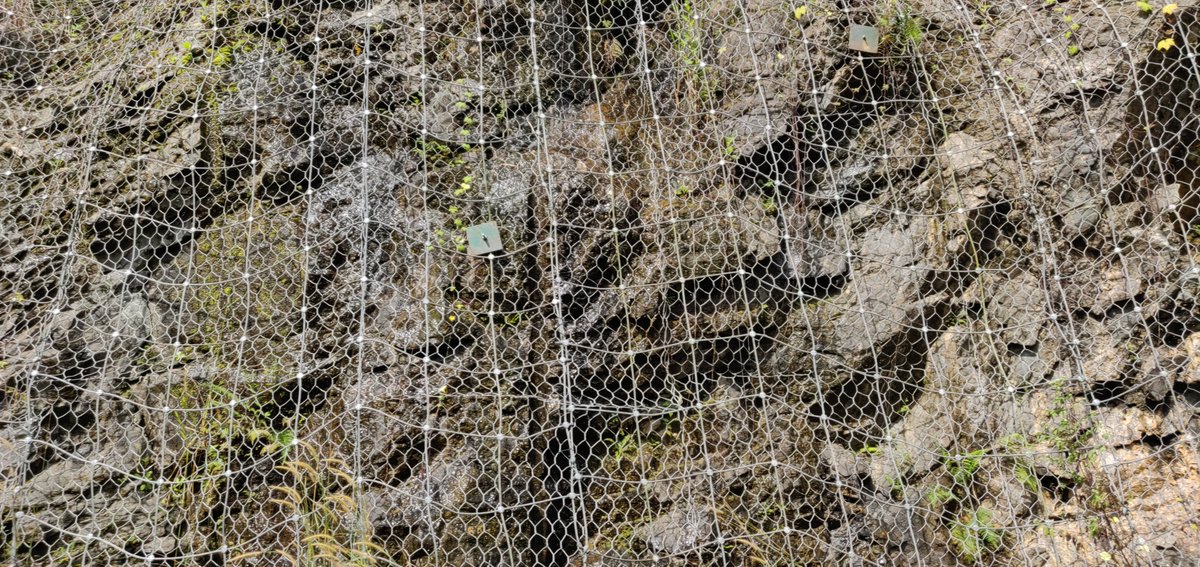
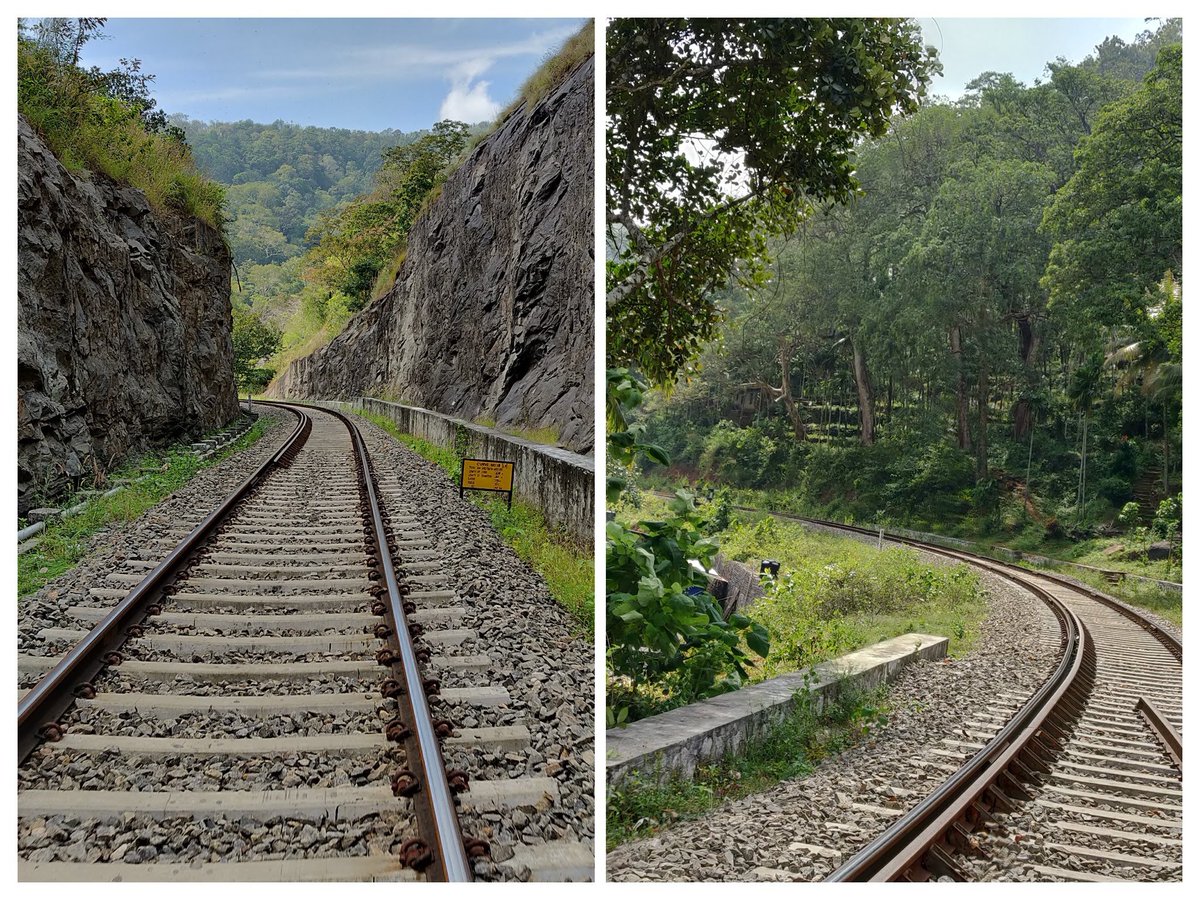
More pictures from the same motor trolley inspection from Sengottai to Thenmala - passing over the landmark Pathimoonu Kannara (13-arch) bridge on the motor trolley; the track curving through the scenic green cover; and the goats we encountered that slowed down the trolley; a photo of the netting done to secure the cutting and prevent boulder fall during the monsoon. #IndianRailways #inspection #memories
Sitting on this motor trolley, I managed to capture the green and scenic landscape of the Sengottai-Thenmala section in the jurisdiction of @drmmadurai during my inspection in 2018! #IndianRailways#inspection#memories
This is such a brilliant painting (with a 3-D effect) by the master, @BijayBiswaal, of a scene during a rainy day on a railway platform! ❤️ #IndianRailways#paintings
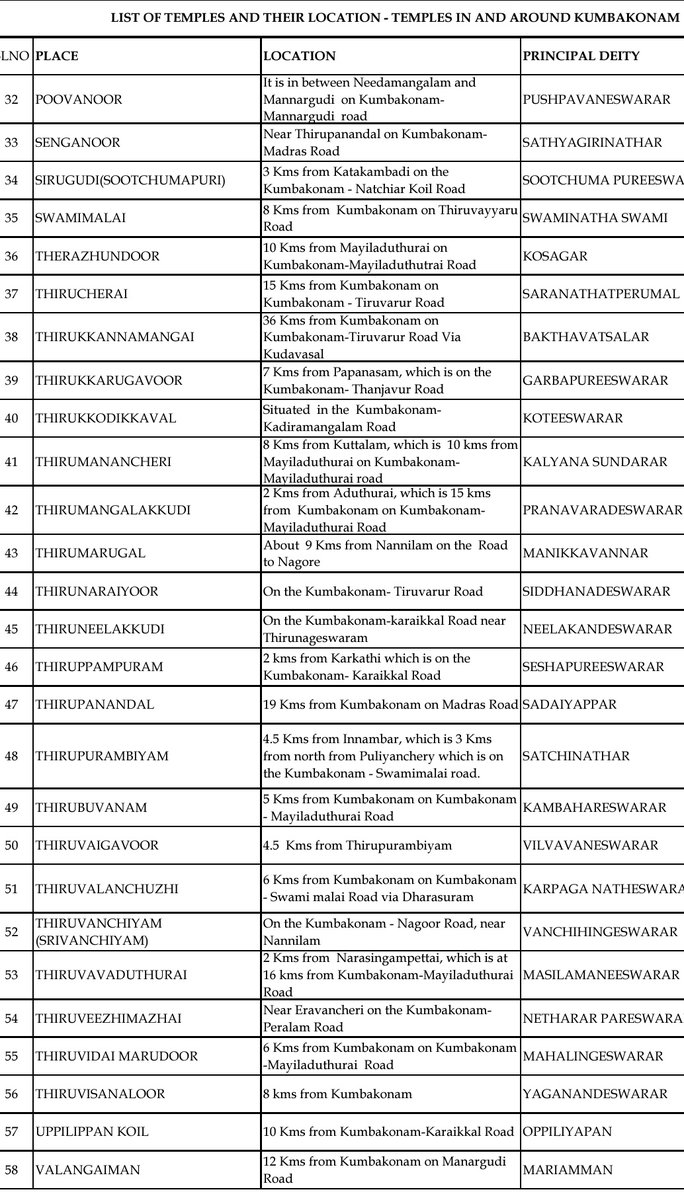
This is for all those who asked for the list of important temples in the delta region in Tamil Nadu. These are 58 temples around Thanjavur, Kumbakonam, Mayavaram, Tiruvarur and Mannargudi. The list contains the location and directions to the temples. #temples@latasrinivasan
Calcutta (now Kolkata), 1945 — a busy street filled with trams, rickshaws, cars, and pedestrians. A glimpse of everyday city life in the final years of British India. This image depicts a bustling street scene in Chowringhee Square.
The photograph was captured during World War II, likely by American military photographers such as Glenn S. Hensley or Clyde Waddell, who documented daily life in the city during that era.
The image illustrates a "bewildering mass" of activity typical of downtown Calcutta at the time, showcasing the city's diverse and often chaotic transportation landscape with trams, early motor cars, military trucks and hand-pulled carts.
#Kolkata #History #street #transport
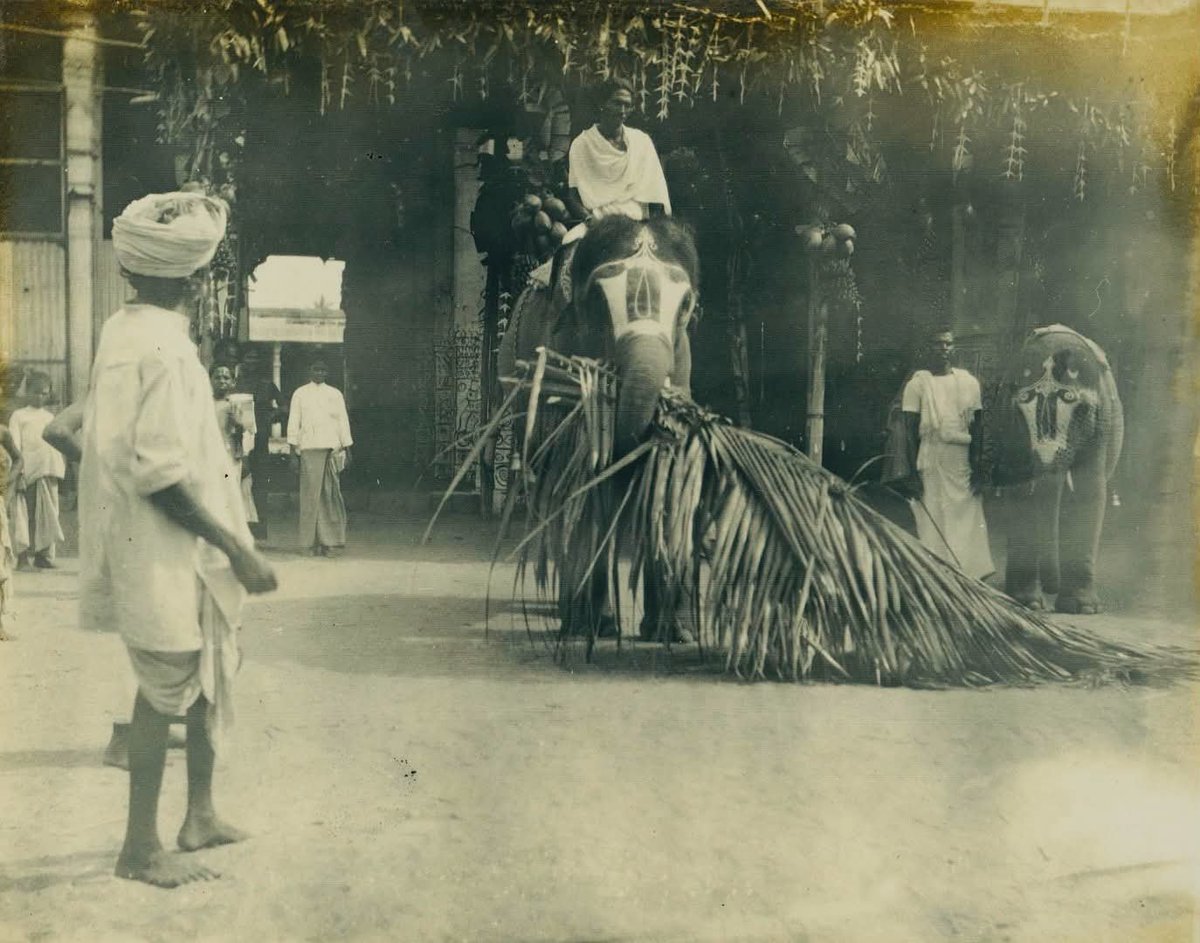
Sacred elephants at the Sri Ranganathaswamy Temple, Srirangam, Trichinopoly (now Tiruchirappalli), India — c. 1930. Elephants at the Sri Ranganathaswamy Temple in Srirangam are central to its rich heritage, symbolizing cosmic auspiciousness and strength.
Historically, they have played vital roles in daily rituals and royal processions, serving as the revered "vehicle" (vahana) for deities and participating in the centuries-old tradition of fetching sacred water from the nearby river.
Before the general public is allowed to enter, one of the temple elephants is brought before the main sanctum to face the Lord alongside a cow. This ancient tradition dictates that Lord Ranganatha first gazes upon these sacred, auspicious beings before seeing human visitors.
The elephants are integral to festivals, particularly the Gajavahana procession, where they carry the deities. They are also traditionally taken to the banks of the Cauvery or Coleroon rivers to collect water for ceremonial temple baths, symbolizing purity and devotion.
During major temple festivals, the elephants are majestically dressed in colorful shabracks (nettipattom), intricate jewelry, and garlands, drawing crowds and adding unparalleled grandeur to the parades.
The use of elephants in Hindu temple processions stems from ancient times when kings would deck out elephants in royal pageantry for victory or religious rath yatras. The meticulous daily routines and strict standards of worship at Srirangam have been standardized since the 11th century, a framework set up by the great saint Sri Ramanuja.
To preserve this vital heritage while ensuring the animals' welfare, the temple provides exclusive modern shelters equipped with high ventilation, a shower for morning bathing, and peaceful environments on the banks of the Coleroon river. #Srirangam #temple #elephants #history
In the early 1970s, the Indian government sought to develop an affordable "people's car". Spearheaded by Sanjay Gandhi, Maruti Motors Limited was established in 1971.
The government issued a letter of intent in 1970 to produce up to 50,000 cars a year. In August 1971, Maruti Motors Limited was officially incorporated. The company acquired 297 acres of land in Gurgaon (in the present-day state of Haryana) for approximately Rs 12,000 per acre to establish the production facility.
Construction progressed during the Emergency period. The facility was operational, but due to a lack of proper engineering resources, the factory's output was critically low—producing only 21 cars between 1975 and 1976.
Following the political shift and the end of the Emergency, a government commission investigated the dealings of Maruti Motors. Amid allegations of political favouritism, the project stalled, and a court ordered the faltering business to close down in 1977.
The struggling company was nationalized in 1980 by the Indian government. This paved the way for a 1981 joint venture with Suzuki Motor Corporation, laying the groundwork to mass-produce an affordable "people's car". A new facility was built in Gurugram, Haryana, in 1982.
On December 14, 1983, the first Maruti 800 rolled off the assembly line. Priced at ₹47,500, it quickly became an iconic symbol of middle-class aspiration, replacing older models like the Ambassador.
Building on its early success, the company expanded by introducing the Maruti Omni (1984) and the off-road Maruti Gypsy (1985). By 1986, just three years after its debut, the Gurugram plant had already produced its 100,000th vehicle. #Maruti #cars #history
1920, a rainy day at Rawalpindi railway station, Punjab (now in Pakistan) - published by K. C. Mehra & Sons, Peshawar.
Rawalpindi Railway Station opened in 1881 as part of the Punjab Northern State Railway, which was surveyed to connect Lahore with Peshawar. Built during the British colonial era, the stunning Victorian-era, Indo-Saracenic structure has served as a pivotal transit hub and backdrop for major political events throughout South Asian history.
K.C. Mehra & Sons was a prominent publisher and printer of historical picture postcards and photographs based in Peshawar (North-West Frontier Province, British India) during the early to mid-20th century. Operating primarily from the 1910s through the 1930s, their business documented life, politics, and landscapes across the frontier.
Mehra's work offers a valuable glimpse into colonial-era society. They documented a wide variety of subjects, from Afghan nomads (the Kuchis) and Pashtun traders to traditional dancers, street scenes, and notable locations like the Golden Temple.
The legacy of K. C. Mehra & Sons lies in their vast visual archive, which provides historians and the public today with a rare, detailed window into the people, culture, and events of early 20th-century Peshawar and the surrounding frontier. #Railways #Rawalpindi #Heritage #legacy @odysseuslahori
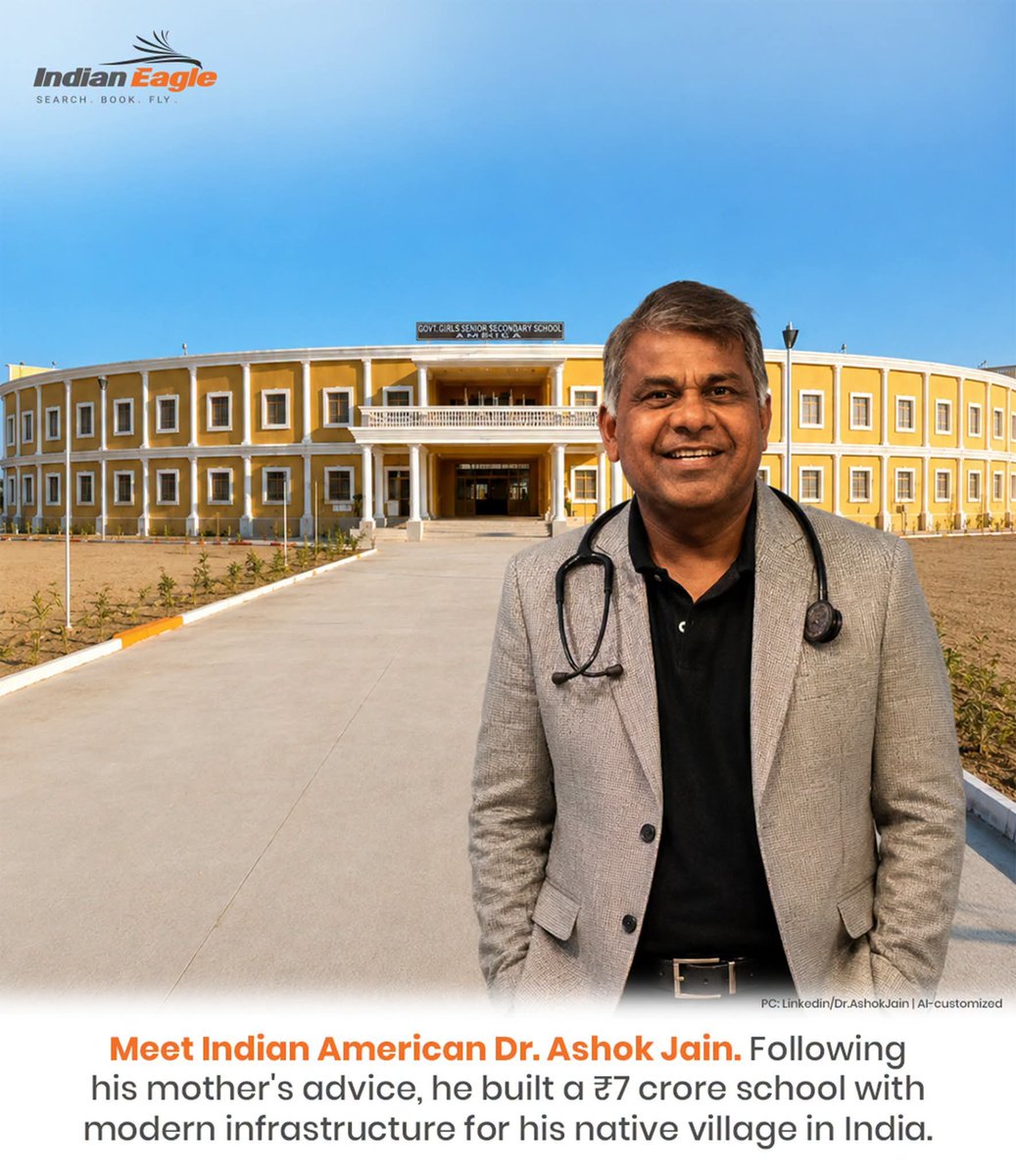
When US-based doctor Ashok Jain visited his childhood school in India in 2020, the principal asked if he could help build a classroom for the students. He happily agreed. But when he shared the idea with his mother, she asked, "What will happen with one room?" Her question inspired Ashok to build an entirely new school for the village instead. Nearly six years later, the ₹7 crore school opened its doors to students in early 2026. Dr. Jain is also honoured with the Bharat Gaurav Award 2026 for his contributions to child healthcare and philanthropy.
Dadal village in Rajasthan is the hometown of doctor and healthcare entrepreneur Ashok Jain. He studied at the village school in the early 1970s, when there were no proper classrooms and children often learned under a tree. His family later shifted to Bengaluru, where Ashok completed the rest of his education. In the mid-1990s, he moved to the US, began his medical career in Chicago in 1998, and later settled in North Carolina. There, he founded KidzCare Pediatrics, which has grown into one of the state's largest pediatric healthcare networks. He also established the 200-bed hospital in Bengaluru.
On 26 January 2020, he was invited as the Republic Day chief guest to his village school. He returned to the school nearly after 40 years, and was saddened to find that many children were still studying in similar conditions. It was during this visit that the school management requested his help. The school project soon became a family dream. Jain's elder brother, Jeetmal Jain, fully supported the idea, and after his mother passed away in 2022, his wife encouraged him to begin construction, reminding him that "education is the greatest charity."
Construction began in 2023, and the whole village came together to make it possible. A local Rajput family even donated three bighas (about 2 acres) of land for the campus expansion. Built in memory of his parents, the new campus, named Shantidevi Chatarmalji Jain Government High School, is designed with architecture inspired by India's Parliament House and can accommodate nearly 1,200 students. It features spacious classrooms, computer labs, a skill development centre, sports courts, a playground, and an open gym.
Story courtesy, @indianeagle!
#IndianAmerican #givingback #EducationMatters #inspiring #RajasthanNews #philanthropy
It is amazing that as days pass by, nothing seems to have changed but when you look back, everything seems so different. Good morning, friends, and have a great #Sunday! 🙏 #SundayMotivation
It is amazing that as days pass by, nothing seems to have changed but when you look back, everything seems so different. Good morning, friends, and have a great #Sunday! 🙏 #SundayMotivation
#DidYouKnow Dwaraknath Tagore's company, Carr, Tagore and Company, along with a group of local merchants, started the Great Western Bengal Railway, probably in the late 1840s, as a rival to the East Indian Railway Company promoted by MacDonald Stephenson.
GWBR proposed a line northward from Calcutta along the Ganges river terminating at Rajmahal, which was a riverine port of the India General Navigation Company, managed by Tagore's company and then build a east West spur to connect the Raniganj coalfields, owned by the Company. #IndianRailways #History
#DidYouKnow In the east of India, the history of Railways can be traced back to the 1840s when, Dwarakanath Tagore, the grandfather of Rabindranath Tagore, went to England, travelled on railroads there ard wanted to recreate the wonder in India. #IndianRailways#History
From whatever little I have seen of the small city of Erode, I must say that it's quite impressive. Quite a commercially active prosperous large town, well organized and quite clean as well. #Erode