🔴 La catedràtica de la UOC @anascardenal, experta en política comparada, opinió pública i comportament electoral, participarà en la taula rodona de la #JornadaPEM26 (@Consell_Audio), dedicada a la desinformació i la democràcia
👉 Inscriu-t’hi a: https://t.co/s2npP65iVJ
Close-minded people who are easily threatened by contradictory information might be the most likely to cling to false beliefs.
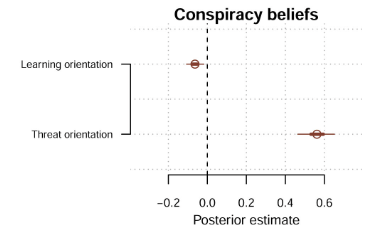
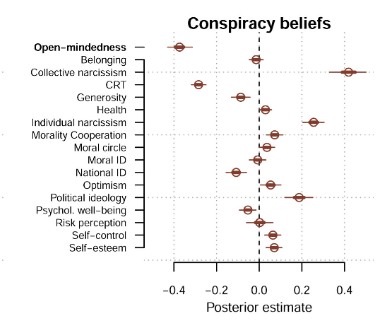
In a large global study (N = 49,968, 68 countries) we found that the open-mindedness aspect of intellectual humility was the strongest predictor for rejecting conspiracy beliefs out of 17 potential individual difference measures.
Specifically, people who were not easily threatened (disagreeing with items like "Only wimps admit that they've made mistakes") were the least likely to hold conspiracy beliefs about the pandemic.
The lesson: Keeping an open-mind might be one of the best paths to the truth--especially if you are willing to own up to your errors.
https://t.co/wSwywmgCGI
Led by @philipparnamets@moral_psych@Robert_M_Ross
Esta es la respuesta que esperaba al tweet de Elías sobre Habermas. Para que la deliberación o el debate racional sean posibles deben darse ciertas condiciones y esto solo es posible con arreglos institucionales específicos que lo promuevan y mucho esfuerzo. Bravo!!
Qué mal entendemos lo que significa deliberar.
En el tuit, A. Elías repasa una serie de interesantes e importantes resultados de investigación (en psicología, neurociencia y comportamiento electoral) que muestran que, habitualmente, en nuestra conducta la racionalidad +
I'm looking to hire a curious, code-savvy, crypto-and-AI-pilled RA for a weird, Jack-of-all-trades kind of role to help me study and write about preserving liberty in an algorithmic world.
The job:
10-20 hrs/week, primarily orchestrated via Slack
Help plan and research Substack pieces that sometimes become academic papers
Build scrappy prototypes with Claude Code
Get your hands dirty: lose pretend money on prediction markets, play Roblox brainrot games, join crypto Discords, probe LLM guardrails, etc
You:
--Undergrad, recent grad, or current PhD student
--Strong coder (Python preferred)
--Stats/econometrics a plus but not required
--Comfortable with ambiguity and strange assignments
--Proactive and able to make progress without lots of hand-holding
--Think "what if I actually tried this?" instead of "someone should study this"
This is not a "summarize the literature" gig. If you want to investigate how the digital world actually works by getting inside it, this role might be for you!
If you're interested, please email me a resume, your github, and a paragraph on why you're interested.