The Anatomical Record publishes new discoveries in morphological aspects of molecular, cellular, systems, and evolutionary biology. Official @AnatomyOrg journal
You are (influenced by) what you eat.
Esophagus of storks & common buzzards show differences in tissues, glands & mucus composition. Storks= extensive glands & mix of mucopolysaccharides; buzzards= compact epithelium & distinct mucus patterns
Aksu et al.: https://t.co/XSRkjnS3Jh
Harbor seals may be born ready for life in the water—but their skulls keep growing for years.
A recent study found the craniomandibular system reaches functional performance early, then develops gradually, unlike terrestrial carnivores
Steinbach et al.: https://t.co/8TYRkZHEmp
🐍 MicroCT of reed snakes (Calamariidae) reveals they lack paired haemapophyses found in all other caenophidian snakes. They have distinctive haemal keels, a newly identified diagnostic feature that may be linked to their burrowing lifestyle
Lizak et al.: https://t.co/ujehVohnty
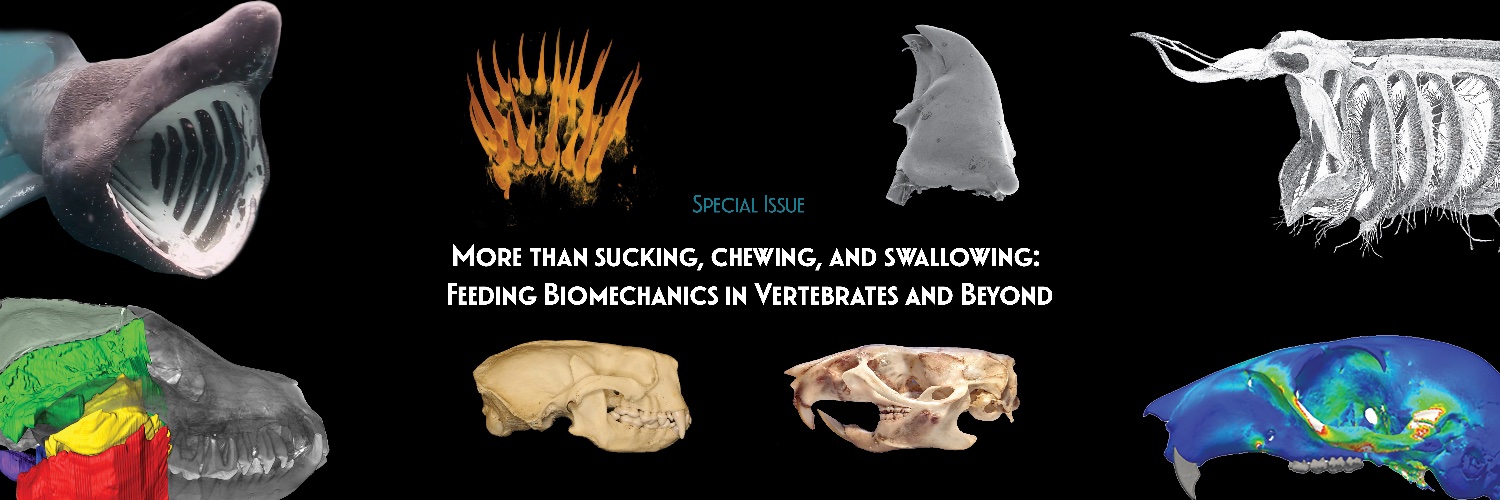
Pleased to share our latest special issue: Feeding biomechanics in vertebrates & beyond! It brings together studies spanning insects, fishes & mammals to explore feeding biomechanics
https://t.co/So4nKCTV0I
Guest Editors: Christine Böhmer & Daniela E. Winkler
Using DiceCT, researchers analyzed jaw muscles of 7 musteloid species & found it reliably reproduces traditional measures (muscle mass, fascicle length, PCSA) while revealing 3D features that provide insights into muscle function & activation
Davis et al.: https://t.co/PUVlo64E5W
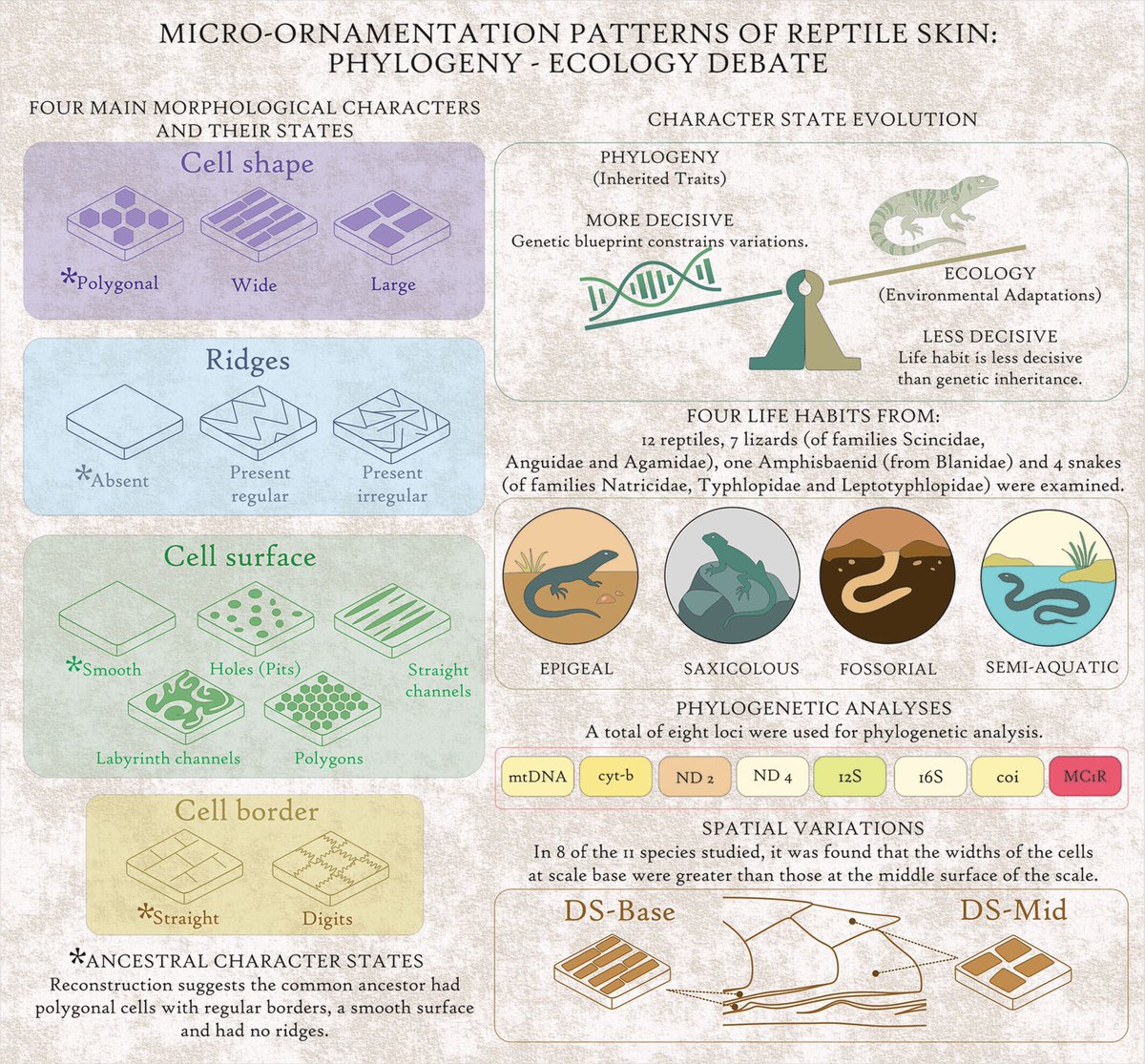
Comparative micro-ornamentation patterns of reptile skin: Phylogeny-ecology debate and species-specific variations.
Study by Melodi Yenmiş: https://t.co/ZDghb6xeQN
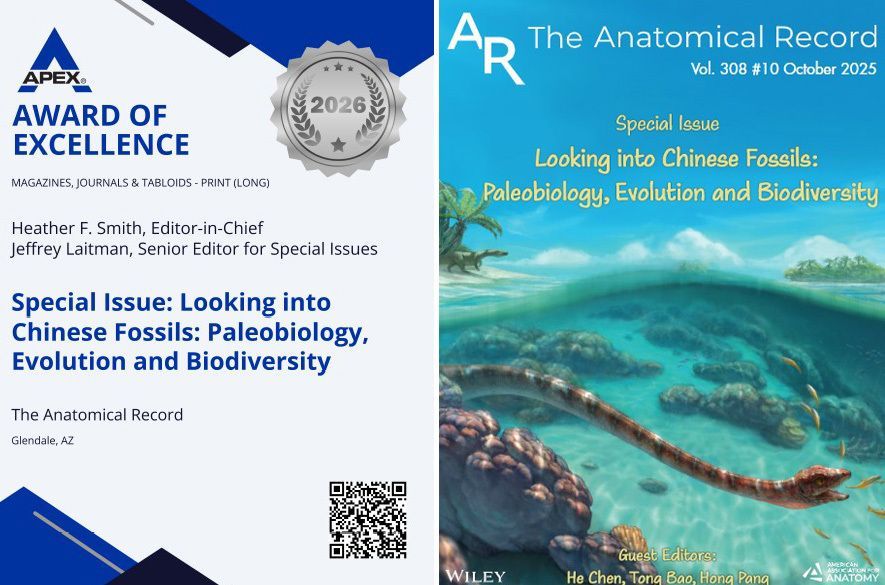
AR has received an APEX Award for Publication Excellence for the special issue "Looking into Chinese Fossils: Paleobiology, Evolution, and Biodiversity", which showcases exceptional fossil discoveries from China—from ancient dinosaurs to insects
https://t.co/koojWg3GSj
New research on worm lizard Trogonophis wiegmanni shows skull & jaw shape change predictably as individuals grow. 3D GM revealed links b/w size & cranial morphology, suggesting ontogenetic allometry is a common pattern in Amphisbaenia
Hohl et al.: https://t.co/STOmVt5FxX
In addition, we investigated several other, distantly related caenophidian snake groups that also possess unusual morphologies in their caudal vertebrae
. Lizak, O., O. Pauwels, J. Brecko and G.L. Georgalis. 2026. @AnatRecord
https://t.co/iSkRpdRRn3
New special issue coming soon in @AnatRecord on biomechanics of feeding in vertebrates, edited by @VertEvo and Daniella Winkler. The introduction article offers a masterful mini-review here: https://t.co/4MHcJI0qzS
A second theropod tooth from the Cauvery Basin reaffirms the presence of troodontid dinosaurs in the Cretaceous of India.
Study by Harsha Dhiman et al.:
https://t.co/aRU0oDNrFS
#FossilFriday
📢 Call for Papers: We are seeking submissions for a Special Issue on Strepsirrhine Anatomy, Ecology, and Evolution. We welcome original research, reviews & commentaries exploring strepsirrhine functional anatomy, phenotypic plasticity & evolutionary history 🐒
📅 Deadline: Nov 1
🦇 Bat tracheal chambers may be key evolutionary innovation behind echolocation diversity. These chambers support higher-frequency calls & helped drive evolution of specialized echolocation, contributing to bats’ remarkable ecological success
Brualla et al https://t.co/9sDQ2LvHYp
New study reveals 2D morphometrics captures major patterns of fish body shape variation but can underestimate subtle 3D features. For broad comparative studies, 2D is often sufficient; for fine-scale morphology, 3D remains essential
Torgersen et al https://t.co/5h7BOBOX3x
New evidence from ~10 Ma Tapar locality (India) strengthens its Late Miocene age. Fossil shrews, rodents & large mammals match fauna from lower Nagri Fm, while diverse mammal community points to resource-rich coastal woodlands
Choudhary et al https://t.co/A7lrpc3H6Y
#FossilFriday
🐰 What drives body shape evolution in rabbits, hares, and pikas? Changes in rib length & thoracolumbar region are main drivers of body shape diversity. Body size—not burrowing or locomotion—best predicts body shape & limb proportions
Brice et al.: https://t.co/gMO1PWrXoJ
How do leading tools compare for reconstructing CT muscle architecture? Xfiber & Goodfibes produce similar fiber length/orientation results in high-quality scans but Goodfibes is more sensitive to lower resolution & curved fascicles
Zobek et al.: https://t.co/mtLAhwcktR
How did primate hand function evolve? 🐒
Hamate bone morphology suggests natural selection shaped key hand traits linked to grip & locomotion. Suspensory behaviors evolved independently in gibbons & great apes
Hunter et al.: https://t.co/r9a20YxToV
🦈 New insights from Kashmir's Permo–Triassic rocks! Rich fossil horizons reveal 1st non-dental chondrichthyan, highlighting clear Permo–Triassic transition & valuable clues to Earth's greatest mass extinction & recovery
Shafi Bhat et al.:
https://t.co/a9o4owiHBP #FossilFriday