@TheFlintFace@IterIntellectus 100GW in space is roughly equal to 800GW on Earth.
Moreover, solar on Earth must be paired with massive batteries to continue powering compute at night and supplemented with combustion or nuclear power during winter.
These are not the same at all.
“If the observer is differentiated from the thing observed, there is a contradiction. That very contradiction is the cause of confusion”
~ Jiddu Krishnamurti
Lahiri Mahasaya taught that spiritual realization does not require abandoning family, work or worldly responsibilities.
Like an actor playing a role, we can perform our duties sincerely while remembering that our true identity lies beyond the roles we play.
The key is to remain active in the world without becoming completely identified with it.
True spirituality is not about escaping life, but discovering the eternal Self while living it.
#LahiriMahasaya #yoga #spiritual #Meditation
No, el consumo no genera riqueza. De hecho, el consumo destruye riqueza.
Consumir es agotar bienes que ya fueron producidos.
La riqueza viene de producir, y para producir es necesario capital, o sea, ahorro previo que alguien dejó de consumir.
Si consumir más nos enriqueciera, Argentina sería potencia mundial porque llevamos unos 50 años o más estimulando la demanda.
El salario no es algún que se fija en base a la bondad de un empresario.
Tiende al valor descontado del producto marginal del trabajador.
O sea, si le pagás por encima de lo que ese trabajador aporta, ese puesto te termina dando pérdidas y desaparece.
Si el aumento viene mediante el Estado a través de una violación de los derechos de propiedad, el resultado es desempleo, sobre todo de los menos productivos.
Lo que el empleado gasta de más es lo que el empresario deja de ahorrar, invertir o gastar.
Sin un aumento real de la productividad.
Es decir, en la práctica no esta apareciendo demanda nueva sino que la misma demanda esta cambiando de bolsillo.
Y si sale de la inversión, a futuro baja la productividad, y con ella el salario real de los trabajadores.
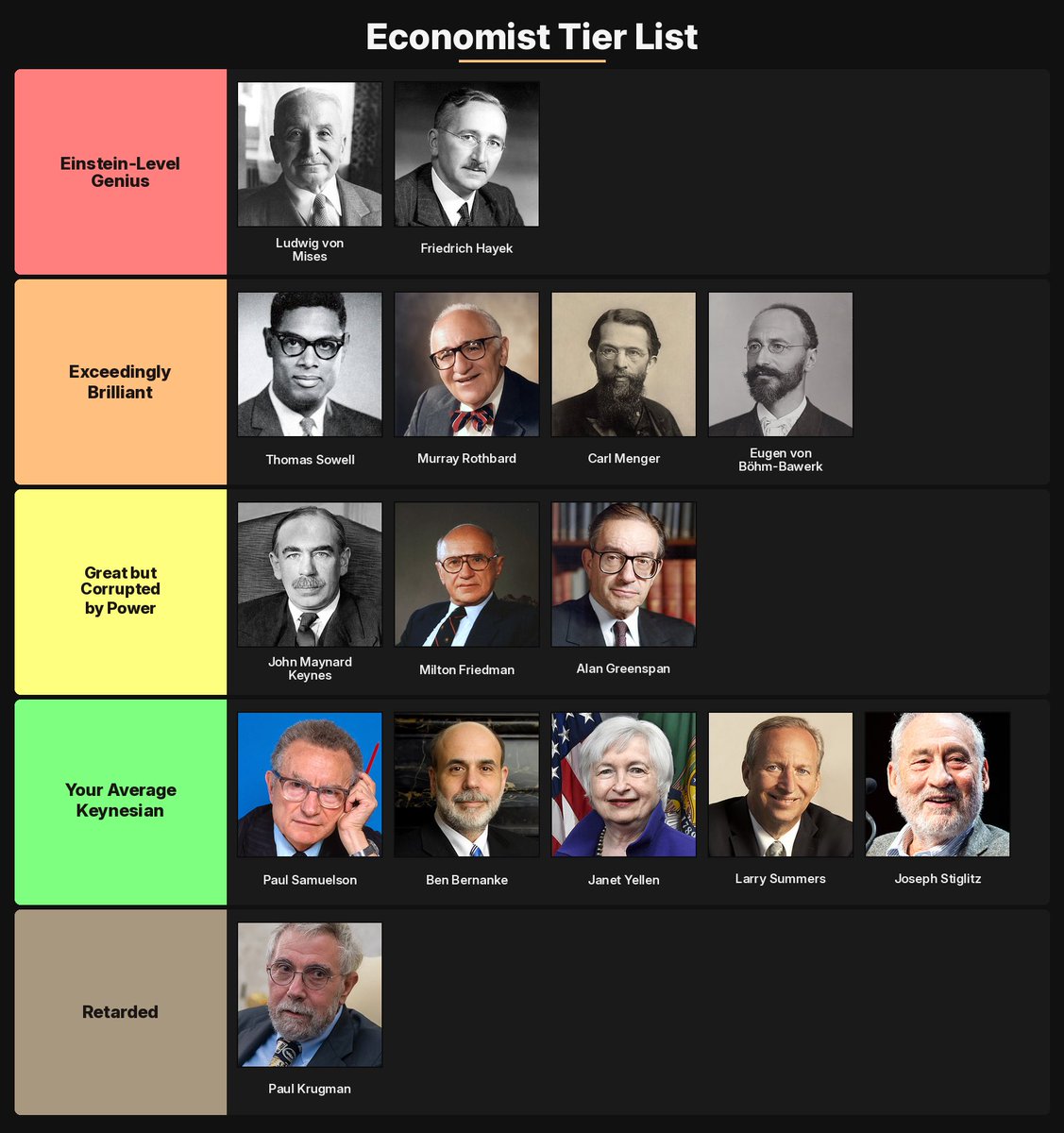
La tontería de que el trabajador mejor pago rinde más ya lo desarmó Rothbard en MES, si fuera cierto, los empresarios, que buscan ganancias, subirían los salarios por su cuenta para quedarse con ese aumento de productividad.
Es decir, no sería necesario que nadie venga y se los imponga por la fuerza (lo que constituye una violación de los derechos de propeidad).
Los salarios reales suben de verdad por una sola vía y es más capital por trabajador.
Eso pide ahorro e inversión, o sea, consumir menos hoy.
Por eso Bastos tiene su icónica frase de Capitalismo, ahoro y trabajo duru.
También lo menciona explicitamente Rothbard en MES, la idea de que estimular el consumo cura la economía es falsa, y lo cierto es lo contrario.
Primero se produce y después se consume.
Your wallet isn't thin because of billionaires and Capitalists.
It's because the government keeps eroding your buying power with inflationary debt spending, taxes, and prosperity-destroying regulations.
The government taxes you when you earn money, taxes you when you spend it, taxes you when you invest it, and then taxes your children when you die. The federal estate tax currently kicks in at 40% on estates above $13.61 million, a threshold the Biden administration repeatedly tried to lower. Washington frames this as targeting dynastic wealth. It actually targets a lifetime of accumulated savings, already taxed multiple times over.
Property rights mean nothing if the state can confiscate your accumulated capital the moment your heart stops. Murray Rothbard put private property at the foundation of liberty for exactly this reason: ownership that evaporates at death is not ownership. It is a revocable license the state issues and reclaims at will.
Consider a family farm in Iowa worth $15 million on paper, generating $200,000 a year in real income. The heirs owe $540,000 in federal estate taxes within nine months of death. They did not get $540,000. They got a farm. So they sell it, usually to a corporate agricultural buyer, which is a funny outcome for a tax rhetorically aimed at breaking up concentrated wealth.
The capital your grandfather spent forty years building represents deferred consumption, resources he chose not to spend. Taxing that capital destroys it. This process doesn't redistribute purchasing power; it rather converts productive assets into government expenditure, removing them from capital markets where they would have funded jobs, equipment, and future production.
Calling this anything other than state-sanctioned inheritance confiscation requires genuine ideological commitment to the fiction that the state has a prior claim on what you built.
If someone invents a battery that makes electric cars twice as cheap and becomes a billionaire, society hasn't lost a billion dollars.
We've gained cheaper transportation.
The obsession with how much money innovators make completely misses how much value they create.