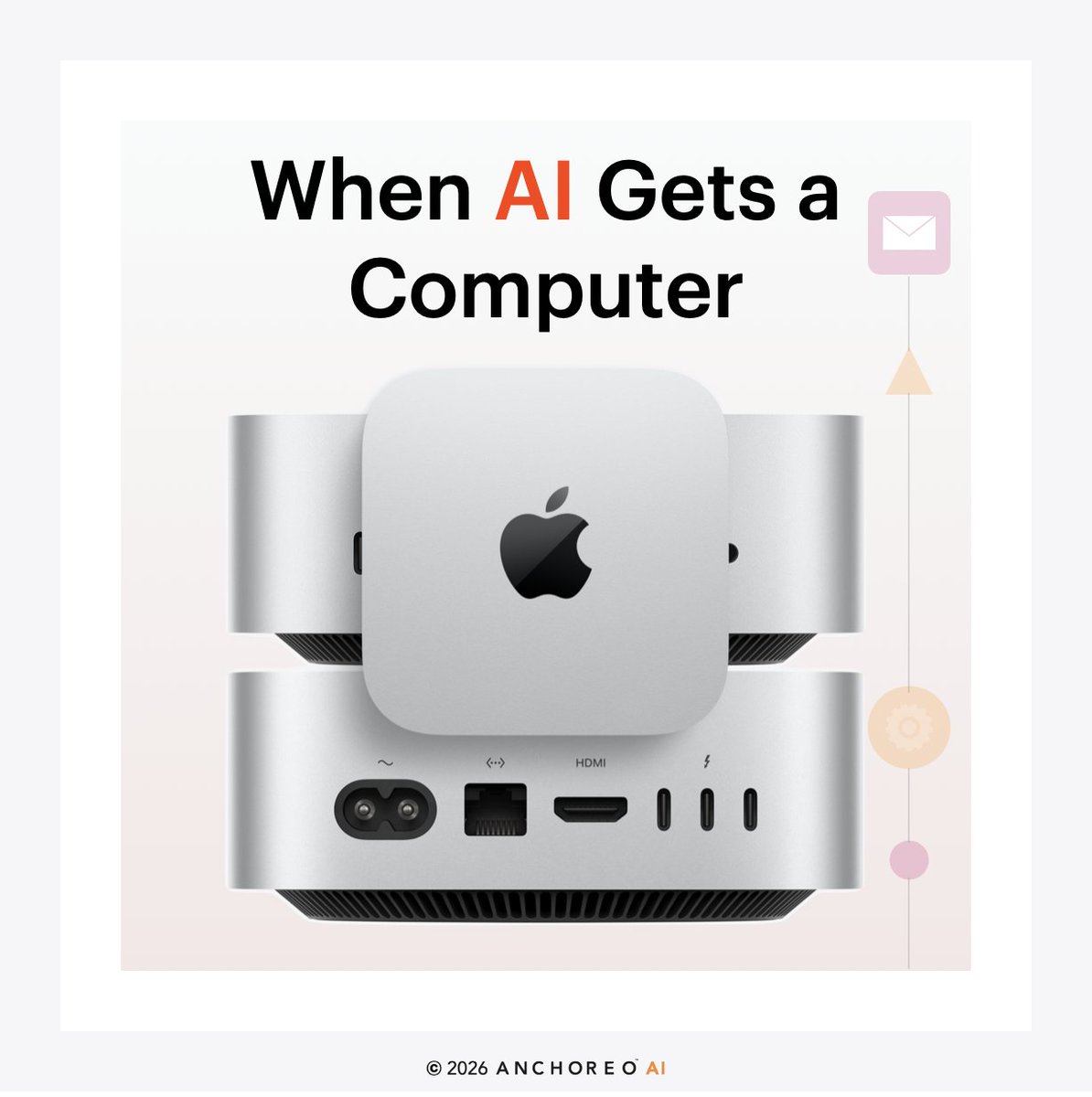
@OpenAI is reportedly buying tens of thousands of Mac minis and Mac Studios to train AI agents.
The bigger story may be what this signals: as AI moves from generating answers to taking actions, it needs environments where agents can practice using software.
AI infrastructure is evolving from compute for models to computers for agents.
#AI #AIAgents #AgenticAI
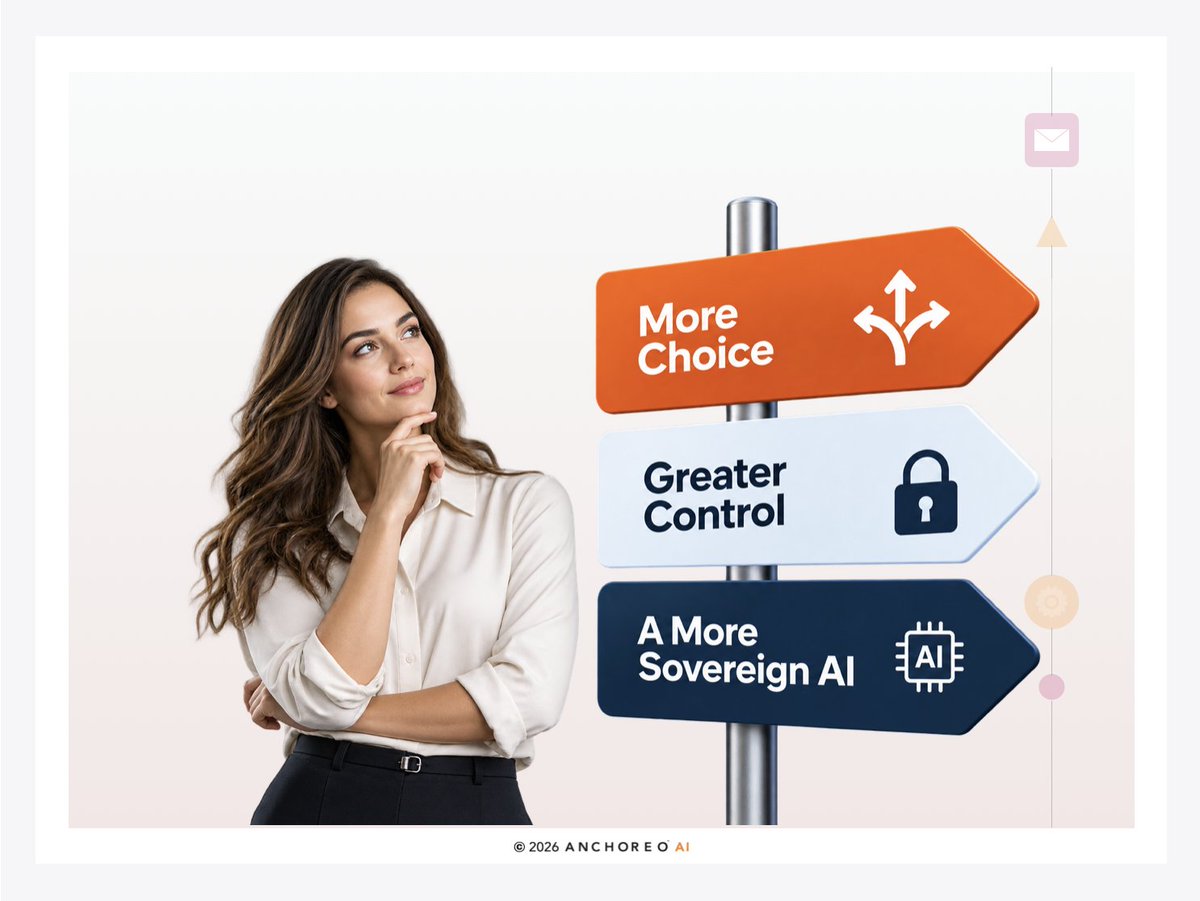
AI sovereignty starts with the freedom to choose your intelligence.
As models evolve, organizations need the ability to evaluate, switch, and route across models without rebuilding their applications.
The real question: 𝗛𝗼𝘄 𝗲𝗮𝘀𝗶𝗹𝘆 𝗰𝗮𝗻 𝘆𝗼𝘂 𝗰𝗵𝗮𝗻𝗴𝗲 𝘆𝗼𝘂𝗿 𝗺𝗼𝗱𝗲𝗹 𝗰𝗵𝗼𝗶𝗰𝗲?
https://t.co/wcje8b9ofc
#AISovereignty #OpenSourceAI #EnterpriseAI
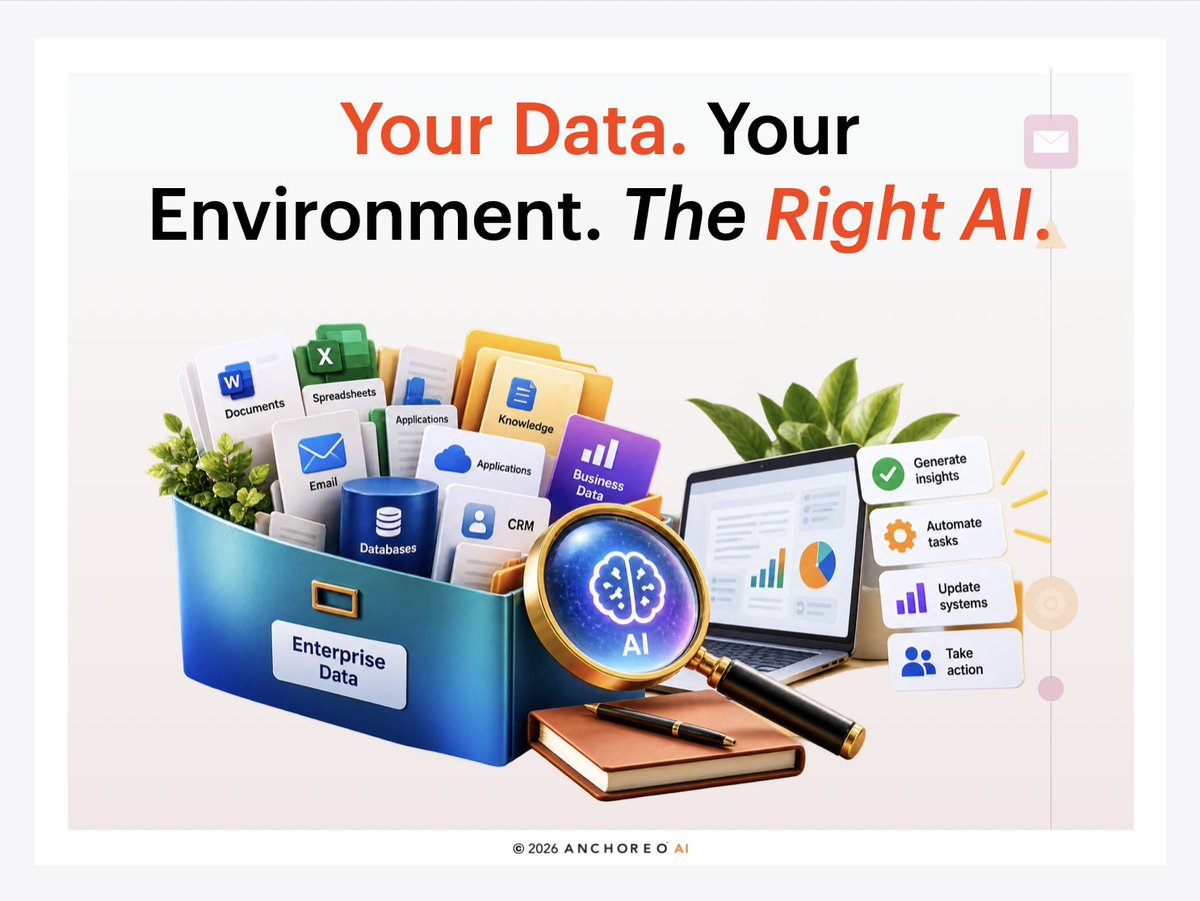
The real enterprise AI opportunity may not be the model itself.
It’s making your data actionable, in your environment, with the right AI for the task.
Models will change. Your enterprise context, workflows, and ability to act on them are where lasting value gets built.
#EnterpriseAI #AI #DataStrategy
AI sovereignty is about more than owning your data.
It’s about controlling how your knowledge is stored, retrieved, governed, and used by AI.
Open source can help enterprises maintain that control while preserving the freedom to change models and infrastructure.
Check out our latest blog which dives deeper into this topic:
https://t.co/87Ek5ZIkHb
#AI #OpenSource #AISovereignty
The best AI experiences may be the ones we barely notice.
They work quietly in the background, removing friction, anticipating the next step, and helping us get things done without constantly demanding our attention.
As AI becomes more embedded in everyday workflows, perhaps seamlessness will matter as much as intelligence.
The real measure of great AI may be how naturally it fits into the way we already work.
AI may automate 30���40% of the tasks in many jobs. But what happens to the other 60–70%?
@AndrewYNg makes an important point: as AI takes on certain tasks, the human work that remains can become even more valuable.
The future of work may be less about AI replacing jobs and more about redefining them.
#AI #FutureOfWork
As the AI stack evolves, one question matters: How much choice will your architecture preserve?
Open source can give organizations greater flexibility across models, data, integrations, workflows and infrastructure.
AI sovereignty starts with preserving that choice.
https://t.co/1NbSOAxsNP
#AISovereignty #OpenSource #EnterpriseAI
AI is becoming too powerful for its governance to be the responsibility of a few companies.
As Dario Amodei puts it: “This is bigger than all of us.”
As capabilities advance, so must the governance guardrails we put in place.
AI can scale expertise. But responsibility still stays with us.
As AI takes on more decisions and actions, accountability has to remain human.
#AI#AIGovernance#EnterpriseAI
AI may be changing productivity in a more interesting way than simply helping us work faster.
@OpenAI's researchers are running more experiments per person as AI tools become more widely used.
The bigger opportunity: AI can expand how many ideas we can afford to try.
More experiments. More learning. More shots at breakthroughs.
Source: OpenAI
The best AI workflows don’t automate everything.
The real advantage is knowing where AI should act and where human judgment should stay in the loop.
Sometimes, the smartest step in an AI workflow is a human one.
#AI#AIWorkflows#HumanInTheLoop
We have more tools to communicate than ever.
Email. Slack. Teams. Docs. CRMs.
Yet context still gets lost between them.
AI can help connect those scattered conversations, decisions and knowledge, giving teams something far more valuable: shared understanding.
#AI #FutureOfWork #Collaboration
I'm so excited that our @theworldlabs team has achieved a major milestone today! Introducing Atlas - a first of its kind multimodal world model trained from scratch! 🚀
Atlas is capable of generating frames with pixel-perfect camera control, reconstructing large scenes from as few as one single input image, simulating space-time by reframing videos, natively outputting 3D spaces from one or more input images, composing multiple posed images into a consistent 3d world, and more! This is the best camera conditioned world model ever, opening doors to many possible use cases from VFX to robotics. I'm so so so proud of our team!♥️
The biggest AI model isn’t always the best fit.
Smaller models running on-device can offer faster responses, greater privacy, more control, and lower costs.
The future of AI may be as much about where intelligence runs as how powerful it is.
#AI#OnDeviceAI#EdgeAI
The smartest AI model can still fail on the simplest task.
Because intelligence alone doesn’t make a system reliable.
Context matters.
Data quality matters.
Tools and integrations matter.
And knowing when to involve a human matters.
As enterprises move from experimenting with AI to putting it inside real workflows, the question is shifting from “How smart is the model?” to “How dependable is the system around it?”
That’s where the real work begins.
#EnterpriseAI #AgenticAI #AI
Every few months, a new AI model takes the spotlight.
But as models become more capable, accessible, and interchangeable, the bigger competitive advantage may lie somewhere else: your organization’s data and context.
Customer conversations. Project history. Decisions made. Lessons learned. Institutional expertise.
Competitors can access the same AI models. They can’t easily replicate the knowledge your organization has accumulated over years.
The strategic question may be shifting from “Which AI model should we use?” to “How well are we capturing and using what our organization already knows?”
That’s the foundation of a strong AI data strategy.
#EnterpriseAI #AIDataStrategy #DataStrategy #ArtificialIntelligence
AI can solve Olympiad-level math, yet struggle to read an analog clock.
That’s “jagged intelligence”: AI can be exceptional at some tasks and surprisingly weak at others.
For businesses, the lesson is clear: test AI on your real workflows, and maintain the flexibility to choose the right model for each task rather than getting locked into one provider.
Source: Stanford HAI, 2026 AI Index Report
The AI skill that may matter most right now? Being willing to experiment.
@salkhanacademy makes a simple but important point: you don’t need to understand every new AI tool. You need enough curiosity to try one, apply it to a real workflow, and see what happens.
Start with copy and paste. Then automate a step. Then build an agent.
That willingness to get past the initial activation energy could become one of the most valuable skills in the AI era.
Sometimes the best way to prepare for what’s next is simply to start pressing a few buttons.
Every generation has had tools that helped us work faster, build more, and solve bigger problems.
AI introduces something different: tools that can participate in the thinking itself.
That makes the question increasingly important:
How do we use AI to strengthen human judgment, rather than simply automate more of what humans do?
#AI #FutureOfWork #HumanCenteredAI
𝗠𝗼𝗿𝗲 𝘁𝗵𝗮𝗻 $𝟭 𝘁𝗿𝗶𝗹𝗹𝗶𝗼𝗻 𝗶𝗻 𝗴𝗹𝗼𝗯𝗮𝗹 𝗔𝗜 𝗶𝗻𝘃𝗲𝘀𝘁𝗺𝗲𝗻𝘁 𝗶𝗻 𝟮𝟬𝟮𝟲.
That’s @GoldmanSachs Research’s latest estimate, with more than $580 billion expected in the US alone.
But the bigger question is what comes next.
As hundreds of billions flow into data centers, chips, compute, power and AI infrastructure, the pressure will increasingly shift toward turning that capacity into measurable business value.
That means moving AI beyond experimentation and into real workflows, where it can improve productivity, reduce costs, accelerate decisions and create new sources of growth.
The infrastructure buildout is happening at extraordinary scale.
Now comes the harder part: putting it to work.
Source: Goldman Sachs Research (link in comments)