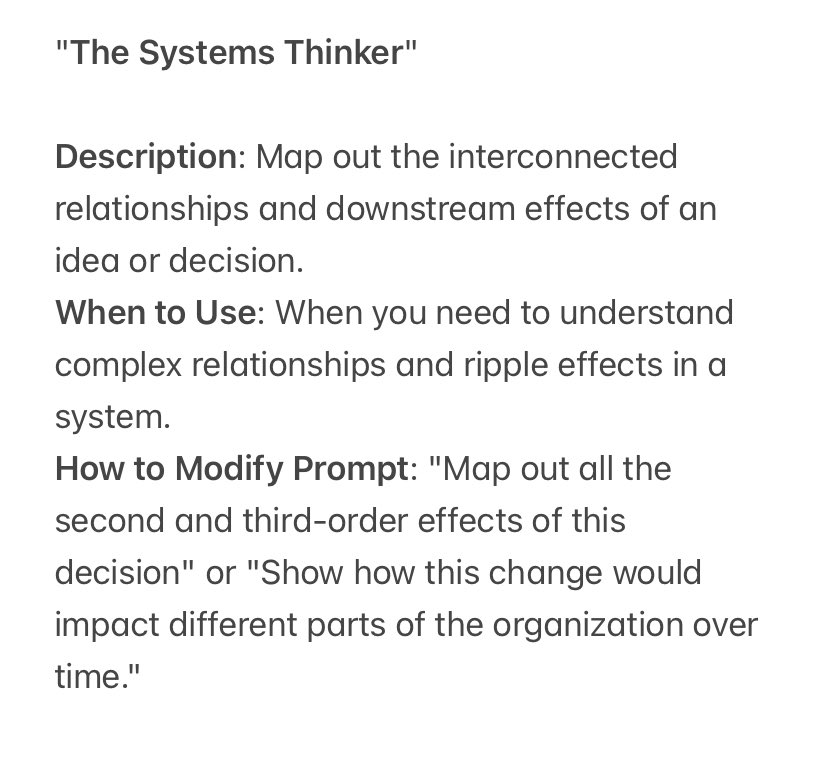
How we prompt AI is very different in 2026 than 2022 when ChatGPT came out.
I'm teaching a new course, AI Prompting for Everyone, to help you become an AI power user — whatever your current skill level.
It covers skills that apply across ChatGPT, Gemini, Claude, and other AI tools. How to use deep research mode for well-researched reports on complex questions. How to give AI the right context, including more documents and images than most people realize you can provide. When to ask AI to think hard for several minutes on important decisions like what car to buy, what to study, or what job to take. And how to use AI to generate images, analyze data, and build simple games and websites.
I also cover intuitions about how these models work under the hood, so you know when to trust an answer and when not to.
Along the way, you'll see flying squirrels, a creativity test, some of my old family photos, and fireworks.
Join me at https://t.co/tcQc4iJAJG
I built https://t.co/4rAUTXjAhc to help me stay-up-date with new AI stuff.
It's tracking 14K open source repos so far, with contributions from over 145K developers.
Every day, it:
- searches for new AI repos (based on 123 keywords and topics)
- surfaces repos that are gaining traction, and
- categorizes each repo
The annotations are done by AI so they are not super accurate, but they've helped me find some useful stuff.
It also lets me see where the contributors are, so when I travel, I can find folks doing cool stuff in a new city or country.
The fallacy of this is that more creates more. More hours, more hiring, more something.
And it is true in a sense. If you put in more work, more work will happen. But I think for most startups, the leverage is really in how differently you approach the problem, how well you cultivate your team, and the strategy.
Any large company can outspend you on hours. They have thousands or tens of thousands more people, spending more hours. If hours worked were the metric, every large company and government organization would always win and do the best work. More hours, better output.
This thinking is often representative of younger founders, where the startup becomes their identity and life. They have a hard time doing anything else, and cannot understand that your work is not the person that is you. But activities outside of work can grow you as a person too and make you do better work.
I’ve never worked this way. As a designer, I always saw the need to take a step back, to take a break. At times, I might work 12 hours or 16 hours, or whatever amount was needed, but it wasn’t the norm. You just can't grind design, you need inspiration. But taking that step away from the work, would give me more perspective, inspiration and I could approach the problem differently or I could just see the solution.
Grinding is never good for any creative problem, and startups or creating new products are often mostly about creative problem solving. Grinding works ok for email jobs, or where you just executing on very clear playbook.
With Linear, we’ve never worked this way. We work reasonable hours, 5 days a week. All of us founders have families. Many of our employees have families. I personally stop every evening, spend time with the family, cook dinner for the family, eat dinner together, and focus on things outside of work. Sometimes I work in the late evenings or weekends, but to me the pride is that I don’t need to. Company should be succesful without it.
My goal is to build a company that is sustainable in the long term, and doesn’t require heroics or personal sacrifices every single day.
There are times when our team is heroic. Launches, incidents, some other work that just needs to be done. They will work late into the night because they know it is the right thing. But we don’t require that every day or every week, and the more this happens, the more I think it is a failure of our company and leadership. The team and the leaders should always keep a reserve to use when something is needed.
Our thinking was also that quality, which we value, doesn’t emerge from working more or stressing people more. It emerges when you create the conditions for it to emerge. Often it is the appreciation, space, time, and how the person feels. A person who is rested will do better work.
I wouldn’t attribute much of our success to working a lot. The success came from having clear thinking, ideas, and focus to do the right things.
I sometimes wish we could move the culture more toward a Zen master.
Real mastery is not exerting the most effort. It is achieving the outcome with the least necessary effort.
Introducing Claude Design by Anthropic Labs: make prototypes, slides, and one-pagers by talking to Claude.
Powered by Claude Opus 4.7, our most capable vision model. Available in research preview on the Pro, Max, Team, and Enterprise plans, rolling out throughout the day.
Such a fascinating talk, highly recommend.
Permissions in the pre agentic era: explicitly specify what software can or can’t do
Agentic era: express intent of what an agent can do and ensure it operates within the boundaries
🗺️ vs 🧭
The UI era is ending. 🪦
For 70 years we designed computer interfaces. Mainframe, CLI, GUI, Touch.
But with AI, the interface is disappearing. What will come next?
My talk from @mastra's conf this week:
Documentation has traditionally been optimised for completeness and correctness, not developer delight.
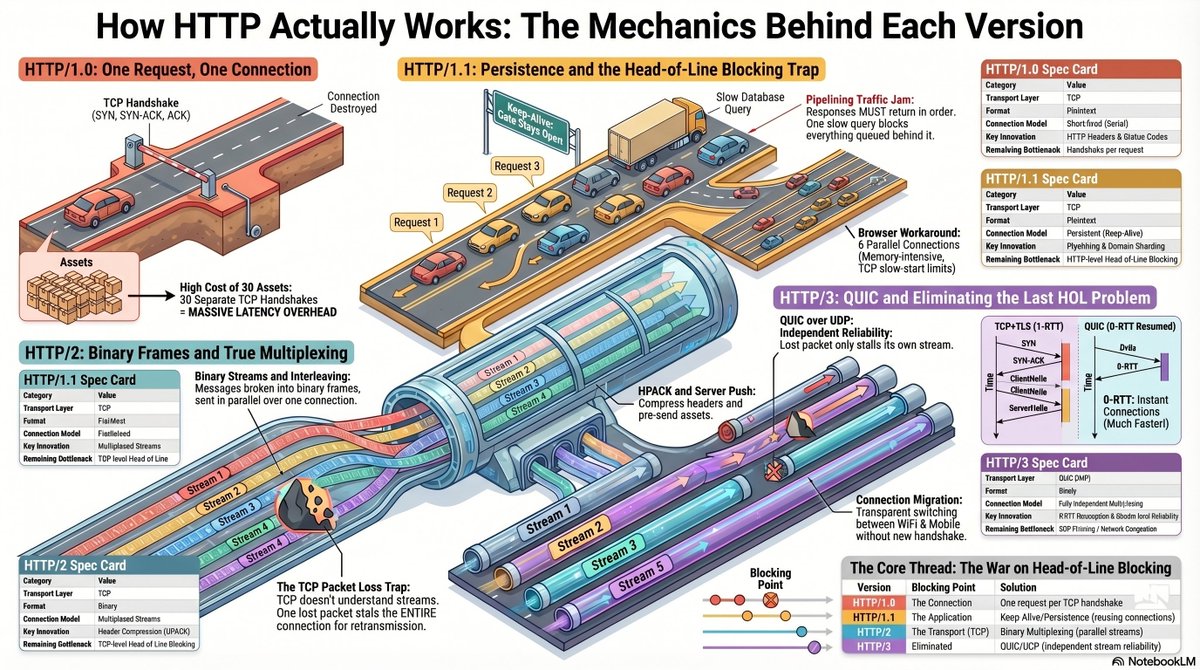
Playing around with @NotebookLM made me realise how interesting you can make something as dry as application protocols feel.
Would love to see @MozDevNet and other docs get an upgrade
I built this thing called Clicky.
It's an AI teacher that lives as a buddy next to your cursor.
It can see your screen, talk to you, and even point at stuff, kinda like having a real teacher next to you.
I've been using it the past few days to learn Davinci Resolve, 10/10.
Introducing Cinematic Video Overviews, the next evolution of the NotebookLM Studio. Unlike standard templates, these are powered by a novel combination of our most advanced models to create bespoke, immersive videos from your sources.
Rolling out now for Ultra users in English!
If you’re in media, this is worth a watch.
Cloudflare handles ≈20% of global traffic, so when CEO Matthew Prince warns at Cannes that AI bots are reshaping the web, publishers need to adapt or risk being left behind.
The ability to recognize excellence in a field without firsthand experience is a superpower. If you have it, you skip the years of trial and error. You make better decisions. You move faster. You see things others don’t. Most people think you need experience to know what good looks like. They’re wrong. Excellence follows patterns. Once you learn how to spot those patterns, you can operate at a high level in any domain, even if you’ve never set foot in it. But most people never figure this out. They assume expertise is earned through time instead of insight.
The best hiring managers don’t need to know how to code to recognize a world-class engineer. The best investors don’t need to be former founders to spot the next billion-dollar startup. The best taste-makers don’t need to be artists to know which designs will win. They all have something in common. They see what others miss. They break apart a field, find its hidden structure, and spot the signals that separate the best from the rest.
Look at any field. The top 1% don’t just work harder. They think differently. They focus on things others ignore. They make decisions in ways that seem counterintuitive at first but are actually rooted in deep principles. This is where most people get it wrong. They assume greatness is about talent or luck. In reality, it comes down to a series of repeatable choices. If you want to recognize excellence without years of experience, your job is to find those choices. What do the best prioritize? What do they refuse to do? What do they see that everyone else is blind to?
The first step is exposure. You can’t recognize world-class work if you’ve never seen it. Study the best. Not the most famous, but the people who consistently produce exceptional results. Compare good vs. great until the differences become obvious. The second step is asking the right people. Most people don’t know what makes them great. They just do it. But a few can break it down in ways that shift how you see the world. Find those people. The third step is using proxy indicators. If you don’t have firsthand experience, use external signals to guide you. Look at past performance. Pay attention to who top operators trust. Watch how the best in a field talk about their work. Patterns will emerge if you look in the right places.
This isn’t about faking expertise. It’s about seeing reality more clearly than everyone else. People who can recognize excellence without direct experience move differently. They hire better. Invest better. Think better. They don’t get distracted by noise because they know what actually matters. They learn faster because they see the patterns others overlook. They make smarter decisions because they aren’t waiting for experience to show them the way.
Most people go through life reacting to what’s in front of them. The ones who shape the future have a different skill. They know how to spot what’s great before anyone else does. Once you learn how to do that, everything changes.
This may be the most inspiring sentence I've ever read. Which is interesting because it's not phrased in the way things meant to be inspiring usually are.