My new book, Building Belonging in Schools, is now sold out on Amazon and looks like they won’t be getting any new stock until February, but it’s still available on the Routledge website and is currently £5 off.
https://t.co/CpghVK1L3q
Bowled over by the response. Thank you.
I wanted to write about my first day in one of England’s toughest schools.
Reading about this experience might bring into focus the problems faced by a small number of schools and help you consider how policy solutions fall short.
How common is this?
Link in post below
My new book, Building Belonging in Schools, is now out.
Here’s what a few early readers had to say about it.
Available on Amazon or direct from the Routledge website, where it’s currently on sale with £5 off!
Its publication day! 🥳🥳
Building belonging in schools has four parts
The science of belonging
Belonging in primary
Belonging through transition
Belonging in secondary
Available now!
Need support with whole-class questioning?
Sign up for our final FREE Carousel Teaching webinar of 2026 - Supercharge Your Questioning with @adamboxer1.
📅 Mon 23rd Nov
⏲️ 4.15 pm - 5.45 pm GMT
Save your seat here:
https://t.co/MFLmQ49QXL
It’s great that the sector is having a big conversation about belonging in schools. We need as much rigour around it as we do around curriculum and instruction.
My new book digs into the research and teases out the tensions.
I hope you give it a try!
In most schools, there is a massive chasm between the Teaching and Learning Policy and what actually happens in classrooms.
Does that mean the policy is a waste of time?
New post, please share if you can, link in reply!
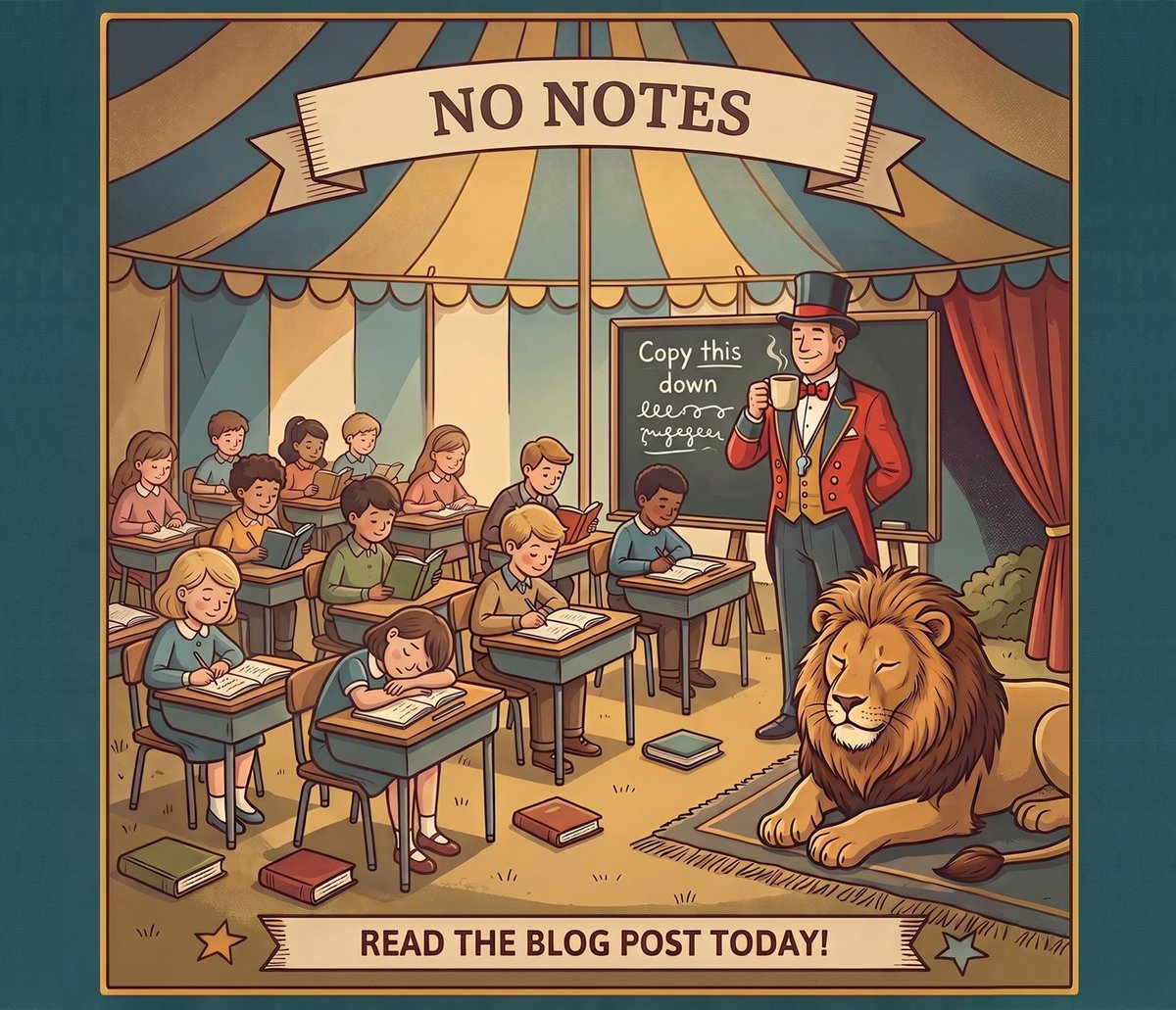
I'm not normally one for banning stuff, but if I were made King Of The Schools, I'd ban copying from the board.
It's everywhere, and I see it in most lessons I visit. And it's a complete waste of time.
Read the blog for why, and please do share to the unconverted!
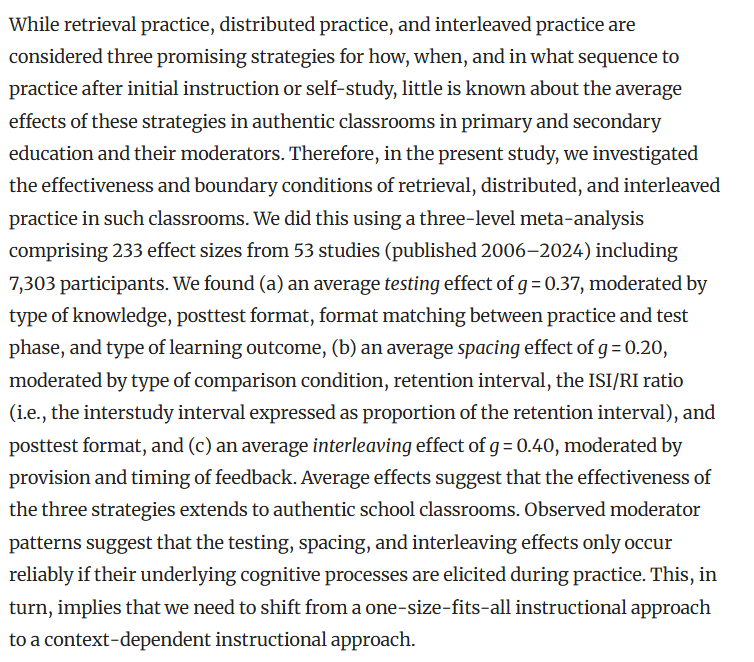
Meta-analysis of retrieval practice, spacing, and interleaving in classrooms concludes fairly robust average effects of each (open access) https://t.co/J4MfmNZQml
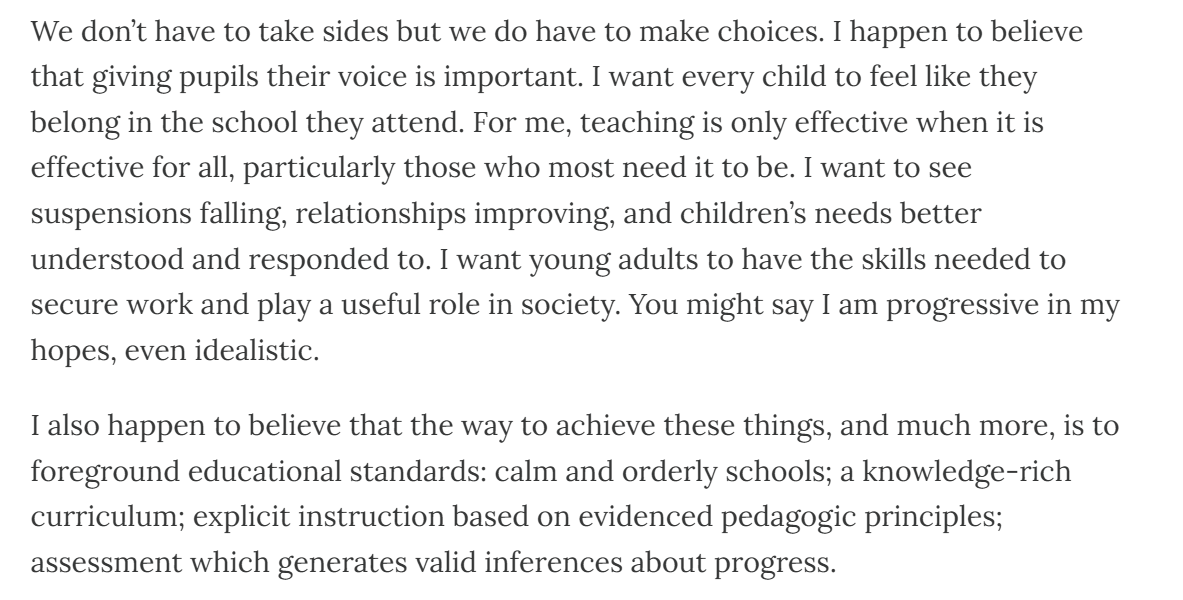
This blog from @head_teach is as good as it gets on education policy and how it filters down to the classroom. Deserves a huge amount of attention. 10/10.
https://t.co/mHOs3AJYFa
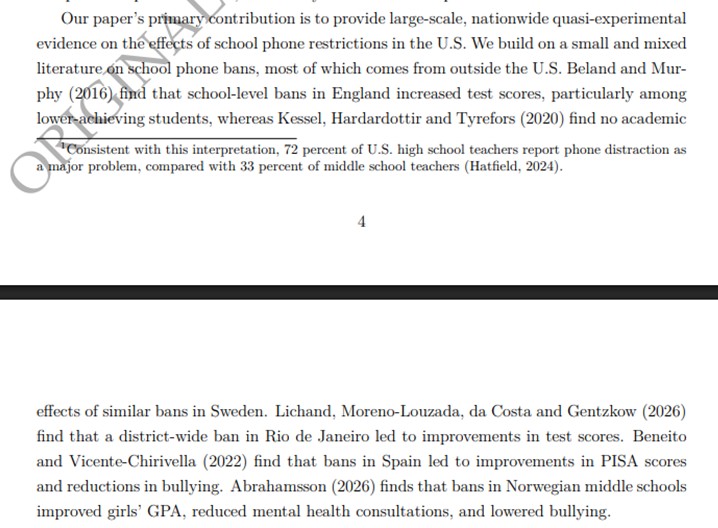
Overall I remain in favour of bans on phones in schools. This is partly evidence based as there is now some limited evidence of positive impact on wellbeing/attainment, but is also ideological - I think schools' policies have an impact on social norms
I had strong priors on this (fewer phones in school = better). The findings of this paper looking at US schools are less emphatic than I would have expected. There were some small benefits to student wellbeing, and in high school (14-18) attainment (tho not middle school (11-14))
In the school I trained in, there was a weekly T&L briefing where we were exposed to one new initiative a week.
In the school I went to next, we had monthly department meetings where there was always one new thing we had to do.
In the school I went to after that, every member of SLT was doing an NPQ, which led to approximately six new initiatives a year (normally which had to be done within a term).
At my current school, we've had four T&L focuses in seven years.
Change fatigue is real. Teachers are busy, and even if it was desirable to try and change that many things in that space of time, it's impossible.
I suspect this state of affairs is still pretty common. Does it feel familiar to you?
New blog below exploring different routes, please share if you can 🙏🙏
In this week’s episode of The Amol Rajan Connection: @daisychristo on how we’re messing up Education; the danger of the Stupidogenic Society; what technology does to our minds; long-term vs working memory; and how AI affects what children should learn. Out now on YouTube, Spotify, Apple Podcasts and Amazon Music.
There is going to be an explosion of CPD on "oracy" over the coming months.
My advice to senior leaders procuring training or to teachers experiencing such training is to ask for videos of the strategies being proposed.
Oracy is a big, nebulous idea. It can mean lots of things to lots of people. So if someone wants you to "do oracy" then you need to know exactly what they mean by the term: what specifically do you want me to do in the classroom?
The best way for them to answer that question is through a video: this is what I want you to do in the classroom.
A video will allow you to establish if you think it was a good use of time in that classroom, and then what it might look like in yours.
This is broadly true of all CPD and teaching strategies, but it's especially true of well-defined ones.
Ask to see what it looks like. Great CPD isn't merely about raising awareness of ideas. It's about changing classroom practice, and you can't do that if you don't know what it looks like.
Pupil behaviour is essential. The tiny things teachers do to make sure behaviour is good are so important to get right. Here are 10 things I’m currently thinking about and using in all of my lessons. 🧵