Shopify saindo do Redis para MySQL no critical path (checkout completion) diz muito sobre como arquiteturas mais simples, com boring techs, podem te levar MUITO longe.
o artigo fala de otimizações como:
- minimizar moving parts;
- minimizar coordination (SKIP LOCKED);
- favorecer ACID p/ correctness e consistência;
- otimizar para workload específico;
- dominar seu RDBMS;
um banco relacional com 1 única instância te leva muito longe em termos de escala, imagina então quando você investir seriamente.
https://t.co/edu4aqqwnm
a Nubank deveria ter vergonha de usar banco relacional que não escala #ironia
sério, impressionante essa migração da Nubank de Self-managed PostgreSQL para Amazon Aurora PostgreSQL 👏🏻
Mais impressionante ainda eh ver a Nubank rodando bem apenas com 3 instâncias do Self-managed Postgres: um writer, um standby e uma read replica.
https://t.co/JAB5qojR4F
Does telling a coding agent to do TDD by itself make a difference? Or is it one of the rare examples where what's good for the human is irrelevant or bad for an agent? Birgitta Böckeler runs experiments and shares her thoughts.
https://t.co/q2vgv8IdOR
"JVM memory, CPU, and classpath best practices for Java containers on AWS".
In this post, we explain how the JVM interacts with the container runtime and the host kernel, and walk through configuration best practices that help you prevent these issues.
https://t.co/xg7TfxbEQv
@jairmearrependi Assisti, e o pessoal ta levando as opnios ao extremo, ou acham uma bosta ou o melhor filme das vidas. Sinceramente é um filme mediano, cumpre seu papel de entreter mas nada marcante
"The VFS" is the fifth chapter of the Understanding the Linux Kernel series, and it answers a question that's easy to never ask: how can file operations work identically on an ext4 file, a /proc file that exists only as kernel memory, and an NFS share on another machine?
The answer is a classic: program against an interface, not an implementation. The VFS defines four objects, each with a table of function pointers: the superblock (one mounted filesystem), the inode (one file or directory), the dentry (one cached name), and the file (one open instance). A filesystem plugs in by filling those tables of pointers.
Read it here: https://t.co/8Kp5FswvGq
@Shinobu_uwu Teve isso do criador do Zig ?
Li por alto o post do Burn, mas não vi em nenhum momento ele desrespeitando o Zig, foi grato e fundamentou pq precisou ir pro Rust
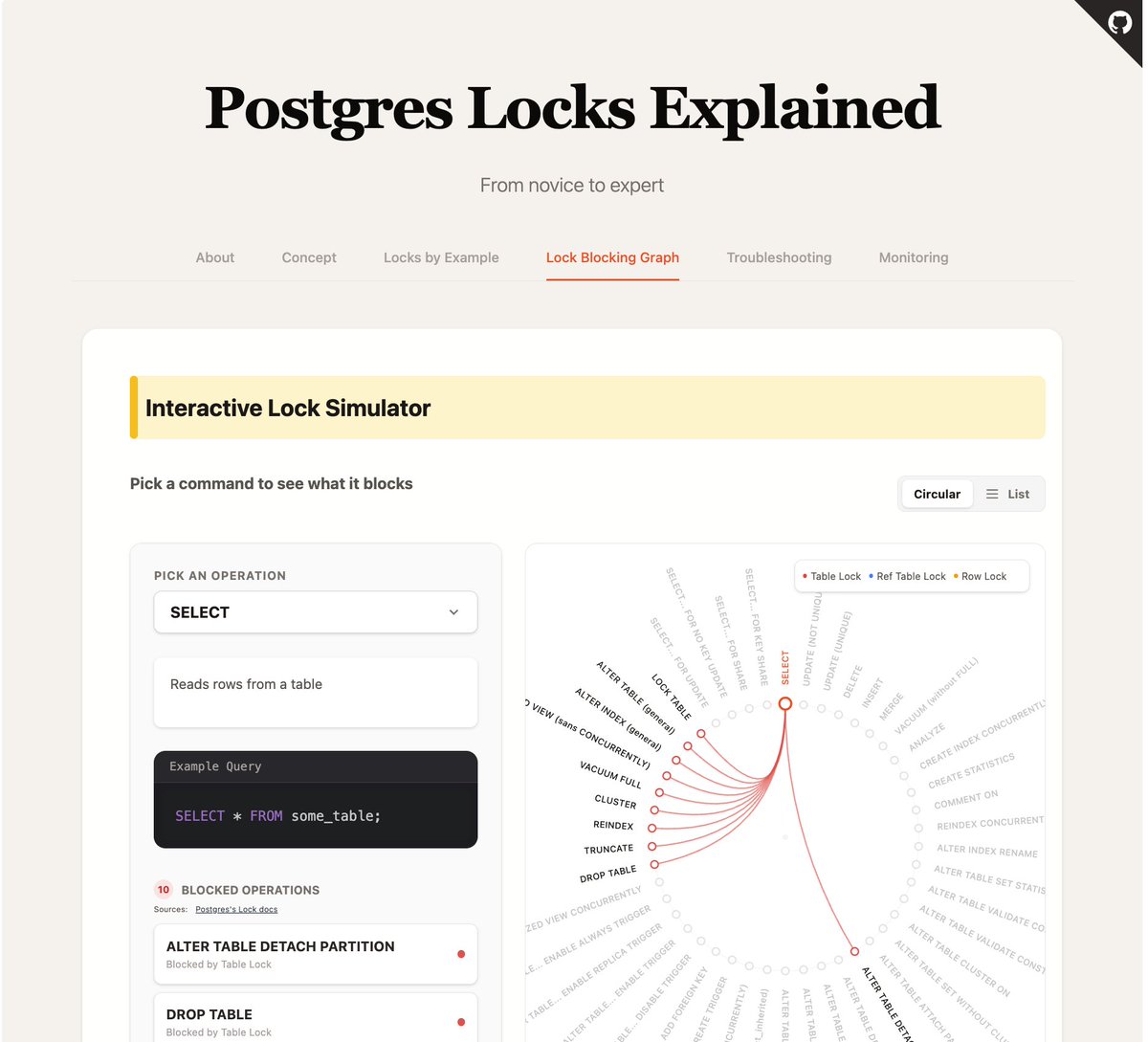
Read a bit into how locks in Postgres work. My main takeaway was that different SQL commands acquire different lock modes, and many of them are intentionally compatible with each other to minimize lock contention
Even a SELECT query acquires a lock that blocks certain heavyweight operations (like VACUUM FULL, REINDEX, etc). There are a surprising number of combinations of SQL commands that can and can't run concurrently
also, here's a neat website that actually shows you a graph of which SQL commands can run concurrently