SITUATION STATUS
- Escalation shift to civilian energy systems confirmed:
US-Israeli strikes continue targeting Iran's domestic energy infrastructure with heavy attacks on Tehran oil warehouses March 9-10, while Iran executes threatened retaliation against Gulf states' critical infrastructure including attempted drone strikes on Saudi Aramco oilfields and attacks causing explosions in Doha, Qatar.
- Iranian missile strikes penetrate Israeli defenses with fatalities:
Iran launched missile attacks on central Israel March 9, killing at least one person and critically injuring two others, bringing Israel's total war deaths to 11. Simultaneous Iranian strikes hit Saudi Arabia, killing two including one Indian national and injuring 12 foreign nationals.
- Gulf states face direct kinetic attacks:
UAE intercepted multiple Iranian missiles and drones March 7-8, resulting in three foreign national deaths (Nepali, Pakistani, Bangladeshi). Saudi Arabia intercepted drones targeting Riyadh, air bases, and Aramco-operated oilfields. Qatar reported explosions in Doha from Iranian attacks.
- Turkey intercepts Iranian missiles, warns against escalation:
Turkey's air defenses intercepted a second Iranian missile March 9, with President Erdogan publicly warning Iran against "provocative steps," indicating potential expansion of conflict beyond immediate theater and straining Iran-Turkey relations.
REGIONAL STABILITY OUTLOOK
Short term (0-30 days):
Conflict has entered infrastructure warfare phase with Iran demonstrating capability and willingness to strike Gulf civilian targets despite interception efforts. Expect continued tit-for-tat strikes on energy facilities across Iran and GCC states, with increasing civilian casualties complicating diplomatic off-ramps. Turkish interceptions signal potential geographic expansion.
Medium term (1-6 months):
Iran's loss of Supreme Leader Khamenei creates succession crisis during active conflict, potentially driving more aggressive military posture to demonstrate regime continuity. GCC states face sustained pressure to distance from US-Israeli operations or accept ongoing infrastructure targeting. Nuclear escalation risk remains elevated with approximately 450kg highly enriched uranium unaccounted for in Iran.
Gulf States critical infrastructure:
Desalination plants, oil terminals, and financial centers across UAE, Qatar, Bahrain, Kuwait, and Oman now confirmed as active Iranian targets with demonstrated strike capability despite air defenses. Three foreign national deaths in UAE indicate vulnerability of expatriate workforce concentrated near critical sites.
Key triggers to monitor:
- Iranian succession announcement and new Supreme Leader's initial military directives
- Successful Iranian strike on major Saudi/UAE oil export terminal or desalination facility
- Israeli or US strike on Iranian urban center or confirmed nuclear weapons development site
- Turkish closure of airspace or Incirlik air base access following additional overflights
- Closure of Strait of Hormuz or major shipping incident in Persian Gulf
GLOBAL IMPLICATIONS FOR ORGANIZATIONS
Energy & oil supply chain risk:
Oil prices surging with President Trump characterizing increase as "very small price" for neutralizing Iran's nuclear threat, indicating acceptance of sustained disruption. Saudi Aramco facilities under direct attack; expect continued volatility and potential supply interruptions from Gulf producers.
Cyber threat escalation:
Infrastructure targeting in physical domain likely paralleled by intensified Iranian cyber operations against Gulf financial systems, energy SCADA networks, and Western corporate targets. Organizations with Gulf operations should assume heightened reconnaissance and pre-positioning activity.
Personnel security in region:
Three foreign national deaths in UAE demonstrate direct risk to expatriate workforce near critical infrastructure. Organizations should review shelter-in-place protocols, consider staff relocations from high-risk zones near ports/energy facilities, and update emergency evacuation plans across all GCC states.
Financial market sensitivity:
Markets pricing in extended conflict with infrastructure degradation on both sides. Gulf financial centers (Dubai, Doha, Bahrain) experiencing operational stress from attack alerts; expect increased transaction costs, insurance premiums, and potential temporary market closures during strike waves.
Sanctions compliance complexity:
Rapidly evolving targeting of Iranian energy sector and potential secondary sanctions on entities facilitating Iranian infrastructure repair create dynamic compliance landscape. Monitor OFAC designations related to Iranian energy reconstruction and dual-use technology transfers.
ANALYST NOTES
The most critical open-source indicators for the next seven days center on Iran's Supreme Leader succession process and whether the new leadership adopts escalatory or de-escalatory posture. Monitor Iranian state media (IRNA, Tasnim, Fars News) and Assembly of Experts statements for succession timeline and initial policy signals. Simultaneously track commercial satellite imagery of struck Iranian oil facilities and Gulf state infrastructure to assess actual damage versus claimed impacts—this will indicate both sides' remaining strike capacity and infrastructure resilience. Gulf state air defense performance data, visible through flight tracking disruptions and official interception announcements, will reveal whether Iranian saturation tactics are degrading or if defenses are adapting. Finally, watch for any IAEA emergency statements or Western intelligence leaks regarding Iran's highly enriched uranium stockpile location, as this 450kg cache represents the potential nuclear threshold that could trigger fundamentally different escalation dynamics. The convergence of leadership transition, infrastructure attrition, and nuclear material uncertainty creates a seven-day window where miscalculation risk is exceptionally elevated.
OSINT COLLECTION TASKING
- Monitor Sentinel Hub/Planet Labs satellite imagery of Tehran oil storage facilities (coordinates: 35.6892°N, 51.3890°E), Saudi Aramco Khurais oilfield (25.8°N, 49.0°E), and UAE Jebel Ali port/DUQM desalination plant for damage assessment, secondary fires, and repair activity over 72-hour intervals. This confirms actual infrastructure degradation versus propaganda claims and indicates operational recovery timelines.
- Track ADS-B Exchange and FlightRadar24 for flight pattern disruptions over UAE, Qatar, Bahrain, and Saudi airspace during 0000-0600 local time windows when Iranian drone/missile attacks have concentrated. Sudden airspace closures, military transponder activations, and commercial flight diversions provide real-time attack warning indicators before official announcements.
- Scrape Telegram channels (Persian and Arabic) associated with IRGC-affiliated media (@Tasnimnews_Fa, @FarsNews_Agency) and GCC official channels for imagery/video of strikes with geolocation metadata. Cross-reference claimed strike locations with Google Earth to verify authenticity and identify previously unreported target sets.
- Monitor MarineTraffic and TankerTrackers for crude oil tanker movements through Strait of Hormuz and departures from Ras Tanura, Mina Al Ahmadi, and Jebel Ali terminals. Sudden anchorage increases, route diversions, or loading delays indicate operational disruption from security threats before official shipping advisories are issued.
- Search LinkedIn and expatriate forums (Dubai Expats, Doha News comments, Bahrain Expat Forum) for firsthand accounts from foreign nationals near reported strike locations, filtering posts from March 7-10. This provides ground-truth casualty data, shelter-in-place effectiveness, and workforce sentiment that corporations need for duty-of-care assessments.
- Track Iranian state media (https://t.co/0jR5UXakZY, https://t.co/QSOjQO81zH, https://t.co/JZ3MPoKP4M) and Assembly of Experts official statements for Supreme Leader succession announcements, comparing rhetoric tone and military commitment language against baseline pre-Khamenei death statements. Shift toward "revenge" or "martyrdom" terminology versus "strategic patience" signals new leadership's escalation intent.
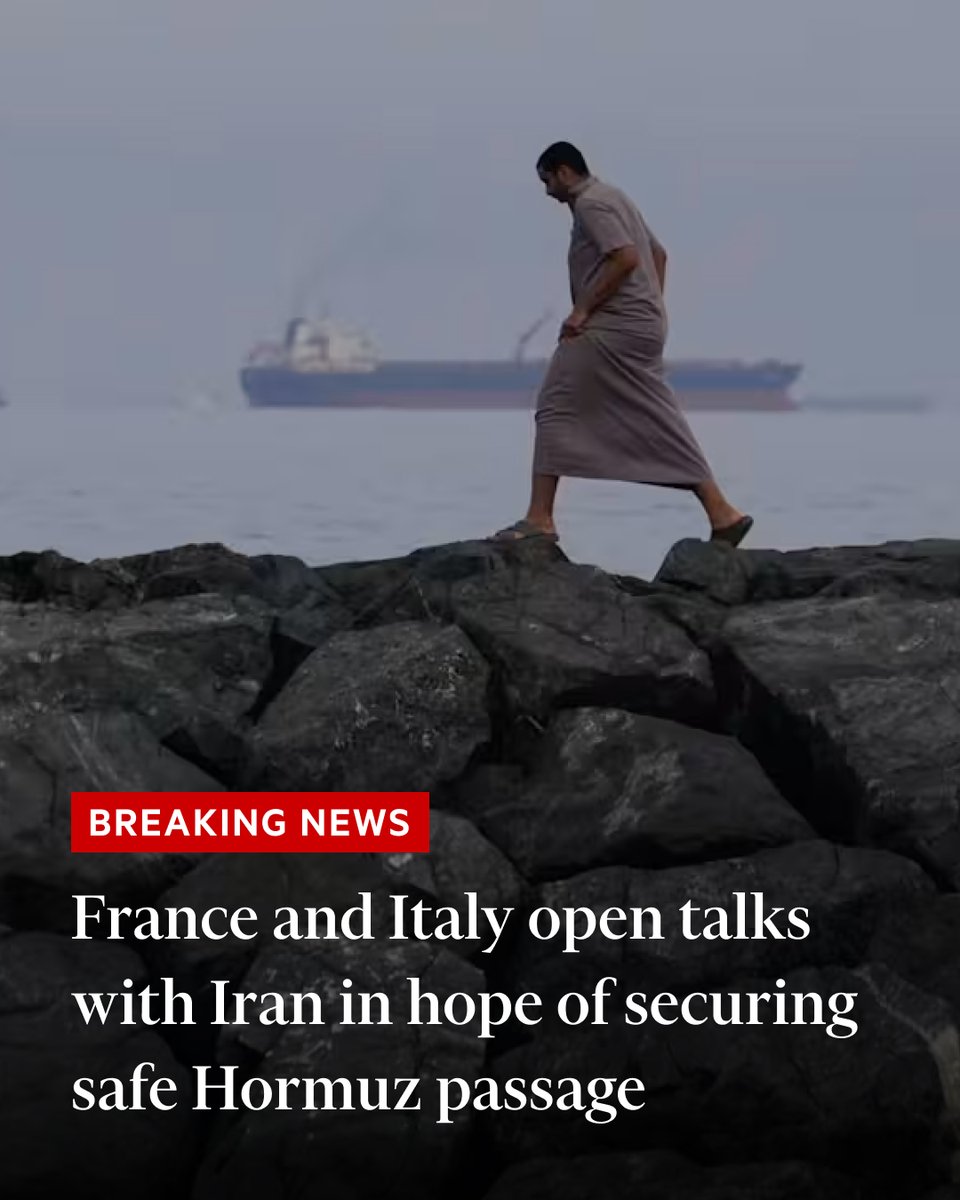
Breaking news: European countries including France have opened talks with Tehran seeking to negotiate a deal to guarantee safe passage for their ships through the Strait of Hormuz, according to people briefed on the efforts. https://t.co/2sXcq2GDPt
KEY CHANGES SINCE LAST BRIEF
Iran declares doctrinal shift from reactive to sustained offensive operations: Iranian state media reports armed forces have "stopped carrying out strictly retaliatory attacks" and will now conduct continuous "strike after strike" operations, representing fundamental change from previous reactive posture to proactive offensive campaign across multiple fronts.
U.S. directly implicated in major civilian casualty incident: Military investigation confirms U.S. Tomahawk missile responsible for Minab school strike killing approximately 175 children (March 10), with Iranian officials displaying "Made in USA" Raytheon debris. This represents first confirmed U.S. responsibility for mass civilian casualties in current conflict, significantly escalating bilateral tensions beyond proxy engagement.
Hezbollah launches largest single-day missile attack of war: Approximately 100 missiles fired toward Israel (March 12) marks most intensive Hezbollah barrage since conflict began, indicating northern front escalation despite Israeli counterpressure. New "eaten bomb operations" series announced, suggesting sustained campaign rather than isolated strike.
Iranian strikes on Tel Aviv and Eilat within 24-hour period: Iran conducted ballistic missile strikes on both Tel Aviv (intercepted, March 13 01:44 UTC) and Eilat (fell in open area, March 13 00:32 UTC), demonstrating sustained targeting of Israeli population centers and southern strategic assets simultaneously, confirming multi-axis operational approach.
Israeli confirmation of targeting Iranian nuclear scientists in recent strikes: Prime Minister Netanyahu publicly confirmed recent airstrikes eliminated additional nuclear scientists working on weapons program, following previous nuclear facility targeting. Represents explicit acknowledgment of decapitation strategy against Iranian nuclear personnel beyond infrastructure destruction.
The next Dubai 2.0 will happen.
A corridor that felt permanent will close. An airport that felt safe will go on contingency. An insurance market that felt stable will exit overnight.
The question isn't whether you'll face a disruption. It's whether you'll have a plan when you do.
I build that plan. Before you need it.
DM me
The next Dubai is already being built somewhere.
A new hub. A new corridor. A new "safest city in the world" for private travel.
And when that corridor closes — and it will close — most people flying through it will have no plan.
Here's what having a plan actually looks like. ��
I work with people for whom time and safety are the same currency.
Family offices with Gulf exposure. Principals who travel privately and need the risk architecture to match the aircraft.
Corporate executives operating in conflict-adjacent environments. Organizations that need someone who has actually been in the room when the situation changes.
I don't sell seats. I sell the framework that keeps you moving when seats stop being available.
The same checkpoint logic is coming for airspace.
Iran already controls who transits Hormuz by sea. FIR Tehran has been closed since Day 1 — effectively the same mechanism applied to the sky.
Notify Iranian authorities before entry or risk being hit. That's not international airspace anymore. That's a tollbooth.
India negotiated a maritime exemption. No airline has negotiated an airspace exemption.
The sea lane is reopening selectively. The sky above it isn't.
A KC-135 down in western Iraq is not just a military loss.
Stratotankers are the backbone of aerial refueling operations across the entire Gulf theater. Every strike package, every ISR mission, every fighter escort over contested airspace depends on them.
One less KC-135 in the AOR means tighter refueling windows. Tighter windows mean compressed flight envelopes. Compressed envelopes mean less flexibility to deconflict with commercial traffic using the same corridors.
Squawk 7700 on the second aircraft means the crew declared general emergency. Both aircraft departed TLV — that routing alone tells you how far the operational footprint has stretched.
Western Iraq. The same geography Baghdad FIR is trying to manage for commercial traffic.
RAF Akrotiri matters for aviation beyond the military story.
Akrotiri shares geography with Nicosia FIR. A drone strike on a UK base in Cyprus means the threat envelope now covers one of the last clean routing corridors between Europe and the Middle East.
I was deployed in Sulaymaniyah and Erbil last year. That base felt like any other regional hub — normal ops, people going about their day.
Four NATO base attacks in recent days. Each one adds restricted airspace around it.
UAE defenses nailed two drones near DXB airport—minor injuries to two Ghanaians and one Bangladeshi, moderate to one Indian. Flights are back to normal, no big disruptions.
But in my world, this spikes risks: potential for more rogue drones from Iran or proxies, forcing airspace tweaks and heightened alerts. Airlines, stay sharp on reroutes over Gulf hotspots.
Smart move by UAE keeping ops smooth—shows solid air defense layers.
As a ex-special forces operator now in aviation risk planning, this NATO action is spot on.
The radar at Kürecik in Turkey is a key part of NATO's missile defense. It's a U.S.-run AN/TPY-2 system with sharp X-band tech that spots fast missiles from Iran early, giving time to stop them.
It's like the one Iran hit in Saudi Arabia's Aramco site.
NATO is fast-shipping a Patriot battery from Ramstein base in Germany to guard it, before Iran tries anything.
In my field, this ramps up flight risks: more no-fly zones and route changes for planes over the Mediterranean to Middle East area. It's a clever way to deter threats, but watch out for Iranian-backed drone swarms probing weak spots.
TRUMP ADMINISTRATION NARRATIVE-REALITY GAP WIDERNING:
President Trump claimed March 9-10 that war is "near the end" and Iran has no remaining capabilities, directly contradicting operational evidence of 33rd Iranian attack wave and sustained missile launches. Previous brief noted declining tempo claims; current evidence shows sustained operations creating credibility gap.
STRIKE STRATEGY PIVOT CONFIRMED:
US-Israeli operations definitively shifted from nuclear/military targets to energy infrastructure March 9-10, with Pentagon publicly confirming focus on "missile infrastructure, navy, and defense industrial base." Previous brief noted this shift emerging; now operationally dominant with "most intense airstrikes of the war" reported March 11.
A "sharp drop" is a civilian metric. In Aviation Risk, 12 missiles and 17 drones still mean a Live Fire Zone.
From my time in Special Ops, we call this Strategic Attrition. You don't need to saturate the sky to win; you just need to keep the threat "active" to keep insurance premiums at 400% and flight corridors closed.
As long as the intercept count isn't zero, the airspace remains functionally denied for private aviation. Reliability is binary—it’s either safe, or it’s not. There is no middle ground at 30,000 feet.