@lulemosb Queria rever o quadro “Homenagem ao Artista” do programa do Raul Gil na Band, dedicado ao Tom Zé, dos anos 2000. A alegria do homenageado foi uma das coisas mais bonitas que já vi na televisão brasileira.
Satyajit Ray on what Jean Renoir told him about the problems faced in Hollywood & what should happen to Hollywood to solve the problems:
"‘What goes wrong with the great continental directors when they go to work in Hollywood?’ was a question many of us had in mind but few had the temerity to ask. But when at last it did come, Renoir’s eagerness to answer it surprised and relieved us. ‘I’ll tell you,’ he said. ‘I’ll tell you what happens to them. It is the American mania for organisation which frustrates them. You have heard of this mania, of course, but you know nothing unless you have seen it in action. Suppose you are in the United States, and you want to go somewhere. So you go to a station to catch a train. And what do you find? You find the train arrives on time. Exactly on time.
Now this is very strange. In France the trains don’t run on time. You are not used to this punctuality, and it makes you feel uneasy. Then you go to work in a studio. You are on the floor, ready to begin work. And what do you find? You find you have to go by the schedules, and so many of them. Which means you are supposed to run on time, too. And then they begin to check. They check the sound and doublecheck it, so that you get perfect sound; they check and doublecheck the lighting, so you get perfect lighting, which is also good. But then they check and double cheek the director’s inspiration —which is not so good.’
Renoir feels that the best intentions are apt to be thwarted in Hollywood owing to certain immutable factors. He mentioned the star system, the endless codes of censorship and the general tendency to regard films as a mass-produced commodity as being the three most obvious. Once in a rare while a director is lucky enough to find the right story, the right sort of players (not stars) to act in it, and the right sort of artistic freedom to make it, and the result is a worth while film. Only once, when he made 'The Southerner' (1945), was Renoir able to work in such ideal conditions in Hollywood.
Renoir also believes that the best films of a country are produced in times of stress; that an atmosphere of smug self-complacence is bad for the cinema. ‘Look what the war has done to Italian films,’ he said. ‘Look at 'Brief Encounter' (1945). I don’t think a great film like that would have been possible without all those air raids London had to suffer. I think what Hollywood really needs is a good bombing.’"
('Our Films, Their Films', Satyajit Ray, 1976)
Clip from:
Brief Encounter (1945)
Director: David Lean
Havia uma lógica nas listas nazistas que nem todo mundo aprendeu na escola. Não bastava ser judeu. A perseguição se estendia a quem ajudou judeus, a quem protegeu judeus, a quem teve relações comerciais com judeus, a quem simplesmente conhecia judeus e não os delatou. A contaminação se espalhava por graus de associação. O nome técnico é Sippenhaft… responsabilidade pela linhagem e pelos vínculos. Quem estava perto do errado, estava errado.
Pois bem.
O perfil O_Papo publicou um fio de cinco partes sobre Tainá de Paula, vereadora do PT no Rio que ousou dizer que banir israelenses de um bar era “barbárie”. Discordo de Tainá de Paula em praticamente tudo. Mas o que o O_Papo_ fez não tem nada a ver com política. É uma investigação de vínculos.
O fio não encontrou nada. Ele mesmo admite: “não encontrei evidências públicas de que Tainá de Paula tenha relações diretas com Israel ou organizações abertamente sionistas.” Mas não parou aí. Descobriu que ela atuou na ONG Rede NAMI. E que a fundadora da Rede NAMI, uma certa Panmela Castro, participou de intercâmbios culturais em Israel. Portanto: Tainá de Paula conhecia alguém que foi a Israel. E isso, nas palavras do perfil, “merece atenção.”
Atenção do quê? De quem? Para fazer o quê?
Deixa eu traduzir essa lógica para o meu mundo. Conheço aproximadamente 2.000 famílias judaicas em São Paulo. Cem por cento delas foram a Israel ao menos uma vez. Cem por cento têm parentes lá. Cem por cento participam de organizações judaicas com conexões institucionais com Israel. Se você passou na minha casa num Shabat, conheceu minha família. Se conheceu minha família, tem laço com sionistas. Se tem laço com sionistas, merece atenção.
Pelo critério do O_Papo_, qualquer pessoa que já conviveu com a comunidade judaica ativa no Brasil é alvo legítimo de denúncia pública. Rabinos, professores de escola judaica, fornecedores de produtos kosher, arquitetos que reformaram sinagogas, médicos que atendem judeus, jornalistas que entrevistaram líderes comunitários. Todos contaminados. Todos suspeitos.
Isso é a lógica do Sippenhaft. Sem exagero. Sem eufemismo. Sem figura de linguagem.
A diferença de tom não muda a estrutura. Os nazistas faziam listas em papel timbrado. O O_Papo_ faz em thread de X com 150 likes. O mecanismo é o mesmo: montar um dossiê de associações para marcar alguém que defendeu o errado. E o errado, aqui, foi dizer que israelenses são seres humanos que não merecem ser expulsos de bares.
Não é só antissionismo. Antissionismo é uma posição que visa destruir o Estado de Israel. Isso aqui é perseguição a pessoas por grau de contato com judeus. Tem um nome para isso. Não é complicado de pronunciar.
Chama-se antissemitismo nos moldes nazistas.
@ricardo90420845 @teniacoquette Preferi não ir a fundo na investigação sobre eu possivelmente ser autista de grau 1, mesmo com alguns sinais dentro do ETA, pois prefiro lidar com minhas neuroatipicidades inominadas a receber benefícios que foram criados para pessoas em graus maiores no espectro.
I concluded my Henry Family lecture at the University of Miami last Thursday by saying:
“Two things are important right now in life: deep learning and fertility. Everything else is noise.”
We are only starting to glimpse what these two forces will do to global life over the next fifty years. And they interact: deep learning will reshape demographics, and demographic collapse will reshape automation.
Nearly all my posts on X (except some parochial commentary on Spanish economic policy) revolve around these two facts. So does most of my current research. Even work that does not seem directly connected turns out to be, once you look carefully.
My papers on geoeconomics and international macro are about figuring out some of the consequences of deep learning and fertility. For example, my work on China focuses on its abysmal demographic future and how the U.S. is positioning itself (rightly or wrongly) to address it.
And my work on political polarization and the welfare state is about the consequences of decades of low fertility in Western Europe. When people talk about political change in Western Europe, they are talking about low fertility, whether they know it or not. It is not clear that modern representative democracy can survive sustained fertility rates of 1.3. I do not say that with glee.
The reason I decided to spend my life on academic work in economics is that I realized, when I was much younger, that daily events are irrelevant. The things that concern the media and 99 percent of commentary on X are largely irrelevant. One political party does better or worse in the next electoral cycle because of internal fights or a good campaign. At a fundamental level, none of it matters: the political outcome 25 years from now will not depend on those accidents. As Alexander Gerschenkron said, Clio is not a tidy housewife. The rise of any political movement is always full of advances and retreats. Social change waxes and wanes.
But at the end of the day, as my favorite historian Fernand Braudel put it:
“The events of history are merely surface disturbances, crests of foam that the tides of history carry on their strong backs.”
or in the much better original:
“Les événements de l’histoire ne sont que des agitations de surface, des crêtes d’écume que les marées de l’histoire portent sur leur dos puissant.”
The tides of history today are deep learning and fertility.
Paul Schrader on why American liberals & leftists overlooked the drawbacks of the superficial "Easy Rider" (1969):
"'Easy Rider' (1969) is a very important movie — and it is a very bad one, and I don’t think its importance should be used to obscure the gross mismanagement of its subject-matter. Dennis Hopper’s film about two drug- culture motorcyclists (Hopper and Peter Fonda) who, in the words of the Easy Rider ad, ‘set out to discover America’, has captured the imagination of the above- and underground press alike.
The underground identification was instant and understandable. 'Easy Rider' fuelled the paranoia which is the staple item of the youth culture (often rightly so). As a friend said, ‘It’s a picture that doesn’t cop out,’ presumably meaning that the young idealists are senselessly massacred and the audience is left without hope.
The reservations of the Life and Newsweek reviewers were overridden by their eagerness to agree with the film’s propositions. As Joseph Morgenstern wrote, ‘Easy Rider’s essential truth is brought home by what we ourselves know of our trigger-happy, hate-ridden nation in which increasing numbers of morons bear increasing numbers of arms.’ The mass media, having exploited every other youth truth, was now usurping youth’s paranoia.
My complaint is that 'Easy Rider', for all its good intentions, functions in the same superficial manner ‘liberal’ Hollywood films have always functioned. Easy Rider’s superficial characterizations and slick insights stem from the same soft-headed mentality which produced such anathema ‘liberal’ films as Elia Kazan’s 'Gentleman’s Agreement' (1947) and Stanley Kramer’s 'Defiant Ones' (1958). But because liberals and leftists of all varieties so desperately need the strong statement 'Easy Rider' makes, they are willing to overlook the film’s shallow, conventional method of argument."
[Excerpt from Paul Schrader's review of 'Easy Rider' (1969) in Los Angeles Free Press, 1969]
Paul Schrader was fired from the paper because of this review.
Masahiro Shinoda explains why it was impossible for the Jesuits to impose their religion in Japan:
"Interviewer: Is 'Silence' (1971) critical of the very fact of the Catholics coming to Japan and imposing an alien culture on the Japanese?
Shinoda: Japan is an island surrounded by the sea. Many cultures from outside have come here. Japan could not refuse them. The sea current itself conveyed these foreigners to Japan’s southern shores. Japan’s culture thus consists of many, many foreign cultures in a mixture. Sometimes it caused us to lose our essential Japanese culture. I’m not even sure sometimes what Japanese culture is. In the sixteenth century Christianity and the gun were introduced into Japan. The introduction of the gun was a traumatic event and had a much deeper impact than did Christianity. The Japanese people were perplexed, but they are a realistic people and they made their choices pragmatically, giving up the metaphysical. We are empiricists, materialists.
Interviewer: If I had made that movie, I would have questioned the right of the Jesuit priests to come to Japan and impose their ideas on the Japanese.
Shinoda: No, it was impossible for the Jesuits to impose their religion on the Japanese because of the animism believed in by this insular, island people. It was not to be destroyed by so severe a religion as Christianity. Christianity destroyed the Roman gods, but the Japanese gods were protected by the softness of Buddhism. Buddhism is so soft that it was absorbed into the Japanese culture of the time.
The Japanese people believed that Buddhism could easily marry with Shinto, and thus Japanese culture is a mixed breed of both religions. Then Christianity came, but by this time the native animism of Shinto and Buddhism were already coexisting in harmony. I think that there was no room for an additional religion.
All Eastern religions are in accordance with a belief in the oneness of man and nature, whereas Christianity deals with the relationship between one man and another. When movies, or film culture, were introduced into Japan they were already based on modern Western thought. But Japanese culture influenced the kind of films that would be made here, despite the Western origins of the cinema. I must categorize the films of the world into three distinct types. European films are based upon human psychology, American films upon action and the struggles of human beings, and Japanese films upon circumstance."
('Voices from the Japanese Cinema', Joan Mellen, 1975)
Ontem, o desabafo foi da @marinalimax. Parece que vivemos mesmo a era dos desabafos, justamente pela ausência de espaços sólidos de crítica e mediação cultural.
O desabafo, nesse cenário, é sintoma. Ele preenche o vazio deixado por uma conversa que deixou de ser estruturada. Mas esse assunto, deixo para outro dia. Volto a Marina.
Eu sequer teria chegado à "crítica" não fosse um comentário do @kmendoncafilho e, depois, o próprio tweet dela, uma das grandes da música brasileira.
Então, fui ler.
E a sensação que ficou é desconcertante. Se existisse uma crítica da crítica, aquele texto dificilmente atenderia aos próprios critérios que pretende mobilizar. Nada conversa com nada. Falta eixo, falta rigor, falta, sobretudo, responsabilidade com o que se afirma.
O que há, em vez disso, é uma coreografia conhecida, a tática do morde e assopra. Uma construção que parece menos interessada em compreender a obra e mais em produzir efeito. No fundo, opera na mesma lógica das redes sociais, visibilidade por fricção, por choque, por bait.
É bait, não é crítica.
E talvez o problema seja mais amplo. A crítica cultural, e por extensão a própria imprensa cultural, não vive um bom momento. Já não vive há algum tempo. Perdeu densidade, perdeu lastro, perdeu a capacidade de sustentar um olhar que vá além da superfície imediata.
Digo isso, inclusive, com certo desconforto. Sou assinante da Folha. Mas, sendo honesto, quase não leio o jornal. Mantenho a assinatura basicamente pelo acervo, ou seja, pelo que o jornal foi, não necessariamente pelo que é.
If you were alive at the time, you might remember that the then-fashionable critical consensus was that both *Miami Vice* and Phil Collins were the essence of empty, soulless, consumerist corporate pop-culture product. As ever, The Cool Kids Were Wrong.
congrats to PTA but this is clearly a make-up win for Boogie Nights and Magnolia and Punch-Drunk Love and There Will Be Blood and The Master and Inherent Vice and Phantom Thread and Licorice Pizza and probably also some of those Haim videos too why not
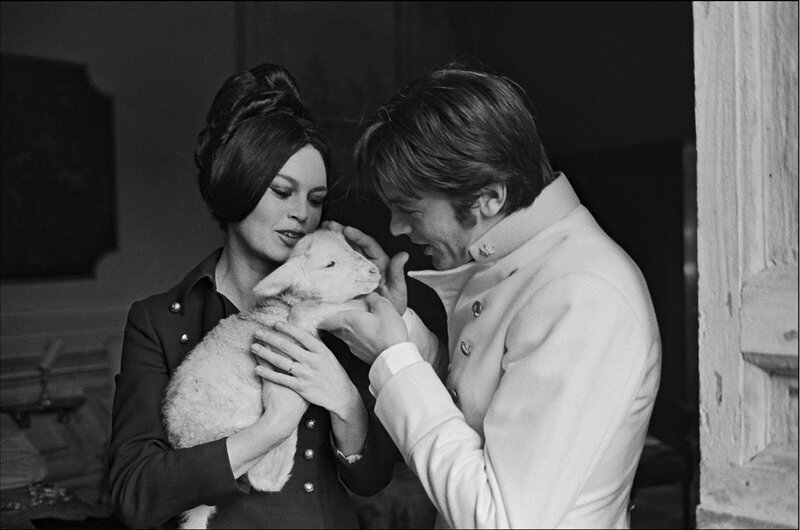
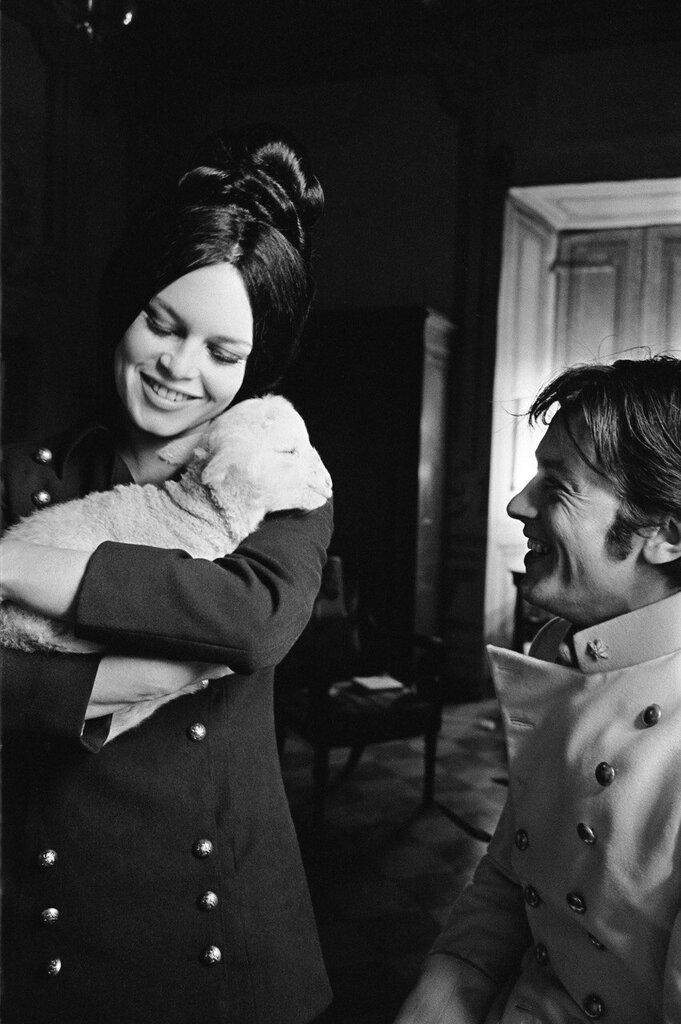
This year's Oscar "In Memoriam" tribute video didn't include Brigitte Bardot. Last year they didn't mention Alain Delon. This is embarrassing to say the least.
I assume they were excluded because of their politics, but the job of the Academy is to remember them for their contributions to Cinema. Their political opinions shouldn't come into consideration here.
I too don't agree with their politics, but I can still celebrate them for their performances on screen. I hope this trend doesn't continue.
Being an anti-regime Iranian in the diaspora is a wild ride.
First, the moment you speak up you basically say goodbye to ever going back home. Then come the threats, from the regime and its supporters everywhere. Then the harassment from leftists and progressives explaining to you how your lived reality wasn’t real, that you’re a paid agent, or that you just “want to be white.”
And just when you think the circus is complete, some far-right Nazi punches you or calls you a “Jew” like it’s an insult.
All of this because you dared to speak for people inside Iran who are living under internet blackouts while a regime points guns at them, ready to slaughter them if they step out of line.
#InternetBlackout
An Iranian official went on the BBC expecting public relations. Instead he accidentally encountered journalism. A rare and confusing moment for everyone. 😏
https://t.co/6nZ97mlzma
British woman telling Iranians that their actual lived experience “is all lies, it’s all lies”. Useful snapshot of a certain section of society that feels they can talk over Iranians and actually accuse them of brain rot.
#IranMassacre#IranIsraelUSWar