Amazing.
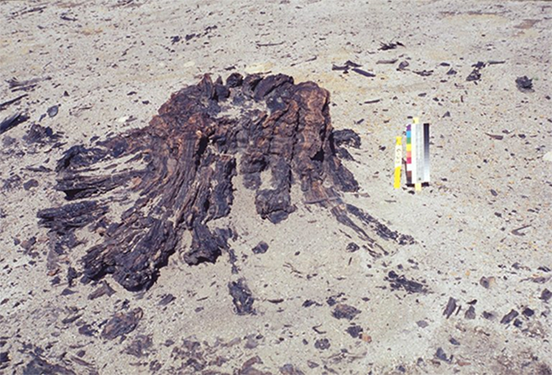
45-million-year-old tree stumps, unchanged from when the Canadian Arctic had a Florida climate. Still sawable wood with leaf litter, cones and seeds nearby.
Worth reading about:
https://t.co/3HpfSnLAvx
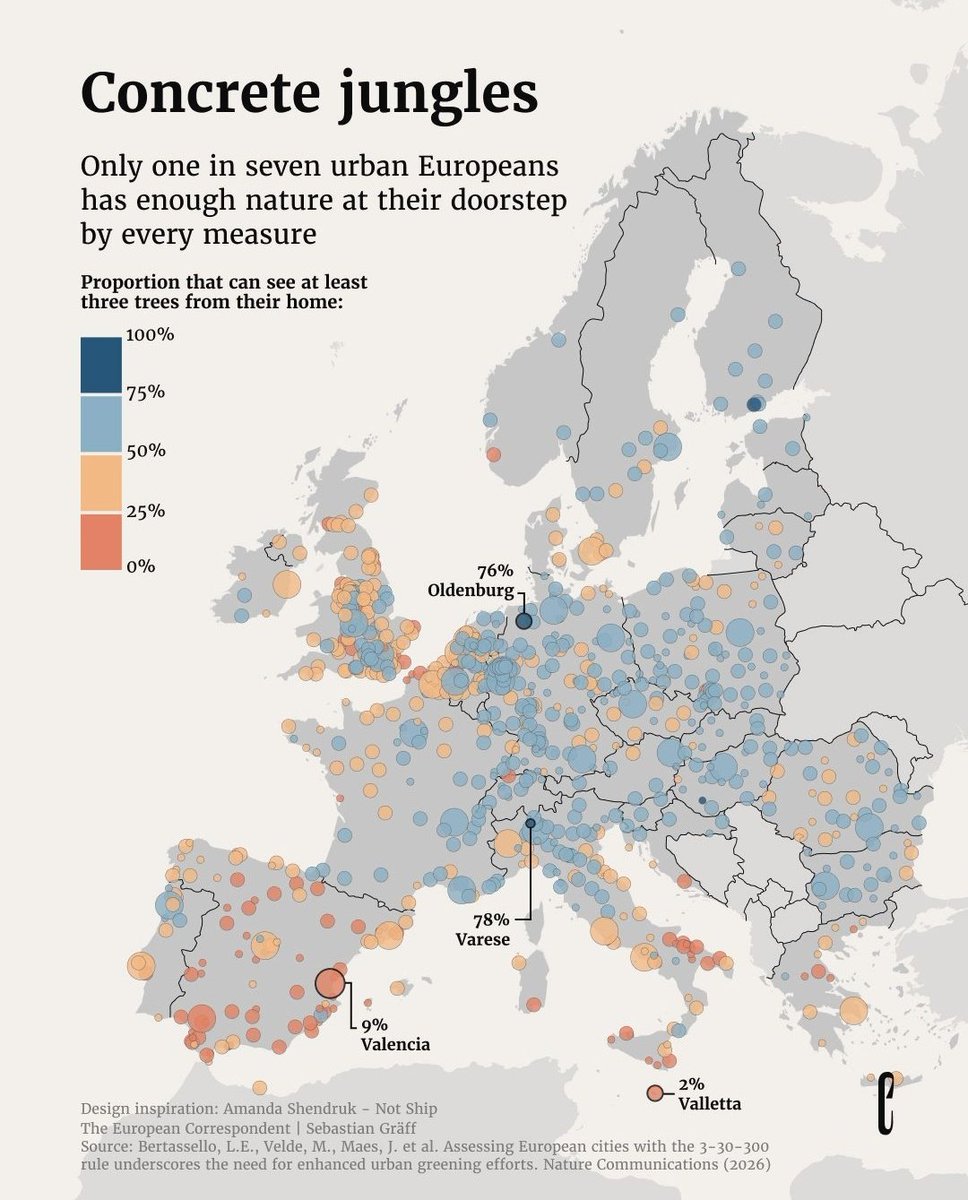
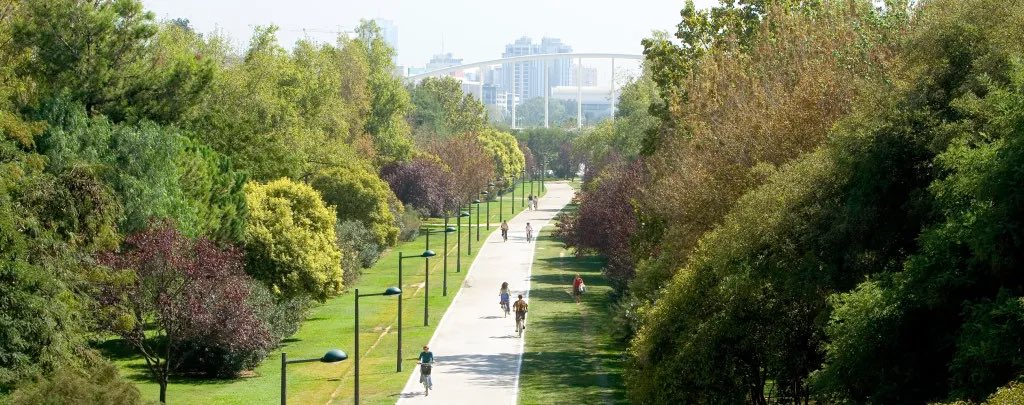
A València necessitem arbres. Cada vegada que veig una nova reforma de carrer amb quatre arbres anecdòtics, amb escocells compactats i una mala relació amb l'espai públic pense en açò. Necessitem arbres, en plan arbres. Arbre ahi i arbre enllà. Per totes les bandes.
I metro tmb.
A Persian scholar finished a single math book in 9th century Baghdad that quietly became the foundation for every line of code running on Earth today.
I started reading about him at midnight and could not believe how many things in my daily life trace back to one man.
His name was Muhammad ibn Musa al-Khwarizmi. The book is called The Compendious Book on Calculation by Completion and Balancing.
Every time you say the word algebra, you are saying his book title. Every time someone says the word algorithm, they are saying his name. Both English words come from him. Both are Latin transliterations of Arabic and of his own identity. The man did not just contribute to mathematics. He named it.
Here is the part almost nobody tells you.
Al-Khwarizmi was born around 780 CE in Khwarazm, in what is now Uzbekistan. He moved to Baghdad and worked at a research institution called the House of Wisdom, which during the Islamic Golden Age was the single most important center of learning on the planet. The caliph al-Mamun hired the best mathematicians, astronomers, and philosophers from across three continents and put them in one building with one job. Translate, study, and produce new knowledge.
Al-Khwarizmi finished his book on algebra around 820 CE. The Arabic title contained the word al-jabr, which referred to one of the two operations he used to solve equations. When the book was translated into Latin in the 12th century, the Latin world did not have a word for what he had built. So they kept his Arabic word. Al-jabr became algebra. The discipline was named after a single Arabic word in the title of a single book by a single man.
The deeper insight is what he actually changed about how humans think.
Before al-Khwarizmi, mathematical problems were solved geometrically. You drew shapes. You measured them. You compared areas. The Greeks had built an entire mathematical tradition on visual proofs and physical constructions. It was beautiful and limited. You could not solve a problem you could not draw.
Al-Khwarizmi did something nobody had done before him at this scale. He said you could solve any problem using abstract symbols and rules. You did not need a shape. You needed a procedure. You moved terms across the equation. You cancelled like terms on both sides. You isolated the unknown. He invented the idea that mathematics is a manipulation of symbols according to rules, not a study of physical figures.
That single shift made everything that came afterward possible. Calculus. Differential equations. Linear algebra. Quantum mechanics. None of it works if math is locked inside geometry. He pulled it out.
The second thing he did is the one that changed how the world counted forever. He took the Hindu numeral system from Indian mathematics, refined it, and wrote a book introducing it to the Arab world. That system included the concept of zero as a placeholder, and a positional notation where the value of a digit depends on its location. Roman numerals could not do complex calculation. Hindu-Arabic numerals could.
When his book on numerals was translated into Latin as Algoritmi de numero Indorum, the word Algoritmi was just the Latin spelling of his own name. Europeans started calling the new method "doing algorism," then "running an algorithm." The word for the most important concept in computer science is literally his name in Latin.
The third thing he did is the part that should haunt anyone who works in tech.
His method of solving problems was systematic. Step one, do this. Step two, check that. Step three, if condition A, then do X, otherwise do Y. He wrote down procedures that could be followed by anyone, anywhere, who knew how to read. The procedure did not depend on intuition or genius. It worked because the steps worked.
That is exactly what an algorithm is. A finite, deterministic procedure for solving a problem. He did not just give us the word. He gave us the entire concept of programming a thousand years before there was anything to program.
When Alan Turing built the first abstract model of computation in 1936, when John von Neumann designed the first stored-program computer in 1945, when every engineer at Google, OpenAI, Anthropic, and DeepMind writes code in 2026, they are working in a paradigm that started with one man in Baghdad twelve centuries ago.
The strangest part is what happens when you walk into any tech office in San Francisco or Bangalore or Lahore today. Engineers say the words algebra and algorithm hundreds of times a day. They do not know whose name they are saying. Almost nobody can spell al-Khwarizmi correctly on the first try.
His original Arabic manuscript is preserved at Oxford. His book on Hindu numerals survives only in Latin translation. The Latin version was the textbook that taught medieval Europe how to count.
The man who built the foundation of the AI revolution did not live to see a calculator. He died around 850 CE, a thousand years before the first electric current was sent through a wire. The civilization he built mathematics for collapsed. The library he wrote in burned. His own grave is unmarked.
But every algorithm running on every machine on Earth right now still answers to his name.
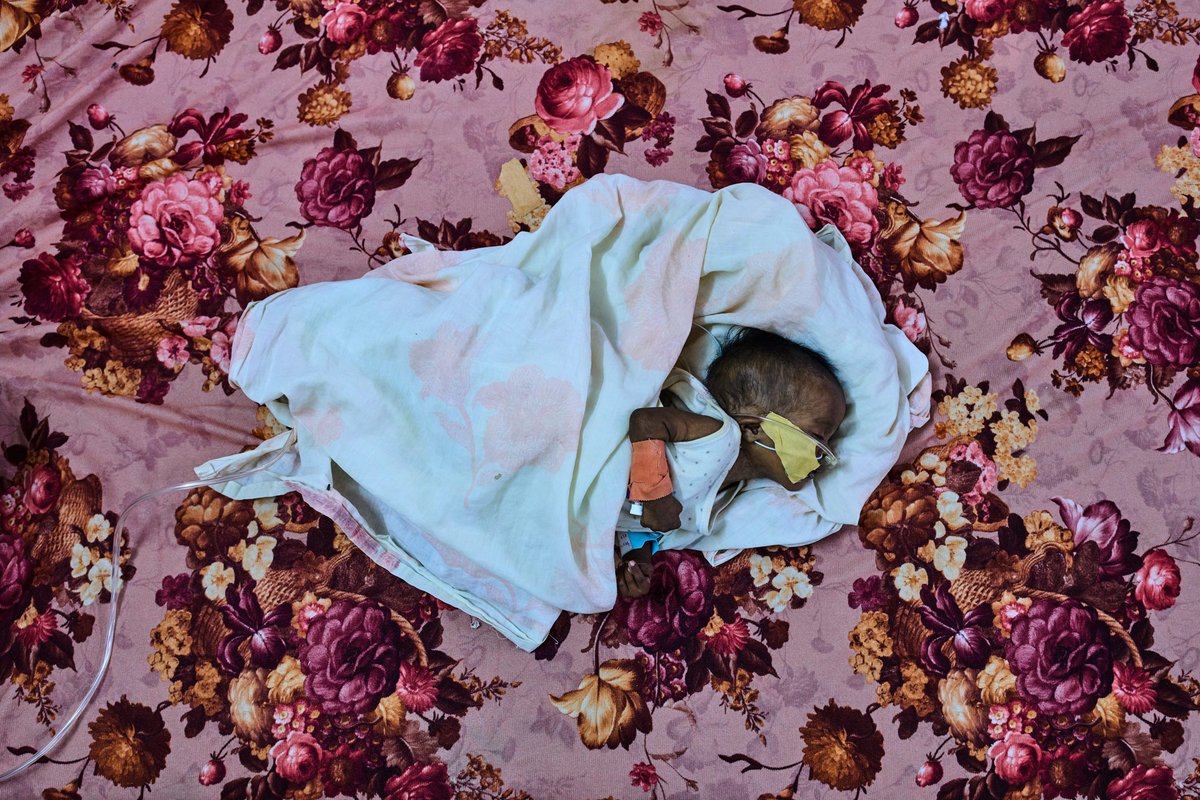
La imagen de la semana, del fotógrafo Bernat Armangué, está tomada en el ala de estabilización del hospital pediátrico de Puerto Sudán, donde la mayoría de pacientes son tratados por desnutrición.
El hambre afecta a 19 millones de personas en Sudán, el equivalente a dos de cada cinco sudaneses, según estimaciones del Programa Mundial de Alimentos.
It would be useful to compare the US media coverage of Iran and Saudi Arabia, Without going into human rights details which are all in favor of Iran, the same events would be covered as scandalous examples of oppression in Iran, and as huge steps towards liberalization of regime in Saudi Arabia.
Le mystère de la "Famille Altaïque" : Un pont invisible de la Méditerranée au Pacifique 🇹🇷🇲🇳🇰🇷🇯🇵
1/ Regardez attentivement cette carte. Elle représente l'une des théories les plus audacieuses et les plus débattues de la science : la Famille des langues altaïques. L'idée ? Des langues parlées à Istanbul, Oulan-Bator, Séoul et Tokyo partageraient un ancêtre commun né dans les steppes il y a des millénaires. 🗺️
2/ Qui sont les membres de cette famille ? 👥
La carte divise cet immense espace en plusieurs groupes colorés que les chercheurs tentent de relier :
- 🔵 Les langues turciques (du Turc de Turquie au Kazakh, jusqu'au Yakoute en Sibérie).
- 🟤 Les langues mongoles (le socle des steppes et des kalmouks).
- 🔴 Les langues toungouses (Mandchourie et Sibérie orientale).
- 🟣 Le coréen et le japonais, souvent vus comme les cousins lointains de cet ensemble.
3/ Pourquoi y croit-on ? Le lien par le "Squelette" 🧩
Ce qui frappe les linguistes, ce n'est pas forcément le son des mots, mais la structure du cerveau des locuteurs. Toutes ces langues fonctionnent comme des jeux de construction (Lego). On appelle cela l'agglutination. Au lieu de changer le mot, on lui empile des suffixes pour ajouter du sens.
4/ La preuve par la syntaxe 🏗️
Prenons un exemple concret : "Dans mes maisons".
En turc (Ev-ler-im-de) comme en japonais (Ie-tachi-no-naka-ni), la logique est identique : Maison + Pluriel + Mon + Dans. C'est une architecture mentale unique, un "plan d'architecte" qui se retrouve sur des milliers de kilomètres.
5/ Le paradoxe : Pourquoi ne se comprennent-ils pas ? 🧐
C'est ici que le mystère s'épaissit. Dans les langues indo-européennes (français, anglais, russe, hindi), le lien est "bruyant". "Mère" se dit Mother en anglais ou Mat en russe. Les chiffres se ressemblent : Trois, Three, Tri. C'est ce qu'on appelle le lexique fondamental.
6/ L'Altaïque : Une parenté "silencieuse" 🤫
Dans les langues de notre carte, ce vocabulaire de base (chiffres, famille proche) est totalement différent d'un groupe à l'autre. Un Turc, un Mongol et un Japonais ne partagent presque aucun mot pour compter jusqu'à dix. Pour les sceptiques, c'est la preuve que cette famille n'existe pas : "Si on est frères, pourquoi n'avons-nous pas les mêmes mots pour nos parents ?"
7/ Le facteur Temps : L'érosion millénaire ⏳
Les partisans de la théorie ont une réponse : le temps. Les langues européennes se sont séparées il y a environ 5 000 ans. L'Altaïque (ou Transeurasien), s'il existe, aurait éclaté il y a plus de 9 000 ans. À cette échelle, les mots s'évaporent comme de la brume. Seul le squelette de la grammaire survit à l'usure des siècles.
8/ Des "mots-fantômes" qui subsistent malgré tout 👻
Pourtant, certains termes résistent. Les linguistes ont identifié des racines liées aux pronoms. Le son "M" ou "B" pour dire "Moi" et le son "S" ou "T" pour dire "Toi" circulent de la Turquie au Japon. On retrouve aussi des racines communes pour des actions vitales comme "donner" ou "tisser", suggérant un passé artisanal commun.
9/ La révolution génétique (2021-2025) 🧬
Le débat a été relancé récemment par une étude majeure publiée dans Nature. En analysant l'ADN de squelettes anciens, des chercheurs ont trouvé un lien génétique : les locuteurs de ces langues descendraient de cultivateurs de millet du Nord-Est de la Chine. La langue aurait voyagé avec les graines et les premières migrations agricoles !
10/ L'effet "Voisinage" ou l'amitié des steppes 🤝
Une autre théorie suggère que ces peuples ne sont pas "parents" par le sang, mais par le contact. À force de vivre, de commercer et de se battre dans la steppe pendant des millénaires, ils auraient fini par calquer leurs grammaires les uns sur les autres. C'est la beauté de la Route de la Soie : une fusion culturelle devenue linguistique.
Quin desastre de proposta, quin desastre de tot.
És com un malsón per a qualsevol urbanista amb dos dits de front. I per a qualsevol ciutadà que estime el seu temps i la seua qualitat de vida.
Estem en 2025 i Espanya encara aposta per la ciutat dispersa i despersonalitzada 👏🏻👏🏻
i think maybe i’m getting old but i think that hope is a precious thing that should be protected and the people excited at the prospect of a nyc that cares for them should be celebrated, not ridiculed.
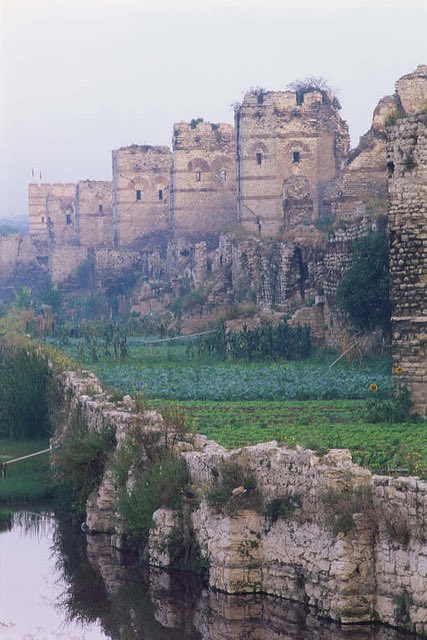
San Salvador de Chora: uno de los laboratorios de gestos humanos —abrazos, besos, primeros pasos, llantos, sueños, caricias, miradas compasivas, manos estrechadas, golpes, brindis, cuchilladas— más alucinantes del mundo. Emociones intactas después de más de 700 años.
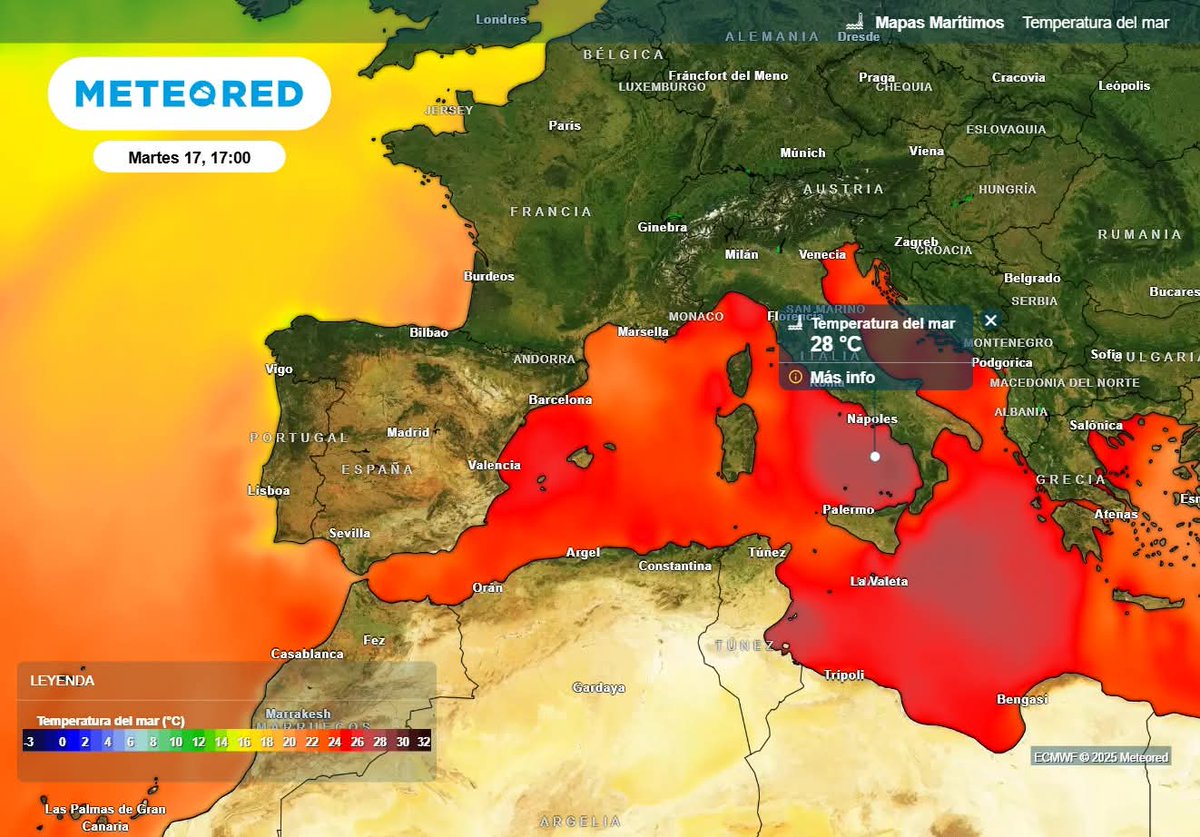
Casi 27ºC en la Boya de Mahón, en Menorca.
El Mediterráneo con temperaturas de agosto en junio. No hay registros de estas cifras para la época. Las anomalías pueden superar los +5ºC en los próximos días.
¿Tomamos dimensión de la gravedad de estas cifras?
Fuente: @MeteoredES.




![MonroyTq's tweet photo. Space II, instalación del estudio 目[mé] en Beppu, Prefectura de Ōita, Japón, 2025. https://t.co/vvOQrKkedG](https://pbs.twimg.com/media/G9KzuPGWEAA-g1k.jpg)
![MonroyTq's tweet photo. Space II, instalación del estudio 目[mé] en Beppu, Prefectura de Ōita, Japón, 2025. https://t.co/vvOQrKkedG](https://pbs.twimg.com/media/G9KzuPFWAAArz4Z.jpg)
![MonroyTq's tweet photo. Space II, instalación del estudio 目[mé] en Beppu, Prefectura de Ōita, Japón, 2025. https://t.co/vvOQrKkedG](https://pbs.twimg.com/media/G9KzuPEWIAA2EFX.jpg)









![MonroyTq's tweet photo. Space II, instalación del estudio 目[mé] en Beppu, Prefectura de Ōita, Japón, 2025. https://t.co/vvOQrKkedG](https://pbs.twimg.com/media/G9KzuPGXoAAiIiC.jpg)