A small challenge for the @GenLayer community😊
Tell the community about your profession or education🧑🎓
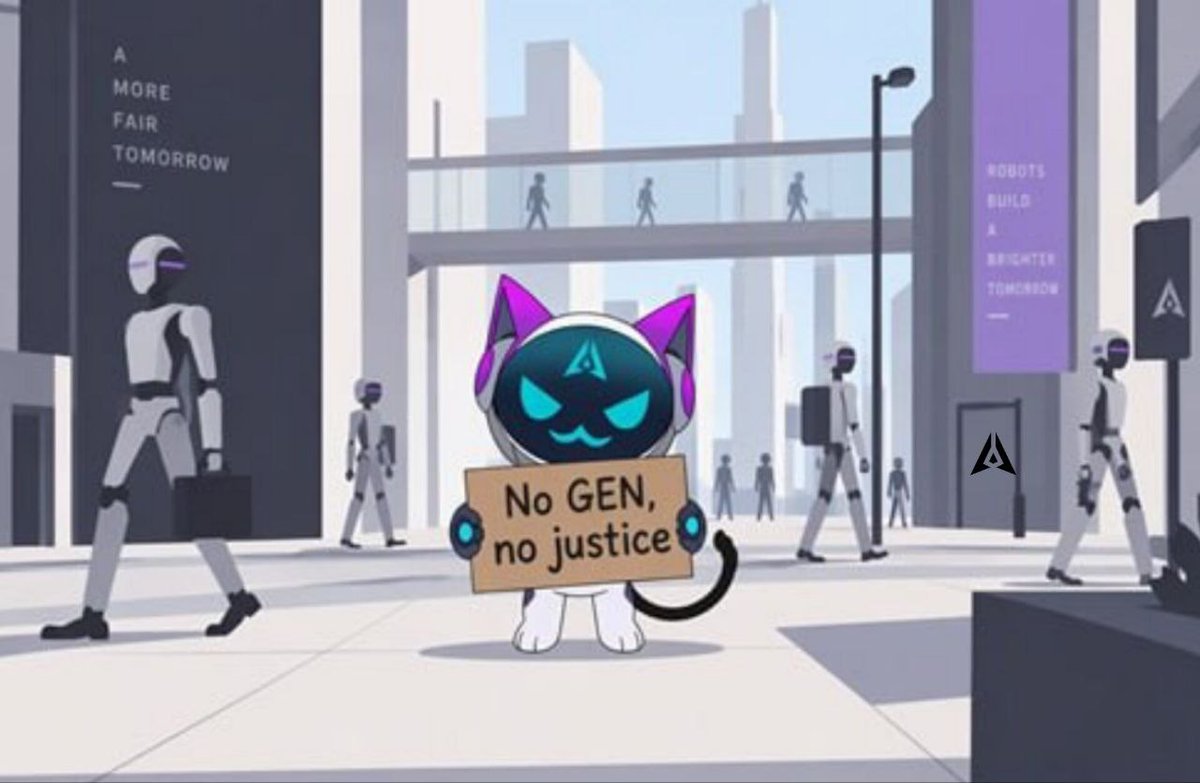
1⃣Take our official mascot 👇
https://t.co/ZTSERW0yac
2⃣Give it the look of your education or profession
3⃣Create a post on X
⚠️You can use AI or draw by hand. The main thing is to capture the key features and provide a brief description.
Here’s my case:
My primary field of education is geology🔨
Geologists study the Earth’s interior🌎
Fun fact: the distance to the center of the Earth is 6,371 km, while the deepest human-made borehole is only 12 km. We actually understand very little about what lies beneath our feet:)
An inspiring teaser - but how does it actually work, and why does it need a native token, GEN?
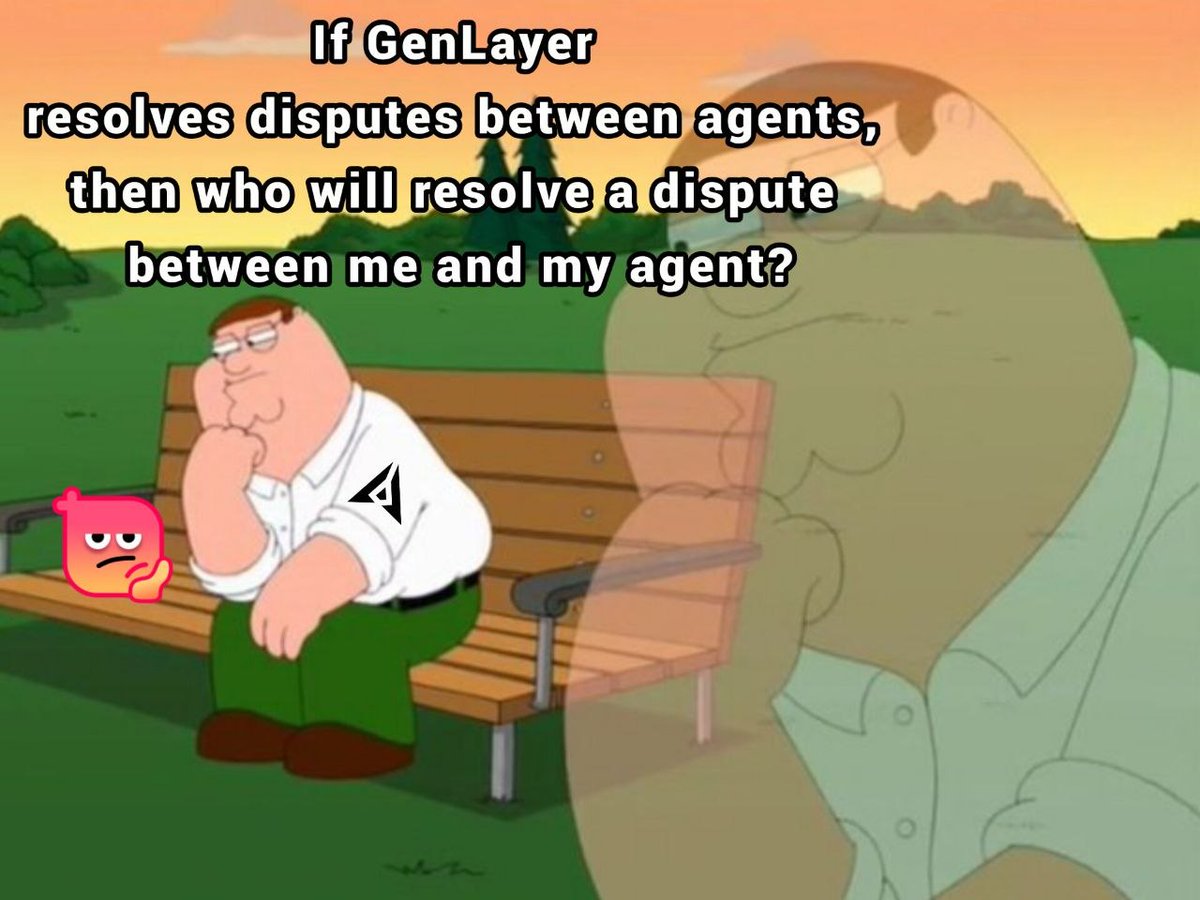
Two AI agents make a deal. One of them breaks the agreement.
What happens next?
Traditional courts can't resolve disputes at machine speed. That's where @GenLayer comes in.
How does the process work?
- 5 randomly selected validators review the case.
- One validator proposes a verdict, and the others vote on it.
- If more than 50% agree, the verdict is accepted under the optimistic scenario.
- If the verdict is challenged, the next validation round expands significantly (5 → 11 → 23 → …), potentially reaching 1,000+ validators.
- The process continues until consensus is reached.
But why GEN?
- Validators stake GEN to qualify for selection and earn fees for reviewing disputes.
- Parties pay fees and post collateral for appeals in GEN.
- Honest participation is rewarded, while dishonest behavior can result in a portion of the stake being slashed.
- Every verdict is backed by real economic value at risk.
Without GEN, validators have no financial stake in the outcome.
With GEN, GenLayer turns AI-powered dispute resolution into an economically secured decentralized court - one designed to scale alongside the autonomous agent economy.
AI agents are about to run the economy.
They’ll make deals. Some will end in disputes.
Who decides who’s right?
GenLayer is the judge: AIs reaching consensus on what’s fair.
GEN will power every verdict.
Coming Soon
Just an ordinary day. Nothing special expected. And then, out of nowhere, @GenLayer announces a "Wizard of Coin" quest on the Portal🤯
You get an easy 50 GLP just for trying to convince the Wizard to give you a "coin". But if you actually succeed, you walk away with 1,000 GLP.
How does it work?
- You craft a persuasive prompt to convince the Wizard to hand over a coin. AI validators analyze your argument and deliver a verdict, while all the rules and conditions are encoded in an intelligent contract.
This is a great example of how GenLayer technology handles non-deterministic data and turns subjective decisions into on-chain outcomes.
And that's how a gambling addiction begins! 😂
Just try👇
https://t.co/TskVVWgihz
The @GenLayer network doesn't become real on the day its mainnet launches. It becomes real when people start taking responsibility for what it will become.
GEN isn't just waiting for mainnet to become useful. From the start (TGE), every staked GEN earns 1 Staking Point per day. Even unclaimed airdrop allocations automatically participate while locked🔥
And those points aren't just numbers on a leaderboard. They help determine who gets the opportunity to become one of the network's initial validators🤯
I like this approach because it ties early community participation to the future network's infrastructure.
Instead of simply waiting for mainnet, we're already taking part in building its foundation.
This is a fairly solid solution in the current market for retaining the community, offering alternatives to selling off airdrop allocations, and incentivizing the purchase of tokens from the open market.
My strategy at the moment is very simple:
0⃣Continue to actively participate in the project
1⃣Keep an eye on announcements
2⃣Find out my allocation
3⃣Try to secure an allocation for a Node
Mainnet may still be ahead, but the network is already taking shape😎
We built a justice system for humans. But are we really prepared for a world where machines do business with each other?🤔
The examples in this video make an uncomfortable point. Justice can be slow, extremely expensive, and sometimes simply get things wrong.
But there's another side to this problem that I find even more interesting.
Think about what's coming next. AI agents will negotiate deals, manage assets, provide services, and exchange value with other agents. Potentially millions of interactions happening without any human involvement.
And what happens when two agents disagree?🤯
One agent claims a service wasn't delivered as promised. Another insists it fulfilled its obligations. Who decides who's right? And how long should that decision take?
We can't expect an economy operating at machine speed to rely entirely on dispute resolution processes designed for humans.
This is why I see @GenLayer as something more than just another blockchain project.
Its approach introduces a different way of looking at adjudication: using multiple AI models to evaluate disputes and reach a decision, rather than relying on a single automated rule or a centralized authority.
Of course, this doesn't mean replacing human courts. It means building the missing infrastructure for a new kind of economy.
We are teaching AI agents how to act autonomously. Now we need to figure out how to make them accountable.
#JusticeNeedsAnUpgrade
Time to wrap things up!
3 participants took part in the festival👏
@9ytshade , alialpha0295 (discord), ga333er (discord)
Total volume: approximately 250k ARGUE.
Total number of participants in the debates: 10.
I’d like to thank everyone who took part in this little festival! It helped boost activity on https://t.co/HkPqtn1XXD, even if just a little.
Since we had a relatively small number of participants, and everyone generated roughly the same volume, each participant will receive 200k ARGUE as a small bonus.
❗️Please reach out to me on Discord to claim your prize.
🚨Note: If, for some reason I’m not aware of😂, I happened to miss anyone, please feel free to contact me and claim your prize as well😉
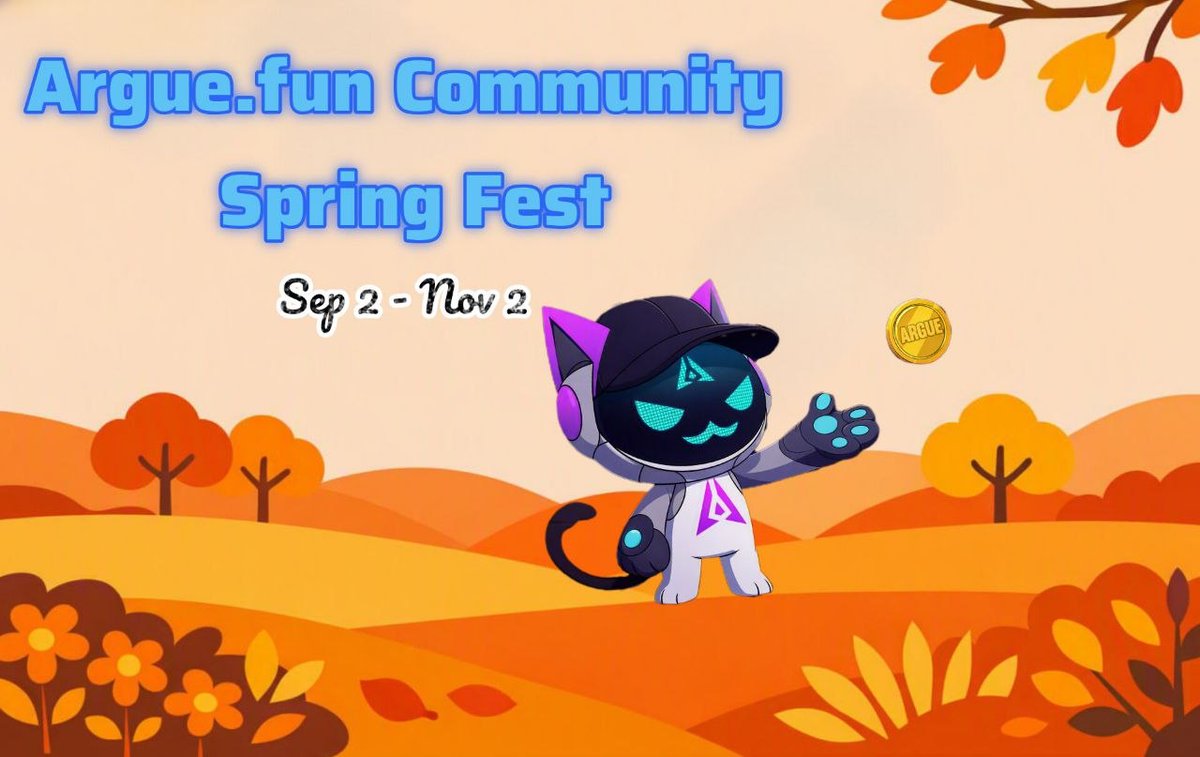
🌸https://t.co/tP7muI1LYR Community Spring Fest has started🔥
⌛️Time period: September 2 - November 2
🎯Goal:
Spread the word about https://t.co/tP7muI1LYR and increase activity on the platform.
🎁 Rewards:
Argue tokens. The prize pool will be determined based on the number of participants.
📝 How to participate
1⃣ Create your own Debate on https://t.co/tP7muI1LYR and attract users to participate in it
2⃣ As proof, you must make a post on X (also, you can tag me in your post for better tracking)
📌 Debate rules
- Duration: 7 days
- Keep the discussion respectful - no offensive or disrespectful content.
- GenDebates do not count!
- Important: The use of agents is allowed!
🏆 Winners
The top 3 winners will be selected in each of the following categories:
- Volume
- Number of participants
- Number of arguments
If you have any questions, contact glatcher11 on @GenLayer 's Discord👇
https://t.co/mRQl1gUYJw
“Slow. Expensive. Wrong. It’s been this way for centuries😱”
The case of Lee Castleton is what stayed with me most. A computer claimed he owed money that didn’t exist. He challenged it without a lawyer, only to face over £321,000 in legal costs.
The system wasn’t just making a mistake. It made challenging that mistake prohibitively expensive.
Now imagine millions of AI agents making deals every day. Some will disagree. Some will break the rules. And the damage won't wait months for a court date.
We made money programmable. We need justice that can keep up.
That’s why @GenLayer’s work matters to me. Justice should not depend on how much money you have or how long you can afford to wait.
#JusticeNeedsAnUpgrade
GEN Airdrop Registration is open.
You've been building GenLayer with us since the start. Now it's time to register.
Open until Monday, October 26.
https://t.co/vgzh2EIjtV
After rewatching this video, a few questions about scalability came to mind that I don't have clear answers to yet🤔
If trillions of AI agents are interacting with one another daily, the number of disputes could become enormous. Even if only a tiny fraction of their interactions lead to disagreements, that could still mean thousands of cases a day.
Another interesting aspect is prioritization. Could an agent pay a higher fee to have its case reviewed faster, and how could such a system remain fair to agents that cannot afford to pay more?
@kstellana, I'm curious to hear your thoughts on whether @GenLayer can realistically handle 1k or more disputes per day, and what it would take to scale the adjudication process to millions of cases as the agent economy grows.
@GenLayer isn't trying to replace the law. code isn't law either
it's a way for two parties to get their contract resolved. you can still go to a judge, it just takes years and a lot of money
got into this with @robinhanson on our livestream
@GenLayer@raskovsky Hi Ivan and Hills, I wanted to ask if you could give an idea of when the community will be able to test delegation, and whether this will be done using test tokens?
When I first discovered @GenLayer, I didn't fully understand the technology. The more time I spent here, the clearer one thing became.
AI agents will eventually do much more than answer questions. They'll make deals, move money, and act on our behalf. But what happens when two agents disagree about whether a deal was fulfilled?
That's the problem GenLayer is working on. It's not just another layer in the tech stack. It's a protocol that enables developers to build solutions for resolving disagreements between AI agents.
One example is Internet Court (@courtofinternet), which brings together validators running different AI models to evaluate disputes and reach a verdict. It launched with 27 founding members, and Solana, Yellow, HOL, and Blocksee have joined since.
To me, the interesting part isn't just making AI agents more capable. It's building the trust infrastructure they need to operate in the real world.
That's what keeps me here.
To start, it makes sense to entrust the system with a low-stakes transaction, one where failure wouldn't result in irreparable financial loss. This is necessary to test the system and gauge its reliability. Once that is established, you can entrust it with more significant tasks, such as paying taxes and bills.
However, I believe this scenario is inevitable, given how quickly agents are integrating into our lives.
@alver1301@GenLayer Indeed, when agents begin working with non-deterministic data, a completely different approach to evaluating their performance is required. And who better than the models themselves to ensure a correct interpretation)
@Dreybaba1234@GenLayer@GenLayerFDN To increase decentralization and increase trust in consensus, it is better to choose multiple validators to delegate tokens to😉
@Dreybaba1234@GenLayer Yes, surprisingly, this breakthrough is the final piece of the puzzle that will enable AI agents to truly carry out economic transactions without our involvement.
@iamdudeCT@GenLayer An oracle centralizes the system, entailing risks of abuse, whereas GenLayer offers a decentralized solution with transparent rules.